One approach to the problem of finding a `pedigree' for Vichy is offered by the Israeli historian Zeev Sternhell, author of a trilogy of books on fascism in France. Sternhell has argued that, far from being an alien graft on to French political cultuire, fascism's origins as a coalescence of the anti-liberal right and ant-liberal left date back to late nineteenth-century France. He goes on to argue that in the 1930s, fascist ideology, or at least a fascist sensibility, was permeating French politics, and that the Occupation can only be understood in this light. Sternhell has been criticised for being too imprecise in his definition of fascism, enrolling any critic of liberal drmmcracy under the banner of fascism. Nonetheless his work does reveal, more than previous historians had done, the existence of strong anti-liberal currents in French political culture, especially in the 1930s. The British historian Tony Judt, analysing the influence of communism on French intellectuals after 1945, has also emphasized the weaknesses of liberal ideas in France. Judt notes that several Communist intellectuals had started in the 1930s as ultra-conservatives: he explains their conversion by their consistent antipathy to liberal democracy.
Julian Jackson, France: The Dark Years 1940-1944 (2001)
Saturday, October 01, 2005


Friday, September 30, 2005
Theatre of Cruelty
RFE/RL presents a review of a new play that proved a box-office hit at this week's New Drama Festival in Moscow. Its subject is the Beslan siege. The play's author and director, Mikhail Ugarov, explains some of the background to his involvement with the subject:
Ugarov himself admits he has no clear position on the war. He describes himself and his audience as Russians who feel sympathy neither for Chechen rebel separatists nor for the government bent on destroying them.
He says his aim is to convey that the war has long spilled out of Chechnya and is slowly breeding fear and hatred in the hearts of ordinary Russians:
"Everybody in the country pretends that there is no war, that we all live peacefully and the war is only on television. But the war penetrates everywhere, into the family, the relations with children. People become more aggressive. The war starts provoking a kind of social paranoia. We wanted to show this paranoia, when everyone is an enemy: Chinese, Vietnamese, Jews, Caucasians, Muscovites," Ugarov said.
Conflict in the Air - III
From today's RFE/RL Newsline:
MOSCOW AND VILNIUS CONTINUE TO ARGUE OVER CRASHED RUSSIAN JET...
Lithuania's Defense Ministry stated on 29 September that Russia has intentionally misinformed Lithuanian specialists investigating the crash of the Russian Su-27 near Kaunas on 15 September (see "RFE/RL Newsline," 28 September 2005) and is providing them with incorrect technical data, Russian media reported. Defense Ministry chief of staff Vitalijus Vaiksnoras said on 29 September that Russia gave his investigators information on black boxes related to different aircraft, RosBalt reported. And Lithuanian Defense Minister Gediminas Kirkilas said that "there is increasingly the impression that the pilot of the aircraft was insufficiently trained and hadn't had enough flight time." Major General Sergei Bainetov, the head of the Russian Air Force safety service, admitted that the jet that crashed was 20 years old and some of its parts were replaced with parts from other aircraft and that caused confusion. Russia's Defense Ministry also denied accusations that pilot Valerii Troyanov was not qualified enough, NTV reported. All of Troyanov's actions in the air were absolutely correct, it added. VY
...AS DEFENSE MINISTRY DENIES SECRET CODES WENT TO NATO.
Russia's Defense Ministry also rejected reports that appeared in the Russian and Western media that Lithuania's military managed to get secret codes from the Russian aircraft, including a top-secret "friend or foe" recognition code, strana.ru reported. Since the collapse of the Soviet Union, so many Su-27s remained in the former Soviet republics that everything NATO wanted to know about it it already knows, the ministry said. As for the "friend or foe " code, it has a triple-duplicated self-destruct procedure and simply cannot remain intact after a crash, an unnamed source in the Defense Ministry told strana.ru. VY
MOSCOW AND VILNIUS CONTINUE TO ARGUE OVER CRASHED RUSSIAN JET...
Lithuania's Defense Ministry stated on 29 September that Russia has intentionally misinformed Lithuanian specialists investigating the crash of the Russian Su-27 near Kaunas on 15 September (see "RFE/RL Newsline," 28 September 2005) and is providing them with incorrect technical data, Russian media reported. Defense Ministry chief of staff Vitalijus Vaiksnoras said on 29 September that Russia gave his investigators information on black boxes related to different aircraft, RosBalt reported. And Lithuanian Defense Minister Gediminas Kirkilas said that "there is increasingly the impression that the pilot of the aircraft was insufficiently trained and hadn't had enough flight time." Major General Sergei Bainetov, the head of the Russian Air Force safety service, admitted that the jet that crashed was 20 years old and some of its parts were replaced with parts from other aircraft and that caused confusion. Russia's Defense Ministry also denied accusations that pilot Valerii Troyanov was not qualified enough, NTV reported. All of Troyanov's actions in the air were absolutely correct, it added. VY
...AS DEFENSE MINISTRY DENIES SECRET CODES WENT TO NATO.
Russia's Defense Ministry also rejected reports that appeared in the Russian and Western media that Lithuania's military managed to get secret codes from the Russian aircraft, including a top-secret "friend or foe" recognition code, strana.ru reported. Since the collapse of the Soviet Union, so many Su-27s remained in the former Soviet republics that everything NATO wanted to know about it it already knows, the ministry said. As for the "friend or foe " code, it has a triple-duplicated self-destruct procedure and simply cannot remain intact after a crash, an unnamed source in the Defense Ministry told strana.ru. VY
The Ambiguity
Toute sa vie durant, Camus allait être désormais invité et incité à se ranger du côté du christianisme, mais il ne céda jamais. Après sa mort, des croyants déposèrent des croix sur sa tombe (qui, sinon, est singulièrement dépouillée). Des articles et même des livres ont été écrits sur Camus chrétien, et ils ont dû être faciles à écrire car Camus lui-même semait les ambiguïtés. Il se retenait en général d'attaquer le christianisme ou l'Église, tout en critiquant la politique de l'Église - dans l'Espagne de Franco, par exemple. En dépit de l'inimitié presque naturelle qui se fit jour entre Camus et celui qui aurait pu être son allié politique, François Mauriac, Camus coexistait sans difficulté avec le catholicisme.
-Herbert Lottman
-Herbert Lottman
Koivisto: the Debate Continues
Helsingin Sanomat's International Edition has a feature about the ongoing debate between Finnish Parliament Speaker Paavo Lipponen and Professor Juhani Suomi on the subject of Mauno Koivisto's presidency.
See also: Koivisto - Dismantling the Myths
See also: Koivisto - Dismantling the Myths
Conference: After Maskhadov
The American Committee for Peace in Chechnya has posted some information about a forthcoming conference on Chechnya, to be held in London, U.K.:
Conference: Chechnya After Maskhadov
London, United Kingdom
25 November 2005, 08:45-18:00 GMT
Medical Aid and Relief for the Children of Chechnya (MARCCH) will host a conference on political and humanitarian conditions in Chechnya. Speakers will include Lord Rea, Lord Judd, Akhmed Zakaev, Ibragim Arsanov, Oksana Antonenko, Khassan Baiev, and others.
At chechnya-sl, Jeremy Putley has posted further details given by one of the conference organisers, Satanay Dorken:
The Conference which our charity, Medical Aid and Relief for Children of Chechnya, (MARCCH),is hosting will take place on Friday 25th November 2005. Both Professor George Hewitt, Head of Near and Middle Eastern Studies at SOAS and myself are organising it.
It will be called Chechnya: After Maskhadov.
Registration starts at 8.45 and the Conference starts at 9.15. and lasts until 6 p.m. The aim of the Conference is to raise awareness of Chechnya and the often forgotten tragic consequences of the recent wars on the civilian population and especially its children.
The speakers we hope will reflect a wide range of views and will cover a range of themes of issues both socio-political and humanitarian.
The Conference will be opened by Lord Rea and the other speakers are:
Lord Judd, ex- EU Rapporteur on Chechnya.
Jeremy Corbyn, MP
Ahmed Zakaev, ex European envoy to the late President Maskhadov
Andrew Jack, Financial Times
Ibraghim Arsanov, The Russian political magazine Glotch
Isabelle Barras, Head of East European Desk, International Red Cross, Geneva
Medina Megamedova, Mothers of Chechnya
Chris Langdon, Military Historian
Professor Bill Bowring, Professor of International Law.
Dr Khassan Baiev, Chechen surgeon and author of the Oath. (Had to
flee his country for wanting to treat both sides when arriving
injured at his hospital and now living in Boston.)
All the above are confirmed speakers but there may be one or two others to be confirmed.
Location: School of Oriental & African Studies, in the great hall of the Brunei Building, London University
Entrance fee: £15 and £5 for students
Conference: Chechnya After Maskhadov
London, United Kingdom
25 November 2005, 08:45-18:00 GMT
Medical Aid and Relief for the Children of Chechnya (MARCCH) will host a conference on political and humanitarian conditions in Chechnya. Speakers will include Lord Rea, Lord Judd, Akhmed Zakaev, Ibragim Arsanov, Oksana Antonenko, Khassan Baiev, and others.
At chechnya-sl, Jeremy Putley has posted further details given by one of the conference organisers, Satanay Dorken:
The Conference which our charity, Medical Aid and Relief for Children of Chechnya, (MARCCH),is hosting will take place on Friday 25th November 2005. Both Professor George Hewitt, Head of Near and Middle Eastern Studies at SOAS and myself are organising it.
It will be called Chechnya: After Maskhadov.
Registration starts at 8.45 and the Conference starts at 9.15. and lasts until 6 p.m. The aim of the Conference is to raise awareness of Chechnya and the often forgotten tragic consequences of the recent wars on the civilian population and especially its children.
The speakers we hope will reflect a wide range of views and will cover a range of themes of issues both socio-political and humanitarian.
The Conference will be opened by Lord Rea and the other speakers are:
Lord Judd, ex- EU Rapporteur on Chechnya.
Jeremy Corbyn, MP
Ahmed Zakaev, ex European envoy to the late President Maskhadov
Andrew Jack, Financial Times
Ibraghim Arsanov, The Russian political magazine Glotch
Isabelle Barras, Head of East European Desk, International Red Cross, Geneva
Medina Megamedova, Mothers of Chechnya
Chris Langdon, Military Historian
Professor Bill Bowring, Professor of International Law.
Dr Khassan Baiev, Chechen surgeon and author of the Oath. (Had to
flee his country for wanting to treat both sides when arriving
injured at his hospital and now living in Boston.)
All the above are confirmed speakers but there may be one or two others to be confirmed.
Location: School of Oriental & African Studies, in the great hall of the Brunei Building, London University
Entrance fee: £15 and £5 for students
Two-Term Presidents and Crises of Confidence
GEOPOLITICAL INTELLIGENCE REPORT
09.29.2005
Two-Term Presidents and Crises of Confidence
By George Friedman
Stratfor does not normally concern itself with the domestic politics of countries, except when political shifts might affect the behavior of nations internationally. We are doubly disinclined to concern ourselves with domestic politics in the United States: We have to live here, and whatever we say will be interpreted as partisan. Nevertheless, this is a moment at which American domestic politics bear examination. The Bush administration -- whose ratings had been slipping already due to the situation in Iraq and rising oil prices -- came under intense attack for its handling of Hurricane Katrina relief efforts, and approval ratings a month after the storm are still hovering near a critical low.
We note this now because the domestic strength of any administration determines, at least in part, its ability to execute foreign policy and the shape of that policy. At this moment, there are very real policy challenges not only in Iraq (where a critical vote approaches on the constitution) but in the former Soviet Union (where Russia is making moves to reclaim control of its near-abroad) and China -- to name only a few areas where the appearance of a weakened presidency could have far-reaching implications for the United States. Therefore, the political condition of the Bush administration has a direct impact on geopolitics.
In the immediate aftermath of Hurricane Katrina, the fundamental issue at stake for George W. Bush was whether the economic fallout from the storm -- and the political savaging he experienced over response efforts -- would hurt him so badly that, in due course, his support would erode to the degree that he no longer would be able to govern effectively. In the context of foreign policy, this would mean that he no longer would be able to make decisive moves because of severe preoccupation with domestic problems and lack of political support. Such things have happened before: For example, Richard Nixon -- and his successor, Gerald Ford -- lost the ability to respond to North Vietnam because of Watergate. Lyndon Johnson, his support crumbling, became paralyzed while waiting for his term to end. If such an extremity were to become the case for the Bush presidency, it would mean -- as an example -- that Bush would lose the ability to unilaterally decide strategy in Iraq. Therefore, understanding the president's political condition is critical.
After Bush's reelection, we made the observation that two-term presidents tend to run into political trouble during their second terms -- frequently over foreign policy, and at times to such a degree that they cannot continue to govern effectively. In examining the question of Bush's political fate, that observation bears closer scrutiny now.
Two-Term Presidents: A Review
During the 20th century, six presidents were elected to a second term: Woodrow Wilson, Franklin Roosevelt, Dwight Eisenhower, Richard Nixon, Ronald Reagan and Bill Clinton.
Wilson's second term ended in congressional reversal of his policies on the League of Nations, something that changed dramatically history's perception of his presidency. During Roosevelt's second term, he was hammered first over his attempt to pack the Supreme Court and then, toward the end, by isolationists over what they claimed was his pro-British foreign policy. Had his career ended with his second term, Roosevelt would have been viewed quite differently by history. Eisenhower encountered a serious second-term scandal concerning his chief of staff, Sherman Adams. Later in his term, he was bitterly criticized over the apparent failure to counter Soviet successes in space and missiles. Nixon, of course, was drummed out of office by Watergate and never finished his term. Reagan was hit hard during his second term when the Iran-contra affair, much of which happened in his first term, broke into public view. And though Clinton did not have a foreign policy problem, he was impeached in his second term over Monica Lewinsky and was hammered on Whitewater.
Of these presidents, Eisenhower fared the best, but all were faced with serious problems that were not anticipated when they won re-election.
An historical review of two-term presidents is somewhat muddied by a class of leaders who came into office after the death of a president and then were elected to a single, final term. These presidents included Theodore Roosevelt, Calvin Coolidge, Harry Truman and Lyndon Johnson. Roosevelt and Coolidge chose not to run for a second term of their own, and Truman and Johnson simply could not run. They would have lost the election and, toward the end of their terms, they had lost the ability to act decisively.
Looking at the 10 presidents as a whole, therefore, we can divide them into three classes. First, there were those who could be said to have successful second terms: Theodore Roosevelt and Coolidge (who both were elevated vice presidents). Second, there were those whose second terms were worse than their first, but who ultimately remained in control until the end: Franklin Roosevelt, Eisenhower, Reagan and Clinton. Third, there were those who experienced catastrophic failure in their second terms. Four of them -- Wilson (who was also ill), Truman, Johnson and Nixon -- lost the ability to govern as a result.
Of the four presidents who faced catastrophic outcomes, all had serious foreign policy problems. Wilson had the League of Nations, Truman had Korea, Johnson and Nixon had Vietnam. For one of these presidents, Nixon, Vietnam was not the primary cause of failure, but it was an element in the problem. Of the four who weathered a troubling second term, three -- Franklin Roosevelt, Eisenhower and Reagan -- were plagued by foreign policy problems, but none lost control of their foreign policy. And Clinton's problems were rooted more in perceived personal failings than in any clear policy issues.
Patterns of Failed Presidencies
The question we are coming to is this: Bush at this point clearly is not going to wind up in the Theodore Roosevelt-Calvin Coolidge group. The question is whether he eventually will join the class of failed presidents (Wilson, Truman, Johnson, Nixon) or whether he will belong to the relatively successful group who simply had problems along the way (FDR, Eisenhower, Reagan, Clinton)? We should point out that the question is not how they look in retrospect. Many would argue that Truman was a successful president in retrospect. That may or may not be the case, but he certainly would not have been re-elected president given the perceptions of his performance at the time. The question is whether, at the time, these "failed" presidents had lost public confidence so fully that they no longer could govern.
Turning our attention, then, to the presidents who by the end had lost control of their situations, we see that three lost control because of foreign policy issues -- or, to be more precise, because of wars that had outcomes unsatisfactory to the public. Only one -- Nixon -- lost control primarily because of personal scandal, and one could make the case, which we won't, that he also had a foreign policy/war problem. None of the four presidents who weathered their second-term storms were dealing with an extended state of active war during their second terms. FDR, obviously, complicates this profile, since he had a war in his third and fourth terms, but he did not wage an unsatisfactory war in the public's view.
At this point, we can see a first pattern: Presidential failure in the second term consistently has been the result of unsatisfactory wars or perceptions that the president was a criminal. Wilson fought the First World War successfully but tried to bring it to an unacceptable conclusion at Versailles. Truman could not terminate the Korean War; Johnson could not terminate the Vietnam War. All were perceived, by the end of their terms, as having entangled themselves in a war with unrealistic goals. It was not always the war itself that damaged the presidents' service, but the growing sense that these presidents did not have a strategy in the war that served the national interest.
The issue, however, is more complex than this. All four failed presidents were reviled by the end of their second terms. But so were FDR, Reagan and Clinton. Even Eisenhower, though it is hard to recall now, was treated with extreme contempt by the press and others for his perceived personal, intellectual failings -- however, the level of animosity was neither as deep or as broad as with the others. The intensity of feeling against all eight men during their second terms was enormous: All faced a substantial group of vitriolic, irreconcilable opponents. At various points, this group expanded to constitute a majority. But the core issue -- the key differentiator between the two groups of "failed' or "troubled" presidents -- was this: Among the troubled presidents, at no point did their own base of support crack. Roosevelt, Eisenhower, Reagan and Clinton were reviled and at times on the defensive, but at no point did their own core supporters waver significantly.
The failed presidents, on the other hand, all failed not because their opponents reviled them or even because those opponents became a majority, but because their own base of political support lost basic confidence in them. Wilson had suffered a revolt among the Democrats. Truman no longer could get the Democratic nomination. It is doubtful that Johnson could have won his party's nomination had he sought it. Nixon collapsed when Republican senators turned on him. On the other hand, no matter what attacks were launched against FDR, Eisenhower, Reagan or Clinton, their base held like a rock. Even when FDR was outgunned by the isolationists, he held his base, and he was never broken.
Bush's problem, therefore, is the war in Iraq. But the issue is not his Democratic opposition, nor even whether his opponents swell to become a majority. The threat to Bush's presidency will come if, and only if, his own political base breaks. By all polls, that base -- which historically has been at about 40-42 percent -- is holding. If that continues to be the case, he will be able to execute foreign policy effectively. If that base is shattered, he fails.
Will Bush's Center Hold?
There is no evidence at this time that the situation in Iraq is cutting into Bush's base of support, but the controversies he weathered following Hurricane Katrina brought attention to his ratings -- which remain soft -- at an extraordinarily early point in his second term.
The charges being leveled by Democrats over Katrina were the same charges that always have been leveled at Bush. First, that he isn't smart enough to be president -- and, in the case of Katrina, that he was too dumb to realize what was happening and too slow to respond. Second, that he is hostile to the interests of the poor and minorities -- that if the hurricane had struck a predominantly white, well-to-do city, he would have been more responsive. Both arguments have been tried by the Democrats on all issues. The visceral impact from Katrina, we would expect, will energize and expand the Democrats' base, but it will not expand at the expense of the Republicans' support. In fact, it will secure the support base for the GOP.
There is one caveat. If Bush's base of support decides, of its own accord, that the president really did not understand what was going on in the hurricane zone until late in the week -- days after Katrina struck -- Bush will reach a crisis point. The storm passed weeks ago, but the danger from public opinion still lingers: Given the numbers of people who were displaced by Katrina and the enormous, long-term need for aid, there is plenty of room for mismanagement and backlash. And if that backlash begins to come from Bush's core supporters, they inevitably will begin to examine their own views of the Iraq war, which is built around the assumption that Bush is effectively executing a difficult and necessary war, in the face of Democratic slander.
There has been confidence in Bush's character. But if it is determined that Bush failed in the Katrina crisis because of a failure of character, then all bets will be off.
In the four failed presidencies, it was the sudden, wrenching realization among core supporters that the president they were defending was unworthy of defense that made all the difference. The fact that Roosevelt, Eisenhower, Reagan and Clinton never reached that moment with their own supporters is what made them successful.
Why does this moment come with wars and in second terms? There is a simple, obvious reason that is utterly human and understandable: a combination of exhaustion, self-confidence and boredom. By the second term, a president is tired: The demands of the White House create a brutal life. He is also self-confident, often to the point of arrogance: He has, after all, survived his enemies and clearly has mastered his office. He has reached the point where he has seen and done everything, and tends to view all matters through the prism of his experience -- including the things that he hasn't experienced. He starts making mistakes, takes too long to correct them, is in denial that he has made a mistake and doesn't want to hear arguments.
If a president has surrounded himself with an inner circle that has both enclosed him and been with him from the beginning, they will be in the same condition. They are all tired. By the middle of the second term, everyone is punchy. Significantly, there is a tendency -- particularly after a successful re-election bid -- to keep the successful team. It is interesting to note that Roosevelt, Eisenhower, Reagan and Clinton all moved their teams around in their second term; the "failed" presidents tended to go with their permanent inner circle.
In Bush's case, that inner circle made a mistake on Katrina. One can argue the details, but the fact was that it appeared to the public that Bush didn't move fast enough. And in a national catastrophe, the president's job is, at the very least, to appear to be doing something -- to lead.
Bush's support base is forgiving, until the point that they shred. In looking at the polls, it does not appear that any shredding is occurring: His support base appears to be holding, with approval ratings around the low 40s -- removing any immediate fears of danger to his presidency. But the steadiness of that base now depends on Bush's ability to do what Wilson, Truman, Johnson and Nixon could not manage to do: give the sense that they were in control of the situation. Those presidents' inability to adjust rapidly and publicly -- the fact that they froze when they needed to be decisive -- created a crisis of confidence among their support base that led to irredeemable failure.
It does not appear to us at the moment that Bush has reached this point. But it is not inconceivable that he will. There's not a great deal of give in Bush's approval ratings at the moment, and only weeks ago -- between late August and mid-September -- he was in a definite "red zone", with only 38 to 40 percent of Americans approving of his performance. The public remains concerned not only with the war in Iraq but with high energy costs -- which will begin to pinch more in some parts of the country, with the need for heating fuel coming on -- and emerging fears of a possible recession. The challenges for Bush, both foreign and domestic, are many, and another crisis could begin to eat away at his core support.
The next few weeks, in our view, could be decisive in determining whether the United States is going to go through one of those crises of confidence it has experienced in the past. Those spasms have created opportunities for international opponents of the United States to take advantage of the paralysis -- and that, when it occurs, is a geopolitical, not just a political, problem.
Send questions or comments on this article to analysis@stratfor.com.
http://www.stratfor.com
09.29.2005
Two-Term Presidents and Crises of Confidence
By George Friedman
Stratfor does not normally concern itself with the domestic politics of countries, except when political shifts might affect the behavior of nations internationally. We are doubly disinclined to concern ourselves with domestic politics in the United States: We have to live here, and whatever we say will be interpreted as partisan. Nevertheless, this is a moment at which American domestic politics bear examination. The Bush administration -- whose ratings had been slipping already due to the situation in Iraq and rising oil prices -- came under intense attack for its handling of Hurricane Katrina relief efforts, and approval ratings a month after the storm are still hovering near a critical low.
We note this now because the domestic strength of any administration determines, at least in part, its ability to execute foreign policy and the shape of that policy. At this moment, there are very real policy challenges not only in Iraq (where a critical vote approaches on the constitution) but in the former Soviet Union (where Russia is making moves to reclaim control of its near-abroad) and China -- to name only a few areas where the appearance of a weakened presidency could have far-reaching implications for the United States. Therefore, the political condition of the Bush administration has a direct impact on geopolitics.
In the immediate aftermath of Hurricane Katrina, the fundamental issue at stake for George W. Bush was whether the economic fallout from the storm -- and the political savaging he experienced over response efforts -- would hurt him so badly that, in due course, his support would erode to the degree that he no longer would be able to govern effectively. In the context of foreign policy, this would mean that he no longer would be able to make decisive moves because of severe preoccupation with domestic problems and lack of political support. Such things have happened before: For example, Richard Nixon -- and his successor, Gerald Ford -- lost the ability to respond to North Vietnam because of Watergate. Lyndon Johnson, his support crumbling, became paralyzed while waiting for his term to end. If such an extremity were to become the case for the Bush presidency, it would mean -- as an example -- that Bush would lose the ability to unilaterally decide strategy in Iraq. Therefore, understanding the president's political condition is critical.
After Bush's reelection, we made the observation that two-term presidents tend to run into political trouble during their second terms -- frequently over foreign policy, and at times to such a degree that they cannot continue to govern effectively. In examining the question of Bush's political fate, that observation bears closer scrutiny now.
Two-Term Presidents: A Review
During the 20th century, six presidents were elected to a second term: Woodrow Wilson, Franklin Roosevelt, Dwight Eisenhower, Richard Nixon, Ronald Reagan and Bill Clinton.
Wilson's second term ended in congressional reversal of his policies on the League of Nations, something that changed dramatically history's perception of his presidency. During Roosevelt's second term, he was hammered first over his attempt to pack the Supreme Court and then, toward the end, by isolationists over what they claimed was his pro-British foreign policy. Had his career ended with his second term, Roosevelt would have been viewed quite differently by history. Eisenhower encountered a serious second-term scandal concerning his chief of staff, Sherman Adams. Later in his term, he was bitterly criticized over the apparent failure to counter Soviet successes in space and missiles. Nixon, of course, was drummed out of office by Watergate and never finished his term. Reagan was hit hard during his second term when the Iran-contra affair, much of which happened in his first term, broke into public view. And though Clinton did not have a foreign policy problem, he was impeached in his second term over Monica Lewinsky and was hammered on Whitewater.
Of these presidents, Eisenhower fared the best, but all were faced with serious problems that were not anticipated when they won re-election.
An historical review of two-term presidents is somewhat muddied by a class of leaders who came into office after the death of a president and then were elected to a single, final term. These presidents included Theodore Roosevelt, Calvin Coolidge, Harry Truman and Lyndon Johnson. Roosevelt and Coolidge chose not to run for a second term of their own, and Truman and Johnson simply could not run. They would have lost the election and, toward the end of their terms, they had lost the ability to act decisively.
Looking at the 10 presidents as a whole, therefore, we can divide them into three classes. First, there were those who could be said to have successful second terms: Theodore Roosevelt and Coolidge (who both were elevated vice presidents). Second, there were those whose second terms were worse than their first, but who ultimately remained in control until the end: Franklin Roosevelt, Eisenhower, Reagan and Clinton. Third, there were those who experienced catastrophic failure in their second terms. Four of them -- Wilson (who was also ill), Truman, Johnson and Nixon -- lost the ability to govern as a result.
Of the four presidents who faced catastrophic outcomes, all had serious foreign policy problems. Wilson had the League of Nations, Truman had Korea, Johnson and Nixon had Vietnam. For one of these presidents, Nixon, Vietnam was not the primary cause of failure, but it was an element in the problem. Of the four who weathered a troubling second term, three -- Franklin Roosevelt, Eisenhower and Reagan -- were plagued by foreign policy problems, but none lost control of their foreign policy. And Clinton's problems were rooted more in perceived personal failings than in any clear policy issues.
Patterns of Failed Presidencies
The question we are coming to is this: Bush at this point clearly is not going to wind up in the Theodore Roosevelt-Calvin Coolidge group. The question is whether he eventually will join the class of failed presidents (Wilson, Truman, Johnson, Nixon) or whether he will belong to the relatively successful group who simply had problems along the way (FDR, Eisenhower, Reagan, Clinton)? We should point out that the question is not how they look in retrospect. Many would argue that Truman was a successful president in retrospect. That may or may not be the case, but he certainly would not have been re-elected president given the perceptions of his performance at the time. The question is whether, at the time, these "failed" presidents had lost public confidence so fully that they no longer could govern.
Turning our attention, then, to the presidents who by the end had lost control of their situations, we see that three lost control because of foreign policy issues -- or, to be more precise, because of wars that had outcomes unsatisfactory to the public. Only one -- Nixon -- lost control primarily because of personal scandal, and one could make the case, which we won't, that he also had a foreign policy/war problem. None of the four presidents who weathered their second-term storms were dealing with an extended state of active war during their second terms. FDR, obviously, complicates this profile, since he had a war in his third and fourth terms, but he did not wage an unsatisfactory war in the public's view.
At this point, we can see a first pattern: Presidential failure in the second term consistently has been the result of unsatisfactory wars or perceptions that the president was a criminal. Wilson fought the First World War successfully but tried to bring it to an unacceptable conclusion at Versailles. Truman could not terminate the Korean War; Johnson could not terminate the Vietnam War. All were perceived, by the end of their terms, as having entangled themselves in a war with unrealistic goals. It was not always the war itself that damaged the presidents' service, but the growing sense that these presidents did not have a strategy in the war that served the national interest.
The issue, however, is more complex than this. All four failed presidents were reviled by the end of their second terms. But so were FDR, Reagan and Clinton. Even Eisenhower, though it is hard to recall now, was treated with extreme contempt by the press and others for his perceived personal, intellectual failings -- however, the level of animosity was neither as deep or as broad as with the others. The intensity of feeling against all eight men during their second terms was enormous: All faced a substantial group of vitriolic, irreconcilable opponents. At various points, this group expanded to constitute a majority. But the core issue -- the key differentiator between the two groups of "failed' or "troubled" presidents -- was this: Among the troubled presidents, at no point did their own base of support crack. Roosevelt, Eisenhower, Reagan and Clinton were reviled and at times on the defensive, but at no point did their own core supporters waver significantly.
The failed presidents, on the other hand, all failed not because their opponents reviled them or even because those opponents became a majority, but because their own base of political support lost basic confidence in them. Wilson had suffered a revolt among the Democrats. Truman no longer could get the Democratic nomination. It is doubtful that Johnson could have won his party's nomination had he sought it. Nixon collapsed when Republican senators turned on him. On the other hand, no matter what attacks were launched against FDR, Eisenhower, Reagan or Clinton, their base held like a rock. Even when FDR was outgunned by the isolationists, he held his base, and he was never broken.
Bush's problem, therefore, is the war in Iraq. But the issue is not his Democratic opposition, nor even whether his opponents swell to become a majority. The threat to Bush's presidency will come if, and only if, his own political base breaks. By all polls, that base -- which historically has been at about 40-42 percent -- is holding. If that continues to be the case, he will be able to execute foreign policy effectively. If that base is shattered, he fails.
Will Bush's Center Hold?
There is no evidence at this time that the situation in Iraq is cutting into Bush's base of support, but the controversies he weathered following Hurricane Katrina brought attention to his ratings -- which remain soft -- at an extraordinarily early point in his second term.
The charges being leveled by Democrats over Katrina were the same charges that always have been leveled at Bush. First, that he isn't smart enough to be president -- and, in the case of Katrina, that he was too dumb to realize what was happening and too slow to respond. Second, that he is hostile to the interests of the poor and minorities -- that if the hurricane had struck a predominantly white, well-to-do city, he would have been more responsive. Both arguments have been tried by the Democrats on all issues. The visceral impact from Katrina, we would expect, will energize and expand the Democrats' base, but it will not expand at the expense of the Republicans' support. In fact, it will secure the support base for the GOP.
There is one caveat. If Bush's base of support decides, of its own accord, that the president really did not understand what was going on in the hurricane zone until late in the week -- days after Katrina struck -- Bush will reach a crisis point. The storm passed weeks ago, but the danger from public opinion still lingers: Given the numbers of people who were displaced by Katrina and the enormous, long-term need for aid, there is plenty of room for mismanagement and backlash. And if that backlash begins to come from Bush's core supporters, they inevitably will begin to examine their own views of the Iraq war, which is built around the assumption that Bush is effectively executing a difficult and necessary war, in the face of Democratic slander.
There has been confidence in Bush's character. But if it is determined that Bush failed in the Katrina crisis because of a failure of character, then all bets will be off.
In the four failed presidencies, it was the sudden, wrenching realization among core supporters that the president they were defending was unworthy of defense that made all the difference. The fact that Roosevelt, Eisenhower, Reagan and Clinton never reached that moment with their own supporters is what made them successful.
Why does this moment come with wars and in second terms? There is a simple, obvious reason that is utterly human and understandable: a combination of exhaustion, self-confidence and boredom. By the second term, a president is tired: The demands of the White House create a brutal life. He is also self-confident, often to the point of arrogance: He has, after all, survived his enemies and clearly has mastered his office. He has reached the point where he has seen and done everything, and tends to view all matters through the prism of his experience -- including the things that he hasn't experienced. He starts making mistakes, takes too long to correct them, is in denial that he has made a mistake and doesn't want to hear arguments.
If a president has surrounded himself with an inner circle that has both enclosed him and been with him from the beginning, they will be in the same condition. They are all tired. By the middle of the second term, everyone is punchy. Significantly, there is a tendency -- particularly after a successful re-election bid -- to keep the successful team. It is interesting to note that Roosevelt, Eisenhower, Reagan and Clinton all moved their teams around in their second term; the "failed" presidents tended to go with their permanent inner circle.
In Bush's case, that inner circle made a mistake on Katrina. One can argue the details, but the fact was that it appeared to the public that Bush didn't move fast enough. And in a national catastrophe, the president's job is, at the very least, to appear to be doing something -- to lead.
Bush's support base is forgiving, until the point that they shred. In looking at the polls, it does not appear that any shredding is occurring: His support base appears to be holding, with approval ratings around the low 40s -- removing any immediate fears of danger to his presidency. But the steadiness of that base now depends on Bush's ability to do what Wilson, Truman, Johnson and Nixon could not manage to do: give the sense that they were in control of the situation. Those presidents' inability to adjust rapidly and publicly -- the fact that they froze when they needed to be decisive -- created a crisis of confidence among their support base that led to irredeemable failure.
It does not appear to us at the moment that Bush has reached this point. But it is not inconceivable that he will. There's not a great deal of give in Bush's approval ratings at the moment, and only weeks ago -- between late August and mid-September -- he was in a definite "red zone", with only 38 to 40 percent of Americans approving of his performance. The public remains concerned not only with the war in Iraq but with high energy costs -- which will begin to pinch more in some parts of the country, with the need for heating fuel coming on -- and emerging fears of a possible recession. The challenges for Bush, both foreign and domestic, are many, and another crisis could begin to eat away at his core support.
The next few weeks, in our view, could be decisive in determining whether the United States is going to go through one of those crises of confidence it has experienced in the past. Those spasms have created opportunities for international opponents of the United States to take advantage of the paralysis -- and that, when it occurs, is a geopolitical, not just a political, problem.
Send questions or comments on this article to analysis@stratfor.com.
http://www.stratfor.com
Out of Control?
Masha Gessen has been reading the transcript of President Putin's three-hour question-and-answer call-in show on Tuesday, and has some reflections on the curiously passive and impersonal quality of the language used by the president. This leads her to some further speculation:
The only time Putin used the first-person singular with confidence and even gusto was when he answered a question about his frequent forays into the armed services -- all those plane-flying and submarine-commanding shenanigans.The rest of the time he sounded meek, evasive and even scared. I first noticed this tendency in Putin in May 2003, when he gave an address that launched his second presidential campaign. I thought his strategy was to frighten people by conveying a picture of a country very close to being out of control. But after his telethon, I am starting to suspect something else: Maybe it is out of control.
Thursday, September 29, 2005
Koivisto - Dismantling the Myths
Tuesday saw the publication of a controversial new book by Finnish academic Juhani Suomi, called Pysähtyneisyyden vuodet - Mauno Koiviston aika 1981-1984 [The Years of Stagnation - the era of Mauno Koivisto, 1981-1984] (Otava). Suomi challenges the generally accepted view of Koivisto as a bringer of change to Finland in the post-Kekkonen period, and presents the view that in many ways Koivisto merely continued the old Paasikivi-Kekkonen line, acting as an errand boy for the Soviet Union in its relations with the West. Suomi also takes issue with the notion that Koivisto was an enthusias for constitutional reform in Finland - in his view, the president was only interested in maintaining and strengthening the president's powers in matters of foreign policy. Relations with Sweden also suffered during the period of his presidency, mainly because of his suspicions of Swedish efforts to monitor Soviet submarine activity in the Baltic. Responsibility for Nordic nuclear security and the Nordic nuclear-free zone was thus foisted onto Sweden, when Finland could and should have taken a more active part, Suomi considers.
The debate about the book has already begun: tomorrow Finnish Parliament Speaker Paavo Lipponen (who was Koivisto's secretary during Koivisto's second term of office as Prime Minister in 1979-82) will present an attack on Suomi's study and a defence of the former president in the columns of Suomen Kuvalehti.
The debate about the book has already begun: tomorrow Finnish Parliament Speaker Paavo Lipponen (who was Koivisto's secretary during Koivisto's second term of office as Prime Minister in 1979-82) will present an attack on Suomi's study and a defence of the former president in the columns of Suomen Kuvalehti.
Conflict in the Air - II
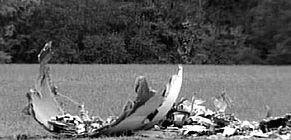
Several Russian media sources are reporting that the data in the black box handed over by Russian specialists to the Lithuanian authorities contains the parameters of a different aircraft - not the Su-27 that crashed. See, for example, this link. The Lithuanians have accused the Russians of disinformation.
Wednesday, September 28, 2005
Conflict in the Air
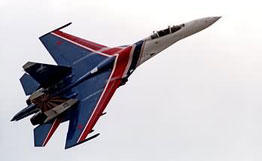
Over at Estland, Jens-Olaf has some acerbic comments on coverage of the crash of the Russia Su-27 fighter in Lithuania, noting that this serious incident, involving an encounter between German fighter planes and a Russian military aircraft, and the apparent deliberate crash of that aircraft on the soil of a NATO member, has received remarkably little attention in the world's media.
Meanwhile, Vladimir Socor, writing in EDM, continues to examine the incident, noting how its ramifications grow more complex with each day that passes.
The original BBC report on the crash and its aftermath is here.
Homeless in the New World
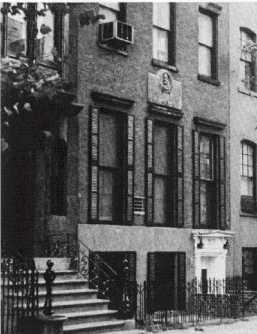
One tends to think of New York City as a place that has always and invariably been a staunch protector and shelterer of the cultural heritage of Europe. In the course of the 20th century so many European writers, artists, thinkers, composers and others active in the arts and sciences found refuge there that a story like that of the Dvorak House - the house that contained the New York home of the great 19th century Czech composer Antonin Dvorak (who for three years towards the end of his life lived and worked in New York and elsewhere in North America) - seems unexpected and somehow cruel.
Steven Richman has done much to propagate and conserve the memory of Dvorak's American years, showing in essays and papers how important Dvorak's legacy was for the development of American music. Dvorak not only supported the cause of African-Anerican and Native American music, but also encouraged the admission of black and female students to the National Conservatory. While his influence on later American music was indirect, he none the less taught the students who would later become the teachers of composers like Aaron Copland, George Gershwin and Duke Ellington. In New York, Dvorak composed some of his best-known works, including the New World Symphony, the Sonatina for Violin and Piano, and the E flat major String Quintet op. 97. Many of these works incorporated elements of indigenous American music.
It's sad to read of what eventually happened to the composer's home. Richman writes, apropos of a Music & Arts CD celebrating Dvorak's life and work:
In 1941, on the 100th anniversary of the composer’s birth, a plaque was placed on the facade of the Dvorak House by Mayor Fiorello La Guardia. Among those who attended the dedication were violinist Fritz Kreisler, conductor Bruno Walter, Czechoslovak Foreign Minister-in-Exile Jan Masaryk, soprano Jarmila Novotná, Dvorak’s secretary J.J Kovarík, and the aforementioned Harry T. Burleigh, who, since his youthful association with Dvorak, had achieved eminence as a composer, pioneering arranger of spirituals (his versions were sung by Enrico Caruso, John McCormack, and Marian Anderson), a noted church and concert baritone (he was soloist at the very same St George’s Church, not missing a performance for 52 years!), founding member of ASCAP, and an editor for Ricordi.(Hat tip: Gayle Dixon)
Half a century later, in February 1991, the facade was designated a landmark on cultural grounds by the Landmarks Preservation Commission. Yet, unfortunately, according to the new city charter, the City Council could overturn the landmarking, and did so under pressure from the [Beth Israel] hospital in June, 1991, ignoring thousands of letters from around the world from such musicians and music lovers as violinist Josef Suk (Dvorak’s great-grandson), Kurt Masur, Yo-Yo Ma, Rudolf Firkusny, Rafael Kubelík, myself, arts patroness Alice Tully, film director Milos Forman, President of Czechoslovakia Vaclav Havel, Mercer Ellington, critic Harold Schonberg, the Archbishop of Prague, the Czechoslovak Minister of Culture, Manhattan Borough President Ruth Messinger, and AIDS activists, all to no avail. The hospital was intransigent, resisting efforts to save even the facade, and the house was summarily destroyed for an AIDS facility in late August-early September, 1991, within days of Dvorak’s 150th Birthday. Fortunately, I myself was out of the country, and was spared the awful reality of its demise. (However, a cellist friend had the foresight to preserve a brick from the site, which he has saved as a keepsake.) A newly elected City Council later renamed the street Dvorak Place, but it was small recompense.
Never Again
Speech by Estonian MEP Tunne Kelam
in the debate on the 25th anniversary of "Solidarnosc" and its message to Europe
Strasbourg, September 26, 2005.
25 years ago in Poland a historic break-through was accomplished when Polish workers and intellectuals succeeded to create a democratic civic alternative to the rigid Communist structures. "Solidarnosc" started the process of East-European nations becoming genuinely free from totalitarian enslavement. "The other lung of the same European homeland" - to quote John Paul II - started to breathe, to convey oxygen and self-respect to tens of millions of East-Europeans. The birth of "Solidarnosc" generated hope that the tragic division of Europe could be overcome.
Poland is a symbol of Europe. It was the first victim of the criminal alliance of Hitler and Stalin who together launched the Second World War. Polish nation experienced the worst of both of these dictatorships. Perhaps it is not a chance that the victory of "Solidarnosc" opened the channel to reunification of Europe.
The most significant achievement of "Solidarnosc" was its ability to unite all sectors of Polish society. This was not possible without a moral revival, without a spiritual dimension, of which the Polish pope became an embodiment, reminder and inspirer.
The important message of "Solidarnosc" victory remains - how to discover both strength and balance in a passionate quest for justice and in the everlasting spiritual values of Europe. Listening to this message could help us to overcome the crisis of European identity about which there was talk today in this hemicycle. Because "Solidarnosc" has already became part of our European identity - it is up to us to fully realize the impact of this transformation.
This week, we have the opportunity and duty to decide about starting to celebrate August 31 as the "Day of Freedom and Solidarity" in Europe. I fully support this initiative. In addition, there is a need for another date to be remembered on the European scale: on August 23 (the anniversary of the 1939 Nazi-Soviet pact) the victims of both Communism and Nazism should be commemorated. Only then the famous appeal "Never again!" would become valid also for the victims of Communism.
(via MAK)
in the debate on the 25th anniversary of "Solidarnosc" and its message to Europe
Strasbourg, September 26, 2005.
25 years ago in Poland a historic break-through was accomplished when Polish workers and intellectuals succeeded to create a democratic civic alternative to the rigid Communist structures. "Solidarnosc" started the process of East-European nations becoming genuinely free from totalitarian enslavement. "The other lung of the same European homeland" - to quote John Paul II - started to breathe, to convey oxygen and self-respect to tens of millions of East-Europeans. The birth of "Solidarnosc" generated hope that the tragic division of Europe could be overcome.
Poland is a symbol of Europe. It was the first victim of the criminal alliance of Hitler and Stalin who together launched the Second World War. Polish nation experienced the worst of both of these dictatorships. Perhaps it is not a chance that the victory of "Solidarnosc" opened the channel to reunification of Europe.
The most significant achievement of "Solidarnosc" was its ability to unite all sectors of Polish society. This was not possible without a moral revival, without a spiritual dimension, of which the Polish pope became an embodiment, reminder and inspirer.
The important message of "Solidarnosc" victory remains - how to discover both strength and balance in a passionate quest for justice and in the everlasting spiritual values of Europe. Listening to this message could help us to overcome the crisis of European identity about which there was talk today in this hemicycle. Because "Solidarnosc" has already became part of our European identity - it is up to us to fully realize the impact of this transformation.
This week, we have the opportunity and duty to decide about starting to celebrate August 31 as the "Day of Freedom and Solidarity" in Europe. I fully support this initiative. In addition, there is a need for another date to be remembered on the European scale: on August 23 (the anniversary of the 1939 Nazi-Soviet pact) the victims of both Communism and Nazism should be commemorated. Only then the famous appeal "Never again!" would become valid also for the victims of Communism.
(via MAK)
Tuesday, September 27, 2005
A New Poland?
Commenting on the left's crushing defeat in Sunday's Polish elections, TOL has some observations and tentative predictions about the likely future development of Polish politics and society. The magazine's editorialists express the opinion that the left-right division in post-communist Polish politics was never very clearly marked, as it seemed to depend less on a division of policies than on one of cultural preferences and outlook. Poland's future, they believe, will continue to be mapped not only by economic concerns but also by such cultural considerations:
...if a “Fourth Republic” or a post-post-communist era is to emerge and survive, it needs to go beyond history and style. For that to happen, these elections suggest it will need several things. One is a strong economy, competently and fairly run. Only a disbelief in the SLD’s economic ability (Poland’s unemployment rate currently runs at about 18 percent) and doubts about its real interests (following a string of corruption scandals) can probably explain why so many former left-wing voters voted for Civic Platform and Law and Justice or simply did not vote (turnout was a dismal 39 percent, down even on the lowly 46 percent recorded in 2001). Put bluntly, a Fourth Republic – if it emerges – means neither left nor right, but better.
But, to last, a Fourth Republic government also requires something else: it somehow needs to bridge Poland’s deep, albeit temporarily hidden cultural cleavage. Secular Poles will surely not mutely watch a social drift to the right and back a “moral revolution” if that revolution means a more intrusive Catholicism. To contain or coopt secular Poles, the liberalism that Civic Platform talks up and the solidarity that Law and Justice invokes will surely have to have a cultural dimension. A Fourth Republic, then, probably needs to be neither Catholic nor non-Catholic, and at least a little “liberal.”
On a day of such an overwhelming victory, Poland’s right can be excused for dreaming dreams. But perhaps only once a government has survived four years and only if it somehow spans the cultural divide can there really be any meaningful talk of a Fourth Republic. Something has ended, nothing wants to begin, perhaps it has already begun, the Polish poet Tadeusz Rozewicz wrote about the early transition days of Poland’s Third Republic. For the time being, it is perhaps enough to say that something has ended, something wants to begin – and perhaps it has already begun.
Brodsky Essays
On a literary note: as I discovered last week, there's a most useful Russian-language collection of essays by Joseph Brodsky here. The essays have in the majority of cases been translated from the English originals to be found in volumes such as Less Than One (1986). Not all the translations are authorised, but there's a very fine authorised translation of "On Tyranny" made by Lev Losev.
Monday, September 26, 2005
The Prague Watchdog Weekly Newsletter, No. 39
------------------------------------------------------------------------------------
THE PRAGUE WATCHDOG WEEKLY NEWSLETTER, No. 39 (September 26, 2005)
------------------------------------------------------------------------------------
1) THE WEEK IN BRIEF (September 19 - 25)
September 17-24 - Alu Alkhanov, the Moscow-backed leader of the Chechen Republic, made an official visit to Jordan and Syria.
September 20 - Three policemen were shot dead in Ingushetia's village of Karabulak.
September 21 - Representatives of several dozen Chechen public organizations established in Bern, Switzerland, the Chechen Civil Society Forum in order to consolidate Chechen civil society and enable Chechen NGOs direct access to European institutions.
September 22 - Chechen lawyer and human rights defender Lida Yusupova was awarded the 2005 Thorolf Rafto Memorial Prize "in recognition of her brave and unrelenting efforts to document human rights violations and act as a spokeswoman for the forgotten victims of the war in Chechnya."
September 22 - Former Chechen guerrilla commander Magomed Khambiyev, who surrendered to the Moscow-backed Chechen authorities under unclear circumstances in March 2004, will take part in the November 27 parliamentary elections, annouced Ramzan Kadyrov, First Vice-Premier of the Moscow-backed Chechen government.
September 23 - Dozens of local and Chechen students of the Kabardino-Balkarian State University clashed in Nalchik, the capital of Kabardino-Balkaria. The Chechen students were supported by Chechen policemen, who used their firearms.
-------------------------------------------------------------------------------------
2) UPCOMING EVENTS
September 29 - Vladikavkaz (North Ossetia / Russia): The North Ossetian parliamentary commission of inquiry into last year's Beslan massacre should familiarize the republic's Parliament with its report on the causes and circumstances of the tragedy.
October 3 - Stockholm (Sweden): Arsen Sakalov, coordinator for the Russian Justice Project (formerly Chechnya Justice Project), will receive the Per Anger Prize for his efforts to bring justice to victims of human rights abuse connected to the conflict in Chechnya.
For more upcoming Chechnya-related events go to http://www.watchdog.cz/calendar.
-------------------------------------------------------------------------------------
3) REGIONAL REPORTING
Museum-preserve in Chechnya under threat of complete destruction (by Lecha Sadayev, September 20)
Relics of Chechnya’s medieval architecture may be completely destroyed, fears Ismail Munayev, head of the Chechen office of the Rosokhrankultura agency.
http://www.watchdog.cz/index.php?show=000000-000002-000002-000045&lang=1
Chechen election campaign picks up speed (by Lecha Sadayev, September 21)
Among those who expressed a desire to fight for parliamentary seats are Salambek Kunchalov, former member of the parliament of independent Chechnya.
http://www.watchdog.cz/index.php?show=000000-000004-000001-000173&lang=1
Two corpses discovered in Grozny district (by Lecha Sadayev, September 22)
According to criminology experts, their deaths were caused by multiple bullet wounds.
http://www.watchdog.cz/index.php?show=000000-000008-000001-000407&lang=1
One policeman killed, another kidnapped in Chechnya (by Lecha Sadayev, September 24)
The body of a Chechen police officer was found in Grozny with gunshot wounds to the head and body.
http://www.watchdog.cz/index.php?show=000000-000005-000004-000114&lang=1
-------------------------------------------------------------------------------------
4) HUMANITARIAN - SURVEY
After 15 years of "depression," people of Kabardino-Balkaria long for change (Caucasus Times, September 26)
Results of a survey conducted in Nalchik by "Caucasus Times"
http://www.watchdog.cz/?show=000000-000002-000001-000161&lang=1
-------------------------------------------------------------------------------------
5) ATTACKS ON HUMAN RIGHTS ACTIVISTS
Monitoring attacks on the rights defenders whose work is connected with the Chechen conflict.
Link: http://www.watchdog.cz/attacks
-------------------------------------------------------------------------------------
6) LATEST ADDITION TO OUR LINKS LIBRARY:
Society for Threatened People (Switzerland) - http://www.gfbv.ch
The Swiss NGO that helped Chechen NGOs to establish the Chechen Civil Society Forum in Bern this past week.
For more Chechnya-related links go to our Links library ( http://www.watchdog.cz/links ), which is being continuously updated.
------------------------------------------------------------------------------------
Prague Watchdog Weekly Newsletter is a publication of Prague Watchdog. If you wish to subscribe (unsubscribe) to it, please send us an e-mail to mail@watchdog.cz. The newsletter is usually sent out on Monday evenings.
Prague Watchdog launched its website in August 2000 and its aim is to collect and disseminate information on the ongoing conflict in Chechnya, focusing on human rights, media coverage, political situation and relief aid.
Visit us at http://www.watchdog.cz. For the Russian version, go to http://www.watchdog.cz/russian.
-------------------------------------------------------------------------------------
THE PRAGUE WATCHDOG WEEKLY NEWSLETTER, No. 39 (September 26, 2005)
------------------------------------------------------------------------------------
1) THE WEEK IN BRIEF (September 19 - 25)
September 17-24 - Alu Alkhanov, the Moscow-backed leader of the Chechen Republic, made an official visit to Jordan and Syria.
September 20 - Three policemen were shot dead in Ingushetia's village of Karabulak.
September 21 - Representatives of several dozen Chechen public organizations established in Bern, Switzerland, the Chechen Civil Society Forum in order to consolidate Chechen civil society and enable Chechen NGOs direct access to European institutions.
September 22 - Chechen lawyer and human rights defender Lida Yusupova was awarded the 2005 Thorolf Rafto Memorial Prize "in recognition of her brave and unrelenting efforts to document human rights violations and act as a spokeswoman for the forgotten victims of the war in Chechnya."
September 22 - Former Chechen guerrilla commander Magomed Khambiyev, who surrendered to the Moscow-backed Chechen authorities under unclear circumstances in March 2004, will take part in the November 27 parliamentary elections, annouced Ramzan Kadyrov, First Vice-Premier of the Moscow-backed Chechen government.
September 23 - Dozens of local and Chechen students of the Kabardino-Balkarian State University clashed in Nalchik, the capital of Kabardino-Balkaria. The Chechen students were supported by Chechen policemen, who used their firearms.
-------------------------------------------------------------------------------------
2) UPCOMING EVENTS
September 29 - Vladikavkaz (North Ossetia / Russia): The North Ossetian parliamentary commission of inquiry into last year's Beslan massacre should familiarize the republic's Parliament with its report on the causes and circumstances of the tragedy.
October 3 - Stockholm (Sweden): Arsen Sakalov, coordinator for the Russian Justice Project (formerly Chechnya Justice Project), will receive the Per Anger Prize for his efforts to bring justice to victims of human rights abuse connected to the conflict in Chechnya.
For more upcoming Chechnya-related events go to http://www.watchdog.cz/calendar.
-------------------------------------------------------------------------------------
3) REGIONAL REPORTING
Museum-preserve in Chechnya under threat of complete destruction (by Lecha Sadayev, September 20)
Relics of Chechnya’s medieval architecture may be completely destroyed, fears Ismail Munayev, head of the Chechen office of the Rosokhrankultura agency.
http://www.watchdog.cz/index.php?show=000000-000002-000002-000045&lang=1
Chechen election campaign picks up speed (by Lecha Sadayev, September 21)
Among those who expressed a desire to fight for parliamentary seats are Salambek Kunchalov, former member of the parliament of independent Chechnya.
http://www.watchdog.cz/index.php?show=000000-000004-000001-000173&lang=1
Two corpses discovered in Grozny district (by Lecha Sadayev, September 22)
According to criminology experts, their deaths were caused by multiple bullet wounds.
http://www.watchdog.cz/index.php?show=000000-000008-000001-000407&lang=1
One policeman killed, another kidnapped in Chechnya (by Lecha Sadayev, September 24)
The body of a Chechen police officer was found in Grozny with gunshot wounds to the head and body.
http://www.watchdog.cz/index.php?show=000000-000005-000004-000114&lang=1
-------------------------------------------------------------------------------------
4) HUMANITARIAN - SURVEY
After 15 years of "depression," people of Kabardino-Balkaria long for change (Caucasus Times, September 26)
Results of a survey conducted in Nalchik by "Caucasus Times"
http://www.watchdog.cz/?show=000000-000002-000001-000161&lang=1
-------------------------------------------------------------------------------------
5) ATTACKS ON HUMAN RIGHTS ACTIVISTS
Monitoring attacks on the rights defenders whose work is connected with the Chechen conflict.
Link: http://www.watchdog.cz/attacks
-------------------------------------------------------------------------------------
6) LATEST ADDITION TO OUR LINKS LIBRARY:
Society for Threatened People (Switzerland) - http://www.gfbv.ch
The Swiss NGO that helped Chechen NGOs to establish the Chechen Civil Society Forum in Bern this past week.
For more Chechnya-related links go to our Links library ( http://www.watchdog.cz/links ), which is being continuously updated.
------------------------------------------------------------------------------------
Prague Watchdog Weekly Newsletter is a publication of Prague Watchdog. If you wish to subscribe (unsubscribe) to it, please send us an e-mail to mail@watchdog.cz. The newsletter is usually sent out on Monday evenings.
Prague Watchdog launched its website in August 2000 and its aim is to collect and disseminate information on the ongoing conflict in Chechnya, focusing on human rights, media coverage, political situation and relief aid.
Visit us at http://www.watchdog.cz. For the Russian version, go to http://www.watchdog.cz/russian.
-------------------------------------------------------------------------------------
The Failure of Pragmatism
The Chechenpress website has published an article by Salamu Talkhigov, entitled Samoubiystvennyi "pragmatizm" zapada (The West's Suicidal Pragmatism), which roundly condemns the world public for backing Russia in Chechnya:
(Via chechnya-sl and BBC Monitoring)
The world public, either by its indifference or its direct support for the actions of the Kremlin in Chechnya, is encouraging the Russian occupation forces to take an even more savage attitude towards the Chechen population. In response to this cruelty, the Chechen people are carrying out actions which the international community describes as "terrorist" and through the mouths of its leaders voices its support for the "fight against terrorism" which Russia is allegedly waging. The result is a vicious circle of hypocrisy, lies and increasing mutual hatred.
Chechnya sacrificed for the sake of cooperation with Russia
Of course, only an incorrigible idealist would today try to appeal to the conscience and morality of eastern or western politicians. In politics conscience and morality serve as a fig leaf which from time to time covers up a brutal and cynical pragmatism. "When it comes to the situation in Chechnya," notes Gabriel Juen of the Brussels office of Amnesty International, "we can see that some influential states, members of the European Union, have decided to take Russia's side for the sake of their own supreme strategic objectives." He could have added that all countries, and not just the countries of the European Union, are behaving in this way.
Each state or community of states has its own "pragmatic" reasons for sacrificing the Chechen people for the sake of cooperation with Russia. France relies on its alliance with Russia to create in the UN Security Council a counterweight to the Anglo-American alliance, which often ignores the political-economic interests of the west European countries. The British leaders, who are being subjected to increasing criticism from the British public for their participation in the war against Iraq, have been forced to justify their close alliance with the USA by the presence of an "international terrorist network", of which Chechnya is, allegedly, one of the cells. And that being the case, [Prime Minister] Tony Blair, in order to preserve his reputation as a "fighter against terrorism", is resolutely supporting [Russian President Vladimir] Putin's "anti-terrorist operation" (albeit artificially protracted) in Chechnya. Germany has a vested interest in Russian oil, gas and the market of investment and consumers of German goods.
The USA, having declared its "anti-terrorist alliance" with Russia, has consolidated its military presence in Central Asia and South Caucasus in two of the most important strategic and energy centres of Eurasia.Iran, which invariably blocks any, even the mildest condemnation of Russian policy in Chechnya adopted by the League of Islamic Countries is clinging with all its might in the hope of Moscow's help in gaining access to nuclear technology.
The Arab regimes are counting on the Kremlin's support in opposing the American-Israeli tandem in the region. China, India, Pakistan, and so on and so forth - all these countries are weighing up the situation on the "political scales" on which the huge nuclear power of Russia clearly outweighs tiny Chechnya.
The so-called "CIS countries" or, more broadly, the countries of post-Soviet space, the majority of whom have scarcely repulsed Russia's military blackmail and the subversive activity of its special services, not only do not support the liberation struggle of the Chechen people, but are themselves, in trying to "placate" the Kremlin, conducting a repressive policy in relation to the Chechen refugees on their territory, submissively and fully aware of their mendacity repeating after Russia's propaganda the rubber stamps of "Chechen terrorism". And all this, despite the fact that in these "young countries" the Chechens have not carried out any "terrorist acts" or serious crimes whatsoever.
Humanitarian principles or support for Russia
As we can see, the reason for the world community's support for Moscow in the Russian-Chechen confrontation has nothing to do with "Chechen terrorism"; on the contrary, this notorious "Chechen terrorism" is a means of escape which enables the democratic countries to violate those very principles, to protect which, allegedly, all these structures were established: the UN, OSCE, NATO, the Parliamentary Assembly of the Council of Europe, EU and so on and so forth. And one can easily understand that faint touch of relief, with which the New York Times newspaper states: "At the same time, the restrictions imposed by Russia on the work of foreign journalists in Chechnya have led to a reduction in the amount of video footage shown in Europe depicting the suffering of the Chechen people."
But, paradoxical as it may sound, it is precisely those "pragmatic considerations", for the sake of which the West turns a blind eye to the methodical annihilation of the Chechen people, declaring it to be "Russia's internal affair", which already make the Chechen tragedy one of the world's most acute international problems.
In the first place, given the whole scarcity of information reaching the West from Chechnya, Western politicians are invariably faced with a dilemma: humanitarian principles or support for Russia. Chechnya has become the touchstone on which the whole reputation of Western civilization is subjected to a fierce examination, and it will not succeed in putting off the ultimate verdict year after year.
Secondly, it is precisely because of the monstrous terror unleashed by the Kremlin against the Chechen people that the hopes for Russia's integral incorporation into the system of Western democracies are becoming more and more illusory. There cannot be a democratic whole, if part of it is anti-democratic and totalitarian. Totalitarianism is so called precisely because it is all-embracing in the social and political aspects.
The genocide of the Chechens, the torture, the bloody activities of the "death squadrons", the extra-judicial executions and the system of hostage-taking and collective responsibility cannot be legalized by means of democratic laws. What is more, these crimes cannot be committed if there is a free and democratic press in the country. Therefore, the crimes of the Russian military in Chechnya inevitably introduce into domestic political life the true elements of totalitarianism. And totalitarianism, in turn, can be based only on a corresponding ideology. Such ideologies can be of only three types: "class", nationalistic and radically religious. For historical reasons (the discrediting of the ideas of communism and the weak religious nature of Russian society), totalitarian trends in the evolution of the Kremlin regime can only be backed up by a nationalist ideology, of which the state-owned church and marginal communist cells have become servants. It is precisely nationalistic ideology, as all independent political scientific research both in the West and in Russia itself proves, that has today become the dominating world outlook of Russian society.
And third and finally, nationalistic ideology, which is the natural outcome of the long years of the war in Chechnya, cannot for long be preserved within the framework of the Chechenophobia established by the Kremlin. Nationalism always generalizes its "enemies", forms them up, as Hitler recommended, "into one line", so as not to complicate propaganda and to concentrate the hatred of the "popular masses" in one direction.
West driving Russia into "bloody swamp of totalitarianism"
Who will be Russia's "enemy" after Chechnya? The answer to this question is obvious: the Islamic peoples, since the Chechens are Muslims, and the West, since it is precisely the West which will absorb the spaces which for a long time were Russia's imperial possessions. But the best "fuel" for nationalism is, as we know, hurt pride and thirst for revenge. Thus, if the East (the "Islamic world") and the West condemn the Chechens to destruction, trying to justify this genocide by "pragmatism", then one has to accept that this "pragmatism" amounts to nurturing and setting a
fascist monster in the shape of Russia armed with a nuclear bludgeon against oneself.
Nationalism, unlike the West's "rational democracy", is an emotional ideology, which does not recognize "pragmatic" restrictions. This means that a nationalistically minded society easily starts a war if even a "pragmatic calculation" shows the suicidal nature of such a war. Germany and Japan in World War II proved this formula by their own fate. Therefore, if the lack of morality of Western politicians and leaders in relation to the Chechen tragedy is absolutely beyond question, then it is time to ask the question: are these politicians and leaders so pragmatic from the point of view of really following their interests? After all, by gaining geo-strategic and economic benefit in supporting the carnage in Chechnya, the West by this support is driving Russia more and more into a bloody swamp of totalitarianism in its nationalistic version. Consequently, Western politicians are thinking in terms of tactical advantages, sacrificing for the sake of these the strategic future of democratic freedoms - the very foundations of Western civilization. And in politics this is called not "pragmatism", but dilettantism, shortsightedness and failure.
Quixote at 400
Leopoldo writes that "Spain is all frantic with the 400 years. Lots of new editions - at very reasonable prices - of Don Quixote with excellent footnotes and commentaries," and cites a recent IHT article by C.J. Moore about the author and the anniversary:
Here is the other face of the modern world as we know it. Following the new humanism of Lazarillo de Tormes, Cervantes brings up the complex issues arising from self-consciousness, the dimension of irony, even self-deprecation. In the person of Don Quixote himself, this self-consciousness shows as melancholy, the mood in which the ingenioso hidalgo approaches his end.
Yet Cervantes rescues us from a potential and terrible pit of cynicism through finding his characters' redemption as individuals. Neither Don Quixote nor Sancho Panza is truly mad, but they are human, noble, absurd, caring, confused, often mistaken, like ourselves, in a real world governed by the facts of life. This year we celebrate the 400th anniversary of that literary redemption of humanity.
Rogue Intelligence
Retired intelligence officers often make a minor career out of giving newspaper interviews, so it's no surprise to find ex-KGB general Leonid Shebarshin expounding his views on such topics as September 11, rogue agents, and Al Qaeda in the pages of the Russian periodical Argumenty i fakty. What does seem mildly surprising (though not if one has read previous statements by the gentleman) in view of the much-touted "U.S.-Russian co-operation in the fight against terror" is the eagerness General Shebarshin shows to implicate U.S. intelligence forces in the planning and execution of 9/11:
The interview concludes with some philosophical musing about what makes people commit treason - is it money, or antagonism to the established order, or both?
Of course, one can't exclude the very tiny possibility that Shebarshin's latest outing may just be one more routine attempt to discredit ex-KGB intelligence officers (Gordievsky, Litvinenko and others) who talk too openly to the press...
[Shebarshin] I believe the Al-Qaeda terrorist acts in New York and Washington on 11 September 2001 were a provocation by American special services. Moreover on such a colossal scale that it is mind-boggling. Can one believe, for example, that Bin-Laden, hiding somewhere in Afghan mountains and without electronic means of communication, organized the simultaneous seizure of five aircraft? Yes, you try and organize a meeting of 10 people in Moscow, without using the telephone.There's a lot more in this vein. In the second part of the interview, Shebarshin changes tack a bit, and starts pooh-poohing the idea, for example, that the CIA was involved in the break-up of the Soviet Union. He also talks a bit about "rogue agents", and refers to Noriega as an example. He sees Bin Laden as another such rogue agent, and considers that "had the Americans wanted, they would have arrested him very quickly. But Bin Laden and Al Qaida he is in charge of are a myth created and whipped up by the USA in order to frighten the world with the threat of terrorism. Although both Bin Laden and Al Qaida may exist in reality, the scale of their activities is microscopic."
The provocation of 11 September was so crude that, at one of the airports, "hot on the trail" the FBI allegedly found a parked car in which there were Arab passports, the Koran and manuals for flying a Boeing, written in Arabic . The whole absurdity was that, firstly, there are no manuals in any other language but English, secondly, can one fly a Boeing after just reading the manuals and, thirdly, how can one board an aircraft without a passport?
It seems, having realized the whole stupidity of its "find", the USA never mentioned it again. Only one thing is clear: we shall never know the whole truth about 11 September.
The USA stood to gain from 11 September
[Question] Who needed such an enormous provocation?
[Shebarshin] In order to find who is behind it, one can use the method used in Ancient Rome and ask oneself a question: who stands to gain from it? And the belligerent group of neoconservatives in the US leadership stood to gain from 11 September. They used it as an excuse for occupying Afghanistan and searching for terrorist gangs there that Afghanistan never had. But Afghanistan is a bridgehead for establishing control over Central Asia with its oil and gas deposits and the routes of their transportation.
Besides, Afghanistan and Central Asian countries are a bridgehead for a possible war with China.
Furthermore, on an excuse of fighting terrorism, the USA occupied Iraq and toppled Saddam Hussein, although it is known that Saddam could not stand terrorists and did not let them into Iraq. Thus, "thanks" to 11 September, the USA established control over the world's largest oil deposits located in Iraq. In addition, Pentagon, whose budget reached astronomical figures, and agencies dealing with domestic security gained as a result. That was the price the 3,000 people, who were killed in the terrorist acts of 11 September 2001, had to pay.
The interview concludes with some philosophical musing about what makes people commit treason - is it money, or antagonism to the established order, or both?
If a person is in conflict with his management or in conflict with his environment, if a person cannot express himself, this is where we, intelligence employees, step in. One can talk to us like to a doctor about anything. We shall always understand, support and... [newspaper parenthesis] recruit.It's interesting to note that there are currently 345 comments on this article at the AiF website.
Of course, one can't exclude the very tiny possibility that Shebarshin's latest outing may just be one more routine attempt to discredit ex-KGB intelligence officers (Gordievsky, Litvinenko and others) who talk too openly to the press...
Sunday, September 25, 2005
Starvation

I stand in the backyard of the Shali food factory among the starving crowd of people who are struggling for the cherished containers, and recall Putin's well groomed assistant Sergei Yastrzhembsky announcing that a humanitarian disaster does not exist.
Aishat Junaidova, the head of the Shali regional migration services (there are almost sixty thousand refugees registered here) says:
"Call Moscow's attention to the fact that this government handout is not enough to live on. Many of our refugees are for all intents and purposes condemned to starvation."
Of course, I promise to tell them this. But I promise very quietly. I don't even actually promise, but just nod and whisper something. And I don't explain anything either. It's hard to tell the condemned that, first, the Kremlin doesn't give a damn about my report and, second, the situation in Moscow regarding the war in the Caucasus is very complicated, and no one knows anything about it, because they don't want to. Third, even close friends don't believe my stories after my trips to Chechnya, and I have stopped explaining anything, and just sit silently when I'm invited anywhere. And finally, not even my newspaper, which opposes the current party line, is eager to print my reports from Chechnya. And if they do, they sometimes cut out the toughest parts, not wanting to shock the public. There are fierce arguments within the editorial staff over this issue, and it is more difficult than ever for me to publish the whole truth.
But I am silent about this, simply because for the people around me, who have suffered so much, I am the first civilian from there, from the other, nonwar world. No journalists come here. There's no one else they can tell what's going on.
To tell me about the starvation, Aishat has to shout over the howls of some women who are out of their minds with hunger and are cursing and ripping a three-day ration out of each other's hands. I also see some people in the crowd spitting at others. They are tubercular. Out of eternal bitterness toward the world, they're trying to infect those who are not yet coughing up blood. Or perhaps they're hoping that the healthy ones will jump aside out of fear and let them through to the boxes of canned goods.
A cordon of soldiers surrounds the trucks with G-4. With their automatic weapons tilted forward, they try to establish some kind of order among the exhausted people. But they have a strange expression on their faces too. Not of sympathy, but not of dumb cruelty either. It's more like a stupor from the kind of war they have to fight, against a crowd of hungry people. Later, month after month, I would see this many more times; most of the soldiers' faces in the second Chechen war would be just like these.
- Anna Politkovskaya, Chechnya: Dispatches from a Small Corner of Hell, 2003
Subscribe to:
Posts (Atom)