Monday, October 24, 2005
Helsinki
I'm in Helsinki, Finland, this week, for the book fair. I'll aim to write about it later, on my return.


Friday, October 21, 2005
Half a Bridge
In what to many observers seemed a rather half-hearted intervention, Swiss parliamentarian Andreas Gross, who has served since June 2003 as rapporteur on Chechnya for the Parliamentary Assembly of the Council of Europe (PACE), gave an interview to RFE/RL's North Caucasus Service on October 19. His intention is evidently to appear "even-handed" - to the extent of "expressing cautious optimism that Russian authorities have permitted a faction 'that does not share their viewpoint' and which aspires to 'build a bridge' between the warring sides in Chechnya to participate in the 27 November elections to a new Chechen Parliament." He also took care not to ruffle the sensibilities of the Russian federal government, explaining his equivocal approach by saying that "we always have to keep the Russians on board, because you can't find a solution to the conflict without them."
None the less, some of Gross's remarks are worthy of attention. He is at least straightforwardly condemnatory about the present intolerable situation in Chechnya, and the Russian government's attempts to cover it up:
None the less, some of Gross's remarks are worthy of attention. He is at least straightforwardly condemnatory about the present intolerable situation in Chechnya, and the Russian government's attempts to cover it up:
Gross was dismissive of official Russian claims that the situation in Chechnya is reverting to "normal." "I think the situation is not normal and is far away from normalization," he said, pointing out that "we don't have a free, democratic society" in Chechnya, but one that is "broken," and that the population is "fed up with all kinds of violence."One might have expected him to go further, and condemn the widespread,long-term violence that is directed by federal and federal-backed forces against Chechnya's civilian population, violence ordered and encouraged by the Kremlin. But "even-handedness" won the day, obviously.
He said the danger of repeat violence will persist as long as there is no effort to reach a compromise between the interests of the various factions in the conflict. In that context, Gross noted that an opposition party that does not share the views of the Russian authorities and which aspires to "build a bridge" between the warring sides (by which he probably meant the Chechen chapter of the Union of Rightist Forces) has been permitted to register candidates in the parliamentary elections scheduled for 27 November. Gross admitted that "they are very weak and it's a very fragile attempt," but "it is still an attempt," and for that reason "I have not lost all hope," even though the situation is "extremely difficult." At the same time, he said he is particularly concerned that "the Russian authorities...are relying too heavily on forces who are closer to [being] criminals than democrats." Gross made it clear later in the interview that he meant the so-called presidential guard headed by Chechen First Deputy Prime Minister Ramzan Kadyrov.
Gross said that he expressed these concerns during a meeting three weeks ago in Moscow with Kozak, and that even though "many in Russia are aware of the problem.... I have to say I sometimes have the impression that the Russian authorities are not aware that they have to do more, they have to be more engaged in a civil way...and that they themselves have to do things which today they delegate" to groups that have forfeited the support and trust of the population -- a clear allusion to the pro-Moscow Chechen leadership
Felgenhauer on the Caucasus
More from Pavel Felgenhauer (Radio Netherlands audio link) about the events in Nalchik, and their wider significance:
"What many foreigners do not understand is that this is also an ethnic conflict between the Kabardins and the Balkars. These are the two main ethnic groups of the republic of two nations created by Joseph Stalin. The bigger part is the Kabardins, who are actually Cherkesy, and the smaller is the Balkars, who are more or less the same nation as the Karachayats from the neighbouring republic of Karachay-Cherkessia. So,the Karachayats, who are being suppressed ethnically and religiously,[…] were mostly supportive of this rebel movement, so this was more or less an uprising by the Balkars."
"It also had a religious element to it, but mostly it was an uprising in response to brutal repression by the ruling Karachayat ethnic group. In some respects it resembles what happened in Rwanda with the Hutus and the Tutsis. That's why they deliberately attacked the local police and security forces. The local residents said that a lot more of the security forces were killed than has been officially announced."
-----
When asked why Moscow would want to present such a simplified and, perhaps, untruthful view of why violence broke out in Nalchik, Mr Felgenhauer has the following to say:
"Right now in the Caucasus, the Russian authorities are using in the classic imperial tactic of divide and rule. They have - from Moscow - picked some kinds of groupings, or tribes, that they are going to support, and these will put down the others. Right now, we have a newly appointed [by Moscow] president of this republic, Kabardino Balkaria."
"But, from the very beginning, when this new policy was formulated by Putin after the Beslan school siege, specialists have said that this is going to be a total disaster in the Caucasus, because tribal communities will not accept those people who are imposed on them from Moscow."
"At the same time, these people - though not having much authority within their own population - have a lot of corrupt capabilities to lobby inside Moscow. And they are preventing the very energetic Kremlin viceroy - Dimitri Kozak - from doing anything positive. Some of his activities are rather positive, but these are being torpedoed by these Kremlin-appointed people, who have their own very powerful lobbies in Moscow - corrupt connections."
"So, Russian policy is totally misguided in the Caucasus. It's obviously leading to what they call in Moscow an 'all-Caucasian fire', because the conflict that began in Chechnya in the beginning of the 1990s has now spread to Dagestan, Ingushetia […] to Kabardino-Balkaria, to Ossetia. It has spread out, and Moscow policies were actually so effective that now we have everyone as our enemy - even the Ossetians and the Georgians, who are Christian tribes of the Caucasus, who are traditional supporters of the Russians against the Muslims, are also our enemies."
"Moscow is isolated, its policy is misguided. Putin, after the events in Nalchik, said that this was a ruthless operation, it's wonderful and we're going to do other ruthless operations in the future. This ruthlessness, this heavy-handedness, is actually just fanning the flames in the Caucasus."
Khodorkovsky Sent To Remote Siberian Camp

RFE/RL reports that Mikhail Khodorkovsky has been sent to serve his sentence in Chita Oblast, in eastern Siberia. The camp lies near the Chinese border, some 5,000 kilometers from his native Moscow:
In order to visit him, his relatives and lawyers will now have to take a six-hour flight from the Russian capital, followed by a seven-hour car ride.Lev Ponomarev, director of the All-Russian Movement For Human Rights, says sending Khodorkovsky to Siberia is a violation of Russian law, which stipulates that inmates must serve their sentences close to their homes:
His transfer to a remote prison, Ponomarev told RFE/RL, is the latest move in the Kremlin's bid to punish him for his political ambitions.
"It's revenge on the part of the authorities, of the Kremlin, and of [Russian President Vladimir] Putin personally," Ponomarev said. "It violates Russian law because relatives cannot visit them [Khodorkovskii and fellow defendant Platon Lebedev]. Our country is headed by small-minded, vindictive people. Mere revenge -- that's the only motive."
The Khodorkovskii case has raised serious concern in the West about Putin's commitment to democratic values.
Ponomarev says he hopes Western countries will not balk at denouncing Khodorkovskii's transfer to a Siberian prison.
"I think leaders of Western countries have a duty to react to this," he said. "I am very much hoping that the Western world will react to this, will force our leaders to adhere to their own laws in this particular case."
Jihad Watch
Publius Pundit has a post about Mark Steyn's latest foray into Russia-watching in an article in the UK's Spectator (free reg required). The article, which begins with a comparison of the events in Nalchik on October 13 to the massacre of Armenians by "Tartar horsemen" in 1905 and talks of how "last week Islamists killed a big bunch of people in Nalchik, the capital of the hitherto more-or-less safe-ish Russian republic of Kabardino-Balkaria", isn't exactly reassuring with regard to Steyn's grasp of the situation in the North Caucasus. His apparent intent is to write about what he sees as the disintegration of Russia under its present leadership (the piece is headed "The Death of Mother Russia"). But for all his readiness to dismiss Russia as "a vacuum wrapped in a nullity inside an abyss", he seems conspicuously willing to believe the versions of reality that are served up by the government he professes to despise.
Thursday, October 20, 2005
SSEES At 90
London's School of Slavonic and East European Studies celebrated its 90th anniversary yesterday.
Quagmire
EDM analyst Andrei Smirnov on how Kabardino-Balkaria faces a long-term guerrilla war:
Russian authorities are hailing their handling of the October 13 rebel attack on Nalchik, the capital of the Caucasian republic of Kabardino-Balkaria, as a "great success." Russian Minister of Internal Affairs Rashid Nurgaliev called the attack an "act of desperation" on the part of the insurgents. "The bandit underground had to step up their activity because we had been following close on their heels" (ORT-TV, October 17).
Russian officials have repeatedly stressed that the rebels failed to seize any of the military and police facilities they attacked. According to the official account, the rebels lost 91 gunmen and did not capture any weapons from the police or army. Moreover, the official version insists that few militants escaped because most were killed or arrested inside Nalchik.
On October 15 Russian President Vladimir Putin met with top security officials, including Nurgaliev, Minister of Defense Sergei Ivanov, Valentin Korabelnikov, chief of Military Intelligence, and Alexander Bragin, deputy chief of the Federal Security Service (FSB) (NTV, October 15). Putin said, "Our actions should be adequate to all threats of the bandits to our country." He promised "to act with the same toughness and success as this time" in future (RIA-Novosti, October 15).
Despite these victorious statements, the meeting was held in Putin's office behind closed doors, suggesting that the authorities are concealing something from the public. Clearly Putin is not satisfied with the FSB, since he invited the deputy chief -- not the director -- of Russian counter-intelligence to the Kremlin. Many observers believe that FSB Chief Nikolai Patrushev is close to resigning.
Even the official, censored information coming from Nalchik contradicts the Kremlin's version of events. According to eyewitnesses, the rebels attacked more than 15 police and military facilities in Nalchik and -- contrary to official claims -- seized at least two facilities: the Main Corrections Department and Police Precinct #3. Nalchik's Police Precinct #2 and the Anti-Terrorist Center were completely destroyed during the attack. In addition, attackers occupied parts of the Ministry of Internal Affairs and local FSB headquarters.
Internal Affairs Minister Nurgaliev told a special session of the State Duma convened to discuss events in Nalchik that the militants had arrived in the city in 19 cars and minibuses (gazeta.ru, October 19). But the official report issued on the morning of October 13 said that the rebels were seizing cars to escape from the city. Many suspect that the extra vehicles were needed to haul away captured weapons, an explanation strongly denied by officials.
There was also no law-enforcement coordination during the first hours of fighting. Nobody knew what was happening. Local officials told journalists they had no information, admitting, "There is absolute chaos in Nalchik." Policemen were so terrified that they jumped from windows to escape the assault (Moskovsky komsomolets, October 15).
The militants insist that most of their fighters eluded capture and escaped from the city. According to a statement by Chechen warlord Shamil Basaev, who claimed to have managed the attack, most of the gunmen had left the city by 11:15 am (Kavkazcenter, October 16). Regnum reports that at least 50 militants went southward through Khasanya village. Kavkazsky Uzel reported that some rebels left Nalchik the day after the attack, when officials claimed to have 50 checkpoints in place. Marziat Kholaeva, a resident of Khasanya, reported seeing five armed men passing through the village to the mountains on October 14. They shot one of their prisoners, a policeman, and abandoned another wounded hostage (Kavkazsky Uzel, October 15).
There are also doubts about the official casualty figures. Many believe that the 91 deaths quoted by the Kremlin include many civilians killed in the crossfire. Fatima Tlisova, a local Associated Press correspondent, reports that a list has been compiled of 40 missing persons. On October 13, all the people named on the list left their homes but never returned. Their relatives, as well as the relatives of the dead rebels, gather every day near the city's morgue to find out more about the fate of their loved ones. Russian law states that bodies of terrorists are not to be returned to their families, and some in the crowd said that their relatives had been deliberately classified as participants in the militant raid to prevent the release of their corpse.
Basaev claims that 217 rebels participated in the attack, with about 41 insurgents killed. The militants themselves came from Kabardino-Balkaria and neighboring regions like Karachaevo-Cherkessia, North Ossetia, Ingushetia, and Krasnodar.
With few causalities, the rebels will be able to continue their attacks in Kabardino-Balkaria. In fact, guerilla warfare has already started in the republic. On October 17, Camagat, the website of the rebels from Kabardino-Balkaria and Karachaevo-Cherkessia, reported fierce fighting between insurgents and federal troops near Kenzhe village, in the outskirts of Nalchik. The next day the authorities admitted that a special operation was underway near Kenzhe to search for fighters who use the settlement as a base (Interfax, October 18). Kavkazsky Uzel reported that gunmen attacked the police special-task unit (OMON) headquarters in Iskozh district of Nalchik on October 17. The same day NTV said that there was an attack on a police checkpoint manned by troops from Rostov-on-Don, a detachment sent to Nalchik to reinforce local troops (NTV, October 18). On October 18, Camagat again reported clashes in Nalchik and Baksan, a village in the north of the republic. The website also said that policemen had taken several female hostages in the Balkar village of Bilim in Elbrus mountain district. They want to exchange the women for the husbands.
It is difficult to say whether a long-term guerilla war by Kabardinian insurgents will undermine the authorities, but the operation seems to be quit real. Putin may soon find himself in another quagmire like the ongoing one in Chechnya.
Chechen Diary
From Prima:
CHECHNYA. (Information from Organisation of Russian-Chechen Friendship & Union of Non-Governmental Organisations) In Chechnya there is no end to disappearances, killings, “special operations”, “addressed cleansing operations”, and arbitrary behaviour by Russian forces, the Chechen militia, as well as other unidentified groups.
6 October
Grozny region. During the night, a member of the interior ministry force was killed by gunmen in the village of Vinogradnoye. Initial reports say he was shot at his front door.
7 October
Achkoi-Martan region. In Kotar-Yurt, two brothers were taken by one of the state armed groups. The names were withheld on request of the two men’s relatives. During the day the older of the two brothers was released after having been tortured. One of his hands had been burned to the bone, and several fingers had been cut off. The fate of the second brother remains unknown.
Urus-Martan region. In Roshni-Chu, masked men in camouflage fatigues took a youth known only as Hamzat.
Shali region. Near the village of Mesker-Yurt, three corpses were discovered.
Grozny region. On the outskirts of the settlement Chechen-Aul, villagers discovered the body of an unknown man, with gunshot wounds to the head.
Vedeno region. From 12-15 October, the village of Azhi-Aul was subjected to bombardment from federal forces.
Grozny region. On the edge of Stariye Atagi, the body of a woman was discovered. Eyewitness accounts said the body showed signs of torture.
Vedeno region. In Vedeno, federal forces in combination with local armed forces carried out a so-called passport check, affecting all citizens and blocking all ways in and out of the town.
Grozny region. In Tolstoi-Yurt, armed forces killed a local inhabitant, age 22-25, near the Mosque. According to some information, the forces had been trying to arrest him, at which point the young man drew a pistol and opened fire.
Grozny. In the Oktyabr district, federal forces carried out a so-called Passport Control, checking documents and stopping all traffic.
8 October
Urus-Martan region. A local woman, Gulya Bairmurzaeva, was shot dead by unknown gunmen. A criminal investigation has been opened, evidence being collected.
Vedeno region. From 4 to 6 a.m. a mountain range near Elistanzhi was subjected to bombardment with heavy weapons by federal forces. This has been a regular occurrence since the start of the month.
Grozny region. During the early hours two unidentified masked men entered the Hozhiev family home in Tolstoi-Yurt. They opened fire on Amzhi Hozhiev (33), seriously wounding him.
Achkoi-Martan region. A zachistka is underway in the villages of Samashki and Novy Sharoi. Local armed forces are carrying it out. All entrances to the villages are being blocked by tanks.
Shali region. Local police are conducting investigations into the kidnapping and subsequent murder of Aslambek Gazimagomaev, resident of the village of Mesker-Yurt. The man’s body, carrying signs of violent death, was found on the outskirts of the village on 5 October. Two days before, according to old routine, he was taken by masked men in unmarked vehicles.
Achkoi-Martan region. Samashki resident Emin Ayziev, detained by undetermined armed forces 4 months ago, has been released. He was ejected from a car not far from his home. Weak and in poor shape, the man was not able to get home without assistance. He said he “does not know” where he was and did not remember who he had been with. His relatives then took him away from the village.
Shali region. Residents of Avtury speak of repeated systematic morning bombardment of the outskirts of their village, a daily event for the last two weeks. The operations include howitzers and originate from Russian positions near the regional centre of Shali. Firing lasts around 40 minutes, between 4 and 6 a.m. Although the shelling is concentrated on the forests between Serzhen-Yurt and Avtury, the residents are nonetheless compelled to hide in their cellars. Villagers are thus subjected to stress, with heart attacks having been the result on occasions.
9 October
Grozny region. Two men, Isa Horsaev and Usman Bakaev, were killed in the settlement of Prigorodnoye after stepping on a mine in a deserted holding.
Shali region. On the outskirts of Mesker-Yurt, the body of a young man carrying signs of torture was found in a wood.
Grozny. Pro-Moscow Chechen militia shot two residents of Samashki in the Grozny area of Staropromyslovskoye. The bodies of the men, Bekhan Katsaev and Ruslan Nasilov, were taken to the Russian military base at Khankala, outside Grozny. According to some information, Nasipov was the head of the Samashki Dzhamaat (rebel group).
Kurchaloi region. A 50-year-old man, Isa Dzhabihadhiev, was taken form his home by armed men. His son (16) was beaten up.
10 October
Shali region. Armed men took three inhabitants from Noviye Atagi, named as Edilov, Idrisov and Terluev. While Terluev was released that day, the fate of the other two remains unknown.
Shelkovsky region. A boy aged 7 was taken from the village of Grebenskaya. According to eyewitnesses, the incident happened at the entrance to the local middle school. The kidnappers forced the boy into a car and drove off.
Grozny. Members of the Oktyabr local police and forces from the “anti-terrorist centre” killed two men during an operation at a crossroads. The men, Bekhan Katsaev (20) and Ruslan Nasilov (29), were said to be “active members of illegal armed formations”, and were “on the federal list for serious crimes committed in the Chechen Republic”. Nasilov was the “Emir of Achkoi-Martan region” and Katsaev his personal bodyguard. They were suspects in the murder of two policemen in March 2004; attacks on polling stations in 2003; and placing land mines on roads.
Shali region. On the edge of Kotar-Yurt, a body of a man was found with signs of an unnatural death. The body could not be identified.
Grozny region. The bodies of a man and a woman carrying signs of torture were found on the outskirts of Stariye Atagi.
Grozny region. In Prigorodnoye a so-called zachistka was carried out by federal forces. A man, Kharon Gatsaev (33), was detained. His whereabouts are unknown.
Grozny region. Two residents were taken from the village of Alkhan-Kala.
Vedeno region. At around 2 a.m. armed men with masks entered a house in Elistanzhi. The owner, Kameta Gakaeva, was questioned about the whereabouts of her son, searched her house, threatened her with punishment, and on leaving vowed to return. Gakaeva told a correspondent she did not know the reason for the non-authorised search. Neighbours said some of her relatives earlier took part in fighting for the Chechen Resistance.
11 October
Grozny region. In the early hours of 11 October members of an unidentified armed force detained an inhabitant of Molsovkhoz 15, Aslanbek Sharipov. The man was taken away in an unmarked vehicle. His whereabouts are unknown.
Grozny region. In Stariye Atagi the burial of native inhabitant Madina Yunusova took place. The young woman had been working at the Oktyabr regional administration in Grozny. Relatives said she had been kidnapped together with a man who had been taking her home. Their bodies were found on 10 October with gunshot wounds to the head.
Ingushetia. On the federal road between Rostov on Don and Baku, a powerful explosion took place near Gamurzievo as a military column was passing. A member of a mobile Interior Ministry unit of Ingushetia was lightly injured. The bomb, with an estimated capacity of 2 kilos of TNT, contained bolts. A criminal investigation has been opened into the attack, the third at that place in a month, said to be on account of the greenery close to the road there.
Vedeno region. Two local schoolboys were released from Vedeno Interior Ministry detention. They had been detained on 9 October during identity checks by local and federal forces. The boys, Abdulkhadzhiev and Bibiev, residents of Elistanzhi, said they had been “treated correctly”, but gave no other details of their detention.
Grozny. Unknown men wearing masks and driving a Zhiguli car carried out an attack on hospital workers. According to eyewitnesses, the car carrying two hospital employees and also a director of studies from a local middle school, was fired at by men using pistols. One of the passengers was lightly injured. The attackers escaped with money from the injured passenger, a woman.
Grozny region. On the outskirts of Stariye Atagi the body of a woman was found in woodland. According to some information, she had been taken by unidentified masked men the day before, and her body showed signs of having been tortured.
Achkoi-Martan region. A man in the village of Katyr-Yurt was beaten by members of an armed force. The badly beaten 50-year-old Shahruddin Izaripov was taken to hospital, where his condition was described as “grave”.
Grozny region. The Mullah of Chechen-Aul, Arbi Musaev (50), was kidnapped.
12 October
Urus-Martan region. In Alkhan-Yurt, an unidentified armed force detained two local inhabitants. A so-called zachistka was being carried out. All entrances into the village were blocked in the early hours of the morning.
Grozny. Two members of Chechen security organs were brought to the city’s hospital no. 9 with multiple gunshot wounds. The condition of the two men was said to be grave.
Urus-Martan region. A body of a man was found on the outskirts of the village Gehi. Some reports said the man was a native of the village who had been taken from his home on 10 October together with his sister.
13 October
Shali region. During a so-called zachistka in Noviye Atagi, Russian forces took three men: Aslan Manaev, Saipa Elbuznukaev, and Magomed Kazimagomadov.
Sunzha region. In the early hours, a policeman was killed in Sernovodsk. Senior lieutenant Lom-Ali Hildiharoev, 36, was shot through the window of his house.
Shali region. Armed forces took two teenagers from Noviye Atagi. Locals say they are two brothers called Yamsaev. Reasons for their arrest and their whereabouts are unknown.
Grozny region. Russian forces bombarded the surroundings of Chechen-Aul.
Achkoi-Martan region. The village of Oreholo was subjected to a so-called zachistka. Inhabitants’ homes were entered and documents checked.
Achkoi-Martan region. In Samashki armed men took a man, named as Sharipov, aged 19 or 20.
Grozny. Pro-Moscow Chechen forces killed the driver of a car driving past. According to eyewitnesses, the incident, which occurred along the central boulevard in the city’s Staropromyslovsky region, happened because the driver did not stop to let a column of the Chechen forces pass. Therefore the armed men stopped the car, forced the driver out, and shot him in front of passers-by.
14 October
Achkoi-Martan region. In the early hours, Russian armed forces subjected the area around Samashki to a massive bombardment. Fire came from one of the bases nearby. According to an inhabitant, shells flew over the village all night and exploded nearby. The bombardment started in the late evening and continued until dawn.
Grozny and Shali regions. The areas of Stariye Atagi and Noviye Atagi were subjected to bombardments from Russian army positions. According to a local inhabitant, the intensity of the shelling reminded of the events of spring 2000. towards 6 a.m. the bombardments became more intensive. Local inhabitants link the heavy shelling in the republic to the events in the republic of Kabardino-Balkaria, where rebels attacked state institutions in the capital Nalchik.
Sunzha region. In Sernovodsk a check of documents is underway. Local residents report the armed forces are checking documents and stopping cars.
CHECHNYA. (Information from Organisation of Russian-Chechen Friendship & Union of Non-Governmental Organisations) In Chechnya there is no end to disappearances, killings, “special operations”, “addressed cleansing operations”, and arbitrary behaviour by Russian forces, the Chechen militia, as well as other unidentified groups.
6 October
Grozny region. During the night, a member of the interior ministry force was killed by gunmen in the village of Vinogradnoye. Initial reports say he was shot at his front door.
7 October
Achkoi-Martan region. In Kotar-Yurt, two brothers were taken by one of the state armed groups. The names were withheld on request of the two men’s relatives. During the day the older of the two brothers was released after having been tortured. One of his hands had been burned to the bone, and several fingers had been cut off. The fate of the second brother remains unknown.
Urus-Martan region. In Roshni-Chu, masked men in camouflage fatigues took a youth known only as Hamzat.
Shali region. Near the village of Mesker-Yurt, three corpses were discovered.
Grozny region. On the outskirts of the settlement Chechen-Aul, villagers discovered the body of an unknown man, with gunshot wounds to the head.
Vedeno region. From 12-15 October, the village of Azhi-Aul was subjected to bombardment from federal forces.
Grozny region. On the edge of Stariye Atagi, the body of a woman was discovered. Eyewitness accounts said the body showed signs of torture.
Vedeno region. In Vedeno, federal forces in combination with local armed forces carried out a so-called passport check, affecting all citizens and blocking all ways in and out of the town.
Grozny region. In Tolstoi-Yurt, armed forces killed a local inhabitant, age 22-25, near the Mosque. According to some information, the forces had been trying to arrest him, at which point the young man drew a pistol and opened fire.
Grozny. In the Oktyabr district, federal forces carried out a so-called Passport Control, checking documents and stopping all traffic.
8 October
Urus-Martan region. A local woman, Gulya Bairmurzaeva, was shot dead by unknown gunmen. A criminal investigation has been opened, evidence being collected.
Vedeno region. From 4 to 6 a.m. a mountain range near Elistanzhi was subjected to bombardment with heavy weapons by federal forces. This has been a regular occurrence since the start of the month.
Grozny region. During the early hours two unidentified masked men entered the Hozhiev family home in Tolstoi-Yurt. They opened fire on Amzhi Hozhiev (33), seriously wounding him.
Achkoi-Martan region. A zachistka is underway in the villages of Samashki and Novy Sharoi. Local armed forces are carrying it out. All entrances to the villages are being blocked by tanks.
Shali region. Local police are conducting investigations into the kidnapping and subsequent murder of Aslambek Gazimagomaev, resident of the village of Mesker-Yurt. The man’s body, carrying signs of violent death, was found on the outskirts of the village on 5 October. Two days before, according to old routine, he was taken by masked men in unmarked vehicles.
Achkoi-Martan region. Samashki resident Emin Ayziev, detained by undetermined armed forces 4 months ago, has been released. He was ejected from a car not far from his home. Weak and in poor shape, the man was not able to get home without assistance. He said he “does not know” where he was and did not remember who he had been with. His relatives then took him away from the village.
Shali region. Residents of Avtury speak of repeated systematic morning bombardment of the outskirts of their village, a daily event for the last two weeks. The operations include howitzers and originate from Russian positions near the regional centre of Shali. Firing lasts around 40 minutes, between 4 and 6 a.m. Although the shelling is concentrated on the forests between Serzhen-Yurt and Avtury, the residents are nonetheless compelled to hide in their cellars. Villagers are thus subjected to stress, with heart attacks having been the result on occasions.
9 October
Grozny region. Two men, Isa Horsaev and Usman Bakaev, were killed in the settlement of Prigorodnoye after stepping on a mine in a deserted holding.
Shali region. On the outskirts of Mesker-Yurt, the body of a young man carrying signs of torture was found in a wood.
Grozny. Pro-Moscow Chechen militia shot two residents of Samashki in the Grozny area of Staropromyslovskoye. The bodies of the men, Bekhan Katsaev and Ruslan Nasilov, were taken to the Russian military base at Khankala, outside Grozny. According to some information, Nasipov was the head of the Samashki Dzhamaat (rebel group).
Kurchaloi region. A 50-year-old man, Isa Dzhabihadhiev, was taken form his home by armed men. His son (16) was beaten up.
10 October
Shali region. Armed men took three inhabitants from Noviye Atagi, named as Edilov, Idrisov and Terluev. While Terluev was released that day, the fate of the other two remains unknown.
Shelkovsky region. A boy aged 7 was taken from the village of Grebenskaya. According to eyewitnesses, the incident happened at the entrance to the local middle school. The kidnappers forced the boy into a car and drove off.
Grozny. Members of the Oktyabr local police and forces from the “anti-terrorist centre” killed two men during an operation at a crossroads. The men, Bekhan Katsaev (20) and Ruslan Nasilov (29), were said to be “active members of illegal armed formations”, and were “on the federal list for serious crimes committed in the Chechen Republic”. Nasilov was the “Emir of Achkoi-Martan region” and Katsaev his personal bodyguard. They were suspects in the murder of two policemen in March 2004; attacks on polling stations in 2003; and placing land mines on roads.
Shali region. On the edge of Kotar-Yurt, a body of a man was found with signs of an unnatural death. The body could not be identified.
Grozny region. The bodies of a man and a woman carrying signs of torture were found on the outskirts of Stariye Atagi.
Grozny region. In Prigorodnoye a so-called zachistka was carried out by federal forces. A man, Kharon Gatsaev (33), was detained. His whereabouts are unknown.
Grozny region. Two residents were taken from the village of Alkhan-Kala.
Vedeno region. At around 2 a.m. armed men with masks entered a house in Elistanzhi. The owner, Kameta Gakaeva, was questioned about the whereabouts of her son, searched her house, threatened her with punishment, and on leaving vowed to return. Gakaeva told a correspondent she did not know the reason for the non-authorised search. Neighbours said some of her relatives earlier took part in fighting for the Chechen Resistance.
11 October
Grozny region. In the early hours of 11 October members of an unidentified armed force detained an inhabitant of Molsovkhoz 15, Aslanbek Sharipov. The man was taken away in an unmarked vehicle. His whereabouts are unknown.
Grozny region. In Stariye Atagi the burial of native inhabitant Madina Yunusova took place. The young woman had been working at the Oktyabr regional administration in Grozny. Relatives said she had been kidnapped together with a man who had been taking her home. Their bodies were found on 10 October with gunshot wounds to the head.
Ingushetia. On the federal road between Rostov on Don and Baku, a powerful explosion took place near Gamurzievo as a military column was passing. A member of a mobile Interior Ministry unit of Ingushetia was lightly injured. The bomb, with an estimated capacity of 2 kilos of TNT, contained bolts. A criminal investigation has been opened into the attack, the third at that place in a month, said to be on account of the greenery close to the road there.
Vedeno region. Two local schoolboys were released from Vedeno Interior Ministry detention. They had been detained on 9 October during identity checks by local and federal forces. The boys, Abdulkhadzhiev and Bibiev, residents of Elistanzhi, said they had been “treated correctly”, but gave no other details of their detention.
Grozny. Unknown men wearing masks and driving a Zhiguli car carried out an attack on hospital workers. According to eyewitnesses, the car carrying two hospital employees and also a director of studies from a local middle school, was fired at by men using pistols. One of the passengers was lightly injured. The attackers escaped with money from the injured passenger, a woman.
Grozny region. On the outskirts of Stariye Atagi the body of a woman was found in woodland. According to some information, she had been taken by unidentified masked men the day before, and her body showed signs of having been tortured.
Achkoi-Martan region. A man in the village of Katyr-Yurt was beaten by members of an armed force. The badly beaten 50-year-old Shahruddin Izaripov was taken to hospital, where his condition was described as “grave”.
Grozny region. The Mullah of Chechen-Aul, Arbi Musaev (50), was kidnapped.
12 October
Urus-Martan region. In Alkhan-Yurt, an unidentified armed force detained two local inhabitants. A so-called zachistka was being carried out. All entrances into the village were blocked in the early hours of the morning.
Grozny. Two members of Chechen security organs were brought to the city’s hospital no. 9 with multiple gunshot wounds. The condition of the two men was said to be grave.
Urus-Martan region. A body of a man was found on the outskirts of the village Gehi. Some reports said the man was a native of the village who had been taken from his home on 10 October together with his sister.
13 October
Shali region. During a so-called zachistka in Noviye Atagi, Russian forces took three men: Aslan Manaev, Saipa Elbuznukaev, and Magomed Kazimagomadov.
Sunzha region. In the early hours, a policeman was killed in Sernovodsk. Senior lieutenant Lom-Ali Hildiharoev, 36, was shot through the window of his house.
Shali region. Armed forces took two teenagers from Noviye Atagi. Locals say they are two brothers called Yamsaev. Reasons for their arrest and their whereabouts are unknown.
Grozny region. Russian forces bombarded the surroundings of Chechen-Aul.
Achkoi-Martan region. The village of Oreholo was subjected to a so-called zachistka. Inhabitants’ homes were entered and documents checked.
Achkoi-Martan region. In Samashki armed men took a man, named as Sharipov, aged 19 or 20.
Grozny. Pro-Moscow Chechen forces killed the driver of a car driving past. According to eyewitnesses, the incident, which occurred along the central boulevard in the city’s Staropromyslovsky region, happened because the driver did not stop to let a column of the Chechen forces pass. Therefore the armed men stopped the car, forced the driver out, and shot him in front of passers-by.
14 October
Achkoi-Martan region. In the early hours, Russian armed forces subjected the area around Samashki to a massive bombardment. Fire came from one of the bases nearby. According to an inhabitant, shells flew over the village all night and exploded nearby. The bombardment started in the late evening and continued until dawn.
Grozny and Shali regions. The areas of Stariye Atagi and Noviye Atagi were subjected to bombardments from Russian army positions. According to a local inhabitant, the intensity of the shelling reminded of the events of spring 2000. towards 6 a.m. the bombardments became more intensive. Local inhabitants link the heavy shelling in the republic to the events in the republic of Kabardino-Balkaria, where rebels attacked state institutions in the capital Nalchik.
Sunzha region. In Sernovodsk a check of documents is underway. Local residents report the armed forces are checking documents and stopping cars.
Murder in Belarus

The Belarus resistance site Charter 97 has some disturbing articles about political murders of journalists in Belarus.
The body of Vasil Grodnikov, a writer on political and social affairs for the independent Minsk-based Narodna Wola newspaper, was discovered by his brother lying next to a telephone in his home in Zaslaul, near the capital, on Tuesday (18 October) morning.There is also an item about journalist Veranika Charkasava, who was brutally murdered one year ago today in her own apartment in Minsk:
The reporter`s family claims he was murdered, saying his head and the wallpaper were covered with blood but with no signs of a break-in to the property, according to a statement forwarded to the Belarusian NGO Charter 97.
One western embassy in Minsk told EUobserver that an internal police report confirms the family`s fears and states that Mr Grodnikov was killed by a blow to the head with a blunt instrument.
But a different opinion appears to have been given by the editor-in-chief of Narodna Wola, Iosif Syaredzich, who was quoted by the BelPAN news agency as saying that following telephone conversations with government investigators, he had "no grounds even for supposing that he has been murdered".
The Brussels office chief of NGO Democratic Belarus, Olga Stuzhinksaya, indicated that "No one really wants to make any statements at this stage", adding "It [the BelPAN report] doesn`t make any sense to me".
Narodna Wola is currently printed in small runs in Smolensk, Russia, after Belarusian state printers pulled the paper`s contract earlier this month.
The criminals have not been found. Professionalism of our policemen has failed again. And again investigators are unproductive in the high-profile case.
The body of Veranika Charkasava was found by her son and step-father. Veranika’s colleagues were alarmed when punctual Veranika had not come to the editorial office in the morning, and was not answering the phone. Worried journalists contacted her family. When her son and stepfather came to the apartment, Veranika was dead…
In the first days of investigation investigators inclined to an opinion that Veranika’s murder was caused by everyday reasons. At the same time the version of the murder’s connection to with her professional activities was voiced. Charkasava wrote about religious sects at the territory of Belarus. However, her colleagues specified that she wrote about sects long ago. Recently she wrote bright articles about interesting people. At the same time, journalists wanted to attract attention of the investigators to the fact that in spring of the year 2004 the “Solidarity” newspaper published a series of articles headlined “The KGB is still watching you”. Earlier the journalist was writing about contracts of Iraqi firms connected with Infobank (which is called Trustbank now).
Homeland of Murder
Irvine Welsh, writing about a new report which claims that Scotland has a higher murder rate than that of the U.S.:
The fact is that in a UK context, Scotland, particularly the populous part of it, is too often seen as a rundown place. The people who leave are viewed as the go-getters; descendants of the entrepreneurial sons and daughters of the empire. Those remaining are frequently cast as the low-life rump. Their lot is to be patronised by Scotland's smug political and media class, often more British than Scottish in its orientation, sometimes augmented by southern white settlers who've made a killing on the housing market.
A depressed region of England might just about get away with this sort of treatment. After all, it will have the assumed superiority of its "Englishness" to fall back upon. It's far more damaging for an entire country to be viewed in this way. I'm aware that this is not a comfortable argument to advance, and many Scots who do so are viewed as self-pitying ingrates, but only a myopic idiot could argue that it carries no validity.
It's time we talked about these taboo issues of poverty, social class and national identity. I make absolutely no apology for saying that I don't want the sass and style of urban Scottish culture to be blanded out of existence. But I most certainly do want the soul-destroying litany of stabbings, slashings and slayings to come to an end. I don't like attending the funerals of young people. I really would much rather be going to graduation, award and achievement ceremonies. Perhaps if we had more of these events for disadvantaged young Scots, then we wouldn't be fretting over our embarrassingly high murder rate.
Wednesday, October 19, 2005
Unmasked
Head of Chechen security Ruslan Alkhanov has ordered ordered his men to shoot and kill any masked person who appears on the streets. Reuters reports that
Russian interior ministry officials however objected.(via chechnya-sl)
"This arbitrary decision should have been considered from a legal point of view," a high-ranking ministry source told Interfax. "One should also have thought about its consequences."
A spokesman for the Interior ministry forces told Interfax that officers and soldiers had a right under law to wear masks during security operations.
"There is a category of law-enforcement officers who should conceal their faces due to the specific nature of their work," Colonel Vasili Panchenkov said. "This right is protected by ... federal laws."
"A ban on masks could harm officers who are fighting crime on the front line," he added.
The Force of the "Elektron"
As the Russian trawler that fled from Norwegian coastguard ships with two abducted Norwegian inspectors on board approaches Murmansk, the drama doesn't seem to be coming to an end. Now in Russian waters, but slowed down by a snowstorm, the "Elektron", together with its captain and crew, seems to be turning into another confrontation between Russia and Europe, involving issues that go far beyond the mesh used in fishing nets. RFE/RL reports that
In Russia, some media reported today that Norwegian aircraft had thrown a net over a Russian ship escorting the "Elektron," causing the vessel to go off course. The reports sparked angry comments from Russian Navy officials, who said the nets, which got caught in the ship's propeller, could have endangered the lives of the men on board.
Norway, however, firmly denies any wrongdoing, as the head of the Russian marine coast guard, Aleksandr Sosov, told reporters. “[They say] no nets were thrown from the Norwegian Coast Guard’s aircraft," he said. "They are rejecting all claims from our side on this topic.”
The "Elektron’s" captain, who has been in regular radio contact with the Russian Navy, insists Norway had no right to detain his vessel. He called the inspection attempt a “show of strength” and accused the Norwegian military of trying to sink his vessel with fire bombs.
Norway denies this claim, too, saying the alleged bombs were, in fact, only flares launched to allow Norwegian television to film the trawler at night.
Dmitrii Litvinov, an environmentalist at Greenpeace, said the row over the "Elektron" has more to do with politics than with fishing. “There exists a conflict between the Norwegian side and the Russian side that is not necessarily mentioned aloud," he said. "It is about who makes decisions about fishing at Spitsbergen, and according to what rules, to what laws this is done. So this is a much deeper political issue than the mere size of meshes in the trawler.”
Norway claims full sovereignty over the waters that surround the archipelagos of Spitsbergen and has declared them a protected zone for fishing. Russia does not recognize this claim.
Russian Foreign Minister Sergei Lavrov noted that the issue has long been a subject of friction between both countries. “We have never agreed to the parameters that the Norwegians set unilaterally," he said. "This has been a topic of debate already for many years.”
Russian authorities have vowed to send the two captured inspectors back to Norway as soon as the "Elektron" reaches quieter waters.
The fate of the "Elektron’s" captain, however, is less clear. The chief of police in Troms, a county in northern Norway, wants to charge him with kidnapping.
Anti-Soros Movement in Georgia
Zaal Anjaparidze writes about the emergence of an anti-Soros movement in Georgia:
On October 17, the Conservative and Republican parties announced the establishment of a new parliamentary faction composed of former members of the ruling National Movement and former allies of Georgian President Mikheil Saakashvili. After the 2003 Rose Revolution both the Conservatives and the Republicans quit the National Movement. Now they seek to protect the gains made by the Rose Revolution through a different mechanism.
On October 3, the nationalist politicians not represented in parliament announced an "Anti-Soros" public movement to repel the spreading ideas of billionaire philanthropist George Soros, which, they claim, "threaten the nation."
The anti-Soros movement confirms the increasing polarization of the already extreme Georgian political spectrum and reveals the ongoing clash of basic values that has become particularly visible since the Rose Revolution. Saakashvili's team has dared to shake the seemingly entrenched, archaic belief systems largely inherited from the Soviet past but identified by segments of Georgian society as "national values."
"I regret that I used a Soros grant," lamented Maia Nikolaishvili, a well-known forensic expert and co-founder of the movement. "Is it possible that Georgian society still has not become aware that Soros is the enemy of Georgia and each of us?" she asked.
The anti-Soros movement unites a diverse group of politicians and civic leaders, including followers of former president Eduard Shevardnadze and the former leader of Ajaria, Aslan Abashidze. The anti-Soros movement members seek to protect "national" values against creeping Western values.
Several leaders of the movement, including Nikolaishvili, believe Tbilisi must rebuild its relations with Russia to protest the excessive "Westernization" of Georgia. "Uprooting Soros-ism" in Georgia is viewed one of the tools to accomplish this task. The "Anti-Soros Movement" also plans to oust Saakashvili's government but in a constitutional manner. The anti-Soros group claims that Saakashvili's government places instructions from Soros above the Georgian Constitution.
But when Soros visited Tbilisi on May 29-31, he reportedly faced a rather cool reception from the Georgian government, allegedly because of disagreements between him and Saakashvili. In January 2005 Soros, together with the United Nations Development Programme, established a "Capacity Building Fund" that provided high salaries for Georgian officials. This program likely is the basis of rumors about Soros co-opting the government of Georgia.
Now some politicians believe that a rift has developed between the two men and that Soros has begun to finance the anti-Saakashvili opposition. Soros reportedly has turned to the Republican Party as a counterweight to Saakashvili's National Movement. "Like the government, some of the so-called "opposition parties" are financed by Soros," says Mamuka Giorgadze of the Popular Party.
Whether or not the anti-Soros movement is a symptom of Georgian society's frustration, the consequences remain to be seen. Leaders of the anti-Soros movement claim that Georgian citizens are becoming increasingly anti-American. A political campaign that plays upon the sensitive topic of Georgian national identity, which Soros and his Georgian henchmen have allegedly violated, may be attractive to the public, especially to citizens unhappy with Saakashvili's governance.
Some local analysts, who frequently refer to Saakashvili as a Soros puppet, believe the anti-Soros movement is a precursor to an anti-globalization movement that would condemn the Saakashvili government for its pro-globalization values. They argue that, although the pro-Soros resources outweigh the anti-Soros forces, the emergence of this movement sends a clear message that the West-supported reforms frequently equated with Soros ideology are not popular in Georgia.
Tuesday, October 18, 2005
CPJ Protest
CPJ, the international Committee to Protect Journalists, has published a protest letter to President Putin concerning the official harassment of independent newspaper reporting on the Chechnya war.
(via chechnya-sl)
(via chechnya-sl)
Monday, October 17, 2005
Subtexts
Pavel K.Baev wonders: was it mostly Iran that Rice discussed with Lavrov and Putin in Moscow?
The content and the outcome of U.S. Secretary of State Condoleezza Rice's "emergency" visit to Moscow last Friday and Saturday remain clouded by diplomatic smoke and mirrors. That overnight stay had certainly not been planned. After visiting three Central Asian states (Kyrgyzstan, Kazakhstan, and Tajikistan) and Afghanistan, Rice made a stop in Paris but then, instead of proceeding to London and across the Atlantic, she opted to make a long detour to Moscow. Most Russian media presented that decision as her own initiative, only the quick-moving Kommersant (October 15) suggested that the invitation had actually come from Moscow. The meeting with Russian Foreign Minister Sergei Lavrov on Saturday morning, October 15, lasted for an hour-and-a-half and at the brief press conference no one gave even a hint of a possible breakthrough or at least rapprochement (Ekho Moskvy, October 15).
The statements indicated that the main topic of discussion was Iran, with Rice insisting that the United States saw no need for Iran to develop a civilian nuclear program, and Lavrov reminding her that the country had an undeniable right to have it (RosBusinessConsulting, October 15). He also confirmed that Russia found no reason whatsoever to address this problem in the UN Security Council, which was a soft diplomatic reminder about a major "friendly gesture": Russia abstained during the crucial vote in the International Atomic Energy Agency (IAEA) on September 24 on the watered-down resolution that mentioned the possibility of transferring the issue to UN authority (Vremya novostei, September 26). The IAEA, encouraged by the Nobel Peace prize, will return to the Iranian problem in November and before that the EU troika (France, Germany, and the UK) will make another attempt to hammer a compromise, while Moscow plans to dispatch to Tehran Igor Ivanov, the secretary of Russia's Security Council, with a proposal to build, in addition to the Bushehr nuclear power plant, a jointly-owned uranium enrichment facility on the Russian territory (Lenta.ru, October 15). There is clearly a need to coordinate all these efforts – but there is hardly any urgency that would explain the change in the schedule of the Secretary of State's long tour.
Up to the very last moment on Saturday it was unclear whether Russian President Vladimir Putin would also meet with her; it would have been quite odd if he did not: President Jacques Chirac had greeted her in Paris; Kazakh President Nursultan Nazarbayev, as well as all other Central Asian leaders, had held long discussions; and Prime Minister Tony Blair was waiting in London. Putin did not want to appear rude, so Rice was rushed to the Novo-Ogarevo presidential residence where both sides emphasized how happy they were that the Russia-U.S. dialogue was continuing without interruptions (Newsru.com, October 15). In the era of non-stop, top-level political networking, that pronouncement is hardly an achievement itself; it is also possible to assume that Iran has not been occupying much of Putin's attention recently and that the constitutional referendum in Iraq was of only marginal interest to him.
In fact, for most of Friday and all of Saturday morning Putin met with the heads of various law-enforcement agencies, special services, and the Defense Minister assessing the crisis in Kabardino-Balkaria. The capital of this small North Caucasian republic, Nalchik, on Thursday morning came under attack by dozens of armed rebels who briefly captured, set on fire, or blocked many official buildings (Kommersant, October 14; see EDM, October 14). Several thousand law-enforcement troops normally stationed in the city managed to repel most attacks and then, with the arrival of heavier reinforcements, isolated remaining armed groups, so that order was restored by mid-day Friday. Reporting to the president, the siloviki (literally, "power guys") played down the fact that they were taken entirely by surprise but emphasized the success of their forces in destroying the enemy (Ezhednevny zhurnal, October 15). There were few reasons to expect that Rice would join this self-congratulatory chorus, so the issue was not taken up at all with her.
What Putin really wanted to discuss was establishing new rules of cooperation and competition between Russia and the United States in Central Asia, so that Moscow would not press for the withdrawal of the U.S. airbase at Manas, Kyrgyzstan, and Washington would refrain from supporting "revolutionary forces" across the region. Rice's Central Asian tour had been watched in Moscow with much concern, and the urgent invitation to meet Putin came when it had become clear that her main message was about strong U.S. support to democratic processes in all concerned countries, whether rich in hydrocarbons or not (Ezhednevny zhurnal, October 14). Thomas Graham, special assistant to President George W. Bush, clarified on Friday that this support was not equal to sponsoring revolutions, so the perceptions about U.S. involvement in staging "color" revolutions were a "big misunderstanding" (Newsru.com, October 14). Moscow, however, is not convinced and prefers to engage in "fair bargaining," for instance about Uzbekistan, where President Islam Karimov is upset with Western ostracism after the May massacre in Andijan – but Putin did not forget to give him a friendly call on Friday (RIA-Novosti, October 14).
Accepting that post-Soviet revolutions are not organized from outside but driven by public anger against corrupt authoritarian regimes is all but impossible for Putin and his courtiers. It would inevitably lead to the conclusion that the street battles in Nalchik were not a terrorist attack but an outburst of accumulated rage caused by police brutality and officially sanctioned persecution of Muslims (Vremya novostei, October 14). Putin's envoy Dmitry Kozak has warned him repeatedly that the North Caucasus is sinking into violent destabilization and the local revolutions are colored green because it is Islamic networks that channel the frustration of the first post-Soviet generation (Polit.ru, October 14). Secretary Rice is quite aware of that, and President Putin probably knows that she knows, which makes for a rich context of the meeting, even if the words exchanged were not that meaningful.
Course Correction
Here's some thought-provoking argument from Zbigniew Brzezinski on the subject of the American Debacle:
Some 60 years ago Arnold Toynbee concluded, in his monumental "Study of History," that the ultimate cause of imperial collapse was "suicidal statecraft." Sadly for George W. Bush's place in history and — much more important — ominously for America's future, that adroit phrase increasingly seems applicable to the policies pursued by the United States since the cataclysm of 9/11.Hat tip: Jeremy Putley
Though there have been some hints that the Bush administration may be beginning to reassess the goals, so far defined largely by slogans, of its unsuccessful military intervention in Iraq, President Bush's speech Thursday was a throwback to the demagogic formulations he employed during the 2004 presidential campaign to justify a war that he himself started.
That war, advocated by a narrow circle of decision-makers for motives still not fully exposed, propagated publicly by rhetoric reliant on false assertions, has turned out to be much more costly in blood and money than anticipated. It has precipitated worldwide criticism. In the Middle East it has stamped the United States as the imperialistic successor to Britain and as a partner of Israel in the military repression of the Arabs. Fair or not, that perception has become widespread throughout the world of Islam.
Now, however, more than a reformulation of U.S. goals in Iraq is needed. The persistent reluctance of the administration to confront the political background of the terrorist menace has reinforced sympathy among Muslims for the terrorists. It is a self-delusion for Americans to be told that the terrorists are motivated mainly by an abstract "hatred of freedom" and that their acts are a reflection of a profound cultural hostility. If that were so, Stockholm or Rio de Janeiro would be as much at risk as New York City. Yet, in addition to New Yorkers, the principal victims of serious terrorist attacks have been Australians in Bali, Spaniards in Madrid, Israelis in Tel Aviv, Egyptians in the Sinai and Britons in London.
There is an obvious political thread connecting these events: The targets are America's allies and client states in its deepening military intervention in the Middle East. Terrorists are not born but shaped by events, experiences, impressions, hatreds, ethnic myths, historical memories, religious fanaticism and deliberate brainwashing. They are also shaped by images of what they see on television, and especially by feelings of outrage at what they perceive to be the brutal denigration of their religious kin's dignity by heavily armed foreigners. An intense political hatred for America, Britain and Israel is drawing recruits for terrorism not only from the Middle East but as far away as Ethiopia, Morocco, Pakistan, Indonesia and even the Caribbean.
America's ability to cope with nuclear nonproliferation has also suffered. The contrast between the attack on the militarily weak Iraq and America's forbearance of a nuclear-armed North Korea has strengthened the conviction of the Iranians that their security can only be enhanced by nuclear weapons. Moreover, the recent U.S. decision to assist India's nuclear program, driven largely by the desire for India's support for the war in Iraq and as a hedge against China, has made the U.S. look like a selective promoter of nuclear weapons proliferation. This double standard will complicate the quest for a constructive resolution of the Iranian nuclear problem.
Compounding such political dilemmas is the degradation of America's moral standing in the world. The country that has for decades stood tall in opposition to political repression, torture and other violations of human rights has been exposed as sanctioning practices that hardly qualify as respect for human dignity. Even more reprehensible is the fact that the shameful abuse and/or torture in Guantanamo and Abu Ghraib was exposed not by an outraged administration but by the U.S. media. In response, the administration confined itself to punishing a few low-level perpetrators; none of the top civilian and military decision-makers in the Department of Defense and on the National Security Council who sanctioned "stress interrogations" (a.k.a. torture) were publicly disgraced, prosecuted or forced to resign. The administration's opposition to the International Criminal Court now seems quite self-serving.
Finally, complicating this sorry foreign policy record are war-related economic trends. The budgets for the departments of Defense and Homeland Security are now larger than the total budget of any nation, and they are likely to continue escalating as budget and trade deficits transform America into the world's No. 1 debtor nation. At the same time, the direct and indirect costs of the war in Iraq are mounting, even beyond the pessimistic prognoses of its early opponents, making a mockery of the administration's initial predictions. Every dollar so committed is a dollar not spent on investment, on scientific innovation or on education, all fundamentally relevant to America's long-term economic primacy in a highly competitive world.
It should be a source of special concern for thoughtful Americans that even nations known for their traditional affection for America have become openly critical of U.S. policy. As a result, large swathes of the world — including nations in East Asia, Europe and Latin America — have been quietly exploring ways of shaping regional associations tied less to the notions of transpacific, or transatlantic, or hemispheric cooperation with the United States. Geopolitical alienation from America could become a lasting and menacing reality.
That trend would especially benefit America's historic ill-wishers and future rivals. Sitting on the sidelines and sneering at America's ineptitude are Russia and China — Russia, because it is delighted to see Muslim hostility diverted from itself toward America, despite its own crimes in Afghanistan and Chechnya, and is eager to entice America into an anti-Islamic alliance; China, because it patiently follows the advice of its ancient strategic guru, Sun Tzu, who taught that the best way to win is to let your rival defeat himself.
In a very real sense, during the last four years the Bush team has dangerously undercut America's seemingly secure perch on top of the global totem pole by transforming a manageable, though serious, challenge largely of regional origin into an international debacle. Because America is extraordinarily powerful and rich, it can afford, for a while longer, a policy articulated with rhetorical excess and pursued with historical blindness. But in the process, America is likely to become isolated in a hostile world, increasingly vulnerable to terrorist acts and less and less able to exercise constructive global influence. Flailing away with a stick at a hornets' nest while loudly proclaiming "I will stay the course" is an exercise in catastrophic leadership.
But it need not be so. A real course correction is still possible, and it could start soon with a modest and common-sense initiative by the president to engage the Democratic congressional leadership in a serious effort to shape a bipartisan foreign policy for an increasingly divided and troubled nation. In a bipartisan setting, it would be easier not only to scale down the definition of success in Iraq but actually to get out — perhaps even as early as next year. And the sooner the U.S. leaves, the sooner the Shiites, Kurds and Sunnis will either reach a political arrangement on their own or some combination of them will forcibly prevail.
With a foreign policy based on bipartisanship and with Iraq behind us, it would also be easier to shape a wider Middle East policy that constructively focuses on Iran and on the Israeli-Palestinian peace process while restoring the legitimacy of America's global role.
Friday, October 14, 2005
Banned
Kiev-based journalist Peter Byrne, who made such a valuable contribution to informing the world about the events of the Orange Revolution in Ukraine last year, has been banned from entering the Russian Federation.
Waiting To Be Arrested
A fit fifty-year-old Chechen mountaineer named Vakha from the village of Tovzeni used to work for the KGB, and also as a teacher in the local high school. Now he works as a volunteer, collecting information on the atrocities committed by the Russian army. For that reason, he expects to be arrested and thrown into a pit every night.Anna Politkovskaya, A Small Corner Of Hell: Dispatches From Chechnya (2003)
Vakha knows how to answer the question dodged by the colonel. He tells me the most unbelievable stories about a short stay of Basayev's brigade in his village. The village residents had really hoped Basayev would finally be arrested. He and his men were exhausted; it could not have been easier. But the army, which had been positioned in a tight circle around the village, suddenly moved away, exactly for the time when Basayev stayed there.
And believe it or not, he left. But as soon as the bandits had gone into the mountains, the soldiers started to arrest and torture the village residents, who had had nothing to do with the militants. while leaving those who had actually taken part in the bloodshed alo:ne. After all, the villagers know everything about everyone.
Thursday, October 13, 2005
Zakayev on Nalchik
In a statement posted on the Kavkaz-Tsentr Chechen separatist center, an organization calling itself the Caucasus Front claimed responsibility for the attacks.
Chechnya's separatist deputy prime minister, Akhmad Zakaev, told RFE/RL's North Caucasus Service that the Caucasus Front answers to the separatist president.
"The Caucasus Front was established by Abdul-Khalim Sadullayev after the death [of his predecessor] Aslan Maskhadov [in March]," Zakaev said. "It is a unit of the armed forces of the Chechen Republic of Ichkeria. As far as I know, it was this unit that conducted this planned military operation in Nalchik."
http://www.rferl.org/featuresarticle/2005/10/37e825d0-05b8-4428-b73e-18326edacb33.html
André Glucksmann at Forum 2000

RFE/RL: Are there any cases of "devoir d'ingérence" [obligation to intervene] in the world today?The whole interview can be read here.
Glucksmann: Of course. But not all rights to assistance are military. It can be the case when you are facing a dictator who has killed so many of his citizens -- so many of his citizens -- that those citizens no longer have the strength to resist dictatorship. For example, Saddam Hussein in Iraq. But there are also more peaceful examples. Charles Taylor, who was an appalling dictator in Liberia –was forced to step down because all democratic powers -- the Americans, France, England -- demanded his removal, and the UN followed. So finally, Charles Taylor, who was a terrible blood-thirsty autocrat, left without war. So, there are cases of rights to assistance and there are cases of rights to assistance – not all are military. You have to put diplomatic pressure. I spent the past 10 years of my life urging the West, Westerners and democrats, to exert pressure on Mr. Putin to get him to put a stop to the worst of all wars which are currently devastating the planet. That is the war in Chechnya. You know, you don’t often see a situation where an army razes a city of 400,000 people such as Grozny. The last time this happened for a European army – and I think it was the last time in the world -- was in 1944, when Hitler razed Warsaw. Well, the Russian army razed Grozny in 2000, and I have been asking for ages for diplomatic pressure on Putin to make him stop this massacre, which has already cost the life of one out of five Chechens. Sometimes the protests bring about change. I protested for 10 years against Milosevic’s atrocities and after those 10 years democratic powers resolved to intervene – not because of me, but because Milosevic committed shocking damages. He created 1 million refugees in Kosovo. Sometimes it takes more time but I think Mr. Putin must be forced to stop the massacre he is committing in Chechnya.
Wednesday, October 12, 2005
Bukovsky: Swap Khodorkovsky for Adamov
From today's RFE/RL Newsline:
Vladimir Bukovskii, the former Soviet political prisoner and democracy campaigner, proposed on 11 October exchanging Khodorkovskii for former Atomic Energy Minister Yevgenii Adamov, who is in Switzerland awaiting extradition to the United States, newru.com reported. Bukovskii, who was swapped for Chilean Communist leader Louis Corvalan in 1976, said Adamov's case is criminal and Khodorkovskii's is political. In the past, he said, "political prisoners were exchanged for spies." But Federation Council International Affairs Committee Chairman Margelov told "Nezavisimaya gazeta" on 11 October that connecting the two cases was akin to linking Khodorkovskii's case with global warming. And Stanislav Belkovskii, the founder of the National Strategy Institute, said that he believes the U.S. administration will make "no radical steps in favor of Khodorkovskii as it is quite satisfied with Putin as president of Russia."
Beslan: Russia's 9/11?
A new and extensive report on the Beslan tragedy by Stanford University expert and former Chechnya Weekly editor John Dunlop is now available online (pdf format). The report draws not only on official Russian sources, including testimony from the trial of Ingush terrorist suspect Nur-Pasha Kulayev, but also makes public the findings of three independent Russian commissions, including a study prepared by the Mothers of Beslan, the group representing mothers who lost children in the siege.
Among other things, the report concludes that many of the terrorists were not Chechens, and that many of the casualties resulted from poor Russian planning, thus challenging the Kremlin's account of this terrible event.
“Three shots were fired from a tank located in the courtyard into the school. I asked: ‘What are you doing?’ They answered: ‘There are rebels.” I responded: ‘But there are people there too.’”
-- Stanislav Kesaev, Chairman,
North Ossetian Parliamentary Commission on Beslan.
Among other things, the report concludes that many of the terrorists were not Chechens, and that many of the casualties resulted from poor Russian planning, thus challenging the Kremlin's account of this terrible event.
“Three shots were fired from a tank located in the courtyard into the school. I asked: ‘What are you doing?’ They answered: ‘There are rebels.” I responded: ‘But there are people there too.’”
-- Stanislav Kesaev, Chairman,
North Ossetian Parliamentary Commission on Beslan.
Job Offer
According to a report in the Scotsman (free reg required), President Putin has offered the jobless Gerhard Schroeder a job in Gazprom:
Gerhard Schröder won't simply retreat into retirement," said Klaus Uwe Benneter, general secretary of Mr Schröder's Social Democrats, commenting on a Russian radio report that said the former chancellor would be invited to become an adviser to the Russian gas monopoly. "He may have more free time, but I am sure he'll remain a political animal."
Tuesday, October 11, 2005
Khodorkovsky Sent To Prison Camp
Frrom today's RFE/RL Newsline:
KHODORKOVSKII REPORTEDLY SENT FROM MOSCOW TO LABOR CAMP... Yevgenii Baru, the lawyer for jailed former Yukos head Mikhail Khodorkovskii,said on 10 October that his client, along with Khodorkovskii's business partner Platon Lebedev, has been transferred from Moscow to an undisclosed location "where they will serve their prison terms." "The relatives of Khodorkovskii and Lebedev will be informed by mail," a prison spokesman said. Meanwhile, a source from the Prosecutor-General's Office told "Zhin" on 10 October that both men have been sent to a labor camp dubbed "Red Duck" near Nizhnii Tagil. But utro.ru reported on 10 October that Khodorkovskii and Lebedev were seen in a train bound for Syktyvkar, in the Komi Republic. VY
...AFTER HE SENDS PUTIN BIRTHDAY WISHES. From his prison cell,Khodorkovskii congratulated President Vladimir Putin on his birthday on 7 October, "Kommersant" reported. In his letter, Khodorkovskii said that Putin was a "very successful man, who has managed to save and preserve the main achievement of modern Russia -- high oil prices." He continued: "You are also an excellent friend and partner and have made all efforts to destroy the country's biggest oil company in the interests of your friends. I would like to wish you the two things you don't have: freedom and rest. I hope you will get them if, in accordance with the constitution, you leave your presidential office." VY
KHODORKOVSKII REPORTEDLY SENT FROM MOSCOW TO LABOR CAMP... Yevgenii Baru, the lawyer for jailed former Yukos head Mikhail Khodorkovskii,said on 10 October that his client, along with Khodorkovskii's business partner Platon Lebedev, has been transferred from Moscow to an undisclosed location "where they will serve their prison terms." "The relatives of Khodorkovskii and Lebedev will be informed by mail," a prison spokesman said. Meanwhile, a source from the Prosecutor-General's Office told "Zhin" on 10 October that both men have been sent to a labor camp dubbed "Red Duck" near Nizhnii Tagil. But utro.ru reported on 10 October that Khodorkovskii and Lebedev were seen in a train bound for Syktyvkar, in the Komi Republic. VY
...AFTER HE SENDS PUTIN BIRTHDAY WISHES. From his prison cell,Khodorkovskii congratulated President Vladimir Putin on his birthday on 7 October, "Kommersant" reported. In his letter, Khodorkovskii said that Putin was a "very successful man, who has managed to save and preserve the main achievement of modern Russia -- high oil prices." He continued: "You are also an excellent friend and partner and have made all efforts to destroy the country's biggest oil company in the interests of your friends. I would like to wish you the two things you don't have: freedom and rest. I hope you will get them if, in accordance with the constitution, you leave your presidential office." VY
South Asia Quake Relief
Neeka's Backlog has a list and roundup of ways to help South Asia earthquake victims.
Lesson of the Past
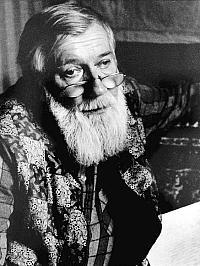
Writing in the Moscow Times, Catherine Nepomnyashchy reflects on the career of Soviet dissident Andrei Sinyavsky, and considers the implications of his message and example for our own times:
Whether you look from the United States or Russia, this seems like a particularly bad time to be an intellectual. People don't want to hear about how complex the world is, and those wielding political power are far likelier to turn for advice to almost anyone else -- rich people, celebrities, spin doctors, religious leaders -- rather than to the best-educated members of society. Yet as the trial of Socrates showed, the role of the intellectual in society was thankless even 2,500 years ago. Defending himself from charges of blasphemy, Socrates argued: "For if you kill me you will not easily find a successor to me, who, if I may use such a ludicrous figure of speech, am a sort of gadfly, given to the state by God; and the state is a great and noble steed who is tardy in his motions owing to his very size, and requires to be stirred into life. I am that gadfly which God has attached to the state, and all day long and in all places am always fastening upon you, arousing and persuading and reproaching you. You will not easily find another like me."(Hat tip: Marius)
Sinyavsky was just such a gadfly, nipping away at the tough hide of Russia. As he predicted, Yeltsin turned out to be eminently replaceable. Sinyavsky, by contrast, has not. Now, a dozen years after the Russian president's assault on his own parliament, the lesson to be learned is not so much that he was right to condemn the intelligentsia's support of Yeltsin. Rather, the lesson lies in why he was right. And, more to the point, it lies in the example he left behind.
At his own trial for blasphemy, Sinyavsky defended his right to be neither "for" nor "against," but simply "different." Let us hope that Russia will be blessed in the near future with more such loyal, difficult, insubordinate, trenchant and loving sons.
Monday, October 10, 2005
Ambiguities
...In other respects, however, German cultural policy in occupied Paris was comparatively relaxed. The Germans pursued the bread and circuses principle that cultural distractions would keep the population happy. Behind this pragmatism, their real attitude to French culture was a schizophrenic mixture of jealousy and contempt: jealousy of France's cultural predominance; contempt at French artistic decadence. Hitler who visited Paris only once, on 23 June 1940, was so in awe of the city, especially the Opera, that he sometimes mused about razing it to the ground. In the end, he decided that the new Berlin would dwarf Paris in magnificence: Paris could be spared because Germany would do better. The Propaganda-Abteilung's long-term objective was to break French cultural hegemony, but this did not mean imposing Nazi cultural norms in France or revealing to France `the secrets of Germany's cultural renaissance': Nazi values were not for export. In Nazi eyes, there was no contradiction between permitting France some cultural freedom and wanting to destroy French cultural hegemony. `What does the spiritual health of the French people matter to us?', Hitler told Speer; `Let them degenerate!'
Allowing the French to choke on their culture suited those Germans in Paris who admired French culture and were keen for the opportunity to choke on it themselves. These cultural Francophiles were mostly employed at the Embassy, but there were also some, like Heller, working for the Propaganda-Abteilung. In artfully selective account must be taken with a pinch of salt. Most Germans who displayed a marked affinity for the French were usually noticed and suffered for it by being sent to the eastern front (as happened to Bremer in 1942), or at least recalled to Berlin (as happened to Epting from June 1942 to January 1943). Heller's feat of lasting the entire war in Paris suggests he had not taken that many risks. Certainly he was zealous in applying the anti-Semitic instructions to literature.
Germans like Heller or the writer Ernst Jünger did certainly see themselves as Francophile, but as we have already observed in the cases of Abetz and Siegburg, German `Francophilia' was often double-edged. It could coexist with an attitude of superiority bordering on contempt: precisely those aspects of France which made her so attractive - her refinement and douceur de vie - also condemned her to the second rank." But many French intellectuals were so relieved by the urbanity and admiration displayed by their conquerors (or some of them) that they failed to detect what lay beneath it. German Francophilia salved uneasy French consciences and lulled the unwary. Joliot felt reassured by the presence of his colleague Gentner. Jean Cocteau had a clearer conscience for being able to write in his diary that the Germans he met were people with a `profound French culture."' Even Claude Mauriac, who felt only antipathy to the Germans and avoided their company, was witness on one occasion to the spell cast by Heller. In February 1943 he found himself unexpectedly at a social gathering where the other guests included two Germans: Heller and a German playwright. Although `stupefied to be shaking hands with one of those officers whose contact I find so repugnant on the metro', he could not deny the irresistible charm' of Heller, `laughing and smiling, witty and friendly'. Heller told him such encounters showed that this `horrible war hasn't stifled every trace of civilization and humanism'. On the next morning Mauriac noted his sense of shame: `The champagne and the atmosphere of sympathy and youth made everything too easy. I should not have been there.' He reassured himself with the thought that since the Germans were obviously going to lose the war, his presence could not be interpreted as toadying to them whereas a year earlier he would have left such a gathering as soon as he had seen who was present. Noneth1ess, despite his guilt, Mauriac still felt that those present had represented a `small island of honest men'.
Julian Jackson: France - the Dark Years 1940-1944 (2000)
Allowing the French to choke on their culture suited those Germans in Paris who admired French culture and were keen for the opportunity to choke on it themselves. These cultural Francophiles were mostly employed at the Embassy, but there were also some, like Heller, working for the Propaganda-Abteilung. In artfully selective account must be taken with a pinch of salt. Most Germans who displayed a marked affinity for the French were usually noticed and suffered for it by being sent to the eastern front (as happened to Bremer in 1942), or at least recalled to Berlin (as happened to Epting from June 1942 to January 1943). Heller's feat of lasting the entire war in Paris suggests he had not taken that many risks. Certainly he was zealous in applying the anti-Semitic instructions to literature.
Germans like Heller or the writer Ernst Jünger did certainly see themselves as Francophile, but as we have already observed in the cases of Abetz and Siegburg, German `Francophilia' was often double-edged. It could coexist with an attitude of superiority bordering on contempt: precisely those aspects of France which made her so attractive - her refinement and douceur de vie - also condemned her to the second rank." But many French intellectuals were so relieved by the urbanity and admiration displayed by their conquerors (or some of them) that they failed to detect what lay beneath it. German Francophilia salved uneasy French consciences and lulled the unwary. Joliot felt reassured by the presence of his colleague Gentner. Jean Cocteau had a clearer conscience for being able to write in his diary that the Germans he met were people with a `profound French culture."' Even Claude Mauriac, who felt only antipathy to the Germans and avoided their company, was witness on one occasion to the spell cast by Heller. In February 1943 he found himself unexpectedly at a social gathering where the other guests included two Germans: Heller and a German playwright. Although `stupefied to be shaking hands with one of those officers whose contact I find so repugnant on the metro', he could not deny the irresistible charm' of Heller, `laughing and smiling, witty and friendly'. Heller told him such encounters showed that this `horrible war hasn't stifled every trace of civilization and humanism'. On the next morning Mauriac noted his sense of shame: `The champagne and the atmosphere of sympathy and youth made everything too easy. I should not have been there.' He reassured himself with the thought that since the Germans were obviously going to lose the war, his presence could not be interpreted as toadying to them whereas a year earlier he would have left such a gathering as soon as he had seen who was present. Noneth1ess, despite his guilt, Mauriac still felt that those present had represented a `small island of honest men'.
Julian Jackson: France - the Dark Years 1940-1944 (2000)
Sunday, October 09, 2005
Saturday, October 08, 2005
A Refutation
French philosopher and political activist André Glucksmann has some comments on the version of his interview on Chechnya that appeared in Chechen Society Newspaper a few months ago.
Belarus Blog
Tobias Ljungvall, author of the book Control - Report from Belarus (2003) [available in Swedish only] has started a new English-language blog devoted to political developments in and around Belarus. I found the first post - on presidential challenger Alyaksandr Milinkevich - informative and interesting.
The Colour of Uncertainty
In current discussions about the future of Belarus, soon to be the arena of slightly doubtful-looking presidential elections in 2006, it’s interesting to observe the apparent eagerness of some to draw a parallel between Minsk now and Kiev in 2004, or Tbilisi in 2003. After the Orange and Rose revolutions, now it’s the turn of – but there isn’t a colour for it yet.
The absence of a characteristic colour for the “Belarus revolution” – if there is one – may be significant. For one thing, Moscow is rather certain that it doesn’t want any more “coloured revolutions” on its doorstep. For another, the kind of opposition represented by Alyaksandr Milinkevich, the U.S.-educated physicist who has been chosen to challenge Lukashenka in 2006, might best be characterized as “grey”.
There's also the Polish factor: Poland has become a base of support for the Belarusian opposition movement. When Lech Walesa, Vaclav Havel and other Polish heroes of 1989 gathered outside the Gdansk shipyard for the 25th anniverary of the founding of the Solidarity movement, they issued a reminder to the world that the revolution is not yet complete, and there has been much talk in Warsaw of “freedom for our neighbours”. Polish MPs have also lobbied for the Belarusian opposition at the European Parliament. Predictably, such steps have not been much to Moscow’s liking.
All in all, there’s a distinct sense that what may lie in store for Belarus is something quite unlike what happened in Ukraine and Georgia.
The absence of a characteristic colour for the “Belarus revolution” – if there is one – may be significant. For one thing, Moscow is rather certain that it doesn’t want any more “coloured revolutions” on its doorstep. For another, the kind of opposition represented by Alyaksandr Milinkevich, the U.S.-educated physicist who has been chosen to challenge Lukashenka in 2006, might best be characterized as “grey”.
There's also the Polish factor: Poland has become a base of support for the Belarusian opposition movement. When Lech Walesa, Vaclav Havel and other Polish heroes of 1989 gathered outside the Gdansk shipyard for the 25th anniverary of the founding of the Solidarity movement, they issued a reminder to the world that the revolution is not yet complete, and there has been much talk in Warsaw of “freedom for our neighbours”. Polish MPs have also lobbied for the Belarusian opposition at the European Parliament. Predictably, such steps have not been much to Moscow’s liking.
All in all, there’s a distinct sense that what may lie in store for Belarus is something quite unlike what happened in Ukraine and Georgia.
Friday, October 07, 2005
Black Hole?
from this week's Chechnya Weekly:
THE QUESTION NO ONE ASKED AT BESLAN
By Andrei Piontkovsky
There are some questions that some nations avoid asking themselves just because they subconsciously know the answers. For a clearly articulated answer could become destructive for the state and therefore we shall never hear it. And that is correct.
The question that I am going to analyze is quite complex. It is so complex that it was not directly formulated even once last week when we were all talking about Beslan, or even at the meeting of the Beslan mothers with Putin. It dissolved into a mass of other questions—about the number of hostages, the number of terrorists, about flamethrowers and tanks, about the circumstances of the first explosion, disarray in the headquarters etcetera.
Here is the question: Why wasn't the scenario of inviting Aslan Maskhadov (Akhmed Zakaev) with a demand (request) to win the release of hostages carried through to its conclusion and the scenario of the storming of the building implemented?
I repeat that the question is very complex, but it does not belong to the category of the forbidden ones. Unlike the incidents mentioned above, it is not about a supposed evil act of the authorities or its autonomous structures. It is merely about the mentality of the authorities—or, rather, the mentality of society.
The question arose for the first time during the tragedy of Nord-Ost. I remind you—and this is fundamentally important—that neither in Nord-Ost nor in Beslan was inviting Maskhadov or his representatives a demand of terrorists: it was the authorities' initiative.
The demands of the terrorists in both cases were globally undefined and therefore unrealizable from the very beginning. The authorities found themselves with a classic irresolvable dilemma: What is of primary importance—rescuing the hostages or annihilating the terrorists?
The idea of inviting Maskhadov and giving him—a military adversary, an enemy—the chance to rescue our hostages signified an existential breakthrough out of the closed circle that doomed hundreds of people to death and shifted the problem to an absolutely different dimension.
During the Nord-Ost incident, it did not imply any damage to the reputation of the authorities. At that moment there was an official structure for negotiations – the contacts between Victor Kazantsev and Akhmed Zakaev, within the framework of which the problem of Maskhadov's arrival could have been resolved. Kazantsev and Zakaev met more than once, including in Moscow.
The idea was seriously discussed, along with other alternatives of action, at the highest level for several hours. The arrival of Kazantsev to Moscow, which was supposed to happen in the morning, was related to a possible realization of this plan. At night, however, another approach prevailed. Perhaps representatives of force structures managed to convince Putin that their gas attack would not lead to the deaths of the hostages. But had Maskhadov succeeded and rescued the hostages, that certainly would have legitimized him even more, something that did not suit either the representatives of force structures nor Putin, who had pledged to "rub terrorists out in the toilet" and became a hostage to his own rhetoric.
This situation repeated itself in Beslan. And Zakaev, who was a legitimate partner in negotiations before that, had by then been declared a criminal, whose extradition Moscow had been seeking. But it was him whom Moscow contacted with the same request—to help release hostages.
On September 3, 2004, at 12 noon, Zakaev called the headquarters about the release of hostages and confirmed Maskhadov's readiness to come to Beslan if he were provided the security guarantees. The details were to be discussed at 2 PM. At 1:05 PM, the storming happened.
I am convinced that Putin was much closer to the alternative of using Maskhadov in the Beslan crisis. It was discussed for several days. On the evening on September 2, Putin made an amazing public statement on TV, one not characteristic of him, which has somehow been forgotten today by everyone, in which he stressed that an unconditional priority in the resolution of the Beslan crisis would be the rescue of the children. This could not have been anything other than a way to prepare public opinion for the fact that no aim other than saving the children would be pursued.
I am frequently accused of demonizing Vladimir Putin. That is not so. Being his political opponent, I never denied that he has some merits - patriotism, for example. I wrote, for example, in Novaya gazeta in September 2001: "V. Putin knows the truth about his ascension to power and about who has brought him to power, and about what role the Chechen war, Basaev's raid into Dagestan, the blasts in Moscow, the ‘training exercises' in Ryazan, played in the operation ‘The Heir.' If he did not know before, then now he is figuring it out. As an officer and a Russian patriot, and he really is that, this truth is painful and unbearable. He drives it away from his head, imposes a taboo on it, expels it into the subconsciousness. And, in accordance with the laws of psychoanalysis, it gushes out of it in its inappropriate explosive reactions any time Chechnya is mentioned. That is the personal human drama of Vladmir Vladimirovich Putin. And this is the tragedy of the country he is leading."
When he was assuring foreign journalists that not one of the Nord-Ost hostages suffered from the use of the gas, he was not lying to us. He was trying to deceive himself. Back then, if he did not know anything, he was starting to understand that he was deceived. He did not want the same outcome to recur in Beslan.
It was impossible to issue an order about storming the school. And he did not issue that order.
The events at Beslan represent an unordered storming, an accidental storming, a forced storming—and no Maskhadovs; no hostages. This suited too many people, including the scoundrel who organized Beslan: Shamil Basaev. He did not at all need the saving of the hostages that would have meant legitimizing Maskhadov to a significant degree in both Chechnya and Russia. He needed an Ossetian-Ingush conflict that would blow up the Caucasus once and for all. The terrorists, as we know, invited quite different people.
Two articles by the brightest and most talented—in my opinion—Russian commentators, Alexander Prokhanov and Leonid Radzikhovsky, appeared almost simultaneously a few days after the tragedy. They belong to the opposite ends of the political spectrum and, as far as I remember, they have never ever agreed with each other about anything. But those two articles seemed to be written by the same hand, in a condition of triumphant euphoria: "It came true! Miraculously, Russian statehood managed to avoid a catastrophe. Maskhadov was not allowed to save children and thereby humiliate the state. The fortress of the Third Rome weathered the storm."
The most talented political poets of our epoch, followed by a bunch of Sokolovs, Leontyevs and Pavlovskys, spoke and wrote about it quite frankly, prompted by their hearts. It was the shared position of a majority of the Russian political class—as well as, probably, a majority of the population.
This gives a sense of the great resistance that Vladimir Putin, a son of his class and his nation, had to overcome both in his entourage and in himself in his shy and inconsistent attempt to make a breakthrough to an elementary humanism. He is not a villain at all. He is simply a weak man in tragic circumstances. Fate twice gave him a chance to rise above massive state gibberish for the sake of rescuing people and to demonstrate greatness of spirit and strength of character.
And it was not "territorial integrity," or "the greatness of Russia," or "geopolitical interests in the Caucasus" that had to be sacrificed. What needed to be sacrificed were petty bureaucratic ambitions—to return to political field the former Soviet artillery officer Aslan Maskhadov. And what made him worse than the hereditary bandit Ramzan Kadirov? In my opinion, he could have been much better as a potential partner of Moscow and a conductor of its interests in the Caucasus. Well, it's a matter of taste. Were those differences in taste worth hundreds of children's lives?
And Viktor Stepanovich Chernomyrdin was called a "heavyweight" in vain. He saved hundreds of lives in Budennovsk. There was so much dirt poured on him again in the last days of his tenure. Of course! He let Basaev, who destroyed so many lives, slip away. But the duty of the prime minister of Russia, Chernomirdin, was to save Russian citizens. And he coped with it within the scope of his capabilities, and he will be remunerated for that at the most important trial. And destruction of the bandit Basaev was the responsibility of other people. And they, by the way, had ten years to carry it out.
And Aslan Maskhadov was killed soon after Beslan, in order to close his problem, but fate spares Basaev. The wonderful Chechen seems to have as many lives as the services he rendered to Moscow. He took Sukhumi and went to Dagestan along the corridor opened for him, and after each of his terrorist acts the vertical of power kept strengthening, and now the Kremlin has made him a leader of the Russian opposition.
And the last thing. About the Russian nation, to which I have both the honor and the misfortune to belong to. The reaction of Russians to Nord – Ost and the Ossetians to Beslan was demonstratively different. Russia forgot about Nord – Ost and does not ask the authorities any questions. Ossetia will never forget and will never stop asking the Russian authorities questions. Even the Putin-appointed president of North Ossetia asks complex questions and says that "he will never be able to be the same man as he was before Beslan."
There is no civil society in Russia and any man remains absolutely defenseless, first of all mentally, before the vertical of power. He knows that he is no one and that he has no name. In the Caucasus, as in the East generally, there is no civil society in the Western understanding of this institution, but its functions are carried out by traditional clan structures. A man feels himself to be a link in a temporal chain of generations and spatial network of relatives. The mass tragic deaths of people touches the whole society.
We Russians seem to have fallen for good into some cultural black hole between East and West. There is no more atomized society than the Russian one. We are dust in wind. And Putin is our president.
THE QUESTION NO ONE ASKED AT BESLAN
By Andrei Piontkovsky
There are some questions that some nations avoid asking themselves just because they subconsciously know the answers. For a clearly articulated answer could become destructive for the state and therefore we shall never hear it. And that is correct.
The question that I am going to analyze is quite complex. It is so complex that it was not directly formulated even once last week when we were all talking about Beslan, or even at the meeting of the Beslan mothers with Putin. It dissolved into a mass of other questions—about the number of hostages, the number of terrorists, about flamethrowers and tanks, about the circumstances of the first explosion, disarray in the headquarters etcetera.
Here is the question: Why wasn't the scenario of inviting Aslan Maskhadov (Akhmed Zakaev) with a demand (request) to win the release of hostages carried through to its conclusion and the scenario of the storming of the building implemented?
I repeat that the question is very complex, but it does not belong to the category of the forbidden ones. Unlike the incidents mentioned above, it is not about a supposed evil act of the authorities or its autonomous structures. It is merely about the mentality of the authorities—or, rather, the mentality of society.
The question arose for the first time during the tragedy of Nord-Ost. I remind you—and this is fundamentally important—that neither in Nord-Ost nor in Beslan was inviting Maskhadov or his representatives a demand of terrorists: it was the authorities' initiative.
The demands of the terrorists in both cases were globally undefined and therefore unrealizable from the very beginning. The authorities found themselves with a classic irresolvable dilemma: What is of primary importance—rescuing the hostages or annihilating the terrorists?
The idea of inviting Maskhadov and giving him—a military adversary, an enemy—the chance to rescue our hostages signified an existential breakthrough out of the closed circle that doomed hundreds of people to death and shifted the problem to an absolutely different dimension.
During the Nord-Ost incident, it did not imply any damage to the reputation of the authorities. At that moment there was an official structure for negotiations – the contacts between Victor Kazantsev and Akhmed Zakaev, within the framework of which the problem of Maskhadov's arrival could have been resolved. Kazantsev and Zakaev met more than once, including in Moscow.
The idea was seriously discussed, along with other alternatives of action, at the highest level for several hours. The arrival of Kazantsev to Moscow, which was supposed to happen in the morning, was related to a possible realization of this plan. At night, however, another approach prevailed. Perhaps representatives of force structures managed to convince Putin that their gas attack would not lead to the deaths of the hostages. But had Maskhadov succeeded and rescued the hostages, that certainly would have legitimized him even more, something that did not suit either the representatives of force structures nor Putin, who had pledged to "rub terrorists out in the toilet" and became a hostage to his own rhetoric.
This situation repeated itself in Beslan. And Zakaev, who was a legitimate partner in negotiations before that, had by then been declared a criminal, whose extradition Moscow had been seeking. But it was him whom Moscow contacted with the same request—to help release hostages.
On September 3, 2004, at 12 noon, Zakaev called the headquarters about the release of hostages and confirmed Maskhadov's readiness to come to Beslan if he were provided the security guarantees. The details were to be discussed at 2 PM. At 1:05 PM, the storming happened.
I am convinced that Putin was much closer to the alternative of using Maskhadov in the Beslan crisis. It was discussed for several days. On the evening on September 2, Putin made an amazing public statement on TV, one not characteristic of him, which has somehow been forgotten today by everyone, in which he stressed that an unconditional priority in the resolution of the Beslan crisis would be the rescue of the children. This could not have been anything other than a way to prepare public opinion for the fact that no aim other than saving the children would be pursued.
I am frequently accused of demonizing Vladimir Putin. That is not so. Being his political opponent, I never denied that he has some merits - patriotism, for example. I wrote, for example, in Novaya gazeta in September 2001: "V. Putin knows the truth about his ascension to power and about who has brought him to power, and about what role the Chechen war, Basaev's raid into Dagestan, the blasts in Moscow, the ‘training exercises' in Ryazan, played in the operation ‘The Heir.' If he did not know before, then now he is figuring it out. As an officer and a Russian patriot, and he really is that, this truth is painful and unbearable. He drives it away from his head, imposes a taboo on it, expels it into the subconsciousness. And, in accordance with the laws of psychoanalysis, it gushes out of it in its inappropriate explosive reactions any time Chechnya is mentioned. That is the personal human drama of Vladmir Vladimirovich Putin. And this is the tragedy of the country he is leading."
When he was assuring foreign journalists that not one of the Nord-Ost hostages suffered from the use of the gas, he was not lying to us. He was trying to deceive himself. Back then, if he did not know anything, he was starting to understand that he was deceived. He did not want the same outcome to recur in Beslan.
It was impossible to issue an order about storming the school. And he did not issue that order.
The events at Beslan represent an unordered storming, an accidental storming, a forced storming—and no Maskhadovs; no hostages. This suited too many people, including the scoundrel who organized Beslan: Shamil Basaev. He did not at all need the saving of the hostages that would have meant legitimizing Maskhadov to a significant degree in both Chechnya and Russia. He needed an Ossetian-Ingush conflict that would blow up the Caucasus once and for all. The terrorists, as we know, invited quite different people.
Two articles by the brightest and most talented—in my opinion—Russian commentators, Alexander Prokhanov and Leonid Radzikhovsky, appeared almost simultaneously a few days after the tragedy. They belong to the opposite ends of the political spectrum and, as far as I remember, they have never ever agreed with each other about anything. But those two articles seemed to be written by the same hand, in a condition of triumphant euphoria: "It came true! Miraculously, Russian statehood managed to avoid a catastrophe. Maskhadov was not allowed to save children and thereby humiliate the state. The fortress of the Third Rome weathered the storm."
The most talented political poets of our epoch, followed by a bunch of Sokolovs, Leontyevs and Pavlovskys, spoke and wrote about it quite frankly, prompted by their hearts. It was the shared position of a majority of the Russian political class—as well as, probably, a majority of the population.
This gives a sense of the great resistance that Vladimir Putin, a son of his class and his nation, had to overcome both in his entourage and in himself in his shy and inconsistent attempt to make a breakthrough to an elementary humanism. He is not a villain at all. He is simply a weak man in tragic circumstances. Fate twice gave him a chance to rise above massive state gibberish for the sake of rescuing people and to demonstrate greatness of spirit and strength of character.
And it was not "territorial integrity," or "the greatness of Russia," or "geopolitical interests in the Caucasus" that had to be sacrificed. What needed to be sacrificed were petty bureaucratic ambitions—to return to political field the former Soviet artillery officer Aslan Maskhadov. And what made him worse than the hereditary bandit Ramzan Kadirov? In my opinion, he could have been much better as a potential partner of Moscow and a conductor of its interests in the Caucasus. Well, it's a matter of taste. Were those differences in taste worth hundreds of children's lives?
And Viktor Stepanovich Chernomyrdin was called a "heavyweight" in vain. He saved hundreds of lives in Budennovsk. There was so much dirt poured on him again in the last days of his tenure. Of course! He let Basaev, who destroyed so many lives, slip away. But the duty of the prime minister of Russia, Chernomirdin, was to save Russian citizens. And he coped with it within the scope of his capabilities, and he will be remunerated for that at the most important trial. And destruction of the bandit Basaev was the responsibility of other people. And they, by the way, had ten years to carry it out.
And Aslan Maskhadov was killed soon after Beslan, in order to close his problem, but fate spares Basaev. The wonderful Chechen seems to have as many lives as the services he rendered to Moscow. He took Sukhumi and went to Dagestan along the corridor opened for him, and after each of his terrorist acts the vertical of power kept strengthening, and now the Kremlin has made him a leader of the Russian opposition.
And the last thing. About the Russian nation, to which I have both the honor and the misfortune to belong to. The reaction of Russians to Nord – Ost and the Ossetians to Beslan was demonstratively different. Russia forgot about Nord – Ost and does not ask the authorities any questions. Ossetia will never forget and will never stop asking the Russian authorities questions. Even the Putin-appointed president of North Ossetia asks complex questions and says that "he will never be able to be the same man as he was before Beslan."
There is no civil society in Russia and any man remains absolutely defenseless, first of all mentally, before the vertical of power. He knows that he is no one and that he has no name. In the Caucasus, as in the East generally, there is no civil society in the Western understanding of this institution, but its functions are carried out by traditional clan structures. A man feels himself to be a link in a temporal chain of generations and spatial network of relatives. The mass tragic deaths of people touches the whole society.
We Russians seem to have fallen for good into some cultural black hole between East and West. There is no more atomized society than the Russian one. We are dust in wind. And Putin is our president.
Thursday, October 06, 2005
Enough Is Enough
Today, on EDM:
GEORGIA ON RUSSIAN "PEACEKEEPING": ENOUGH IS ENOUGH
Georgia has taken a major step toward correcting or ending Moscow's "peacekeeping" and "mediating" activities in the Abkhaz and South Ossetian conflicts on Georgia's territory. Georgian parliamentary leaders in close consultation with the Presidency have drafted a resolution whereby the parliament sets deadlines for corrective measures or, alternatively, termination of those activities in Abkhazia and South Ossetia.
Parliament Chairwoman Nino Burjanadze, foreign affairs committee chairman Kote Gabashvili, and three influential young parliamentarians -- Giga Bokeria, Nika Rurua, and Davit Bakhradze, vice-chairmen respectively of the legal affairs, defense and security, and European integration committees, a generation of rising political leaders -- are the resolution's main drafters.
During more than a decade of Russian "peacekeeping" and "mediation," the document notes, "every effort for conflict-resolution based on internationally recognized norms and democratic principles has reached no tangible result." It observes that Russia's claim to the role of peacekeeper and mediator is incompatible with Russia's actual role in inspiring and sustaining the Abkhaz and South Ossetian conflicts. Moscow "does nothing to advance the process of conflict-resolution; on the contrary, it strengthens the separatist regimes."
The document describes the secessionist authorities as clan-based regimes manipulating ethnic issues in their own interest, their income and power based on smuggling and racketeering. It observes that the two enclaves are rife with gang activity, robbery and kidnapping, and arms trafficking, which "endangers the entire population including the Abkhaz and Ossetian peoples whom the secessionist leaders claim to protect." The enclaves have been turned into "information vacuums that are only filled with anti-Georgian propaganda"; and the authorities persecute those Abkhaz and South Ossetians who have tried to engage in public diplomacy and civic reconciliation with Georgians.
The text goes on to list Russia's steps toward incorporating Abkhazia and South Ossetia de facto into Russia. The enumeration includes: granting Russian citizenship to local residents en masse; official visits by Russian delegations and signing of agreements with the secessionist authorities; appropriation of Georgian assets, including properties of Georgian refugees; arming and training of secessionist forces and sponsoring their military exercises; and sending citizens of Russia, including senior military and intelligence officers, to take up leadership posts in Abkhazia and South Ossetia.
Russian "peacekeeping" forces are shielding those activities, "disregarding international law … and contravening the [stated] goals of conflict resolution and demilitarization," the document notes. In view of the aggravating situation, "The Georgian parliament deems it necessary to achieve rapid progress toward peaceful political conflict-settlements that would guarantee the full range of rights and freedoms for all residents of Abkhazia and South Ossetia and protection of their identity within a united Georgia."
Consequently, the parliament resolves that the peacekeeping forces' performance deserves a "highly negative assessment." The parliament shall instruct the Georgian government to take up this issue with Russia and international organizations. The government is to report to parliament by February 10 on developments in South Ossetia and by July 1 on developments in Abkhazia. "If the situation continues to warrant a negative assessment and no progress is witnessed," the parliament shall exercise Georgia's sovereign right to demand the termination of Russian peacekeeping operations and associated structures in South Ossetia by February 15 and in Abkhazia by July 15. In that event, the Georgian government shall "undertake appropriate measures for the rapid withdrawal of Russian peacekeeping forces from the territory of Georgia." Concurrently, Georgia's Prosecutor-General's Office shall take legal steps against Russia's citizens who hold leadership posts within the Abkhaz and South Ossetian secessionist authorities.
Russian Defense Minister Sergei Ivanov reacted instantly by claiming that any withdrawal of Russian "peacekeepers" or change to those operations' format would require "agreement on the part of Abkhazia and South Ossetia." On cue, the Abkhaz and South Ossetian leaders Sergei Bagapsh and Eduard Kokoiti repeated that assertion and gave the Russian peacekeeping operations a "highly positive assessment" as "guarantors of stability."
In reply, Gabashvili commented that Ivanov's statement amounted to "open support to separatism and an effort to thwart the settlement of conflicts." Gabashvili and the other drafters cautioned Moscow that the presence of its "peacekeepers" would officially be declared illegal by Georgia, if Moscow refuses to change the two operations' format or to withdraw the troops at Georgia's request from what is legally Georgia's territory. In the same vein Burjanadze declared, "We want peaceful settlements, but will not tolerate criminal-separatist regimes on our territory that destroy our country."
Saakashvili weighed in with the remark, "Georgia will no longer put up with the freeze on the negotiating process." His is a key conceptual point, clarifying on the highest level that the negotiations, not the conflicts as such, are frozen.
As Gabashvili points out, "It is no longer possible to speak about frozen conflicts, nor about peace processes." Instead, "What we have is direct annexation of these territories by Russia" (Novye izvestiya, September 29-October 5). Given this Russian policy and international passivity in the face of that policy, an internally consolidated Georgia is responding as any normal state would in such a situation.
(Civil Georgia, Interfax, Rustavi-2 and Imedi TV, Russian Television Channel One, September 30-October 1)
--Vladimir Socor
GEORGIA ON RUSSIAN "PEACEKEEPING": ENOUGH IS ENOUGH
Georgia has taken a major step toward correcting or ending Moscow's "peacekeeping" and "mediating" activities in the Abkhaz and South Ossetian conflicts on Georgia's territory. Georgian parliamentary leaders in close consultation with the Presidency have drafted a resolution whereby the parliament sets deadlines for corrective measures or, alternatively, termination of those activities in Abkhazia and South Ossetia.
Parliament Chairwoman Nino Burjanadze, foreign affairs committee chairman Kote Gabashvili, and three influential young parliamentarians -- Giga Bokeria, Nika Rurua, and Davit Bakhradze, vice-chairmen respectively of the legal affairs, defense and security, and European integration committees, a generation of rising political leaders -- are the resolution's main drafters.
During more than a decade of Russian "peacekeeping" and "mediation," the document notes, "every effort for conflict-resolution based on internationally recognized norms and democratic principles has reached no tangible result." It observes that Russia's claim to the role of peacekeeper and mediator is incompatible with Russia's actual role in inspiring and sustaining the Abkhaz and South Ossetian conflicts. Moscow "does nothing to advance the process of conflict-resolution; on the contrary, it strengthens the separatist regimes."
The document describes the secessionist authorities as clan-based regimes manipulating ethnic issues in their own interest, their income and power based on smuggling and racketeering. It observes that the two enclaves are rife with gang activity, robbery and kidnapping, and arms trafficking, which "endangers the entire population including the Abkhaz and Ossetian peoples whom the secessionist leaders claim to protect." The enclaves have been turned into "information vacuums that are only filled with anti-Georgian propaganda"; and the authorities persecute those Abkhaz and South Ossetians who have tried to engage in public diplomacy and civic reconciliation with Georgians.
The text goes on to list Russia's steps toward incorporating Abkhazia and South Ossetia de facto into Russia. The enumeration includes: granting Russian citizenship to local residents en masse; official visits by Russian delegations and signing of agreements with the secessionist authorities; appropriation of Georgian assets, including properties of Georgian refugees; arming and training of secessionist forces and sponsoring their military exercises; and sending citizens of Russia, including senior military and intelligence officers, to take up leadership posts in Abkhazia and South Ossetia.
Russian "peacekeeping" forces are shielding those activities, "disregarding international law … and contravening the [stated] goals of conflict resolution and demilitarization," the document notes. In view of the aggravating situation, "The Georgian parliament deems it necessary to achieve rapid progress toward peaceful political conflict-settlements that would guarantee the full range of rights and freedoms for all residents of Abkhazia and South Ossetia and protection of their identity within a united Georgia."
Consequently, the parliament resolves that the peacekeeping forces' performance deserves a "highly negative assessment." The parliament shall instruct the Georgian government to take up this issue with Russia and international organizations. The government is to report to parliament by February 10 on developments in South Ossetia and by July 1 on developments in Abkhazia. "If the situation continues to warrant a negative assessment and no progress is witnessed," the parliament shall exercise Georgia's sovereign right to demand the termination of Russian peacekeeping operations and associated structures in South Ossetia by February 15 and in Abkhazia by July 15. In that event, the Georgian government shall "undertake appropriate measures for the rapid withdrawal of Russian peacekeeping forces from the territory of Georgia." Concurrently, Georgia's Prosecutor-General's Office shall take legal steps against Russia's citizens who hold leadership posts within the Abkhaz and South Ossetian secessionist authorities.
Russian Defense Minister Sergei Ivanov reacted instantly by claiming that any withdrawal of Russian "peacekeepers" or change to those operations' format would require "agreement on the part of Abkhazia and South Ossetia." On cue, the Abkhaz and South Ossetian leaders Sergei Bagapsh and Eduard Kokoiti repeated that assertion and gave the Russian peacekeeping operations a "highly positive assessment" as "guarantors of stability."
In reply, Gabashvili commented that Ivanov's statement amounted to "open support to separatism and an effort to thwart the settlement of conflicts." Gabashvili and the other drafters cautioned Moscow that the presence of its "peacekeepers" would officially be declared illegal by Georgia, if Moscow refuses to change the two operations' format or to withdraw the troops at Georgia's request from what is legally Georgia's territory. In the same vein Burjanadze declared, "We want peaceful settlements, but will not tolerate criminal-separatist regimes on our territory that destroy our country."
Saakashvili weighed in with the remark, "Georgia will no longer put up with the freeze on the negotiating process." His is a key conceptual point, clarifying on the highest level that the negotiations, not the conflicts as such, are frozen.
As Gabashvili points out, "It is no longer possible to speak about frozen conflicts, nor about peace processes." Instead, "What we have is direct annexation of these territories by Russia" (Novye izvestiya, September 29-October 5). Given this Russian policy and international passivity in the face of that policy, an internally consolidated Georgia is responding as any normal state would in such a situation.
(Civil Georgia, Interfax, Rustavi-2 and Imedi TV, Russian Television Channel One, September 30-October 1)
--Vladimir Socor
Through the Looking Glass
As playwright Tom Stoppard found out on a recent trip to Minsk, there are one or two things about Lukashenka's Belarus that just don't add up:
But the Belarusian dictatorship has no monolithic party behind it to legitimise it. Lukashenko is a dictator without an ideology, only a business plan. (Sannikov calls it "an accidental dictatorship". The president, he says, hires and fires down to factory manager level, and imprisons at state company director level wherever he suspects conspiracy against his unchallenged rule.)
The effect is a form of dictatorship which I found - still find - puzzling. Who investigated the "disappearances"? None other than the KGB and the Prosecutor's Office, and the report, which leaked out, was no cover-up. Allegedly, it was the reason why four of the investigators died mysteriously. Two others sought political asylum in America.
So, on the one hand, there is "Lukashenko's death squad", a phrase one hears everywhere. On the other, there's the T-shirt with the faces of the four "disappeared" which Nikolai was wearing to meet me at the airport. There are other "dissident T-shirts", too, openly worn. A woman told me how she had been embraced by a stranger while wearing a T-shirt which said, "Lukashenko-free Zone". Belarus is different.
Wednesday, October 05, 2005
Stalemate
For all the talk of "strategic partnership" and "working closely together on counter-terrorism for the future", it seems that nothing much happened at the London get-together after all. The main focus of the security talks appears to have been Iran - and as it's well-known where the Kremlin stands on that particular issue, it's hard to see how much progress could have been made in any case. From RFE/RL's daily update:
RUSSIA-EU SUMMIT ENDS WITHOUT BREAKTHROUGH... The EU-Russia talks in London between President Vladimir Putin, European Commission officials, and U.K. Prime Minister Tony Blair (see "RFE/RL Newsline," 4 October 2005) ended with no tangible results and no agreements have been signed, RFE/RL reported on 4 October. Speaking at a press conference with Blair, whose country holds the EU's rotating presidency, Putin announced that progress was made in easing EU visa regulations for some categories of Russian citizens, including businessmen, journalists, and students, and that a visa-facilitation agreement can be signed by the end of the year, RTR and other media reported. "We believe that these arrangements are a stage that would help us approach a visa-free regime," Putin said. In response, Russia agreed to readmit illegal immigrants arriving in Europe through Russia. "Komsomolskaya pravda" noted on 5 October that although Russia has such "friends" in the EU as Germany. France, Italy, Spain,and Greece, in general the EU "does not understand us." "We ask their help in observation of ethnic Russians' rights in the Baltics, but they say you should care more about Chinese, Vietnamese, or Tajik immigrants in Russia. Or we ask them to facilitate visa entry, but they say first sign border agreements with the Baltic states." VYWhile it's possible that the visa "deal" may mean that Chechens who have found themselves to have the status of illegal aliens in EU countries might be sent back to Russia, it's more likely that the whole thing is just a piece of window-dressing to please the small numbers of "businessmen, journalists and students" who might like to be able to visit Russia more easily. At all events, one might speculate that it's not really likely to increase the appeal of Russia - in its present state and under its present regime - to Western tourists.
Tuesday, October 04, 2005
Monday, October 03, 2005
Vindication
Then, during the '80s, those you would call the young philosophers of France, such as Bernard and Glucksmann, pointed out that Camus had said things no one wanted to hear in the political arena. They said it was Camus who was right, not those who had slid under the influence of Sartre, that is to say an unconditional devotion to Communism as seen in the Soviet Union. And ever since then the evaluation of Camus has continued to modify up until today. Intellectuals of Camus' age who had previously disliked him now appreciate him. And at that point we come back to literature, and it's agreed that he was always a great writer.
-Catherine Camus
-Catherine Camus
Sunday, October 02, 2005
Might and Mercy
It's encouraging to see that the autumn's discussions of Finland's political past seem to be gathering momentum there. After Professor Juhani Suomi's critical assessment of Mauno Koivisto's 1981-84 presidency comes another book that examines the actions of Finnish politicians during the Cold War.
In 2003 the prestigious Tieto-Finlandia Prize for the best Finnish non-fiction book of the year went to Finnish author and researcher Elina Sana, for her book Luovutetut [The Returnees] (WSOY, 2003), which revealed that the number of prisoners and refugees handed over by Finland to the German Gestapo during the war was much greater than previously acknowledged. In her research Sana found that Finland sent more than 500 political and Jewish prisoners of war to Germany: previous accounts put the number of deported Jews at just eight. The Wiesenthal Centre requested that an investigation into the matter be carried out, and the request was implemented by the Finnish government. Now Finnish researchers Jussi Pekkarinen and Juhani Pohjonen have published a study of another aspect of Finland's wartime and postwar history that has so far escaped public discussion.
After the end of the Second World War some 100,000 people were expelled from Finland over the eastern border into the Soviet Union - thus, a considerably larger number than was deported to Nazi Gemany. The terms of the peace agreement required that Finland had to return to the Soviet Union some 56,000 Ingrian, 44,000 Soviet and over 2,500 German prisoners of war. If these terms were not met, the Soviet government would refuse to return the many Finnish prisoners of war to their own country. The return of the Ingrians was not spoken about in postwar Finland. One Finnish commentator has remarked: "During the whole time the Soviet Union existed, people didn't speak about those Ingrians that had been sent back. This return of the ethnic Finns after the war didn't exist. Not until the end of the 80s did the matter attract attention when books and memoirs were published. "
The new book by Pekkarinen and Pohjonen - Ei armoa Suomen selkänahasta [Literally: "No Mercy at Finland's Expense"] (Otava)- makes a thorough examination - probably the first to be made in Finland - of the whole issue. which did not end with World War 2 but continued to be a problem throughout the Cold War. Marius Labentowicz has drawn my attention to an article/interview in the Polish daily Gazeta Wyborcza which reviews and discusses the work, and he has sent me some translated excerpts from Polish:
Moral hangover from Finnish realpolitik during the Cold War?
From a book published in Finland it can be concluded that between 1945-1981 Finnish authorities were sending back a majority of political refugees from the USSR, who were trying to flee to the West through Finland, this was done by the authorities of their own free will, and was not forced on them.
However, there weren't many of those kind of of cases. Juha Pohjonen, author of recently published book "Ei armoa Suomen selkänahasta" ("No Mercy At Finland's Expense ") dug through the archives and counted 117 persons who were sent back to the USSR. Pohjonen told Gazeta that a majority of them got harsh sentences of 10-15 years of prison or gulag. In one instance a death sentence was executed, some people who were sent back committed suicide.
"It's not the scale of this behaviour that's important - what matters is acquiring a moral perspective on the Finnish politics of those days," Pohjonen asserts. He believes that his book will cause lively discussion.
Finlandization after two wars
After World War II Finland became a neutral state.
[passage omitted]
The price for Finnish "neutrality" was the 1948 friendship treaty with the USSR. The Finns were assured that they would not be a target of Soviet attack, and Moscow could sleep in peace because she knew that no NATO attack awaited her from Finnish territory. Unlike Norway, Finland could not enter NATO at the time it was created, as there was a Soviet base on her territory until 1956.
East Imperative
"After the war, the Soviet Union was a big danger with which we were left alone. Good relations with the USRR became an imperative of Finnish politics," asserts Klaus Törnudd, an expert on Finnish foreign affairs and former diplomat. In exchange for
their submission, the Finns were able to develop a market economy and build prosperity.
From Pohjonen's book it can be concluded that this imperative influenced policy towards refugees from the USSR. Shortly after the war, the Finnish authorities sent back to USSR around 100,000 people within the framework of repatriation. These were Soviet citizens who were on Finnish territory because of military actions Some of them had Ugro-Finnish ethnicity and fought on the side of the Finns against the USSR. The Finnish archives do not tell what happened to them. Historians are waiting for the Russian archives to be opened.
"This policy of sending back Soviet refugees was continued by President Urho Kekkonen, who took office in 1956. Kekkonen sent refugees back to the USSR refugees because he was convinced that good relations with USSR were more important that the fate of those people," Pohjonen tell us. "Despite what has been suggested for many years by different Western historians there was no secret agreement between Kekkonen and Moscow. Finland had, of course, signed border agreement with the USSR, but that agreement made no mention of readmission."
According to Pohjonen's book not all refugees were handed over to the Russians. 36 of 153, who wanted to flee obtained the right to stay, and some of them went on to the West through Sweden. But the Finns mainly helped persons Finno-Ugric ethnicity.
"The policy of sending refugees back to the USSR was continued by subequent presidents, until Mauno Koivisto, when during his rule we had the collapse of the USSR. In my book I descibe the facts and don't judge the Finnish politics of those days," says Juha Pohjonen. "Today we can wonder if it was right from a moral point of view, but in those days that was the realpolitik that prevailed."
Jussi Pekkarinen and Juhani Pohjonen will be taking part in a live discussion of their new book at the Helsinki Book Fair on Sunday October 30 at 11 am (Kullervo Room).
Subscribe to:
Posts (Atom)