Thursday, August 11, 2005

Poland: the Chechnya of the 1860s


Mikhail Zygar, writing in Kommersant, comments on the aftermath and general context of the recent mugging attack in Warsaw on the teenage sons of Russian diplomatic staff, and the two apparent "tit-for-tat" assaults on Polish embassy staff in Moscow - attacks that bear the hallmarks of a calculated provocation on the part of someone doubtless intent on making a further negative impact on the already badly frayed relations between Russia and Poland. Zygar notes that few people remember that some 150 years ago Poland for Russia was the same as Chechnya is now:
Uprisings flared up from time to time in the Polish Kingdom, part of the Russian Empire. The latest, in 1863, caused the indignation of the authorities and broad circles of the Russian public. It began with an act of terror: in the heat of night Poles massacred Russian men and officers sleeping in their barracks.

Many influential, including liberal, mass media demanded that a non-constitutional order be reestablished in Poland by a firm hand (the Constitution in the Polish Kingdom was repealed by Nicholas I after the uprising of 1830). The progressive-minded poet and writer, Nikolai Nekrasov, publicly read an ode to Count Muravyev the Hanger who suppressed the uprising. Only the Russian revolutionary emigrant, Alexander Herzen, who lived in London at the time, spoke with sympathy of the Polish insurgents and openly wished them victory, for which many of his fellow-countrymen denounced him.

The Polish question was a matter of principle for many people. Some persons, like the writer and journalist, Nikolai Danilevsky, maintained that independence shouldn't be granted to Poland, because in that case it would immediately become the centre of all revolutionary intrigues against Russia.

A century-and-a-half later the situation is repeated. Poland is now the main critic of Russia on the problem of Chechnya. And Moscow now regards Warsaw as the extremely dangerous source of revolutionary ideas smuggled into the CIS.
Read the whole thing.

Hat tip: Marius

Wednesday, August 10, 2005

Basayev Interview Transcript (English)

An English-language transcript of Andrei Babitsky's televised interview with Shamil Basayev can be read here.

Finland/Estonia Helicopter Crash - VM Statement


The Estonian Foreign Ministry has now issued the following statement:
The helicopter crashed about 5 km off the coast of the island Naissaar today before 13.00. The Copterline helicopter was on its way from Tallinn to Helsinki.

The flight control station lost contact with the helicopter crew at 12.43, three minutes after the departure from Tallinn.

According to the latest info there were twelve passengers (6 Finns, 4 Estonians and 2 Americans) and two Finnish crew members on the flight. The rescuers have not yet found people or the helicopter on the surface.

The rescue operations are under way. A border guard helicopter, a border guard vessel Kati and border guard boat N-29 are working on the site. A trade vessel Baltic Teider has also come to offer its help.

For information on the passengers and crew call the info hotline 1345 (for calls from Estonia only).

Interior Ministry Communications Centre
Tel: (+372) 612 5033, (+372) 612 5032

http://www.vm.ee/eng/kat_138/5831.html


PRESS SPOKESPERSON'S OFFICE
MINISTRY OF FOREIGN AFFARIS OF ESTONIA
(+372) 6317 654
(+372) 50 94 645
pressitalitus@mfa.ee
www.vm.ee

Walk of Faith

Walk of Faith - Condoleezza Rice

August 27, 2002

Walking in faith

Trained as a girl to be a concert pianist and a competitive ice skater, National Security Advisor Condoleezza Rice, 47, is undergirded by her Christian beliefs. During an Aug. 4 Sunday school class at National Presbyterian Church, she explained what inspires her. Here are some excerpts:

I was a preacher's kid, so Sundays were church, no doubt about that. The church was the center of our lives. In segregated black Birmingham of the late 1950s and early 1960s, the church was not just a place of worship. It was the place where families gathered; it was the social center of the community, too.

Although I never doubted the existence of God, I think like all people I've had some ups and downs in my faith. When I first moved to California in 1981 to join the faculty at Stanford, there were a lot of years when I was not attending church regularly. I was traveling a lot. I was a specialist in international politics, so I was always traveling abroad. I was always in another time zone. One Sunday I was in the Lucky's Supermarket not very far from my house - I will never forget - among the spices and an African-American man walked up to me and said he was buying some things for his church picnic. And he said, "Do you play the piano by any chance?"

I said, "Yes." They said they were looking for someone to play the piano at church. It was a little African-American church right in the center of Palo Alto. A Baptist church. So I started playing for that church. That got me regularly back into churchgoing. I don't play gospel very well - I play Brahms - and you know how black ministers will start a song and the musicians will pick it up? I had no idea what I was doing and so I called my mother, who had played for Baptist churches.

"Mother," I said, "they just start. How am I supposed to do this?" She said, "Honey, play in C and they'll come back to you." And that's true. If you play in C, people will come back. I tell that story because I thought to myself, "My goodness, God has a long reach." I mean, in the Lucky's Supermarket on a Sunday morning.

I played for about six months for them and then I decided to go and find the Presbyterian Church again. I'm a devoted Presbyterian. I really like the governance structure of the church. I care about the Presbyterian Church. On a Sunday morning, I went to Menlo Park Presbyterian Church [in Palo Alto]. The minister that Sunday morning gave a sermon I will never quite forget. It was about the Prodigal Son from the point of view of the elder son.

It set the elder son up not as somebody who had done all the right things but as somebody who had become so self-satisfied; a parable about self-satisfaction, and content and complacency in faith [and] that people who didn't somehow expect themselves to need to be born again can be complacent. I started to think of myself as that elder son who had never doubted the existence of God but wasn't really walking in faith in an active way anymore.

I started to become more active with the church, to go to Bible study and to have a more active prayer life. It was a very important turning point in my life.

My father was an enormous influence in my spiritual life. He was a theologian, a doctor of divinity. He was someone who let you argue about things. He didn't say, "Just accept it." And when I had questions, which we all do, he encouraged that. He went to great lengths to explain about the man we've come to know as Doubting Thomas; he thought that was a little story from Christ about the fact it was OK to question. And that Christ knew that Thomas needed to feel his wounds; feel the wounds in His side and feel the wounds in His hands. That it was what Thomas needed - he needed that physical contact. And then of course Christ said when you can accept this on faith, it will be even better.

I [liked] that because my father didn't brush aside my questions about faith. He allowed me as someone who lives in my mind to also live in my faith.

In this job, when we faced a horrible crisis like September 11, you go back in your mind and think, "Is there anything I could have done? Might I have seen this coming? Was there some way?" When you go through something like that, you have to turn to faith because you can rationalize it, you can make an intellectual answer about it but you can't fully accept it until you can feel it here (taps chest). That time wasn't a failure, but it was a period of crisis when faith was really important for me.

I try always to not think I am Elijah, that I have somehow been particularly called. That's a dangerous thing. In a sense, we've all been, to whatever it is we are doing. But if you try to wear the imprimatur of God - I've seen that happen to leaders who begin too much to believe - there are a couple of very good anecdotes to that. I try to say in my prayers, "Help me to walk in Your way, not my own." To try to walk in a way that is actually trying to fulfill a plan and recognize you are a cog in a larger universe.

I think people who believe in a creator can never take themselves too seriously. I feel that faith allows me to have a kind of optimism about the future. You look around you and you see an awful lot of pain and suffering and things that are going wrong. It could be oppressive. But when I look at my own story or many others that I have seen, I think, "How could it possibly be that it has turned out this way?" Then my only answer is it's God's plan. And that makes me very optimistic that this is all working out in a proper way if we all stay close to God and pray and follow in His footsteps.

I really do believe that God will never let you fall too far. There is an old gospel hymn, "He knows how much you can bear." I really do believe that.

I greatly appreciate, and so does the president, the prayers of the American people. You feel them. You know that they are there. If you just keep doing that, it is so important to all of us.

In many ways, it's a wonderful White House to be in because there are a lot of people who are of faith, starting with the president. When you are in a community of faithful, it makes a very big difference not only in how people treat each other but in how they treat the task at hand.

Among American leadership, there are an awful lot of people who travel in faith. It's a remarkable thing and I think it probably sets us apart from most developed countries where it is not something that is appreciated quite as much in most of the world.

I've watched over the last year and a half how people want to have human dignity worldwide. You hear of Asian values or Middle Eastern values and how that means people can't really take to democracy or they'll never have democracy because they have no history of it, and so forth. We forget that when people are given a choice between freedom and tyranny, they will choose freedom. I remember all the stories before the liberation of Afghanistan that they wouldn't "get it," that they were all warlords and it would just be chaos. Then we got pictures of people dancing on the streets of Kabul just because they could listen to music or send their girls to school.


from the Washington Times 8/27/2002

Finland/Estonia Helicopter Crash

YLE reports that a Copterline helicopter en route from Tallinn to Helsinki has crashed into the Gulf of Finland only a few minutes after taking off. All fourteen people aboard are believed to have been killed.

Unfinished Business


At Stratfor, Peter Zeihan has some interesting reflections on the probable future course of American foreign policy beyond the war on terrorism:
Unfinished Business in Russia

It should come as no surprise that the most dynamic part of U.S. foreign policy relates to Russia. Condoleezza Rice, appointed as Secretary of State at the beginning of the year, began her government work during the end of the Cold War, when she served as former President George H. W. Bush's Soviet expert at the National Security Council. Now that she is in the big chair at Foggy Bottom, she has surrounded herself with members of the same team from her previous stint in government service. Of particular note are former U.S. Trade Representative Robert Zoellick, former U.S. ambassador to NATO Nicholas Burns, and Robert Joseph, former special assistant to the president and senior director for proliferation strategy, counterproliferation and homeland defense with the National Security Council (NSC) -- a wordy way of saying that he was really important. The three now serve essentially as Rice's No. 2, 3 and 4 at State.

As we stated when Rice was appointed in January, the State Department is now "staffed by a team that helped knock the Soviet Union off its superpower perch. Russia can look forward to four years of a State Department with the resources and the will to ratchet back Moscow's influence throughout the Baltics, the Balkans, the Caucasus, Central Asia and even its western Slavic flank. The confrontation over Ukraine was just the beginning."

Personnel changes have not been limited to the top tier. Vershbow's replacement as ambassador -- William Burns -- fits the mold set by Rice and her top team. He served at the U.S. embassy in Moscow as minister-counselor for political affairs during the 1980s, a position and time that would tend to shape one's political views. He is now coming back to Moscow after several years of knocking Israeli and Palestinian heads together.

In the case of Russia, however, the transformation is much deeper than "just" a fresh ambassador, secretary of state and top management team. The rank and file of the entire Russia desk at the State Department is being overhauled. Considering that most State Department personnel swap out positions every two to three years to avoid the dangers of going native, a certain amount of turnover is expected, but the top-to-bottom housecleaning in the case of the Russia team appears to be far more thorough than any scheduled rotation.

The big shift began -- and the direction of U.S. policy was set -- at the V-E Day celebrations in Moscow in May. During that trip, the Bush team bracketed a whirlwind tour past a parade stand in Moscow between deep, long and extremely friendly visits to Latvia and Georgia. The message was clear: the United States is now more concerned with the comings, goings and concerns of Vaira Vike-Freiberga and Mikhail Saakashvili-- the Latvian and Georgian presidents -- than it is with the Russians, and this message was sent on the Russians' national day.

In the Russian mind, it is all snapping into place: color "revolutions" in Georgia, Kyrgyzstan and Ukraine; NATO and EU expansion right up to the Russian border; the commencement of pumping on the Baku-Tbilisi-Ceyhan oil pipeline; and now a thorough personnel shift in the State Department that is stocking the top ranks with people who were present at -- and played a role in -- the Soviet defeat. The Kremlin's belief is that the West, led by the United States, is committing to a full-court press into Russia's geopolitical space in an attempt to permanently remove Russia as a threat.

The Nuance Police

James Hamilton, with a hard-hitting analysis of British modes of social communication based on ideological platitudes that centre around perceptions of the West's role in Iraq and the war on terror. Money quote from the article:
This debate about the West - which is currently chewing on suicide bombers and will shortly spit them out, as it spat the Iraq War out - is also a kind of jostling for position, a way for us in the West to communicate to our friends and colleagues about the sort of people we are.

If we are at all interested in politics, the chances are that we are also interested in seeing ourselves as intelligent, nuanced, concerned, involved. Of course we are - who really, at the bottom of their hearts, wants everyone to see them as an ignorant thug? (There will be those who'll affect not to care..) And we'd like other people to see us as smart and caring too, if at all possible. But you can't just go up to someone and say "I'm nuanced, I'm intelligent": they'll immediately assume the opposite, and that's not all they'll assume. No, these things have to be got across by osmosis. How? by declaring support for sets of views which we think are adopted by people who have those desirable attributes of intelligence, nuance etc.

There's actually a number of these sets of views - pro-War, South Park Conservative, anti-Poverty, etc. - and there are points where they merge or serve the same constituency. But by far the most effective and universal set of views at the moment is the anti-Bush, anti-Capitalist, Kyoto, anti-Globalisation, anti-War one. Given the advantages adopting this set of views gives you, it is no surprise that they have taken off in quite the way they have.

Although I don't hold any of those views myself (I think I may be the only British psychotherapist who doesn't) I don't blame anyone who does. In fact, in a real way I envy them. Holding these views does so much for a person, gives them so much extra, provides so much value, that it's only sensible to take them on if you can.

There are so many advantages that I don't even know where to start. I'll attempt a list:

People assume that you're a nice person
People assume that you are intelligent
People assume that you keep yourself informed
People think that you have cleverly not been fooled by liars.
People think that you are willing to sacrifice for the benefit of others
You can do all the adopting of these views from home. No equipment or additional purchase needed
You line up with Geldof, Tutu, Mandela, Castro, Galloway, Moore, Benn - charisma is on your side, and it rubs off on you
You have a context for passion, anger, commitment - which other people accept
You are no longer to blame for global warming - you're on the side of the angels
You are no longer responsible for poverty - you're on the side of the angels
You have access to the youth-giving properties of these views
You are assumed to be tolerant, anti-racist, in favour of human rights
You are assumed to be easy-going and to have a sense of humour
You are assumed to be capable of a fulfilling sex life
You are assumed to be free of neuroses, tics, hang-ups.
You are assumed to be in the right on the issues of the day without your having to demonstrate this
You are seen as being essentially classless - neither a toff, nor a chav.
You get to feel you're in the majority and in the vanguard at the same time

I could go on, and on, and on. There's no punchline, by the way - I'm not writing satire here.. The fact of the matter is, you can get all those advantages in your life and many more, just by saying something like "He's killed thousands" when Bush appears on the television. Everything else is done for you. You don't have to march - but it's there for you if you want. You don't have to spend a lot of money - stick the Guardian or the Independent in your bag, and you're away. You don't have to change your job (if you're in the military, you actually get bonus points). You don't have to move house. In fact, you can pretty much carry on as before
Read the whole thing.

Bueno Hermano


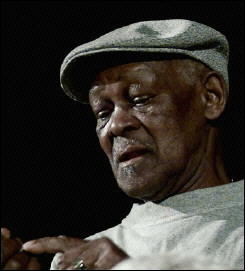
At BabalĂș Blog, A.M. Mora y Leon has a personal overview of the life and work of the great Cuban singer Ibrahim Ferrer, who died recently in Havana at the age of 78.

Tuesday, August 09, 2005

Russia Losing N. Caucasus, Analysts Say

Window on Eurasia: Russia is Losing the North Caucasus, Moscow Analysts Say

Paul Goble

Tartu, August 9 – Despite Moscow’s repeated claims of progress in Chechnya, the Russian government is quickly losing control of the northern Caucasus as the other non-Russian republics there increasingly acquire the attributes of independent countries, according to a group of analysts in the Russian capital.

Moreover, Moscow’s position in that region, they say, is likely to deteriorate further in the near future because the remedies the Kremlin currently favors – greater use of military force and spending more money through existing political structures – do little to reverse that trend and may in many cases even be making the situation worse.

As a result, these analysts suggest, the situation across the northern Caucasus ever more recalls „the parade of sovereignties” of the late 1980s and early 1990s, a development that contributed to the dismemberment of the Soviet Union and the serious weakening of the Russian Federation as well.

These analysts, who are grouped around the Institute for National Strategy, do not argue that a similar outcome is inevitable, but they do suggest that the Russian government must stop denying to itself and others how serious things are and change its policies as well.(http://www.apn.ru/?chapter_name=advert&data_id=599&do=view_single).

The INS analysts draw most of their examples from Daghestan because they argue the situation there is the most critical. But they insist that Russia’s position is declining across the region as a whole because of the coming together of a set of seven increasingly inter-related factors.

First, they note, in the years since 1991, ethnic Russians and other Russian-speaking groups have fled the region, thus eliminating one of the groups on which Moscow had traditionally relied to maintain control. Today, for example, Russians account for fewer than one of every 20 residents in Daghestan.

Second, the people in the region are increasingly relying on foreign currency rather than the Russian ruble, precisely what happened at the end of the Soviet period across the country but just the reverse of more recent and much-commented-upon trends elsewhere in the Russian Federation.

According to official statistics, Daghestan has the lowest avereage pay of any federal subject, but the population there has increased its purchases of foreign currency from 1.6 billion rubles worth in 2003 to 8.8 billion rubles’ worth in 2004. And its foreign currency deposts over the last four years have shot up 17.5 times, the INS analysts report.

Third, despite Moscow’s promises, the Russian authorities have failed to develop a sufficiently large or effective assistance program. In this year alone, they note, the central Russian government allocated twice as much money on the celebration of the 1000th anniversary of the city of Kazan as it did on the reconstruction of Chechnya.

Fourth, the political institutions left over from Soviet times on which Moscow has continued to rely are increasingly corrupt and do not have much authority with the local population. Indeed, the INS analysts say,one can now speak of „the absence of the state” in many parts of the north Caucasus.

Because the central Russian government relies on these corrupt regimes, little of its assistance to the region reaches the population, something that undermines Moscow’s authority there. And because of both these factors, people in the northern Caucasus are far more willing to engage in protests than people in other parts of the Russian Federation.

Fifth, because nature abhors a vacuum, the INS analysts argue, Islam as a social and political force and not just as a set of ideas has moved to fill this gap, creating what are in effect parallel political institutions with more authority in the population and consequently more effective power.

Often, as in the case of Daghestan, these parallel structures take the form of Islamic jamaats, communal organizations whose operations have the effect of creating „a special social space where Russian social and legal norms already no longer operate.”

One measure of this is the explosive growth in the number of Islamic institutions, especially in Daghestan. There are now more than 1595 mosques in that republic alone – 59 times more than in 1983 – and some 14,000 young people are studying in the more than 400 Islamic academies now operating there.

Remarkably, the INS analysts note, both Moscow and local officials in the 1990s even helped power this growth, the first out of a belief that Islam could help overcome ethnic divisions and integrate the people of this region into the Russian Federation and the latter in the hope that it would provide them with an independent power base.

Sixth, because of the collapse of the Soviet external border, the people of this region have dramatically expanded their ties to foreign countries and especially to the Muslim Middle East. Indeed, for many people in the northern Caucasus, the Arab world is now less foreign than the rest of the Russian Federation.

Many in Europe and the United States have focused on the impact of the opening of the Russian Federation’s border with the West, but few have considered the results of the opening of the Russian Federation’s southern border, something that could prove equally fateful, the INS analysts say.

In 1998 alone, they report, 14,000 Daghestanis made the haj to Mecca. During the 1990s on average, 12,000 people travelled from there to Saudi Arabia each year. And in 1996 alone, the INS experts report, some 1230 young people from that northern Caucasus republic studied abroad, most of them in Saudi Islamic institutions.

Those ties have contributed to a change in the mental maps of the Daghestanis, these analysts say. Now, many in that republic and other parts of the northern Caucasus view the Arab world as far closer to them than Moscow, a place they see as an increasingly „foreign” destination.

And seventh, the INS analysts point out, the common information space which the Soviet system imposed on this region has collapsed, and as a result, people in the region increasingly get their news and have their opinions shaped not by Moscow outlets but rather by their own national elites or by groups beyond the borders of the Russian Federation.

Recent statements by Dmitriy Kozak, the Presidential plenopotentiary for the northern Caucasus whose report on Daghestan recently leaked to the press, and by top Putin aide Vladislav Surkov who compared the problems of this region to „a underground fire,” suggest that Moscow may be beginning to understand dangerous the situation is, the INS analysts say.

But they add that there is as yet little indication that they are prepared to change course, and as a result, the situation first in Daghestan and then elsewhere across the northern Caucasus is likely to develop in ways that may prove even more threatening to the territorial integrity of the Russian Federation than the insurgents in Chechnya have been up to now.
Monday, August 08, 2005

Letters from Iceland

Curious Behaviour of a Scotch Baronet

`We instantly left our guides and the horses to manage matters as they could; and rushing over slags, lava, and mud, fell upon the snow like wild beasts upon their prey. My enjoyment was excessive; and the very recollection of it is so gratifying that I must be excused for recording a circumstance of so little importance.'

-McKenzie.

Art without malice

`The clergyman had a large family and McDiarmed good-naturedly took a blooming little maiden of six or seven years a ride on his pony; while Lord Lodbrog drew a very accurate sketch of his home and church. It was really very well done and when pinned up against the wall of the sitting-room had a smart appearance.'

-Umbra.

Hear, Hear!

'Let's go home. We can't camp in this beastly place.
- What is he saying?
- I'm not going to camp here.
- You must, All Englishmen do.
- Blast all Englishmen.'

-William Morris.

Moral drawn from a Geysir

`While the jets were rushing up towards Heaven with the velocity of an arrow my mind was forcibly borne along with them to the contemplation of the Great and Omnipotent JEHOVAH in comparison with whom these and all the wonders scattered over the whole immensity of existence dwindle into absolute insignificance; whose almighty commands spake the universe into being; and at whose sovereign fiat the whole fabric might be reduced, in an instant, to its original nothing.'

- Henderson.

Rudeness shown to the same Geysir

'Darwin profanely called the Geysir an old brute.'

-Umbra.

Spread of Nazi Doctrines among the Icelandic ponies

`Famous scientists, doctors, politicians, and writers, mounted her and rode for a wonderful week's tour. Richer in experience, strengthened and refreshed by Nature, ready for a new struggle with the arch-fiend culture, they went home and gave lectures.'

-Fleuron.


W.H. Auden and Louis MacNeice, Letters from Iceland (1937)

Gayle Dixon


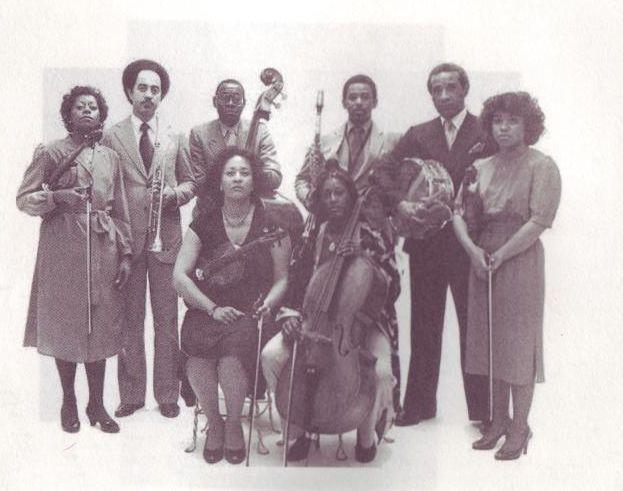
Here's a wonderfully informative and inspiring account of the career of one of the great string players in jazz, violinist Gayle Dixon, who together with her sister, cellist Akua Dixon, has brought the clarity and scope of classical string playing to the realm of jazz performance. In addition to her extensive work as a music educator and union organizer, Gayle was an original member and first violinist of the Uptown String Quartet and Quartette Indigo, has performed with singers such as Sarah Vaughan and Tony Bennett, and recorded with major jazz artists such as Woody Shaw, Max Roach (The Max Roach Double Quartet is pictured left), Steve Turre and James Newton. An excerpt from the essay-interview:
Dixon's music studies began at a time when enormous cultural opportunities were available to New Yorkers. For one thing, she notes, there were many community orchestras, opera companies and chamber music groups that she and her sister Akua, a cellist, could play with after school. Her professional career also began early. "In junior high school my sister and I earned money by playing in churches. We would play three or four Messiahs on the Sunday before Christmas."

After attending Performing Arts High School, she won a scholarship to the Manhattan School of Music, where she studied with Stanley Bednar for four years. She then studied violin with Raphael Bronstein and chamber music coached by Harold Berkley and his wife. She was awarded a Martha Baird Rockefeller Music Assistance Fund fellowship, and later studied violin with Sam Kissell and Burton Kaplan.

Along with her classical training, Dixon was deeply influenced by the music she grew up with: the blues, spirituals and gospel music. She also heard Latin music in her neighborhood, and has subsequently done a lot of work in that field.

Dixon's college roommate found out about the Symphony of the New World, which had been formed by a group of activist musicians in the early 1960s to give opportunities to Black musicians, and both of them played for the conductor, Benjamin Steinberg. "One of my finest musical experiences as a young musician was playing in the first chair octet of the Symphony of the New World, and in the octet for young players, which was funded by a Ford Foundation grant," Dixon recalls. "We rehearsed three or four times a week and played string quartet and octet concerts in New York City and the surrounding areas. Several people in the fellowship program went on to major orchestras."

Among the people who helped her get started were Selwart Clarke, Al Brown, Kermit Moore, Julien Barber and Sanford Allen. "Raphael Bronstein's daughter, Ariana Bronne, hired me to sub for her at the Palace Theatre, where I met Mel Rodnon. He hired me to work at the Westbury Music Fair and on Broadway while I was still in school, and is the contractor of Phantom. Red Press hired me over a period of many years."

Dixon has worked closely since the beginning of her career with her sister, cellist Akua Dixon Turre, a composer and arranger. "Akua has written many works, including a body of work for symphonic strings, compositions for string quartet, an oratorio based on the poetry of Henry Dumas, and a wonderful opera that I hope she will complete some day. Over the years I played in many ensembles she formed to play her music." Akua is married to jazz trombonist Steve Turre, a member of the Saturday Night Live band, and Gayle has also worked on many of his projects, including his CD "Fire & Ice," which featured Quartette Indigo.

She was among a group of 30 Black string players who founded The String Reunion in 1976, at violinist Noel Pointer's initiative, "to develop a repertoire of music by Black composers. We held workshops and presented concerts, classical as well as jazz, and were hired to do concerts and record dates," Dixon recalls. "Akua was the music director, and her compositions were the foundation of our repertoire.

"The most gratifying work I've done musically has been string quartets, and some of the most demanding has been as a string player in a jazz environment. The first time I played string quartet with jazz ensemble was a concert for McCoy Tyner at Town Hall about 1970. Akua put together a jazz string quartet to play at the Village Gate in 1972. I did lots of interesting projects with Jazzmobile, with the Collective Black Artists, with Charles Tolliver and Stanley Cowell for Strata East Records, and for The New Muse (the Community Museum of Brooklyn), where Reggie Workman was director."

She has also worked with many of the Latin greats, including Tito Puente and the great Cuban bassist, Israel "Cachao" Lopez, and has also worked and recorded with many popular charanga groups, including Lou Perez y su charanga and Tipica Novel.


Read it all.

Sunday, August 07, 2005

The Testament

But he wishes us more than this. To be free
is often to be lonely. He would unite
the unequal moieties fractured
by our own well-meaning sense of justice,

would restore to the larger the wit and will
the smaller possesses but can only use
for arid disputes, would give back to
the son the mother's richness of feeling:

but he would have us remember most of all
to be enthusiastic over the night,
not only for the sense of wonder
it alone has to offer, but also

because it needs our love. With large sad eyes
its delectable creatures look up and beg
us dumbly to ask them to follow:
they are exiles who long for the future

that lives in our power, they too would rejoice
if allowed to serve enlightenment like him,
even to bear our cry of 'Judas',
as he did and all must bear who serve it.

One rational voice is dumb. Over his grave
the household of Impulse mourns one dearly loved:
sad is Eros, builder of cities,
and weeping anarchic Aphrodite.

from: W.H. Auden, In Memory Of Sigmund Freud (1940)

The Left Inversion

Nick Cohen, writing in the Observer about the British Left:
Auden noticed a retreat from universal principles in the 1930s - communism was fine in 'semi-barbaric' Russia but would have been a screaming outrage in a civilised country. He should have been alive today. With no socialism to provide international solidarity, good motives of tolerance and respect for other cultures have had the unintended consequence of leading a large part of post-modern liberal opinion into the position of 19th-century imperialists. It is presumptuous and oppressive to suggest that other cultures want the liberties we take for granted, their argument runs. So it may be, but believe that and the upshot is that democracy, feminism and human rights become good for whites but not for browns and brown-skinned people who contradict you are the tools of the neo-conservatives.

On the other hand when confronted with a movement of contemporary imperialism - Islamism wants an empire from the Philippines to Gibraltar - and which is tyrannical, homophobic, misogynist, racist and homicidal to boot, they feel it is valid because it is against Western culture. It expresses its feelings in a regrettably brutal manner perhaps, but that can't hide its authenticity.

The result of this inversion of principles has been that liberals can't form alliances with the victims of al-Qaeda in Afghanistan or Iraq any more than the Auden generation could form alliances with the victims of Stalinism.

This isn't simply about international relations. Who is going to help the victims of religious intolerance in Britain's immigrant communities? Not the Liberal Democrats, who have never once offered support to liberals and democrats in Iraq. Nor an anti-war left which prefers to embrace a Muslim Association of Britain and Yusuf al-Qaradawi who believe that Muslims who freely decide to change their religion or renounce religion should be executed. If the Archbishop of Canterbury were to suggest the same treatment for renegade Christians all hell would break loose. But as the bigotry comes from 'the other' there is silence.
Read it all.

(via Harry's Place)

Saturday, August 06, 2005

Abductions in Chechnya

Abductions in Chechnya

http://eng.kavkaz.memo.ru/newstext/engnews/id/838682.html

A group of unidentified people in camouflage uniforms, armed with automatic weapons, broke into the house of Said-Selim Abdulkhanov, a local resident, in Dolinskoye, Grozny district, and brought him away on the night of 4 August, a source with Chechnya's Internal Affairs Ministry told Caucasian Knot. Abdulkhanov is a fireman with the fifth fire unit of the republican Civil Defence and Emergencies Ministry, the source added. Sultan Abubakarov, CK correspondent.

Military men detained six local residents in Serzhen-Yurt, Shali district, and brought them away without indicating the destination. There were searches carried out without search warrants, Radio Liberty says. Neither people from the prosecutor's office, nor representatives of the district administration attended the arrests.

Chief Beslan Gunman Described

http://eng.kavkaz.memo.ru/newstext/engnews/id/838683.html

The case of Nurpashi Kulayev charged with involvement in the attack on school No 1 in Beslan continued to be heard in Vladikavkaz. Three out of the 38 summoned victims came to interrogation today.

Svetlana Dzheriyev who had been taken hostage together with her daughter spoke first. Her 6-year-old Dana went to the first form on that day. To calm down her daughter, Svetlana told her the bombs hanging overhead were lumps of soap. Svetlana also confirmed the terrorists were shooting in the backs of running children.

Liudmila Reznov who spoke next also told about atrocities. She said one terrorist ran into the gymnasium after an explosion there and threw a grenade. Liudmila said while some gunmen were breaking windows in the gymnasium one of them explained, "Nord-Ost taught us that."

The evidence given by Atikat Koniyev who had been taken hostage together with her granddaughter was the most interesting. Atikat told the court about a terrorist called Ali. Other victims had previously mentioned a terrorist named so, and some think it was Ali who was the chief of the gang, not Ruslan Khuchbarov nicknamed Colonel.

Atikat described Ali as a very cynical man.

"He told us, 'These bombs are very good, I've made them myself. There are 1,200 metal items in each of them, one bomb is enough for all of you.' He also said, 'We will be killing federals as long as we have cartridges, and when we are out, we will blow you up.'"

Atikat recollects that the "school was like a tin stuffed with explosives." Ali even read out the Koran to them, according to her.

"I asked him why children, why haven't you seized the House of Government. He answered, 'We would take the House of Government, too, if they hadn't taken away Grozny.' He also said, 'I've shaven my beard to get here.'"

Several times Ali talked to someone by phone and demanded the president. Atikat was near at such moments and could even hear answers in the receiver.

"I will only talk to the president," Ali told someone and put down the receiver. His phone rang again in 15-20 minutes.

"President?"

"No, his aide," the reply was heard in the receiver and Ali interrupted the talk at once.

Once, when someone asked Ali for water, he replied:

"We have an aim - no food and water. It was an indulgence that we gave you water. We have rations, but I don't eat myself," Ali said.

Atikat said no one of those men whom they had taken out of the gymnasium had come back.

"Overall, it was clear from the very beginning that they will be killing us, it was no secret to anyone. Their demands were unrealisable, how could these troops be removed..."

"Do you think talks with the gunmen should have been held?" the victim's lawyer, Taimuraz Chejemov, asked Atikat.

"Of course, they should! Everything should have been done to save the children, talks held, and the president (Dzasokhov) as a man should have gone there."

In conclusion, Atikat Koniyev who had not even been wounded in the school confessed she felt guilty because she survived.

"I have since been unable to sleep, those children before my eyes," the victim said crying.

The next hearing was scheduled for 9 August.

Britain At War In Colour


I've been watching a remarkable DVD of colour documentary footage from the Second World War, called Britain At War In Colour. The most extraordinary sequences are not those of the actual fighting, but of British cities, towns and country places in wartime. One can actually gain a sense of what it felt like to live in Britain during those years: the shots of street scenes (such as I remember from my own childhood only five or six years later) and countryside fairs, with "Holiday At Home" signs, and the children, many pale and undernourished, yet cared for. The films, many recorded by amateurs, show a society deeply unsettled and anxious, plagued by food shortages and fears of bombing and invasion, yet cohering around a sense of national identity that was really nothing more nor less than a sense of being human. These sequences go a long way to counter the commonly accepted cliches about Britain - the "stiff upper lip" and so on - for one can see just from the expressions on faces in the street that there was no certainty the war would be won, and the material hardship and ever-present threat and reality of cataclysmic violence made it hard to go on.

Watching these films, which among other things show U.S. service personnel in London, and British fighter pilots being trained at airbases in the United States, I became more and more aware of the acute differences between Britain and the United States: though America made a great contribution to the defeat of Nazism, America did not suffer internally as a country in the way that Britain did. In spite of all the sacrifices made by U.S. forces during the war and after, the American people still don't really know what it means to encounter and fight evil as a nation.

Friday, August 05, 2005

Chechnya: The Dirty War


The following is a very quick translation of a recently-published article by Novaya Gazeta correspondent Alexander Nekrasov about the U.K. Channel 4 documentary "The Dirty War", which was screened in July. It contains some interesting remarks about the apparent links between Russian intelligence services and Arab extremist organizations.


"THE DIRTY WAR"

British television crew meets with Chechen fighters in the very heart of Chechnya

Oh, how the word will fly to someone in the FSB and MVD! Is it a joke? A film crew from the British Channel 4 TV program “Dispatches” arrives in Grozny in May this year, with authorization from the Russian authorities, to make a film about “the restoration of normal life in the republic", but at odd moments meets up with Chechen field commanders and even films their annual assembly at which they take a decision to extend military operations to the entire territory of Russia.

As if in mockery of the Russian and Chechen security services, the documentary film "Chechnya: The Dirty War", shown recently on British television’s Channel Four, opens with the following words by the presenter: "The military conflict in Chechnya has now been dragging on for more than ten years. During this war Moscow has tried every means possible to prevent it being reported in the press. And so all contacts with members of Chechen resistance are considered illegal... "

The makers of the film "A Dirty War" lost no time in informing their viewers that they began to gather material about Chechen fighters as long as three years ago, when they established contact with field commander Gelayev and his men during a visit to Chechnya in the winter of 2003. And although in the film itself Gelayev appears only as an extra, as he leads his fighters through the mountains on a routine operation, his closest companion-in-arms, field commander Alman Bakayev, talks about the situation.

Among other things, Bakayev tells of how in late November 2003 he sent *his men” to Moscow with the task of "meeting Putin". "At the last moment he turned down the meeting,” Bakayev asserts. “The pretext was that they had to wait until the elections were over." Bakayev also said: "Because of the Chechen war they (i.e., Russia. - A.N.) lost the positions they had had in the USSR, beginning with influence in the Arab countries and ending with the countries of the former Union, including the ones in Europe. Certainly, they want to find some way out, but it’s not one that suits us."

The film crew of the program “Dispatches” visited the Middle East, where they were able to find some leaders of the Chechen fighters, who, as it was said in the film, are occupied there in collecting money. "The guerrilla war is always a deep underground,” said an unnamed leader of Chechen fighters. “This deep underground irritates the Russians more than the open war. I do not know how this war can be stopped, but I know that our purpose is to go to the end. No one in history has ever got back their territory without war. After the disintegration of the USSR, Russia was not yet a state, but were a state already then. At the time, Yeltsin said: take as much as you can. We took, and created are state more quickly than the Russians. But then they realized what had happened and thought that if Chechnya were to secede, then the entire Caucasus would follow. And if the entire Caucasus were to secede, then the whole of Russia would come crashing down."

Later in the film, Alman Bakayev was shown in Paris, where he has spent the past year through the invitation of the French government. But the most curious thing here was Bakayev’s assertion that he went to France in order, together with the French authorities, "to study the strange interrelation between the Russian special services and the Arab extremists". In France, according to Bakayev, "live very many of our people and many officials of Russian intelligence". And here he made one completely unexpected admission, after referring to the fact that some officials of the Russian special services work "at the level, let us say, of our representatives". "Bakayev told us,” said the presenter, “that the French authorities were greatly interested in the assertions of Chechens about the fact that Russian intelligence used its contacts from the times of the USSR in order to mobilize Arab extremists for its purposes". According to Bakayev, Russian special services were able to inject their agents into the radical organizations of the Arab world, which support the Chechen movement for independence. "All this is true,” said Bakayev. – “Unfortunately, it’s true."

In the film it was acknowledged that the seizure of the school in Beslan deprived the Chechen independence movement of support in the world. Immediately after the Beslan tragedy the authors of the film put questions to Aslan Maskhadov, who in response to this gave them a cassette with his answers. Maskhadov, in particular, said the following: "Without removing responsibility from those people who took children hostage at the school in Beslan, I would like to tell the truth about the main reason for what happened – it is the human-hating, barbarous policy of Russia in the Caucasus. The second reason is the continuing war in Chechnya. A war which in its cruelty has no analogs. In the last five years all Chechen children, the entire people of Chechnya have been held hostage. They are all undergoing state terrorism from the side of Russia ".

"Our film crew returned to Chechnya during May of this year,” said the presenter. “As before, Russian troops were in complete control of the situation in Chechnya. We were taken to the ceremony of the first anniversary of President Akhmat's Kadyrov’s death. This ceremony was not announced in public and was held a day early for reasons of security.”

“In the course of the ceremony the fountains were turned on. And this in a city where the majority of people do not have running water in their houses. All the filming was done under the indefatigable supervision of Russian soldiers. And this in spite of the fact that Russia insists that the Chechens are managing their own affairs and that the republic is attempting to return to a normal course of life. However, according to the latest report to the human rights organization "Human Rights Watch", in 2004 1700 disappeared in the republic without trace, and illegal killings became commonplace."

According to the makers of the film, no one from the "Pro-Moscow Chechen government" was willing to meet with them or to give them an interview. And so, the presenter quietly explained, the film crew of the program "Dispatches", itself went off in search of fighters, as it had done in the past. As a result, the meeting of British journalists with the group of field commanders took place in the mountains: they included Alman Bakayev, who, as it was explained, on this occasion was dealing with the creation of small forces capable of delivering blows against government forces and targets.

The film makers also met with Doku Umarov, vice-premier of the Chechen government in exile. The meeting took place at one of the bases of the Chechen fighters. "Never in my life have I seen the Chechen people in such humiliation and fear", Umarov said in the “Dispatches” interview.

Kusama Maskhadova – Aslan Maskhadov’s widow – also appeared in the film.

"For the Russians this was a great victory,” said the film’s presenter. “After enticing Maskhadov with promises to begin negotiations, they killed him. With his death, the last vetiges of faith among the Chechen resistance in the possibility of negotiations disappeared."

"In order to preserve Russia’s influence in Chechnya, President Putin is ready to support Ramzan Kadyrov, a man who, in the view of human rights organizations, bears responsibility for many disappearances of people and illegal killings. It even awarded Kadyrov with Russia’s highest award – the title of Hero of Russia."

But the creators of film saved up the biggest bombshell for the end. After complaining about the fact that the West no longer supports the Chechen resistance, Doku Umarov declared that from now on the war will be conducted by Chechen fighters using different methods. "We will now divide the regions of Russia between the commanders, so that this commander will deal with the western regions, this – with the Siberian regions, this – with the eastern ones. We will now set this work into implementation."

"Maskadov's death”, said the film’s presenter, “convinced the leadership of fighters of the that it would be expedient to transfer the war to Russia’s economic centres. This solution was communicated to all fighters who were located outside the territory of Chechnya."

And at the very end of the film the presenter drew this conclusion: "President Putin was able to convince the West of the fact that Chechnya is Russia’s internal problem and that the West has no right to interfere. At the same time he says that it is part of global war with terrorism. What began as a fight for the independence of a small republic may go far beyond its boundaries. This war now helps to feed the wider movement of an Islamic Jihad in the world, which threatens both the West and Russia."

Alexander Nekrasov, our own correspondent, London

04.08.2005

Basayev Interview Transcript (Russian)

A Russian-language transcript of Andrei Babitsky's televised interview with Shamil Basayev is now available on the Chechenpress website. Normally an English translation is released on the site some days after the initial publication of such transcripts, so it may be necessary to wait for this.

Thursday, August 04, 2005

Passing the Buck

Andrei Smirnov in EDM:

BASAEV INTERVIEW ENRAGES RUSSIAN AUTHORITIES

The interview with Chechen warlord Shamil Basaev that aired on American television on July 29 dealt a serious blow to the Kremlin. Russian authorities made desperate efforts to prevent the ABC television network from broadcasting the interview on its "Nightline" news program. The Russian Embassy in Washington sent its protest to ABC several hours before the show aired (Kommersant, July 30). When the interview was broadcast, the Russian Ministry of Foreign Affairs announced that it would not renew ABC's accreditation in Russia for the next year (RIA-Novosti, August 2).

There are several reasons why Russian authorities are so angry at the interview with Basaev. First of all, the Chechen rebel commander called himself a "terrorist," but at the same time he explained convincingly that the Russian side was also responsible for the violence and the wave of terror in the Caucasus and Central Russia. Talking about the Beslan and Nord-Ost terrorist attacks, Basaev pointed out that most of the hostages died because of gas (in Moscow) and flame throwers and tanks (in Beslan) used by federal forces during so-called "rescue operations" rather than because of actions by his men.

To take at least part of the responsibility for the Chechen war means the Kremlin would partly open the door for negotiations with the rebels, which the Russian government is very afraid to start. Meanwhile, to have Basaev or somebody else reveal the truth about operations in which Moscow's representatives all but ignored the lives of hostages could unleash anger among Russian society and give another strong argument to the anti-Putin opposition movement. At the same time, the Russian government is unhappy with the fact that major Western media sources are queuing to interview Basaev but almost ignore President Alu Alkhanov, First Deputy Prime Minister Ramzan Kadyrov, and other pro-Russian Chechen leaders handpicked by Moscow.

However, it is not just the interview, but also the way it was produced that partly explains the Kremlin's disappointment.

Basaev was interviewed by Andrei Babitsky, a well-known Radio Liberty correspondent who had worked on the rebels' side at the start of the second Chechen campaign in mid-1999. In January 2000 federal officials detained Babitsky as he tried to leave Grozny, the Chechen capital. He spent one month in detention before he was freed.

Babitsky subsequently left Russia for Prague, where Radio Liberty has offices, but in 2003 he returned to Chechnya to visit rebel bases in the mountains. Late in June of this year he went to the Caucasus again to meet, as he said, Doku Umarov, a Chechen commander and vice-president of the separatist government. Babitsky entered Russia from Ukraine and went by car to Ingushetia, a republic adjacent to Chechnya. A rebel, whom he had met in the Ingush village of Sleptsovskaya, took him to another village, named Nesterovskaya.

Nesterovskaya lies at the intersection of two roads leading to the mountainous part of the republic. One of the roads goes to the mountain village of Arshti and then on to the Chechen settlement of Bamut. The rebel envoy accompanying Babitsky brought him to this road in Nesterovskaya and asked the reporter to go to a car waiting for him on the roadside. Babitsky said later that he was shocked when he saw Basaev himself sitting in the back seat of the car. Basaev and Babitsky reached the Chechen border and walked into the woods on the Chechen side. The journalist spent two days at a secret rebel base interviewing Basaev (Kommersant, July 30).

The details of Babitsky's journey show how weakly federal officials control the North Caucasus and revealed lies told by the generals. Just four months ago Nikolai Rogozhkin, the commander of Russia's Interior troops, had said that Basaev was lying low because was scared. "Hardly anybody has heard Basaev's voice recently," Rogozhkin added confidently (RIA-Novosti, April 15).

Nevertheless, as we know now, such statements contradict reality. Basaev can travel by car not only in Chechnya, but also in Ingushetia and probably in other North Caucasus republics as well. The Babitsky story of his meeting with Basaev in Ingushetia forced security officials to respond. The Kremlin has made the Ingush Ministry of Interior Affairs the scapegoat. They are blamed instead of the army, Russian police special units, and Federal Security Service (FSB). The Ingush police were ordered to lie to the media.

"If Basaev or his men had been in Ingushetia, they would have been immediately arrested," declared Murat Zurabov, head of the Press Service of the Ingush Interior Ministry (RIA-Novosti, August 1).

In reality, however, the Kremlin now trusts the Ingush police even less than before. Two days after the interview was televised, Ingushetia's roads were crowded with Russian troops who had set up mobile checkpoints at all main intersections. Supported by armored trucks and armored personnel carriers, masked servicemen check suspicious cars and their passengers while military aircraft patrol above Ingush towns and villagers. The larger groups of soldiers are stationed near the approaches to Sleptsovskaya and Nesterovskaya settlements, the area where Basaev met Babitsky.

The hunt for Basaev is underway, but the warlord is unlikely to appear where he knows his enemies are lying in wait. Basaev gained a small victory over Vladimir Putin by meeting Babitsky in Nesterovskaya, and there is nothing else for the Russian president to do but to blame ABC television for his public humiliation.

Beslan: "As Hot As In Hell"

"In the gymnasium it had become as hot as in hell"

//Beslan hostages assert that they were fired at from
flamethrowers//

Trial of Kulayev

http://www.kommersant.ru/doc.html?DocID=598138&IssueId=23472

[passage omitted]

Zemfira Agayeva described how the fighters were rounding up people into the gymnasuim, shouting that those were not to be afraid, "that we here, so the troops from Chechnya would be withdrawn". The victim told also about the beginning of the assault:

- Practically immediately, as the first explosion was heard, from the side of courtyard some unbearable whistle was heard, and again something exploded, only it was much stronger. In a few minutes in the gymnasium became hot as in hell, I even thought that I'm on fire.

Those flamethrowers were being shot, although Shepel (Nikolai Shepel, deputy prosecutor of Russia. - L) assures that the flamethrowers couldn't cause any fire. If he were here, I would want to ask him a question.

Zemfira Agayeva described how when leaving the school she noticed "people at the front - in the bulletproof vests and with the automatic submachine guns standing quite far from the school, and the hostages were being saved by the locals, as there are now called them, the [people's] militiamen (opolchentsy), and if not them, then even more of us would perish". Victim Marina Pak tried to present a question to Zamfira Agayeva, presumably , about the use of flamethrowers; however, Judge Aguzarov interrupted her. Mrs. Pak didn't stop, after stating that, "if we've been trying Kulayev, why we listen to those, who didn't see Kulayev in the school"; however, this argument did not work. Then the judge threatened to remove the woman from the courtroom, and passions calmed down a little bit. True, not for long.

- Tell us Nurpashi, do they inject you with anything before these court sessions? - Agayeva asked the defendant .

- This question is removed, sharply interupted her Tamerlan Aguzarov. - It does not relate to the case.

- How it does not relate, the victim got sincerely astonished. - He always says one and the same - about a number of fighters and about the fact that there were no flamethrowers...

But she did not get an anwer in this question.

Aleta Gadiyeva described how on the third day "we waited, that everything will end, we wanted just simply to die, that everything would explode". When the assault began, the hostage with her two daughters crawled up to a window in order to get out into the schoolyard.

- There, under the window, a man was laying, recalled Mrs. Gadiyeva. - He saw what I wanted to do and he yelled not throw the children out in any circumstances. He said that the fighters shoot them in the back. Then we went to other side, to the cafeteria. There were already many people there. Khodov (one of the leaders of terrorists. - K) began to shout to take the children as shields and put them at the windows. We begged him to put the adults there, but he answered: "I said - the children!"

Zaur Farniyev for K., Vladikavkaz

(tr. M.L., via chechnya-sl)

Gessen on the ABC Ban

Like the Censors of Old

By Masha Gessen

Back in the dark old days of the Soviet Union, foreign journalists in Moscow led pretty ridiculous lives. They lived in hotels and, later, in special closed compounds. They were required to use interpreters, drivers and office staff supplied by the Soviets -- and, generally speaking, employed by the KGB. They had to ask for permission to venture outside of Moscow.

Before 1961, all foreign journalists were required to file their reports from a particular room in the Central Telegraph building on what was then called Gorky Street. The reports were read by the censor, who sometimes held them up for days and sometimes returned them with multiple deletions -- or marked "not cleared." The censor made few decisions by himself or herself. During the Stalinist era, all questions were phoned directly in to Stalin's secretariat, which issued instructions.

Obviously, most journalists were constantly looking for ways to circumvent this system. Some slipped idiomatic expressions or literary allusions into their copy in the hopes that the censor would miss the subtleties -- and it often worked. Radio reporters filing by phone from a special booth in the Central Telegraph would try to speak fast so the censor would not notice when they diverged from the approved copy. Some journalists sent their copy through diplomatic mail so it could be published under a pseudonym.

When they got caught cheating the system, reporters would get expelled. At one point in the late 1940s, expulsions became so frequent that there was only one foreign correspondent in Moscow: the great Harrison Salisbury of The New York Times. Several others were writing for foreign media, too, but all of them were married to Soviet citizens so their presumed loyalty was to the Soviet state. Eventually, other newspapers and radio companies got new people accredited, and the pool widened.

Expulsions continued after the lifting of censorship, well into perestroika. A UPI reporter was expelled for interviewing a hospital doctor soon after the Chernobyl disaster. Briton Edward Lucas claims to have been the last reporter kicked out of the Soviet Union -- he was asked to leave the Baltics in 1991, though he later returned to Russia as an Economist correspondent.

Expulsions of journalists resumed after the second war in Chechnya began. But until recently there was always a formal reason for expelling journalists, banning them from re-entering Russia or revoking their accreditation. An exception is a bizarre incident in May when a Latvian TV crew was detained in the Pskov region and kicked out of the country with no explanation.

But the current brouhaha over ABC's airing of an interview with Chechen warlord Shamil Basayev takes the practice of punishing journalists to a whole new level. After the interview aired, the Foreign Ministry summoned the U.S. envoy for a dressing down, then issued a note of protest. Then the defense minister said ABC would lose all access to information about the military. Then the Foreign Ministry said that no one from ABC would have their accreditation renewed. Even in Soviet times, repressive measures were always taken against individual journalists, not against entire media companies. An interesting wrinkle in the scandal is that the interview was recorded by Radio Liberty journalist Andrei Babitsky, a Russian citizen living in Prague who can't be expelled.

So some of the most senior officials in the country, feeling helpless to do anything about Babitsky, start flailing and doing what comes naturally. They appeal to the higher-ups -- as though they thought Ted Koppel could make no editorial decision without consulting ABC executives, who, in turn, could make no move without Washington. Of course, this is not how the real world works -- but it's a valuable insight into the way the Russian ministers' lives are organized. Like the censors of old, they call all questions in to the Kremlin.

Masha Gessen is a contributing editor at Bolshoi Gorod.

http://www.themoscowtimes.com/stories/2005/08/04/006.html

(via chechnya-sl)

Wednesday, August 03, 2005

A Useful Gangster

From Chechnya Weekly (August 3):

http://www.jamestown.org/publications_details.php?volume_id=409&&issue_id=3424


BABITSKY FOUND HIM – WHY CAN'T THE FSB?

Gazeta.ru ran a commentary on July 29 stating that the Russian authorities and Basaev find each other useful. "On the one hand, granting air time to the gangster Basaev – and he is undoubtedly a gangster, whatever your different semantic experiences in this area might be – could not provoke applause in Russia, and it would evidently be much more preferable to see a broadcast about how the special services had finally succeeded in eliminating such a dangerous criminal," the website opined. "On the other hand, it is hard to escape the feeling that the federal authorities need Basaev for the time being as a figure on which to pin the organization of any terrorist act regardless of whether he has any relation to it or not. It should be stated that the interest is, paradoxically, mutual. Members of the security services who are not in a position to single out the organizer of a specific act of terrorism can always blame Basaev for it. And he, in turn, by admitting to it regardless of the extent to which this corresponds to the reality, increases his rating among potential clients." The Gazeta.ru commentary added that U.S. officials do not publicly protest the broadcasting of statements by Osama bin Laden or Abu Musab Al-Zarqawi on Al-Jazeera or Al-Arabiya. "They are not talking about ‘journalists' double standards' as does the Russian Foreign Ministry," the website opined. "Journalists are not to blame for the fact that Basaev and Bin Laden are still alive."

Sergei Goncharov, head of the association of veterans of the elite Alpha commando unit, said the fact that Shamil Basaev could be found by a foreign journalist raised doubts about the Russian special services' efforts at eliminating terrorist leaders. "This question arises each time an interview with a notorious rebel appears," Goncharov told Interfax on August 1. "Ordinary people cannot understand why it is that a journalist can reach a specific bandit while the same bandit remains unattainable for the special services. This situation gives rise to undesirable speculation and puts the Russian special services in a questionable position against the backdrop of the successful fight against terrorists conducted by their British and Egyptian colleagues…Basaev's invincibility may be explained by the fact that somebody needs him alive and that for some reason Basaev is more dangerous dead than alive."

Novaya gazeta editor-in-chief Dmitry Muratov was more explicit. Asked during a call-in show on Ekho Moskvy radio on July 29 how Babitsky was able to find Basaev while those in Russia responsible for tracking him down seem unable to do so, Muratov answered: "Well, I think the answer to this is simple. Basaev wanted Babitsky to find him and did not want [Federal Security Service Director Nikolai] Patrushev or anybody else to find him. But, indeed, why can't they find Shamil Basaev? This is a good question. Why are we so indignant about the interview, but not about the failure to catch him so far? Let's recall where, in general, he came from, in order to understand why this is happening now. At the start of the 1990s, when Russia wanted to win control of a section of Georgian territory called Abkhazia, a special battalion was established, Shamil Basaev's battalion, which trained on ranges belonging to the Main Directorate of Intelligence [GRU] of the Russian Defense Ministry's General Staff. He was given arms there. He was trained. His men were trained for sabotage raids. They were trained in mine warfare, sniper skills. I myself have seen a photograph taken at the Prudboy range near Volgograd, a range run by our very own Defense Ministry, which showed them training Shamil Basaev."

Noting that the GRU also trained the pro-Moscow Vostok battalion headed by Sulim Yamadaev, which is accused of numerous human rights abuses during a raid in the Chechen village of Borozdinovskaya in June, Muratov said: "We ourselves are creating monsters. The monster is, of course, a bastard, but he is our bastard, as far as this principle goes. Yes, the terrorist is a murderer, but he is now serving our interests. So, let's help him. But that doesn't work. That won't work, as the case of Basaev shows. We can see what he has perpetrated, the bloodiest terrorist act in Russia's history. Neither will it work with Kadyrov or Yamadaev – who use our weapons – with the people whom we are now festooning with medals."

Interestingly, on July 28 before the "Nightline" program with excerpts from Basaev's interview was broadcast, gazeta.ru quoted the Vasily Panchenkov, head of the press service of the Interior Ministry's Internal Troops, as saying they had located Basaev in Chechnya's Vedeno district but had not carried out an operation to capture or kill him out of fear for the safety of civilians. Panchenkov claimed that Basaev had planned several days earlier to attack Dagestan from Chechnya but had not gathered sufficient forces to carry it out.

The chairman of Chechnya's State Council, Taus Dzhabrailov, denounced Panchenkov's statement. "This is the first time I've ever heard that the [Russian military] command did not carry out a special operation in the mountains out of fear of possible victims among the civilian population," Dzhabrailov said. "To this day, operations of varying scope are carried out in any settlement even if one militant is discovered, and there are instances in which damage is done to the property and lives of citizens."

Baltics: Finland Sets The Record Straight

Vladimir Socor at EDM:

PUTIN'S ANTI-BALTIC MONOLOGUE REBUFFED

In an unprecedented development, a European head of state has publicly and outspokenly refuted Russian President Vladimir Putin's accusations that Estonia and Latvia oppress their Russian residents. Most European officials are aware that those accusations are unfounded, but would not contradict the Kremlin publicly.

Visiting Finland on August 2, Putin used the joint news conference with the country's President Tarja Halonen to launch a routine attack on Riga and Tallinn. Putin urged Finland -- a member of the European Union's troika this year, and scheduled to become the EU's presiding country in 2006 -- to work with Russia and within the EU in order to "resolve the problems" of Russians in Estonia and Latvia. Zeroing in on the issue of citizenship, Putin alleged that the legal category of "non-citizen" [to which many of the Soviet era-legacy residents there belong] is unique to Estonia and Latvia. Terming this situation "absolutely impermissible," Putin accused Estonia and Latvia of withholding citizenship and otherwise restricting the rights of those people "on ethnic grounds." "Ethnic discrimination is unacceptable," he warned. On this occasion again, Putin tried to portray the Baltic states as breaching European criteria for democracy and rule of law, and he asked the EU to help Russia correct this situation.

In her response, Halonen -- a Socialist who maintains traditionally good rapport with Moscow -- made three basic points. First, Estonia's and Latvia's legislation and practice "correspond with the criteria for EU membership," as well as "meeting the requirements of the Council of Europe and the OSCE," on citizenship and related issues. Moreover, "It is normal for any state to set certain requirements and conditions for granting citizenship." Second, minority-related issues "exist everywhere in the EU, and are resolved within the EU, as well as in cooperation with the UN and OSCE" -- a remark apparently intended to preclude intrusion into EU political processes by non-member Russia. Thirdly, the policies of Estonia and Latvia are "doing their best … actively encouraging the non-citizens to take up citizenship."

Halonen went on to urge Putin to encourage the signing and ratification by Russia of the border treaties with Estonia and Latvia. Indicating that this is not just a problem for the two Baltic states, but also an EU problem, she told Putin that the conclusion of the border treaties would mean "one less problem for us" (Interfax, August 2). Russia had refused to sign the treaty with Latvia in May and revoked its signature on the treaty with Estonia in June this year. Although fully satisfied with the content of both treaties, Moscow objected to legal statements attached by Estonia and Latvia reaffirming their standing as continuation states since 1918, whereas Moscow implies that the Baltic states were only created in 1991.

Putin handled defensively the issue of linguistic and political discrimination of Finno-Ugric-speaking people in Russia's Mari-El Republic (western Siberia), where the native language is closely related to Estonian and Finnish. Without addressing that issue directly, Putin paraphrased Soviet historiographical confabulations about "Slavic and Finno-Ugric tribes that did not just live there, but were building a kind of a community. Objective research shows that their coexistence was very harmonious." He spoke of a common Slavic and Finno-Ugric culture as "our culture: How can I not like it, when part of it, a significant part, is mine."

In recent months, cultural and political figures from Estonia, Finland, and Hungary have issued a series of appeals for measures to protect the identity of the Mari people from forced assimilation and to defend political representatives of that people from repression. The European Parliament and the Parliamentary Assembly of the Council of Europe have recently adopted resolutions on this issue. Last month, that republic's authorities expelled students from Estonia's Arts Academy who were on a field trip to Mari-El. A major conference of Finno-Ugric studies is scheduled to be held there later this month.

(BNS, Interfax, Russian Television Channel One, August 2)

Update: Estland has some more on the story and related issues here.

Latynina on the ABC Ban

Words Versus Body Counts

By Yulia Latynina

When the ABC program "Nightline" aired journalist Andrei Babitsky's interview with Chechen terrorist Shamil Basayev, it made Defense Minister Sergei Ivanov see red. The Defense Ministry has troops in Chechnya, including two military intelligence battalions: Zapad, which is under the command of Hero of Russia Said-Magomed Kakiyev, and Vostok, which is under the command of Hero of Russia Sulim Yamadayev. Yamadayev's men recently distinguished themselves in a violent raid on the peaceful civilian population in the village of Borozdinovskaya.

You would think that the defense minister would be out there pledging to nab Basayev as fast as possible so that he would stop giving interviews to journalists and start giving testimony to investigators. But no. Instead, the ministry's retribution promises to be far more terrifying. From now on, the U.S. channel's single Moscow journalist will be banned from all ministry briefings. This is it, folks. ABC will never recover from the blow.

The interview scandal has its roots in the peculiar nature of the Russian authorities. Those in power in Russia today are former KGB men. These chekists are running businesses, interfering in politics and tapping many a wire. But somehow they can't manage to keep track of Babitsky, who lives in Prague and has long been a thorn in their side.

The authorities had a chance to catch both Basayev and Doku Umarov, whom Babitsky has interviewed in the past. They had at their disposal the means to catch them if they didn't want them to talk to the press, such as the Vostok battalion or the FSB's elite Alfa unit. But just because the FSB can't seem to get the job done does not mean they should take it out on journalists.

An interview is not an act of terrorism. Terrorists do not use words to make their points; they use dead bodies. Basayev is a terrorist not because of what he says but because he kills people.

You can understand why the authorities reacted to the interview the way they did. They had to react somehow, and better to condemn its broadcasters than to discuss its content. For example, Basayev was wearing a T-shirt emblazoned with the word "Anti-Terrorist" and said that Russian policies in Chechnya were terrorism, which makes him an anti-terrorist.

This might sound almost reasonable if it weren't for one small "but." Let's not forget that back in 1999, Chechnya was for all intents and purposes independent. Regardless of how terrible the war was before the Khasavyurt accord and no matter which side committed more atrocities, Chechnya had practically gained its freedom. There were no Russian troops, but only President Aslan Maskhadov and roadblocks manned by criminals who robbed passersby in the name of Allah.

Basayev, like many a military leader in peacetime, was threatened with political oblivion.

When did Chechnya lose its hard-won freedom? When Basayev and his men attacked Dagestan. Some believe that this invasion was orchestrated by the Kremlin: It got Vladimir Putin the presidency and returned Basayev to the limelight. I would not go so far as to suggest a conspiracy. But at the very least Basayev sacrificed his homeland's freedom to satisfy his own ambitions.

A person who orders a sniper to take out a terrorist holding a detonator is just as responsible for the ensuing explosion as the people who planted the explosives to begin with. In much the same way, Basayev, by invading Dagestan, shares the blame for the second Chechen war with the Russian authorities.

Yulia Latynina hosts a political talk show on Ekho Moskvy radio.

Tuesday, August 02, 2005

GSS Photos


Tanya has posted some of the photos she took on the last night of the GSS strings course. Here's one of them (yours truly on the far right):

Pipes and Wartime TV


Daniel Pipes has an article about terrorism and television exposure, asking whether it's a good idea to let terrorists like Osama bin Laden expound their ideas on the airwaves:

The distinguished historian Conor Cruise O'Brien thinks not. When he served as the Irish minister of posts and telecommunications in 1976, he imposed a ban on interviews with Irish Republican Army terrorists and Sinn Fein members, arguing that it was necessary to prevent them from spreading their message. For the same reason, the Russian foreign ministry expressed its "strong indignation" after America's ABC television last week interviewed Chechen terrorist leader Shamil Basayev.

It's such a pity that Daniel Pipes doesn't understand that the Russian federal government is one of the foremost promoters of terrorism in the world today, and that its "war" in Chechnya is designed precisely to sabotage the very principles he aims to safeguard and protect.

Al Qaeda Defined

George Friedman has an interesting take on Al Qaeda:


Al Qaeda as Warfighting Entity


In recent weeks, we have been trying to analyze the state of the U.S.-jihadist war, touching on subjects ranging from the decision -- announced this past week -- to begin reducing U.S. troops in Iraq to the idea that we are in the midst of a surge of jihadist attacks, intended to reshape the course of the war.

As often happens, our readers -- mostly non-subscribers, we would note -- have lambasted us. Critics of the war have accused us of pimping for the Bush administration for daring to imply that the war was anything but a total and catastrophic failure. Supporters of the war wrote to condemn us for even imagining that al Qaeda might consist of people who actually think and plan things, rather than of raving psychotics seeking slaughter because they feel like it. One e-mail said the war is the result of George W. Bush's unresolved Oedipal conflicts. Another said that we were naĂŻve in assuming that all Muslims were not deranged killers. Discussions of the war have never been elevated, but they have now degenerated to a Warner Brother's cartoon -- with Sylvester, Tweety, Elmer and Bugs all cranked up on speed and self-righteousness.

In the midst of this cartoon-like mayhem, one group of quite serious e-mails caught our attention and seemed to require serious consideration.

Stratfor has been treating both Iraq and the global U.S.-jihadist conflict as a war, understandable by the rules of warfare. We have treated this as an asymmetric war in which two sides, using very different methods, have engaged in a global duel. If this is so, then looking to previous wars will provide us with guidance. As an example, we spoke last week of the current offensive as similar to the Battle of the Bulge and Tet -- one unsuccessful and one successful military gambit to reverse an unacceptable course of events.

A series of thoughtful e-mails arrived, arguing that in thinking in terms of conventional warfare -- and these readers regard even the unconventional warfare of Vietnam as ultimately conventional -- we are fundamentally missing the point about what is happening. The United States may be engaging in warfare, but the jihadists are not. As one writer put it, al Qaeda is engaged in a kind of theater and is indifferent to the outcome in any practical sense. Creating terror is an end in itself. Therefore, so long as it can continue to inflict terror at some level and with some randomness, it will be satisfied.

Put simply, this argument goes, al Qaeda does not think of itself as being in a war but in a permanent confrontation with Christianity, Judaism and Hinduism. This is not warfare properly understood because it is not politics properly understood. Moreover, another stream went, terrorism is not a warfighting strategy but a psychological one. Yet others argued that al Qaeda is not sufficiently coherent as an organization to be engaged in warfighting and that what the United States faces is not a military force but a social movement.

These are good, thoughtful arguments that have some merit. Ultimately, however, we think them to be in error.

Karl von Clausewitz wrote that war is the continuation of politics by other means. In order for the United States to be engaged in a war with al Qaeda, three things seem to be necessary.

1. Al Qaeda must be an entity that is capable of making and enforcing decisions. There can be no war without strategy and tactics, and no strategy and tactics without a command structure.
2. Al Qaeda must have political goals that are in some sense practical. Punishing the infidel is not a political goal: It is not intended to achieve a political outcome, nor is it intended to create or influence regimes.
3. Al Qaeda must have a warfighting strategy that it is pursuing. Its actions must fit into the paradigm of war and make sense from a military standpoint.

In our view, all three of these criteria are met. This does not mean that al Qaeda will or won't be successful; it simply means that al Qaeda's behavior can be properly understood in terms of war.

First, it is true that al Qaeda is not a nation. The history of warfare is replete with sub-national groups that have waged wars on the way to becoming nations or to taking over a state. What is interesting about al Qaeda is that it is not a sub-national grouping but a trans-national grouping. Its goals do not involve any one country, but a range of countries. What comes to mind is the First and Second Communist International, before the Bolshevik Revolution captured revolutionary communism for the Soviet state.

In the end, however, the issue is less whether there is historical precedent for al Qaeda than whether there is a decision-making structure that can guide combatants through the war. There certainly was one on Sept. 11, 2001. At this point, that structure appears to be frayed. But if it is frayed, that is not due to the nature of al Qaeda but rather to the reversals it has suffered. In addition, decision-making must be appropriate to a particular battlefield. Whereas the United States may require a highly technical command, control and communication system to manage its assets on the battlefield, al Qaeda commands sparse forces on a global basis in an intensely hostile environment.

The very process of command, control and communication represents the Achilles' heel of their system. More precisely, the enemy -- the United States -- owns the electromagnetic spectrum. Communications through that domain will lead to detection and destruction. This leaves al Qaeda's primary path of communication as the movement of humans from one point to another to deliver messages. Command and control is dramatically slowed by communications. By necessity, operational and tactical control devolve to forces in the field. The situation on the global battlefield requires that al Qaeda provide only general guidance. That does not prevent the waging of a global offensive, planned in general with sufficient time for couriers to arrive with instructions. Al Qaeda is a warfighting system -- but one that, of necessity, operates by different rules than others. Al Qaeda has a command structure and does wage war.

Al Qaeda also has political goals. Indeed, it differs from prior groups that used terror tactics by the fact that it embarked on the war with political goals. The long-term goal -- creating a caliphate encompassing all the lands it deems to be part of the dominion of Islam -- was not the immediate goal. Rather, al Qaeda's immediate goal was to increase the effective Islamist opposition to existing Muslim regimes to force at least one successful uprising. The means toward that end were two-fold: First, to demonstrate in the Muslim world the vulnerability of the United States -- the patron of many of these existing regimes -- and second, to force a response from the United States that would increase either contempt or effective hostility among Muslims. If the United States refused combat, this would be a sign that it was a paper tiger. If it surged into the Islamic world, this would prove the United States was the enemy. Either way, al Qaeda thought it would win.

This perspective differs wildly from that of terrorist groups of the 1970s and 1980s. Consider groups such as the Bader-Meinhof gang in Germany, the Weather Underground in the United States or even Black September. The first two couldn't state a coherent political program, let alone correlate their actions with that program. Black September had a goal -- the creation of a Palestinian state -- but there was no clear connection between any of its actions and that goal. Killing Israeli athletes in Munich was theater.

Al Qaeda had a very clear goal and, from many perspectives, it was not a preposterous goal. It wanted governments like that in Egypt to fall in an Islamist uprising. It felt that the submerged sentiment in these countries favored Islamism, and that -- depending on the behavior of the United States -- risings were achievable. Al Qaeda might have been wrong, and an element of psychological warfare was present, but in the end, the attacks on Sept. 11 and afterward were carefully connected with a political goal.

If they made an error, it was only in assuming that genuine anti-Americanism and hatred of local regimes supported by the United States would translate into effective anti-Americanism that could be leveraged to al Qaeda's advantage. Public sentiment matters in democratic regimes; it doesn't matter in warfare very much. Consider: Most of Europe hated the Germans and their occupation during World War II. Anti-German feeling was overwhelming. Nevertheless, this did not translate into effective anti-German sentiment. European states were never in a position to overthrow German power. That required an external intervention. In Vietnam, on the other hand, anti-Americanism proved effective: It turned into a warfighting process.

Where al Qaeda miscalculated was in assuming that sentiment would turn into effective sentiment. Thus far, except in four Sunni provinces in Iraq, that hasn't happened. But that it didn't happen was neither pre-ordained nor obvious. Al Qaeda knew what it was doing.

Finally, al Qaeda used a reasonable method of warfighting to achieve its aims. Given its intention -- to strike the United States and other countries -- and its resources, its only option was to conduct counterpopulation operations. Allied bombing of Germany and Japan and the German bombing of London constituted counterpopulation attacks. The goal was to drive a wedge between the state and population, or cause a social breakdown, through mass bombings designed to inflict hardship and generate terror among the civilian populace.

Al Qaeda's use of terror attacks suited its strategic goals. The organization intended to destabilize the target country, forcing it into military actions that would bring the desirable result. Given al Qaeda's resources and expertise in covert operations, it had few options other than pursuing terror attacks.

At this point, al Qaeda is losing the war from the standpoint of its own strategic goals. No Muslim regime has fallen since Sept. 11, save two -- Afghanistan and Iraq -- that fell to the United States. The Iraqi resistance showed extreme promise for a very long time, given American miscalculations. Anti-Americanism had turned effective. However, the shifting calculus among the Sunni elders has threatened to undermine support for al Qaeda's man in Iraq, Abu Musab al-Zarqawi, and the Sunni nationalist insurgency -- onto which al Qaeda has clamped parasitically -- has been in danger of disruption. This, coupled with serious breaches in al Qaeda's global system, forced the group into a desperate counteroffensive.

The counteroffensive could be only loosely organized, given the difficulties in command, control and communication. Moreover, the resources available were local supporters in places such as London who lacked the key skills needed for strategic operations -- operations on the order of Sept. 11. The counteroffensive may not be over, but thus far the attacks appear to be politically ineffective. There has been no shift in the basic trends. The center of gravity of the situation now is in Iraq, among the Sunnis. As the Sunnis go, so goes the war in Iraq. As the war in Iraq goes, so goes the general war in the Muslim world. The trend favors the United States, but al Qaeda is attempting to reverse that trend.

In short, al Qaeda is very much a warfighting entity. It adheres to the general rules of warfare and therefore can be understood and, to a limited extent, predicted, on the basis of its political program and resources. The outcome of the war is still uncertain, and the level of violence is not a measure of anyone's warfighting capability unless you know their resources. In warfare, the most intense fighting frequently occurs prior to collapse. If the Sunnis in Iraq switch sides -- which is one of the things U.S. Secretary of Defense Donald Rumsfeld recently visited Iraq to try to arrange -- al Qaeda's back will be against the wall. The violence will not end, but its significance will decline.

We therefore feel that we can, in fact, understand the U.S.-al Qaeda war in relatively conventional ways, so long as we adjust for the asymmetric nature of the conflict. In the end, war is simply politics by other means. The United States has its means, and so does al Qaeda. But it is still war.

Ignorance Is Bliss


RBW: We should conclude that ABC has possibly acted illegally, has certainly acted irresponsibly, and has certainly violated the public trust. We should conclude that the American government has fallen short of justice and leadership. We should conclude that Americans are uninformed, but we should not conclude that Americans are malevolent. The only way that most Americans will ever be able to find the North Caucasus on a map is if Survivor films a segment there. Most Americans will never hear of Shamil Basayev, and will never know anything about what is happening in Russia. They want America to maintain good relations with Russia, and they wish all Russians and all Chechens peace and prosperity.

Robert Bruce Ware, commenting on ABC's recent screening of Andrei Babitsky's interview with Chechen guerrilla leader Shamil Basayev.

(via chechnya-sl)

Water Music

Pliable at On An Overgrown Path has an interesting post about a new study of the present world-wide development of monthly subscription charge systems that make unlimited amounts of recorded music available to an ever-increasing audience:
The main thrust of Leonhard’s paper is that consumers are now taking charge of their own entertainment, and the borders between performance and copy, and access and ownership have been crossed. He says the music business is rapidly moving towards a flat charge for access, and away from the historic, and clumsy, pay per performance model. A flat charge for access is how utility providers operate, and is where his catchy music-like-water moniker comes from. Leonhard predicts that once distribution is no longer a barrier to entry, the music market will explode. And the traditional record companies will be left for dead as new players control the flow of music-like-water.

Fanciful? Unlikely to happen in our lifetime? Harmless crystal ball gazing? I don’t think so. Music-like-water has already arrived. Just last week mobile (cell) phone operator T-Mobile announced an 18 month deal with Robbie Williams, which will make some of his songs and concert footage available exclusively over the phone network - presumably music will follow.

Read it all.

IAJEStrings

It struck me that music-oriented readers might like to follow the current discussions on the IAJEStrings list. There are presently threads on three topics: octave (or tenor) violin, amplification, and the new AB Fable CDs of historic jazz violin recordings. All the threads can be found here.

Monday, August 01, 2005

Limits

It is not himself that God creates, not himself he redeems, even when he “reveals himself” it is not himself he reveals: his revelation does not have himself as an object. He limits himself in all his limitlessness, he makes room for the creatures, and so, in love to him, he makes room for love to the creatures.

Martin Buber, The Question to the Single One