A Step At A Time

Reflections on the new world order. The blog can also be accessed here

Friday, September 30, 2005


Theatre of Cruelty

RFE/RL presents a review of a new play that proved a box-office hit at this week's New Drama Festival in Moscow. Its subject is the Beslan siege. The play's author and director, Mikhail Ugarov, explains some of the background to his involvement with the subject:
Ugarov himself admits he has no clear position on the war. He describes himself and his audience as Russians who feel sympathy neither for Chechen rebel separatists nor for the government bent on destroying them.

He says his aim is to convey that the war has long spilled out of Chechnya and is slowly breeding fear and hatred in the hearts of ordinary Russians:

"Everybody in the country pretends that there is no war, that we all live peacefully and the war is only on television. But the war penetrates everywhere, into the family, the relations with children. People become more aggressive. The war starts provoking a kind of social paranoia. We wanted to show this paranoia, when everyone is an enemy: Chinese, Vietnamese, Jews, Caucasians, Muscovites," Ugarov said.


Conflict in the Air - III

From today's RFE/RL Newsline:

MOSCOW AND VILNIUS CONTINUE TO ARGUE OVER CRASHED RUSSIAN JET...

Lithuania's Defense Ministry stated on 29 September that Russia has intentionally misinformed Lithuanian specialists investigating the crash of the Russian Su-27 near Kaunas on 15 September (see "RFE/RL Newsline," 28 September 2005) and is providing them with incorrect technical data, Russian media reported. Defense Ministry chief of staff Vitalijus Vaiksnoras said on 29 September that Russia gave his investigators information on black boxes related to different aircraft, RosBalt reported. And Lithuanian Defense Minister Gediminas Kirkilas said that "there is increasingly the impression that the pilot of the aircraft was insufficiently trained and hadn't had enough flight time." Major General Sergei Bainetov, the head of the Russian Air Force safety service, admitted that the jet that crashed was 20 years old and some of its parts were replaced with parts from other aircraft and that caused confusion. Russia's Defense Ministry also denied accusations that pilot Valerii Troyanov was not qualified enough, NTV reported. All of Troyanov's actions in the air were absolutely correct, it added. VY

...AS DEFENSE MINISTRY DENIES SECRET CODES WENT TO NATO.

Russia's Defense Ministry also rejected reports that appeared in the Russian and Western media that Lithuania's military managed to get secret codes from the Russian aircraft, including a top-secret "friend or foe" recognition code, strana.ru reported. Since the collapse of the Soviet Union, so many Su-27s remained in the former Soviet republics that everything NATO wanted to know about it it already knows, the ministry said. As for the "friend or foe " code, it has a triple-duplicated self-destruct procedure and simply cannot remain intact after a crash, an unnamed source in the Defense Ministry told strana.ru. VY


The Ambiguity

Toute sa vie durant, Camus allait être désormais invité et incité à se ranger du côté du christianisme, mais il ne céda jamais. Après sa mort, des croyants déposèrent des croix sur sa tombe (qui, sinon, est singulièrement dépouillée). Des articles et même des livres ont été écrits sur Camus chrétien, et ils ont dû être faciles à écrire car Camus lui-même semait les ambiguïtés. Il se retenait en général d'attaquer le christianisme ou l'Église, tout en critiquant la politique de l'Église - dans l'Espagne de Franco, par exemple. En dépit de l'inimitié presque naturelle qui se fit jour entre Camus et celui qui aurait pu être son allié politique, François Mauriac, Camus coexistait sans difficulté avec le catholicisme.

-Herbert Lottman


Koivisto: the Debate Continues

Helsingin Sanomat's International Edition has a feature about the ongoing debate between Finnish Parliament Speaker Paavo Lipponen and Professor Juhani Suomi on the subject of Mauno Koivisto's presidency.

See also: Koivisto - Dismantling the Myths


Conference: After Maskhadov

The American Committee for Peace in Chechnya has posted some information about a forthcoming conference on Chechnya, to be held in London, U.K.:

Conference: Chechnya After Maskhadov

London, United Kingdom

25 November 2005, 08:45-18:00 GMT

Medical Aid and Relief for the Children of Chechnya (MARCCH) will host a conference on political and humanitarian conditions in Chechnya. Speakers will include Lord Rea, Lord Judd, Akhmed Zakaev, Ibragim Arsanov, Oksana Antonenko, Khassan Baiev, and others.


At chechnya-sl, Jeremy Putley has posted further details given by one of the conference organisers, Satanay Dorken:

The Conference which our charity, Medical Aid and Relief for Children of Chechnya, (MARCCH),is hosting will take place on Friday 25th November 2005. Both Professor George Hewitt, Head of Near and Middle Eastern Studies at SOAS and myself are organising it.

It will be called Chechnya: After Maskhadov.

Registration starts at 8.45 and the Conference starts at 9.15. and lasts until 6 p.m. The aim of the Conference is to raise awareness of Chechnya and the often forgotten tragic consequences of the recent wars on the civilian population and especially its children.

The speakers we hope will reflect a wide range of views and will cover a range of themes of issues both socio-political and humanitarian.

The Conference will be opened by Lord Rea and the other speakers are:
Lord Judd, ex- EU Rapporteur on Chechnya.
Jeremy Corbyn, MP
Ahmed Zakaev, ex European envoy to the late President Maskhadov
Andrew Jack, Financial Times
Ibraghim Arsanov, The Russian political magazine Glotch
Isabelle Barras, Head of East European Desk, International Red Cross, Geneva
Medina Megamedova, Mothers of Chechnya
Chris Langdon, Military Historian
Professor Bill Bowring, Professor of International Law.
Dr Khassan Baiev, Chechen surgeon and author of the Oath. (Had to
flee his country for wanting to treat both sides when arriving
injured at his hospital and now living in Boston.)

All the above are confirmed speakers but there may be one or two others to be confirmed.

Location: School of Oriental & African Studies, in the great hall of the Brunei Building, London University

Entrance fee: £15 and £5 for students


Two-Term Presidents and Crises of Confidence

GEOPOLITICAL INTELLIGENCE REPORT
09.29.2005

Two-Term Presidents and Crises of Confidence

By George Friedman


Stratfor does not normally concern itself with the domestic politics of countries, except when political shifts might affect the behavior of nations internationally. We are doubly disinclined to concern ourselves with domestic politics in the United States: We have to live here, and whatever we say will be interpreted as partisan. Nevertheless, this is a moment at which American domestic politics bear examination. The Bush administration -- whose ratings had been slipping already due to the situation in Iraq and rising oil prices -- came under intense attack for its handling of Hurricane Katrina relief efforts, and approval ratings a month after the storm are still hovering near a critical low.

We note this now because the domestic strength of any administration determines, at least in part, its ability to execute foreign policy and the shape of that policy. At this moment, there are very real policy challenges not only in Iraq (where a critical vote approaches on the constitution) but in the former Soviet Union (where Russia is making moves to reclaim control of its near-abroad) and China -- to name only a few areas where the appearance of a weakened presidency could have far-reaching implications for the United States. Therefore, the political condition of the Bush administration has a direct impact on geopolitics.

In the immediate aftermath of Hurricane Katrina, the fundamental issue at stake for George W. Bush was whether the economic fallout from the storm -- and the political savaging he experienced over response efforts -- would hurt him so badly that, in due course, his support would erode to the degree that he no longer would be able to govern effectively. In the context of foreign policy, this would mean that he no longer would be able to make decisive moves because of severe preoccupation with domestic problems and lack of political support. Such things have happened before: For example, Richard Nixon -- and his successor, Gerald Ford -- lost the ability to respond to North Vietnam because of Watergate. Lyndon Johnson, his support crumbling, became paralyzed while waiting for his term to end. If such an extremity were to become the case for the Bush presidency, it would mean -- as an example -- that Bush would lose the ability to unilaterally decide strategy in Iraq. Therefore, understanding the president's political condition is critical.

After Bush's reelection, we made the observation that two-term presidents tend to run into political trouble during their second terms -- frequently over foreign policy, and at times to such a degree that they cannot continue to govern effectively. In examining the question of Bush's political fate, that observation bears closer scrutiny now.

Two-Term Presidents: A Review

During the 20th century, six presidents were elected to a second term: Woodrow Wilson, Franklin Roosevelt, Dwight Eisenhower, Richard Nixon, Ronald Reagan and Bill Clinton.

Wilson's second term ended in congressional reversal of his policies on the League of Nations, something that changed dramatically history's perception of his presidency. During Roosevelt's second term, he was hammered first over his attempt to pack the Supreme Court and then, toward the end, by isolationists over what they claimed was his pro-British foreign policy. Had his career ended with his second term, Roosevelt would have been viewed quite differently by history. Eisenhower encountered a serious second-term scandal concerning his chief of staff, Sherman Adams. Later in his term, he was bitterly criticized over the apparent failure to counter Soviet successes in space and missiles. Nixon, of course, was drummed out of office by Watergate and never finished his term. Reagan was hit hard during his second term when the Iran-contra affair, much of which happened in his first term, broke into public view. And though Clinton did not have a foreign policy problem, he was impeached in his second term over Monica Lewinsky and was hammered on Whitewater.

Of these presidents, Eisenhower fared the best, but all were faced with serious problems that were not anticipated when they won re-election.

An historical review of two-term presidents is somewhat muddied by a class of leaders who came into office after the death of a president and then were elected to a single, final term. These presidents included Theodore Roosevelt, Calvin Coolidge, Harry Truman and Lyndon Johnson. Roosevelt and Coolidge chose not to run for a second term of their own, and Truman and Johnson simply could not run. They would have lost the election and, toward the end of their terms, they had lost the ability to act decisively.

Looking at the 10 presidents as a whole, therefore, we can divide them into three classes. First, there were those who could be said to have successful second terms: Theodore Roosevelt and Coolidge (who both were elevated vice presidents). Second, there were those whose second terms were worse than their first, but who ultimately remained in control until the end: Franklin Roosevelt, Eisenhower, Reagan and Clinton. Third, there were those who experienced catastrophic failure in their second terms. Four of them -- Wilson (who was also ill), Truman, Johnson and Nixon -- lost the ability to govern as a result.

Of the four presidents who faced catastrophic outcomes, all had serious foreign policy problems. Wilson had the League of Nations, Truman had Korea, Johnson and Nixon had Vietnam. For one of these presidents, Nixon, Vietnam was not the primary cause of failure, but it was an element in the problem. Of the four who weathered a troubling second term, three -- Franklin Roosevelt, Eisenhower and Reagan -- were plagued by foreign policy problems, but none lost control of their foreign policy. And Clinton's problems were rooted more in perceived personal failings than in any clear policy issues.

Patterns of Failed Presidencies

The question we are coming to is this: Bush at this point clearly is not going to wind up in the Theodore Roosevelt-Calvin Coolidge group. The question is whether he eventually will join the class of failed presidents (Wilson, Truman, Johnson, Nixon) or whether he will belong to the relatively successful group who simply had problems along the way (FDR, Eisenhower, Reagan, Clinton)? We should point out that the question is not how they look in retrospect. Many would argue that Truman was a successful president in retrospect. That may or may not be the case, but he certainly would not have been re-elected president given the perceptions of his performance at the time. The question is whether, at the time, these "failed" presidents had lost public confidence so fully that they no longer could govern.

Turning our attention, then, to the presidents who by the end had lost control of their situations, we see that three lost control because of foreign policy issues -- or, to be more precise, because of wars that had outcomes unsatisfactory to the public. Only one -- Nixon -- lost control primarily because of personal scandal, and one could make the case, which we won't, that he also had a foreign policy/war problem. None of the four presidents who weathered their second-term storms were dealing with an extended state of active war during their second terms. FDR, obviously, complicates this profile, since he had a war in his third and fourth terms, but he did not wage an unsatisfactory war in the public's view.

At this point, we can see a first pattern: Presidential failure in the second term consistently has been the result of unsatisfactory wars or perceptions that the president was a criminal. Wilson fought the First World War successfully but tried to bring it to an unacceptable conclusion at Versailles. Truman could not terminate the Korean War; Johnson could not terminate the Vietnam War. All were perceived, by the end of their terms, as having entangled themselves in a war with unrealistic goals. It was not always the war itself that damaged the presidents' service, but the growing sense that these presidents did not have a strategy in the war that served the national interest.

The issue, however, is more complex than this. All four failed presidents were reviled by the end of their second terms. But so were FDR, Reagan and Clinton. Even Eisenhower, though it is hard to recall now, was treated with extreme contempt by the press and others for his perceived personal, intellectual failings -- however, the level of animosity was neither as deep or as broad as with the others. The intensity of feeling against all eight men during their second terms was enormous: All faced a substantial group of vitriolic, irreconcilable opponents. At various points, this group expanded to constitute a majority. But the core issue -- the key differentiator between the two groups of "failed' or "troubled" presidents -- was this: Among the troubled presidents, at no point did their own base of support crack. Roosevelt, Eisenhower, Reagan and Clinton were reviled and at times on the defensive, but at no point did their own core supporters waver significantly.

The failed presidents, on the other hand, all failed not because their opponents reviled them or even because those opponents became a majority, but because their own base of political support lost basic confidence in them. Wilson had suffered a revolt among the Democrats. Truman no longer could get the Democratic nomination. It is doubtful that Johnson could have won his party's nomination had he sought it. Nixon collapsed when Republican senators turned on him. On the other hand, no matter what attacks were launched against FDR, Eisenhower, Reagan or Clinton, their base held like a rock. Even when FDR was outgunned by the isolationists, he held his base, and he was never broken.

Bush's problem, therefore, is the war in Iraq. But the issue is not his Democratic opposition, nor even whether his opponents swell to become a majority. The threat to Bush's presidency will come if, and only if, his own political base breaks. By all polls, that base -- which historically has been at about 40-42 percent -- is holding. If that continues to be the case, he will be able to execute foreign policy effectively. If that base is shattered, he fails.

Will Bush's Center Hold?

There is no evidence at this time that the situation in Iraq is cutting into Bush's base of support, but the controversies he weathered following Hurricane Katrina brought attention to his ratings -- which remain soft -- at an extraordinarily early point in his second term.

The charges being leveled by Democrats over Katrina were the same charges that always have been leveled at Bush. First, that he isn't smart enough to be president -- and, in the case of Katrina, that he was too dumb to realize what was happening and too slow to respond. Second, that he is hostile to the interests of the poor and minorities -- that if the hurricane had struck a predominantly white, well-to-do city, he would have been more responsive. Both arguments have been tried by the Democrats on all issues. The visceral impact from Katrina, we would expect, will energize and expand the Democrats' base, but it will not expand at the expense of the Republicans' support. In fact, it will secure the support base for the GOP.

There is one caveat. If Bush's base of support decides, of its own accord, that the president really did not understand what was going on in the hurricane zone until late in the week -- days after Katrina struck -- Bush will reach a crisis point. The storm passed weeks ago, but the danger from public opinion still lingers: Given the numbers of people who were displaced by Katrina and the enormous, long-term need for aid, there is plenty of room for mismanagement and backlash. And if that backlash begins to come from Bush's core supporters, they inevitably will begin to examine their own views of the Iraq war, which is built around the assumption that Bush is effectively executing a difficult and necessary war, in the face of Democratic slander.

There has been confidence in Bush's character. But if it is determined that Bush failed in the Katrina crisis because of a failure of character, then all bets will be off.

In the four failed presidencies, it was the sudden, wrenching realization among core supporters that the president they were defending was unworthy of defense that made all the difference. The fact that Roosevelt, Eisenhower, Reagan and Clinton never reached that moment with their own supporters is what made them successful.

Why does this moment come with wars and in second terms? There is a simple, obvious reason that is utterly human and understandable: a combination of exhaustion, self-confidence and boredom. By the second term, a president is tired: The demands of the White House create a brutal life. He is also self-confident, often to the point of arrogance: He has, after all, survived his enemies and clearly has mastered his office. He has reached the point where he has seen and done everything, and tends to view all matters through the prism of his experience -- including the things that he hasn't experienced. He starts making mistakes, takes too long to correct them, is in denial that he has made a mistake and doesn't want to hear arguments.

If a president has surrounded himself with an inner circle that has both enclosed him and been with him from the beginning, they will be in the same condition. They are all tired. By the middle of the second term, everyone is punchy. Significantly, there is a tendency -- particularly after a successful re-election bid -- to keep the successful team. It is interesting to note that Roosevelt, Eisenhower, Reagan and Clinton all moved their teams around in their second term; the "failed" presidents tended to go with their permanent inner circle.

In Bush's case, that inner circle made a mistake on Katrina. One can argue the details, but the fact was that it appeared to the public that Bush didn't move fast enough. And in a national catastrophe, the president's job is, at the very least, to appear to be doing something -- to lead.

Bush's support base is forgiving, until the point that they shred. In looking at the polls, it does not appear that any shredding is occurring: His support base appears to be holding, with approval ratings around the low 40s -- removing any immediate fears of danger to his presidency. But the steadiness of that base now depends on Bush's ability to do what Wilson, Truman, Johnson and Nixon could not manage to do: give the sense that they were in control of the situation. Those presidents' inability to adjust rapidly and publicly -- the fact that they froze when they needed to be decisive -- created a crisis of confidence among their support base that led to irredeemable failure.

It does not appear to us at the moment that Bush has reached this point. But it is not inconceivable that he will. There's not a great deal of give in Bush's approval ratings at the moment, and only weeks ago -- between late August and mid-September -- he was in a definite "red zone", with only 38 to 40 percent of Americans approving of his performance. The public remains concerned not only with the war in Iraq but with high energy costs -- which will begin to pinch more in some parts of the country, with the need for heating fuel coming on -- and emerging fears of a possible recession. The challenges for Bush, both foreign and domestic, are many, and another crisis could begin to eat away at his core support.

The next few weeks, in our view, could be decisive in determining whether the United States is going to go through one of those crises of confidence it has experienced in the past. Those spasms have created opportunities for international opponents of the United States to take advantage of the paralysis -- and that, when it occurs, is a geopolitical, not just a political, problem.

Send questions or comments on this article to analysis@stratfor.com.

http://www.stratfor.com


Out of Control?

Masha Gessen has been reading the transcript of President Putin's three-hour question-and-answer call-in show on Tuesday, and has some reflections on the curiously passive and impersonal quality of the language used by the president. This leads her to some further speculation:
The only time Putin used the first-person singular with confidence and even gusto was when he answered a question about his frequent forays into the armed services -- all those plane-flying and submarine-commanding shenanigans.The rest of the time he sounded meek, evasive and even scared. I first noticed this tendency in Putin in May 2003, when he gave an address that launched his second presidential campaign. I thought his strategy was to frighten people by conveying a picture of a country very close to being out of control. But after his telethon, I am starting to suspect something else: Maybe it is out of control.

Thursday, September 29, 2005


Koivisto - Dismantling the Myths

Tuesday saw the publication of a controversial new book by Finnish academic Juhani Suomi, called Pysähtyneisyyden vuodet - Mauno Koiviston aika 1981-1984 [The Years of Stagnation - the era of Mauno Koivisto, 1981-1984] (Otava). Suomi challenges the generally accepted view of Koivisto as a bringer of change to Finland in the post-Kekkonen period, and presents the view that in many ways Koivisto merely continued the old Paasikivi-Kekkonen line, acting as an errand boy for the Soviet Union in its relations with the West. Suomi also takes issue with the notion that Koivisto was an enthusias for constitutional reform in Finland - in his view, the president was only interested in maintaining and strengthening the president's powers in matters of foreign policy. Relations with Sweden also suffered during the period of his presidency, mainly because of his suspicions of Swedish efforts to monitor Soviet submarine activity in the Baltic. Responsibility for Nordic nuclear security and the Nordic nuclear-free zone was thus foisted onto Sweden, when Finland could and should have taken a more active part, Suomi considers.

The debate about the book has already begun: tomorrow Finnish Parliament Speaker Paavo Lipponen (who was Koivisto's secretary during Koivisto's second term of office as Prime Minister in 1979-82) will present an attack on Suomi's study and a defence of the former president in the columns of Suomen Kuvalehti.


Conflict in the Air - II
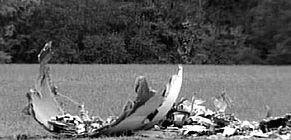

Several Russian media sources are reporting that the data in the black box handed over by Russian specialists to the Lithuanian authorities contains the parameters of a different aircraft - not the Su-27 that crashed. See, for example, this link. The Lithuanians have accused the Russians of disinformation.

Wednesday, September 28, 2005


Conflict in the Air
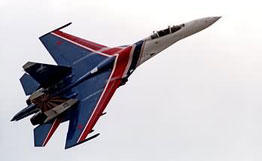

Over at Estland, Jens-Olaf has some acerbic comments on coverage of the crash of the Russia Su-27 fighter in Lithuania, noting that this serious incident, involving an encounter between German fighter planes and a Russian military aircraft, and the apparent deliberate crash of that aircraft on the soil of a NATO member, has received remarkably little attention in the world's media.

Meanwhile, Vladimir Socor, writing in EDM, continues to examine the incident, noting how its ramifications grow more complex with each day that passes.

The original BBC report on the crash and its aftermath is here.


Homeless in the New World
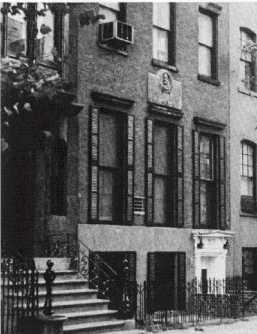

One tends to think of New York City as a place that has always and invariably been a staunch protector and shelterer of the cultural heritage of Europe. In the course of the 20th century so many European writers, artists, thinkers, composers and others active in the arts and sciences found refuge there that a story like that of the Dvorak House - the house that contained the New York home of the great 19th century Czech composer Antonin Dvorak (who for three years towards the end of his life lived and worked in New York and elsewhere in North America) - seems unexpected and somehow cruel.

Steven Richman has done much to propagate and conserve the memory of Dvorak's American years, showing in essays and papers how important Dvorak's legacy was for the development of American music. Dvorak not only supported the cause of African-Anerican and Native American music, but also encouraged the admission of black and female students to the National Conservatory. While his influence on later American music was indirect, he none the less taught the students who would later become the teachers of composers like Aaron Copland, George Gershwin and Duke Ellington. In New York, Dvorak composed some of his best-known works, including the New World Symphony, the Sonatina for Violin and Piano, and the E flat major String Quintet op. 97. Many of these works incorporated elements of indigenous American music.

It's sad to read of what eventually happened to the composer's home. Richman writes, apropos of a Music & Arts CD celebrating Dvorak's life and work:
In 1941, on the 100th anniversary of the composer’s birth, a plaque was placed on the facade of the Dvorak House by Mayor Fiorello La Guardia. Among those who attended the dedication were violinist Fritz Kreisler, conductor Bruno Walter, Czechoslovak Foreign Minister-in-Exile Jan Masaryk, soprano Jarmila Novotná, Dvorak’s secretary J.J Kovarík, and the aforementioned Harry T. Burleigh, who, since his youthful association with Dvorak, had achieved eminence as a composer, pioneering arranger of spirituals (his versions were sung by Enrico Caruso, John McCormack, and Marian Anderson), a noted church and concert baritone (he was soloist at the very same St George’s Church, not missing a performance for 52 years!), founding member of ASCAP, and an editor for Ricordi.

Half a century later, in February 1991, the facade was designated a landmark on cultural grounds by the Landmarks Preservation Commission. Yet, unfortunately, according to the new city charter, the City Council could overturn the landmarking, and did so under pressure from the [Beth Israel] hospital in June, 1991, ignoring thousands of letters from around the world from such musicians and music lovers as violinist Josef Suk (Dvorak’s great-grandson), Kurt Masur, Yo-Yo Ma, Rudolf Firkusny, Rafael Kubelík, myself, arts patroness Alice Tully, film director Milos Forman, President of Czechoslovakia Vaclav Havel, Mercer Ellington, critic Harold Schonberg, the Archbishop of Prague, the Czechoslovak Minister of Culture, Manhattan Borough President Ruth Messinger, and AIDS activists, all to no avail. The hospital was intransigent, resisting efforts to save even the facade, and the house was summarily destroyed for an AIDS facility in late August-early September, 1991, within days of Dvorak’s 150th Birthday. Fortunately, I myself was out of the country, and was spared the awful reality of its demise. (However, a cellist friend had the foresight to preserve a brick from the site, which he has saved as a keepsake.) A newly elected City Council later renamed the street Dvorak Place, but it was small recompense.
(Hat tip: Gayle Dixon)


Never Again

Speech by Estonian MEP Tunne Kelam
in the debate on the 25th anniversary of "Solidarnosc" and its message to Europe

Strasbourg, September 26, 2005.

25 years ago in Poland a historic break-through was accomplished when Polish workers and intellectuals succeeded to create a democratic civic alternative to the rigid Communist structures. "Solidarnosc" started the process of East-European nations becoming genuinely free from totalitarian enslavement. "The other lung of the same European homeland" - to quote John Paul II - started to breathe, to convey oxygen and self-respect to tens of millions of East-Europeans. The birth of "Solidarnosc" generated hope that the tragic division of Europe could be overcome.

Poland is a symbol of Europe. It was the first victim of the criminal alliance of Hitler and Stalin who together launched the Second World War. Polish nation experienced the worst of both of these dictatorships. Perhaps it is not a chance that the victory of "Solidarnosc" opened the channel to reunification of Europe.

The most significant achievement of "Solidarnosc" was its ability to unite all sectors of Polish society. This was not possible without a moral revival, without a spiritual dimension, of which the Polish pope became an embodiment, reminder and inspirer.

The important message of "Solidarnosc" victory remains - how to discover both strength and balance in a passionate quest for justice and in the everlasting spiritual values of Europe. Listening to this message could help us to overcome the crisis of European identity about which there was talk today in this hemicycle. Because "Solidarnosc" has already became part of our European identity - it is up to us to fully realize the impact of this transformation.

This week, we have the opportunity and duty to decide about starting to celebrate August 31 as the "Day of Freedom and Solidarity" in Europe. I fully support this initiative. In addition, there is a need for another date to be remembered on the European scale: on August 23 (the anniversary of the 1939 Nazi-Soviet pact) the victims of both Communism and Nazism should be commemorated. Only then the famous appeal "Never again!" would become valid also for the victims of Communism.

(via MAK)

Tuesday, September 27, 2005


A New Poland?

Commenting on the left's crushing defeat in Sunday's Polish elections, TOL has some observations and tentative predictions about the likely future development of Polish politics and society. The magazine's editorialists express the opinion that the left-right division in post-communist Polish politics was never very clearly marked, as it seemed to depend less on a division of policies than on one of cultural preferences and outlook. Poland's future, they believe, will continue to be mapped not only by economic concerns but also by such cultural considerations:
...if a “Fourth Republic” or a post-post-communist era is to emerge and survive, it needs to go beyond history and style. For that to happen, these elections suggest it will need several things. One is a strong economy, competently and fairly run. Only a disbelief in the SLD’s economic ability (Poland’s unemployment rate currently runs at about 18 percent) and doubts about its real interests (following a string of corruption scandals) can probably explain why so many former left-wing voters voted for Civic Platform and Law and Justice or simply did not vote (turnout was a dismal 39 percent, down even on the lowly 46 percent recorded in 2001). Put bluntly, a Fourth Republic – if it emerges – means neither left nor right, but better.

But, to last, a Fourth Republic government also requires something else: it somehow needs to bridge Poland’s deep, albeit temporarily hidden cultural cleavage. Secular Poles will surely not mutely watch a social drift to the right and back a “moral revolution” if that revolution means a more intrusive Catholicism. To contain or coopt secular Poles, the liberalism that Civic Platform talks up and the solidarity that Law and Justice invokes will surely have to have a cultural dimension. A Fourth Republic, then, probably needs to be neither Catholic nor non-Catholic, and at least a little “liberal.”

On a day of such an overwhelming victory, Poland’s right can be excused for dreaming dreams. But perhaps only once a government has survived four years and only if it somehow spans the cultural divide can there really be any meaningful talk of a Fourth Republic. Something has ended, nothing wants to begin, perhaps it has already begun, the Polish poet Tadeusz Rozewicz wrote about the early transition days of Poland’s Third Republic. For the time being, it is perhaps enough to say that something has ended, something wants to begin – and perhaps it has already begun.


Brodsky Essays

On a literary note: as I discovered last week, there's a most useful Russian-language collection of essays by Joseph Brodsky here. The essays have in the majority of cases been translated from the English originals to be found in volumes such as Less Than One (1986). Not all the translations are authorised, but there's a very fine authorised translation of "On Tyranny" made by Lev Losev.

Monday, September 26, 2005


The Prague Watchdog Weekly Newsletter, No. 39

------------------------------------------------------------------------------------
THE PRAGUE WATCHDOG WEEKLY NEWSLETTER, No. 39 (September 26, 2005)
------------------------------------------------------------------------------------

1) THE WEEK IN BRIEF (September 19 - 25)

September 17-24 - Alu Alkhanov, the Moscow-backed leader of the Chechen Republic, made an official visit to Jordan and Syria.

September 20 - Three policemen were shot dead in Ingushetia's village of Karabulak.

September 21 - Representatives of several dozen Chechen public organizations established in Bern, Switzerland, the Chechen Civil Society Forum in order to consolidate Chechen civil society and enable Chechen NGOs direct access to European institutions.

September 22 - Chechen lawyer and human rights defender Lida Yusupova was awarded the 2005 Thorolf Rafto Memorial Prize "in recognition of her brave and unrelenting efforts to document human rights violations and act as a spokeswoman for the forgotten victims of the war in Chechnya."

September 22 - Former Chechen guerrilla commander Magomed Khambiyev, who surrendered to the Moscow-backed Chechen authorities under unclear circumstances in March 2004, will take part in the November 27 parliamentary elections, annouced Ramzan Kadyrov, First Vice-Premier of the Moscow-backed Chechen government.

September 23 - Dozens of local and Chechen students of the Kabardino-Balkarian State University clashed in Nalchik, the capital of Kabardino-Balkaria. The Chechen students were supported by Chechen policemen, who used their firearms.

-------------------------------------------------------------------------------------
2) UPCOMING EVENTS

September 29 - Vladikavkaz (North Ossetia / Russia): The North Ossetian parliamentary commission of inquiry into last year's Beslan massacre should familiarize the republic's Parliament with its report on the causes and circumstances of the tragedy.

October 3 - Stockholm (Sweden): Arsen Sakalov, coordinator for the Russian Justice Project (formerly Chechnya Justice Project), will receive the Per Anger Prize for his efforts to bring justice to victims of human rights abuse connected to the conflict in Chechnya.

For more upcoming Chechnya-related events go to http://www.watchdog.cz/calendar.

-------------------------------------------------------------------------------------
3) REGIONAL REPORTING

Museum-preserve in Chechnya under threat of complete destruction (by Lecha Sadayev, September 20)
Relics of Chechnya’s medieval architecture may be completely destroyed, fears Ismail Munayev, head of the Chechen office of the Rosokhrankultura agency.
http://www.watchdog.cz/index.php?show=000000-000002-000002-000045&lang=1

Chechen election campaign picks up speed (by Lecha Sadayev, September 21)
Among those who expressed a desire to fight for parliamentary seats are Salambek Kunchalov, former member of the parliament of independent Chechnya.
http://www.watchdog.cz/index.php?show=000000-000004-000001-000173&lang=1

Two corpses discovered in Grozny district (by Lecha Sadayev, September 22)
According to criminology experts, their deaths were caused by multiple bullet wounds.
http://www.watchdog.cz/index.php?show=000000-000008-000001-000407&lang=1

One policeman killed, another kidnapped in Chechnya (by Lecha Sadayev, September 24)
The body of a Chechen police officer was found in Grozny with gunshot wounds to the head and body.
http://www.watchdog.cz/index.php?show=000000-000005-000004-000114&lang=1

-------------------------------------------------------------------------------------
4) HUMANITARIAN - SURVEY

After 15 years of "depression," people of Kabardino-Balkaria long for change (Caucasus Times, September 26)

Results of a survey conducted in Nalchik by "Caucasus Times"

http://www.watchdog.cz/?show=000000-000002-000001-000161&lang=1


-------------------------------------------------------------------------------------
5) ATTACKS ON HUMAN RIGHTS ACTIVISTS
Monitoring attacks on the rights defenders whose work is connected with the Chechen conflict.

Link: http://www.watchdog.cz/attacks

-------------------------------------------------------------------------------------
6) LATEST ADDITION TO OUR LINKS LIBRARY:

Society for Threatened People (Switzerland) - http://www.gfbv.ch
The Swiss NGO that helped Chechen NGOs to establish the Chechen Civil Society Forum in Bern this past week.


For more Chechnya-related links go to our Links library ( http://www.watchdog.cz/links ), which is being continuously updated.


------------------------------------------------------------------------------------
Prague Watchdog Weekly Newsletter is a publication of Prague Watchdog. If you wish to subscribe (unsubscribe) to it, please send us an e-mail to mail@watchdog.cz. The newsletter is usually sent out on Monday evenings.

Prague Watchdog launched its website in August 2000 and its aim is to collect and disseminate information on the ongoing conflict in Chechnya, focusing on human rights, media coverage, political situation and relief aid.

Visit us at http://www.watchdog.cz. For the Russian version, go to http://www.watchdog.cz/russian.
-------------------------------------------------------------------------------------


The Failure of Pragmatism

The Chechenpress website has published an article by Salamu Talkhigov, entitled Samoubiystvennyi "pragmatizm" zapada (The West's Suicidal Pragmatism), which roundly condemns the world public for backing Russia in Chechnya:


The world public, either by its indifference or its direct support for the actions of the Kremlin in Chechnya, is encouraging the Russian occupation forces to take an even more savage attitude towards the Chechen population. In response to this cruelty, the Chechen people are carrying out actions which the international community describes as "terrorist" and through the mouths of its leaders voices its support for the "fight against terrorism" which Russia is allegedly waging. The result is a vicious circle of hypocrisy, lies and increasing mutual hatred.

Chechnya sacrificed for the sake of cooperation with Russia

Of course, only an incorrigible idealist would today try to appeal to the conscience and morality of eastern or western politicians. In politics conscience and morality serve as a fig leaf which from time to time covers up a brutal and cynical pragmatism. "When it comes to the situation in Chechnya," notes Gabriel Juen of the Brussels office of Amnesty International, "we can see that some influential states, members of the European Union, have decided to take Russia's side for the sake of their own supreme strategic objectives." He could have added that all countries, and not just the countries of the European Union, are behaving in this way.

Each state or community of states has its own "pragmatic" reasons for sacrificing the Chechen people for the sake of cooperation with Russia. France relies on its alliance with Russia to create in the UN Security Council a counterweight to the Anglo-American alliance, which often ignores the political-economic interests of the west European countries. The British leaders, who are being subjected to increasing criticism from the British public for their participation in the war against Iraq, have been forced to justify their close alliance with the USA by the presence of an "international terrorist network", of which Chechnya is, allegedly, one of the cells. And that being the case, [Prime Minister] Tony Blair, in order to preserve his reputation as a "fighter against terrorism", is resolutely supporting [Russian President Vladimir] Putin's "anti-terrorist operation" (albeit artificially protracted) in Chechnya. Germany has a vested interest in Russian oil, gas and the market of investment and consumers of German goods.

The USA, having declared its "anti-terrorist alliance" with Russia, has consolidated its military presence in Central Asia and South Caucasus in two of the most important strategic and energy centres of Eurasia.Iran, which invariably blocks any, even the mildest condemnation of Russian policy in Chechnya adopted by the League of Islamic Countries is clinging with all its might in the hope of Moscow's help in gaining access to nuclear technology.

The Arab regimes are counting on the Kremlin's support in opposing the American-Israeli tandem in the region. China, India, Pakistan, and so on and so forth - all these countries are weighing up the situation on the "political scales" on which the huge nuclear power of Russia clearly outweighs tiny Chechnya.

The so-called "CIS countries" or, more broadly, the countries of post-Soviet space, the majority of whom have scarcely repulsed Russia's military blackmail and the subversive activity of its special services, not only do not support the liberation struggle of the Chechen people, but are themselves, in trying to "placate" the Kremlin, conducting a repressive policy in relation to the Chechen refugees on their territory, submissively and fully aware of their mendacity repeating after Russia's propaganda the rubber stamps of "Chechen terrorism". And all this, despite the fact that in these "young countries" the Chechens have not carried out any "terrorist acts" or serious crimes whatsoever.

Humanitarian principles or support for Russia

As we can see, the reason for the world community's support for Moscow in the Russian-Chechen confrontation has nothing to do with "Chechen terrorism"; on the contrary, this notorious "Chechen terrorism" is a means of escape which enables the democratic countries to violate those very principles, to protect which, allegedly, all these structures were established: the UN, OSCE, NATO, the Parliamentary Assembly of the Council of Europe, EU and so on and so forth. And one can easily understand that faint touch of relief, with which the New York Times newspaper states: "At the same time, the restrictions imposed by Russia on the work of foreign journalists in Chechnya have led to a reduction in the amount of video footage shown in Europe depicting the suffering of the Chechen people."

But, paradoxical as it may sound, it is precisely those "pragmatic considerations", for the sake of which the West turns a blind eye to the methodical annihilation of the Chechen people, declaring it to be "Russia's internal affair", which already make the Chechen tragedy one of the world's most acute international problems.

In the first place, given the whole scarcity of information reaching the West from Chechnya, Western politicians are invariably faced with a dilemma: humanitarian principles or support for Russia. Chechnya has become the touchstone on which the whole reputation of Western civilization is subjected to a fierce examination, and it will not succeed in putting off the ultimate verdict year after year.

Secondly, it is precisely because of the monstrous terror unleashed by the Kremlin against the Chechen people that the hopes for Russia's integral incorporation into the system of Western democracies are becoming more and more illusory. There cannot be a democratic whole, if part of it is anti-democratic and totalitarian. Totalitarianism is so called precisely because it is all-embracing in the social and political aspects.

The genocide of the Chechens, the torture, the bloody activities of the "death squadrons", the extra-judicial executions and the system of hostage-taking and collective responsibility cannot be legalized by means of democratic laws. What is more, these crimes cannot be committed if there is a free and democratic press in the country. Therefore, the crimes of the Russian military in Chechnya inevitably introduce into domestic political life the true elements of totalitarianism. And totalitarianism, in turn, can be based only on a corresponding ideology. Such ideologies can be of only three types: "class", nationalistic and radically religious. For historical reasons (the discrediting of the ideas of communism and the weak religious nature of Russian society), totalitarian trends in the evolution of the Kremlin regime can only be backed up by a nationalist ideology, of which the state-owned church and marginal communist cells have become servants. It is precisely nationalistic ideology, as all independent political scientific research both in the West and in Russia itself proves, that has today become the dominating world outlook of Russian society.

And third and finally, nationalistic ideology, which is the natural outcome of the long years of the war in Chechnya, cannot for long be preserved within the framework of the Chechenophobia established by the Kremlin. Nationalism always generalizes its "enemies", forms them up, as Hitler recommended, "into one line", so as not to complicate propaganda and to concentrate the hatred of the "popular masses" in one direction.

West driving Russia into "bloody swamp of totalitarianism"


Who will be Russia's "enemy" after Chechnya? The answer to this question is obvious: the Islamic peoples, since the Chechens are Muslims, and the West, since it is precisely the West which will absorb the spaces which for a long time were Russia's imperial possessions. But the best "fuel" for nationalism is, as we know, hurt pride and thirst for revenge. Thus, if the East (the "Islamic world") and the West condemn the Chechens to destruction, trying to justify this genocide by "pragmatism", then one has to accept that this "pragmatism" amounts to nurturing and setting a
fascist monster in the shape of Russia armed with a nuclear bludgeon against oneself.

Nationalism, unlike the West's "rational democracy", is an emotional ideology, which does not recognize "pragmatic" restrictions. This means that a nationalistically minded society easily starts a war if even a "pragmatic calculation" shows the suicidal nature of such a war. Germany and Japan in World War II proved this formula by their own fate. Therefore, if the lack of morality of Western politicians and leaders in relation to the Chechen tragedy is absolutely beyond question, then it is time to ask the question: are these politicians and leaders so pragmatic from the point of view of really following their interests? After all, by gaining geo-strategic and economic benefit in supporting the carnage in Chechnya, the West by this support is driving Russia more and more into a bloody swamp of totalitarianism in its nationalistic version. Consequently, Western politicians are thinking in terms of tactical advantages, sacrificing for the sake of these the strategic future of democratic freedoms - the very foundations of Western civilization. And in politics this is called not "pragmatism", but dilettantism, shortsightedness and failure.
(Via chechnya-sl and BBC Monitoring)


Quixote at 400

Leopoldo writes that "Spain is all frantic with the 400 years. Lots of new editions - at very reasonable prices - of Don Quixote with excellent footnotes and commentaries," and cites a recent IHT article by C.J. Moore about the author and the anniversary:
Here is the other face of the modern world as we know it. Following the new humanism of Lazarillo de Tormes, Cervantes brings up the complex issues arising from self-consciousness, the dimension of irony, even self-deprecation. In the person of Don Quixote himself, this self-consciousness shows as melancholy, the mood in which the ingenioso hidalgo approaches his end.

Yet Cervantes rescues us from a potential and terrible pit of cynicism through finding his characters' redemption as individuals. Neither Don Quixote nor Sancho Panza is truly mad, but they are human, noble, absurd, caring, confused, often mistaken, like ourselves, in a real world governed by the facts of life. This year we celebrate the 400th anniversary of that literary redemption of humanity.


Rogue Intelligence

Retired intelligence officers often make a minor career out of giving newspaper interviews, so it's no surprise to find ex-KGB general Leonid Shebarshin expounding his views on such topics as September 11, rogue agents, and Al Qaeda in the pages of the Russian periodical Argumenty i fakty. What does seem mildly surprising (though not if one has read previous statements by the gentleman) in view of the much-touted "U.S.-Russian co-operation in the fight against terror" is the eagerness General Shebarshin shows to implicate U.S. intelligence forces in the planning and execution of 9/11:
[Shebarshin] I believe the Al-Qaeda terrorist acts in New York and Washington on 11 September 2001 were a provocation by American special services. Moreover on such a colossal scale that it is mind-boggling. Can one believe, for example, that Bin-Laden, hiding somewhere in Afghan mountains and without electronic means of communication, organized the simultaneous seizure of five aircraft? Yes, you try and organize a meeting of 10 people in Moscow, without using the telephone.

The provocation of 11 September was so crude that, at one of the airports, "hot on the trail" the FBI allegedly found a parked car in which there were Arab passports, the Koran and manuals for flying a Boeing, written in Arabic . The whole absurdity was that, firstly, there are no manuals in any other language but English, secondly, can one fly a Boeing after just reading the manuals and, thirdly, how can one board an aircraft without a passport?

It seems, having realized the whole stupidity of its "find", the USA never mentioned it again. Only one thing is clear: we shall never know the whole truth about 11 September.

The USA stood to gain from 11 September

[Question] Who needed such an enormous provocation?

[Shebarshin] In order to find who is behind it, one can use the method used in Ancient Rome and ask oneself a question: who stands to gain from it? And the belligerent group of neoconservatives in the US leadership stood to gain from 11 September. They used it as an excuse for occupying Afghanistan and searching for terrorist gangs there that Afghanistan never had. But Afghanistan is a bridgehead for establishing control over Central Asia with its oil and gas deposits and the routes of their transportation.

Besides, Afghanistan and Central Asian countries are a bridgehead for a possible war with China.

Furthermore, on an excuse of fighting terrorism, the USA occupied Iraq and toppled Saddam Hussein, although it is known that Saddam could not stand terrorists and did not let them into Iraq. Thus, "thanks" to 11 September, the USA established control over the world's largest oil deposits located in Iraq. In addition, Pentagon, whose budget reached astronomical figures, and agencies dealing with domestic security gained as a result. That was the price the 3,000 people, who were killed in the terrorist acts of 11 September 2001, had to pay.
There's a lot more in this vein. In the second part of the interview, Shebarshin changes tack a bit, and starts pooh-poohing the idea, for example, that the CIA was involved in the break-up of the Soviet Union. He also talks a bit about "rogue agents", and refers to Noriega as an example. He sees Bin Laden as another such rogue agent, and considers that "had the Americans wanted, they would have arrested him very quickly. But Bin Laden and Al Qaida he is in charge of are a myth created and whipped up by the USA in order to frighten the world with the threat of terrorism. Although both Bin Laden and Al Qaida may exist in reality, the scale of their activities is microscopic."

The interview concludes with some philosophical musing about what makes people commit treason - is it money, or antagonism to the established order, or both?
If a person is in conflict with his management or in conflict with his environment, if a person cannot express himself, this is where we, intelligence employees, step in. One can talk to us like to a doctor about anything. We shall always understand, support and... [newspaper parenthesis] recruit.
It's interesting to note that there are currently 345 comments on this article at the AiF website.

Of course, one can't exclude the very tiny possibility that Shebarshin's latest outing may just be one more routine attempt to discredit ex-KGB intelligence officers (Gordievsky, Litvinenko and others) who talk too openly to the press...

Sunday, September 25, 2005


Starvation


I stand in the backyard of the Shali food factory among the starving crowd of people who are struggling for the cherished containers, and recall Putin's well groomed assistant Sergei Yastrzhembsky announcing that a humanitarian disaster does not exist.

Aishat Junaidova, the head of the Shali regional migration services (there are almost sixty thousand refugees registered here) says:

"Call Moscow's attention to the fact that this government handout is not enough to live on. Many of our refugees are for all intents and purposes condemned to starvation."

Of course, I promise to tell them this. But I promise very quietly. I don't even actually promise, but just nod and whisper something. And I don't explain anything either. It's hard to tell the condemned that, first, the Kremlin doesn't give a damn about my report and, second, the situation in Moscow regarding the war in the Caucasus is very complicated, and no one knows anything about it, because they don't want to. Third, even close friends don't believe my stories after my trips to Chechnya, and I have stopped explaining anything, and just sit silently when I'm invited anywhere. And finally, not even my newspaper, which opposes the current party line, is eager to print my reports from Chechnya. And if they do, they sometimes cut out the toughest parts, not wanting to shock the public. There are fierce arguments within the editorial staff over this issue, and it is more difficult than ever for me to publish the whole truth.

But I am silent about this, simply because for the people around me, who have suffered so much, I am the first civilian from there, from the other, nonwar world. No journalists come here. There's no one else they can tell what's going on.

To tell me about the starvation, Aishat has to shout over the howls of some women who are out of their minds with hunger and are cursing and ripping a three-day ration out of each other's hands. I also see some people in the crowd spitting at others. They are tubercular. Out of eternal bitterness toward the world, they're trying to infect those who are not yet coughing up blood. Or perhaps they're hoping that the healthy ones will jump aside out of fear and let them through to the boxes of canned goods.

A cordon of soldiers surrounds the trucks with G-4. With their automatic weapons tilted forward, they try to establish some kind of order among the exhausted people. But they have a strange expression on their faces too. Not of sympathy, but not of dumb cruelty either. It's more like a stupor from the kind of war they have to fight, against a crowd of hungry people. Later, month after month, I would see this many more times; most of the soldiers' faces in the second Chechen war would be just like these.


- Anna Politkovskaya, Chechnya: Dispatches from a Small Corner of Hell, 2003

Saturday, September 24, 2005


Grabovoy: Mothers of Beslan Appeal

We, members of the North Ossetian public organization Association of the Victims of Terror Acts, The Mothers of Beslan, appeal to public opinion and to the entire world community apropos of the recent events connected with the visit of the leadership of our organization to the so-called healer – but in reality, charlatan - Grigory Grabovoy.

We categorically declare that this visit was a provocation, the purpose of which is to discredit and, as a result, to neutralize our movement. It is just one more plan devised by the authorities and special services in order to liquidate our organization by means of psychological action and pressure on the leadership of the committee headed by Susanna Dudiyeva. However, our public organization has many more members than the 10 people whom it was possible to brainwash [zombirovat’ = “turn into zombies, zombify”].

The overwhelming majority of the victims have remained in possession of their senses. We do not intend to reject our purposes and tasks in the reaching of the truth. We also declare: those who organized this provocation did not attain and will not attain a split in our ranks. Despite the fact that Susannah Dudiyeva took this step, she and all those who participated in the sectarian’s seances will remain with us.

We condemn the openly criminal and cynical repression of women who have survived terrible grief - the death of their children - and are fighting for justice.

We appeal to the Attorney General of the Russian Federation to give a legal opinion and to take appropriate legal measures with regard to the criminal activity of the charlatan Grigory Grabovoy.

22 September 2005


[my tr. - Russian text is here]

For background on the Grabovoy provocation, see this link.

Friday, September 23, 2005


Le Muezzin

Sous l’impulsion de Max-Pol Fouchet et de Camus, d'interminables duscussions se déroulaient, bien souvent au coeur de la Casbah, dans un café d’angle qui s'appelait le Fromentin, où l'on disait qu'Eugène Delacroix venait volontiers s'asseoir au XIXe siècle -- puis, lors de ses visites a Alger, plus tard, leur intellectuel préferé, André Gide. Its sirotaient du thé à la menthe cependant que le muezzin appelait les fidèles a la prière, du haut du minaret de la petite mosquée située juste en face. Fouchet observa que Camus était particulièrement touché par cet appel à la prière, car il lisait les mystiques, Ruysbroek, sainte Thérèse d'Avila et, sous l’influence de Grenier, la Bhagavad-gita.

-- Herbert R. Lottman

Thursday, September 22, 2005


Nuclear Poker

GEOPOLITICAL INTELLIGENCE REPORT 09.21.2005

The Value of a Nuclear Program

By George Friedman

This was a week of nuclear weapons. The North Koreans seemed to promise that they would abandon their nuclear weapons program, while the Iranians made it clear that they had no intention of abandoning theirs. The confluence of these events causes us to raise a fundamental question rarely addressed: Why would small nations want to spend their national treasure on developing a handful of nuclear weapons that would be difficult to deliver to a target and that could be destroyed by another country -- like the United States -- almost at will, if the United States chose to use their own enormously more plentiful weapons?

The answer is not as obvious as it might seem. One of the concerns normally expressed about the North Korean nuclear program is that Pyongyang might one day choose to destroy Tokyo. That is not a trivial concern, but it is not clearly a realistic one. Assume that North Korea developed four or five fission bombs. Assume also that they fired some of those weapons at Tokyo. Obviously, Tokyo would be destroyed. But what would North Korea gain? The most likely outcome -- certainly one that the North Koreans would have to assess as the most likely response -- would be a massive counterstrike by the United States. The intent would be not only punitive, but would be to destroy any remaining nuclear weapons and capabilities.

In this scenario, then, Tokyo would be lost, but so would North Korea. Thus, for the original equation to work, it has to be assumed that the North Koreans are crazy or that the Iranians have reached such a level of religious intensity that the destruction of Tel Aviv would be worth the rain of destruction that would be brought against Iran by Israel's much larger nuclear capability. The standard analysis, therefore, begins with the assumption that nuclear weapons in the hands of smaller nations -- particularly North Korea or Iran -- are dangerous because these countries have non-rational calculations of their national interests. They are religious fanatics, ideological fanatics or simply nuts. Therefore, the possession of nuclear weapons in their hands poses a tremendous danger. The mere desire to develop nuclear weapons is a sign of instability (among anyone other than large nations who already have them, of course).

Before buying into the lunatic theory, let's consider what happened this week. North Korea, for example, took part in a six-power conference -- meeting with representatives of South Korea, Japan, Russia, China and the United States. Absent nuclear weapons, North Korea has the intrinsic geopolitical weight of Ethiopia. For it to be noticed by any of these nations, except perhaps South Korea, would require a natural disaster. But here the North Koreans were, hanging with the big dogs, all because they might be in the process of developing a few small nuclear devices -- the deliverability and reliability of which were completely unclear.

Iran is a much more substantial country than North Korea in every respect. It is not, however, a great power, let alone a superpower. Nevertheless, the United States is focused obsessively on Iran's capabilities, while Germany, France and Britain stand ready to mediate and deliver stern warnings. Russians send messages to the United States via their relations with Iran, while the Chinese buy oil and happily fish in muddy waters. Iran would always have international attention, but certainly not on the order that it receives every time it rattles its nuclear development program.

The possession of a nuclear weapons development program has one obvious result: international attention is drawn to the country developing the weapon. It really doesn't matter much how well the country is doing in developing the weapon; it is only necessary that the intent be known and their ability to build the weapon uncertain. The question is, therefore, what the value is of being noticed, when one of the consequences of being noticed might be a pre-emptive nuclear strike.

There has been only one pre-emptive strike against a nuclear capability, and that in itself wasn't a nuclear strike -- it was Israel's attack against Iraq's Osirak reactor in 1981. Other than that, nuclear programs have not been attacked. The reason is simple: Those who might choose to attack are loath to use nuclear weapons. It is not in their interest to break the effective taboo that has been in place since Nagasaki. A conventional strike is uncertain at best. After Iraq, countries have learned to disperse and harden their nuclear programs. Preemptive strikes, barring massive provocation or imminent threat, have simply not been practical or desirable.

The normal response by world leaders has been to find levers that are persuasive to the country developing nuclear weapons. Once you get past the "stiff diplomatic note" stage -- i.e., hot air -- the options are penalties and rewards.

There are usually a range of penalties, economic and political. The problem is that -- as with all international sanctions -- they require unanimity, at least among major powers. Since at least one power invariably finds it in its interest to circumvent the sanctions for political or economic reasons, sanctions usually turn out to be useless. Indeed, sanctions have the mild benefit of making the country involved appear to be the victim of great-power bullying. There is always some value in that.

The real benefit occurs, however, when the carrot is used. Since military action is not desired, since stern warnings embodied by U.N. resolutions don't carry as much weight as they might and since sanctions rarely work, all that is left is the carrot. At a certain point, if the United States or some other country becomes convinced that the North Koreans, for example, are really developing a bomb -- and simultaneously become convinced that they might, for whatever perverse reason, use it -- a game of "Let's Make a Deal" begins. Whether it is money, food, technology, politics or season tickets to the Dallas Cowboys, the discussion usually comes around to a payoff.

North Korea, which pioneered this model, learned that in order to carry this out successfully, three things were needed:

1. It was imperative for the world to know North Korea had a secret program under way. A truly secret program would have no value; therefore, it is important to permit international inspections long enough to confirm that you are building a weapon, and then to expel the inspectors in order to frighten everyone around you.

2. It is vital that you adopt a political culture in which foreigners believe that the total annihilation of your country is a matter of monumental indifference to you, so long as you get to destroy part of some other country. At the very least, you must appear crazy enough to raise questions in the minds of foreign diplomats as to whether you might do something crazy.

3. You must never actually do anything really crazy, like make it appear that you are about to launch a nuclear attack with your three weapons. Since you're not really good at this yet, it will take time to move the weapon, load it on a missile or plane, and launch. During that time, someone might conclude that you really have weapons and that you really have lost your mind and nuke you. Don't do anything that actually appears to make you an immediate danger -- just create the impression that you are almost posing an immediate danger. It's probably best to spend ten years almost ready to be a threat.

Now, this entire strategy rests on one key assumption: that your country is situated in a sufficiently strategic locale that great powers should care whether you have nuclear weapons or not. Otherwise, you might find yourself following the Libyan model -- making all the right poker moves and not exciting anyone, because there is nothing really important within reach of your potential weapons. This might also explain why other small countries, such as Argentina and South Africa, simply gave up their pursuit of nuclear programs. In the game of nuclear poker, as in geopolitics, "place" matters.

The geographic location of both North Korea and Iran is, however, important, and for the past decade or so, the North Koreans have been giving a clinic on how to extract maximum value from almost having a nuclear weapon and appearing to be nuts. They have gotten money, food, technology. Most of all, they have been treated as the equal of the United States, China, Russia, Japan and South Korea. This has tremendous value domestically, in that it legitimizes the regime. It also creates a bargaining situation that not only allows Pyongyang to extract benefits, but achieves the ultimate political goal.

That goal is regime survival. With the end of the Cold War, North Korea's survival was in serious jeopardy. It had survived by being of some value to the Soviets or to the Chinese. By the early 1990s, however, North Korea no longer was of value to anyone. The probability of the regime in Pyongyang surviving appeared minimal. But developing and publicizing its nuclear program made North Korea a wild card: It was too dangerous to attack or even to undermine. Its nuclear program was in an uncertain state -- and the regime, feeling threatened, might choose to go nuclear. There was, therefore, a consensus that the survival of the North Korean regime was less of a problem than its fall.

Which is just the consensus North Korea was after.

Iran has learned a great deal from the North Koreans. It has learned that it is extremely important for the world to know it has a nuclear program, and Tehran has been quite content to allow inspectors in -- and then jerk them around after they have confirmed everyone's worst fears. The Iranians have learned to display a political culture that forces other nations to believe they are quite capable of using nuclear weapons, even at the price of national catastrophe. They have learned to be extraordinarily cautious in not crossing a line that would bring down a pre-emptive strike. It makes no sense to do what Saddam Hussein did, which was to spend a fortune on a nuclear facility that the Israelis then blew up.

The Iranians have used their nuclear program in a far more sophisticated manner than have the North Koreans. The North Koreans engaged in very skillful quid pro quos, with the only complexity being that they just about never kept their word after they got what they wanted. The Iranians are not nearly as concerned about regime survival as the North Koreans. Their regime is going to survive. Iranian leaders are concerned with a range of regional issues, the most important at this moment being Iraq.

The Iranian interest in Iraq is profound. Tehran wants to see the creation of an Iraq that, at the very least, poses no threat to Iran -- and which would be, at most, an Iranian satellite. The Iranians and Americans are engaged in a dizzyingly complex game in Iraq, and Tehran needs every lever it can find. The nuclear card increases the Iranians' leverage and gives them something with which to bargain. They also managed to skillfully draw in the British, French and Germans as mediators in an effort to drive another wedge between the United States and the Europeans. They have not been fully successful at this, but so long as the ultimate threat is recourse to the U.N. Security Council -- where any resolution permitting military action will be vetoed -- they have channeled the process in harmless directions.

The value of a nuclear program for a small country is not that it provides a military option. It does not. The value is not even in possessing nuclear weapons, which might actually turn out to be too dangerous. The value of a nuclear program is that it exists and is known to exist. That very fact redefines its possessor's place in the international system and provides it with opportunities to extract concessions. So long as the country does not push its position in such a way that anyone is convinced of an imminent threat -- or, to put it differently, so long as the line between potential threat and "ready to launch" is never crossed -- great powers will sooner make concessions than take risks.

In other words, North Korea and Iran are very rationally engaged in appearing to be irrational risk-takers. It is interesting to note that, aside from its pursuit of nuclear weapons, North Korea has taken few strategic risks since the end of the Korean War, while Iran -- willing to underwrite any number of covert groups -- has been very careful, since the end of the Iran-Iraq war, with its own military adventures. If we forget the rhetoric, these are countries that have prudently managed risks. Possessing a program to develop nuclear weapons is, therefore, part of a prudent portfolio for managing their position in a dangerous world. It only appears to be risky. In practice, it reduces risk by limiting the threats others pose against them and by increasing the willingness of others to make concessions.

When playing poker, the cautious player always hides his caution behind a mask of recklessness. That is the prerequisite for bluffing effectively and getting people to call into full houses. The development of nuclear programs -- not the weapons themselves -- is a useful part of the mask of recklessness. Until, that is, someone calls the bluff -- telling North Korea to go develop all the weapons it wants, save that if it deploys a single one on a launcher, it would be nuked. But the North Koreans are betting that that is too much for the United States to push into the pot, as is Iran.

They are probably right.

Send questions or comments on this article to analysis@stratfor.com


The Plagues

"We know evil exists. We have established that fact beyond all doubt. The important question is: `Is there reason to hope?" Then Camus quoted the words of Dr. Rieux in The Plague:

Since the order of the world is shaped by death, mightn't it be better for God if we refuse to believe in Him and struggle with all our might against death without raising our eyes toward the heaven where He sits in silence.

"You know these lines of The Plague.... I have quoted them to you before, but do you know what I had in mind when I wrote them?"

"My impression was that you were concentrating on the suffering of the innocent. One would expect fear and terror in Oran in the face of the plague, but instead we find only longing for loved ones. As you said, `Reunion is only the exception and happiness only an accident that has lasted.'"

Camus seemed amused by my interpretation. I wondered if I had perhaps given the wrong answer, so I asked, "How would you describe what you were trying to say?"

"I was trying to say that there are at least three responses humanity can make to the plagues of human experience. First, a man may commit philosophical or physical suicide. That is, a person may simply yield to the sheer impossibility of the situation. Second, he may develop a nihilistic posture, characterized by the asthmatic old Spaniard who spends his days transferring dried beans from one pot to the other. (That alternative doesn't make life any better or any worse.) Last, and possibly most important, I tried to present the alternative of revolt, represented by the sanitation squads who go out and bury the dead bodies. Even around the collective funeral pyres, man responds to the inner flame of comradeship in the service of human survival.

"To me this is all there is – simply going on living. The only hope that I can offer is simply to live. Repetition, grilling each day with the pure act of living. Starting over again until death, that is all there is. Yet, Howard, I sense deep within that something is missing. Is there more?"
Howard Mumma, in Albert Camus and the Minister (2000)

Wednesday, September 21, 2005


A New Beginning

Israeli president inaugurates Estonian synagogue


TALLINN, Estonia, Sept 19, 2005 (AFP) - Israeli President Moshe Katsav inaugurated the construction of a new synagogue in Tallinn on Monday, the first to be built in the Estonian capital since World War Two.

"I am very grateful to the local Jewish community for building the new synagogue," Katsav told Jewish leaders and schoolchildren at a packed Jewish school hall.

"The synagogue is very important, and I appeal to all of you to continue keeping the Jewish traditions alive here," the Israeli president said, after watching a concert of traditional Jewish songs and dances by the school's students.

Katsav presented a sacred stone to be placed in the foundation of the synagogue.

Jewish synagogues in Estonia were destroyed in World War Two. Currently,only a small makeshift synagogue operates in the school.

Estonia has about 3,000 Jews, down from a pre-war figure of 4,400.

Following a meeting with Estonian President Arnold Ruutel on Monday, Katsav said he was happy there was no anti-Semitism in Estonia, while expressing concern over rising extremism and anti-Semitism in Estonia's neighour Russia.

"I am really concerned over the rise of anti-Semitism in Europe and in Russia," Katsav said.

"I hope the Russian authorities will struggle against anti-Semitism by education, by enforcing laws, by influencing public opinion."

Katsav also attended a ceremony of laying a wreath at a monument to Holocaust victims near Tallinn. The 1,000 Jews who remained in the country after the start of World War II perished in the Nazi death camps.


tt/bo/bj


Kremlinology

In Yezhednevnyi Zhurnal, political correspondent Alexander Golts writes (Russian, my quick tr.):
The work of a political journalist in Moscow increasingly resembles the work of the Western kremlinologists of Soviet days. It was built on the fact that not even the Soviet propaganda apparatus was able to falsify the entire flow of information about the country. The kremlinologist’s task consisted in endlessly correlating data and restoring the truth by following indirect signs… In this connection I highly recommend www.kremlin.ru (the official presidential site). Its editors do not rest at allowing themselves to correct the speeches of the American resident. They also boldly correct the interviews given by Vladimir Putin himself. To take just one recent example – the interview given to the American television company Fox News. The American journalists were trying to put what for them was the most important question in such a way that Putin would have to give a perfectly straight answer. Presenter Chris Wallace reminded Putin of the American President Sherman, who said that if he was nominated for the presidency he would not take part in the election campaign, and that if he was elected then he would refuse to work.

"Can you say the same thing about your presidency in 2008?", asks the presenter.

"You want me to give a blood oath and repeat for the hundredth time what I’ve already said 99 times. I think I formulated my answer to the previous question rather clearly. That is enough," says Putin, trying to avoid answering, and showing irritation.

"So you won’t run for election?" - says Wallace, trying to make the most of this.

And in reply gets what he wants: “I’ve already given you my answer. I will not.”

But now, take note. The presidential site gives a completely adequate translation of the interview. With the exception of one moment. Putin answers "I will not" to a question which Wallace did not put. "So you won’t run for election for the next term?" – this is how the question appears in the Kremlin transcript.

You must agree, this correction, if it was made consciously, may tell us many things. For example, about Putin’s intention of Putin return to power with the aid of some trick. Let us say, to let someone else be elected, and then find (or create) a pretext for holding elections and to be elected himself - and formally that will not be for the next term. After all,Vladimir Vladimirovich is so very fond of holding on to the literal meaning of words. For example, he promised not to bankrupt YUKOS - and did not make it bankrupt. But not to sell the company’s most profitable asset to a certain one-day firm: that he promised no one.

In any other country the liberties which the editors of the presidential site permit themselves would not pass unnoticed – there would be a scandal. The President would be forced to state unambiguously, once and for all, whether he was going to remain in power (whether in the post of the President or in some other capacity, it doesn’t matter) or not. Only not in Russia. One additional similarity between Russian journalists and Western kremlinologists consists in the fact that no matter what sensational facts they reveal, it will in no way change public opinion in the country.

And Golts concludes:

[Putin’s] reputation in the foreign press (with one or two exceptions) cannot be damaged any further. Everyone is certain that he is an authoritarian leader. But Putin is safe in the knowledge that this has absolutely no effect on the ceremonial side of his relations with Western leaders. They haven’t kicked him out of the G8, they will go on buying the oil and gas. Well, and they will wash their hands immediately after the handshake – but we are not that proud. At spy school we were taught all kinds of things.


Alternatives - II

The discussion continues on the IAJEStrings list.

Tuesday, September 20, 2005


Planes Behaving Badly

Vladimir Socor, on yet another incident that calls into question the still received wisdom that the Cold War ended 16 years ago:
RUSSIAN AIR FORCE PLANES MISBEHAVE OVER LITHUANIA, ESTONIA

At 15:20 local time in good flying weather on September 15, a Russian air force Su-27 fighter jet crashed into a field in western Lithuania. The plane was part of a convoy of seven fighter jets (Mig-29 and Su-27) and an A-50 radar plane en route over neutral waters of the Baltic Sea from Russia's Leningrad region to the Chernyakhovsk air base in Kaliningrad region. Earlier in the day, the convoy had crossed Estonia's flight information area with signals switched off, thus jeopardizing flight safety there.

The plane strayed almost 200 kilometers from the prescribed route, which passed approximately 20 kilometers off Lithuania's Baltic shore (just over the 12-mile limit of territorial waters). The crash site is located approximately 170 kilometers inland. The pilot, Major Valery Troyanov, ejected safely and is being held for questioning by the Lithuanian Prosecutor-General's Office in for the duration of investigations into the incident.

For two days, Russia's ministries of Defense and Foreign Affairs were claiming -- as did the pilot initially -- that the plane was unarmed. On September 17, however, the Lithuanians found that the plane was armed as if for a wartime operation. They recovered the flight recorder (black box) as well as two air-to-air missiles and the machine gun with its ammunition box from the plane's wreckage. They are looking for the other two missiles that the Russian side now admits the plane was carrying and might possibly have dropped elsewhere before crashing. Most of the plane's fuselage is buried 4 to 5 meters deep in the ground and must be recovered manually for fear of explosives inside.

The pilot and Moscow blame the incident on a malfunction of the plane's navigation equipment, which caused the pilot to lose orientation and eventually to crash land when his fuel ran out. The plane's identification friend-or-foe (IFF) system self-destroyed while in flight, as it is programmed to do in the event of a failure of navigation equipment. Further, according to this version, the Russian pilot could not contact Lithuanian civilian air control or NATO's radar in Lithuania because he does not speak English.

Questioning this version, experts note that the plane, if disoriented, was not assisted by the other Russian planes in the convoy; ran out of fuel too soon if at all; it did not contact Kaliningrad air control on the Su-27's emergency radio with emergency frequencies; and could have contacted Lithuanian air controllers, both for civil aviation and with NATO's radar in Lithuania, who are fluent in Russian as well as English. Lithuania's ace pilot, Colonel (ret.) Stasys Murza, is among those asking such questions.

According to the Russian side, when fuel ran out the pilot crashed the plane deliberately into the empty field to avoid damage to lives and property. The investigation, however, does not rule out the possibility that the deep intrusion may itself have been deliberate, as part of an intelligence mission or practice of an operation. This theory gained currency when Lithuanian journalists identified Troyanov in film footage aired in October 2004 by Belarus state television, about a joint training simulation of a deliberate intrusion into Belarus air space.

Officials and the public also consider the distinct possibility that the flight may have been a planned operation to test NATO's air defense system and response capability in the Baltic states. Radar in Lithuania did not register the deep intrusion because the plane was flying low. Two NATO planes based at Zokniai in north-central Lithuania -- they are German air force F-4s in the current rotation -- spotted the Russian plane just after it had nosedived and while the pilot was parachuting.

Russia's Defense Minister Sergei Ivanov apologized to his Lithuanian counterpart, Gediminas Kirkilas, by telephone on September 15 and offered compensation for any damages. Since that date, however, Russia's ministries of Foreign Affairs and Defense claim that the pilot and plane are legally immune. Moscow demands that the pilot and the plane's wreckage including the black box be handed over to Russia.

Lithuania's Prosecutor-General's Office and Defense Ministry are conducting a legal and a military investigation, respectively, into the incident. Troyanov's status was changed as early as September 16 from witness to suspect of violating international flight regulations. He is being questioned in the presence of a Lithuanian lawyer and in contact with the Russian embassy in Vilnius. From September 17 on, the Lithuanians have allowed Maj.-General Sergei Baynetov, head of the Russian Defense Ministry's flight safety service, with a group of Russian officers to observe the investigations as bystanders. Lithuanian authorities rule out any parallel Russian investigation or a Lithuanian-Russian joint investigation.

Estonia was affected by the first phase of this incident. While passing through Estonia's flight information area, the Russian planes deactivated their transmitters that should provide airspace controllers with data about the flight. Inasmuch as Estonia's Defense Ministry had granted permission for the flight in advance, it was all the more justified in issuing a protest against the action of "Russian air force planes switching off the transmitters, thereby posing a threat to the safety of civil aviation." Russia's First Deputy Defense Minister, Col.-General Alexander Belousov, in a public reply, denied outright that the planes were required to send flight-path data to air controllers while over flying international waters. However, such provision should be required in order to verify that the planes adhere to the flight path. Russian air force planes sometimes deviate from it, violating Estonia's air space and over flying Estonian islands.

Estonia, Latvia, and Lithuania form an integral part of NATO's air space. Such incidents should generate discussion at NATO headquarters on improving the alliance' air policing mission in this region.

(ELTA, BNS, Lietuvos Rytas, Interfax, Russian Television, September 16-19)


(via EDM)


Alternatives


At IAJEStrings, there's a discussion on the subject "Alternative Strings". This label - intended to cover non-classical genres of string-playing - has come to be accepted in recent years, but some have questioned its appropriateness. I tried to present my own take on the topic in the following post:
I like Gayle Dixon's suggestion of World Strings as a "catch-all" title for diverse non-classical genres of string playing. But I also wonder if it's good for strings to keep isolating themselves from the rest of the currents of music. After all, genres such as Folk, Fusion, Latin, Gypsy, Klezmer and so on are not exclusive to strings, though strings may often be involved. What I mean is that perhaps it isn't necessary to have a special term or category for non-classical string playing. When strings play jazz, that is precisely what they do - play jazz, along with other non-string instruments. And when they play the various kinds of folk music, they again play folk music -alongside, or in awareness of, other instruments or voices. The same is true when strings play classical music.

I think the categorisation/classification issue is an important one, because it has far-reaching implications for the role of string instruments in jazz music in particular. If string instruments are divided off as being somehow "special" or "alternative", it makes it all the harder for them to be integrated within a jazz context.

While recently listening to some of the Quartette Indigo recordings from the late 1990s, I became pleasantly aware that while several musical traditions are interwoven in this playing - jazz, classical, gospel, blues, African music, to mention just a few - Akua Dixon's music is above all a jazz expression, with plenty of scope for improvisation and "free" playing. But as music played by strings, it also has numerous points of contact with things that are usually played on other instruments. The quartet arrangements by pianist Sonelius Smith and trombonist Steve Turre, and Gayle Dixon's violin performance of a John Coltrane solo and her arrangement of Monk's Ruby My Dear are particularly interesting from this point of view.

To my ears, the music of Quartette Indigo points both inward, to the sounds and timbres and colorations of strings, and outward, to the orchestral and vocal palette of a much larger range of genres, interests and ensembles beyond the string section or quartet. Just as the classical string quartet or string orchestra constantly reminds the listener of a wider range of instrumentation, so does the jazz string chamber ensemble, when conceived in this way. And in QI, there's also a clear link to the classical and even the symphonic tradition, a link of the kind that's found in the music of Duke Ellington, for example.

I think there are lessons to be drawn from this - not least the perception that while classical music and jazz can happily co-exist, so can classical music and other genres of musical expression. It would be a shame to think that the non-classical styles and genres represent some form of rebellion against or denial of the classical ones. Instead, perhaps we need to look for forms of music-making, composition, improvisation and listening that enable all the genres to communicate with one another. That's what I hear, for example, in Tanya Kalmanovitch's experiments with Bartok improvisations (on compositions for 2 violins) and her work on South Indian music.

If strings are to make real headway in a jazz context, I submit that they need to opt in to all the richness, diversity and variety of which they have historically proven themselves to be capable, rather than opt out into some uncertain "alternative" or "contemporary" musical future. And perhaps that's a question that needs to be considered in the field of string music education.

I don't know how much sense this makes, but thought I'd say it anyway.


DM

Monday, September 19, 2005


Talking Terrorism

LACKING SUBSTANCE, MOSCOW PREFERS TO TALK TERRORISM

The huge gathering of world leaders under the UN flag last week was generally disappointing, but for Russian President Vladimir Putin it worked out just fine. Moscow is quite content with the unreformed format of the Security Council, where it has one of the five permanent seats, so Putin spared no compliments for the work of the organization, which has grown used to undiplomatic criticism (Izvestiya, September 16).

Russia also finds no reasons to feel upset about the lack of agreement on non-proliferation. Putin received his greatest international media attention when he met with Iranian President Mahmoud Ahmadinejad. An awkward overlap in Putin's schedule caused the postponement of that meeting from Wednesday to Thursday, but his counter-part appeared quite satisfied with the outcome (Kommersant, September 16). Discussing the Iranian nuclear program with U.S. President George W. Bush the next day, Putin insisted, "The potential of diplomatic solutions to all these issues is far from exhausted," effectively blocking the prospect of increasing international pressure on Iran (Lenta.ru, September 17).

The embarrassing inability of the UN to agree on a definition of terrorism is also a non-issue from Moscow's point of view, since it makes it perfectly possible for the Kremlin to stick to its own interpretation (Gazeta.ru, September 16). In his genuinely forgettable speech before the General Assembly, Putin even offered a new take on this phenomenon, calling it the "ideological successor of Nazism" (Kommersant, September 17). It is not entirely clear what he implied with this parallel – but it is rather clear that it is hardly applicable to the kind of terrorism that is a daily reality in the North Caucasus.

During Putin's visit to New York and Washington, tensions increased in the North Caucasus. Ingushetia experienced a series of explosions targeting railways, military convoys, court buildings, and police stations (Lenta.ru, September 16). Those were low-yield "improvised explosive devices" and, miraculously, there were no fatalities. It is well known that such attacks are performed neither by trained professionals nor by ideological extremists but by locals, often teenagers or even kids, for whom it is just a way to earn little money for their families (Ekho Moskvy, September 10). In Dagestan, meanwhile, police cars and patrols come under fire every week, but this deadly hunt is just a form of competition for power between local clans (Newsru.com, September 15). Dmitry Kozak, Putin's special envoy in the Southern Federal District, warned that this republic was teetering on the brink of explosion, but Putin, when paying a surprise visit to Makhachkala in July, confirmed his full confidence in its leadership (Ezhednevny zhurnal, July 18).

On September 2, the first anniversary of the massacre in Beslan, Putin invited to the Kremlin a group of mothers whose children were murdered in the school. Under a barrage of their angry questions, he admitted that he was not fully informed about the circumstances of that mismanaged operation (Polit.ru, September 15; see EDM, September 9, 16). This forced confession explains many deficiencies in Russia's domestic war on terror: the Commander-in-Chief prefers not to know about the real scale of the problem and the true causes of terrorism. Policymakers in Moscow are convinced that any problem could be solved by money, which – thanks to the exorbitant oil prices – they have aplenty. The republics of the North Caucuses have received massive subsidies and direct budget transfers – but stability has been eroded rather then enhanced. The ruling elites have become entirely dependent on Moscow, and the "angry young men," for whom there are no prospect of meaningful employment, blame them for the neglected social problems (Polit.ru, September 8). All normal channels of protest are carefully blocked, so anger brews in the tightly knit communities – and extremism finds an expanding pool of recruits.

By comparing terrorism to Nazism, Putin pretends not to know that it is his own carefully built system of power that generates the social tension and anger against rampant corruption that shape the environment in which terrorism flourishes. Moscow is always eager to score some cheap points by condemning – but when it comes to practical cooperation in counter-terrorist operations, the drive dissipates. Defense Minister Sergei Ivanov, meeting with NATO counterparts last week, accused them of giving too much attention to the parliamentary elections in Afghanistan and neglecting the drug problem (Vremya novostei, September 15). He established the link between the narco-business and terrorism, asserting that the violent May uprising in Andijan, Uzbekistan, was in fact a terrorist attack organized from bases in Afghanistan that NATO had failed to eradicate. What he did not mention was the transformation of Tajikistan, Russia's closest ally in Central Asia, into a drug-trafficking state where the 1300-km long border along the Panj River has become a profitable gateway, rather then a barrier, for delivering heroin to European markets (Nezavisimaya gazeta, September 15).

Talking about terrorism has become Moscow's topic of choice when it discovers the need to hide its lack of a relevant and constructive agenda. Many in Putin's inner circle would probably agree with Belarusian President Alexander Lukashenka who lashed bombastically against U.S. unilateralism and "aggressiveness" while speaking at the UN (Vedomosti, September 16). It is much wiser, however, to take a cooperative attitude – and duly receive praise from President Bush as a "strong ally in the war on terror." As for those angry teenagers in Ingushetia and heartbroken mothers in Beslan, they do not quite fit into the acceptable counter-terrorist discourse and only distort the cozy mutual understanding. The problem is that they know the brutal and bloody truth about terrorism, about which Putin does not want to be informed, but that truth can break through all protective layers of hypocrisy.

--Pavel K. Baev

(Via www.jamestown.org/edm)


The Prague Watchdog Weekly Newsletter, No. 38

--------------------------------------------------------------------------------
THE PRAGUE WATCHDOG WEEKLY NEWSLETTER, No. 38 (September 19, 2005)
--------------------------------------------------------------------------------

1) THE WEEK IN BRIEF (September 12 - 18)

September 12 - Akhmad Avdorkhanov, a top Chechen guerrilla commander and ex-head of the security guard of the late Ichkerian President Aslan Maskhadov, was killed in a battle in Chechnya, according to the September 18 report by pro-guerrilla website Kavkaz-Center and subsequent confirmation by Russian news agencies referring to the Moscow-backed Chechen Vice-Premier Ramzan Kadyrov.

September 12 - Representatives of major Russian political parties met in Grozny and Chechen Election Committee chairman Ismail Baykhanov stated that all political parties represented in Russia's State Duma will take part in the November 27 parliamentary elections in Chechnya.

September 13 - About ten people, mostly officers, were wounded when Chechen guerrillas used grenade launchers to shell the building of the Interior Ministry of the Chechen Republic in the center of Grozny.

September 13 - Valery Kuznetsov, Moscow Region Deputy Prosecutor, replaced Vladimir Kravchenko as Prosecutor of the Chechen Republic.

September 14 - Chechen police and guerrillas clashed in the town of Argun, with several dead on both sides. Shamil Muskiyev, deputy of Chechen resistance leader Abdulkhamid Sadullayev, was killed in the battle.

September 15 - Former heavyweight boxing champion Mike Tyson arrived in Gudermes to open a boxing tournament. He was invited there by Ramzan Kadyrov, the First Vice-Premier of the Moscow-backed Chechen government.

September 15 - Residents of Novye Atagi started blocking the federal motorway "Kavkaz" to protest against the abduction of ten young men from their village by members of the Moscow-backed Chechen security forces.

September 16 - The property of the federal state-run company "Directorate for Construction and Reconstruction in the Chechen Republic" was handed over to the Moscow-backed Chechen government.

September 16 - Three blasts took place in Ingushetia's Nazran, Nesterovskaya and Alkhasty, one blast in North Ossetia's Prigorodny district near the border with Ingushetia. There was no casualties in any of the incidents.

September 16 - The lawyer of Zara Murtazaliyeva, a Chechen student sentenced to 8.5 years in prison for an alleged bombing attempt in Moscow, said he had filed a complaint about her unfair trial in Russia to the European Court of Human Rights in Strasbourg.


-------------------------------------------------------------------------------------
2) UPCOMING EVENTS

September 19-30 - Warsaw (Poland): The ODHIR and the OSCE Chairmanship will host the annual Human Dimension Implementation Meeting.

September 27 - Gudermes (Chechnya): The Kremlin-backed Chechen government will organize a music festival with some Russian rock stars taking part. The event was postponed from July 5 for security reasons.

For more upcoming Chechnya-related events go to http://www.watchdog.cz/calendar.

------------------------------------------------------------------------------------
3) REGIONAL REPORTING

Residents of Novye Atagi block "Kavkaz" federal highway (by Lecha Sadayev, September 16)
They decided to take this step after members of Chechen security forces carried out house-to-house searches in their village and took away 10 young men.
http://www.watchdog.cz/index.php?show=000000-000008-000001-000406&lang=1

------------------------------------------------------------------------------------
4) ATTACKS ON HUMAN RIGHTS ACTIVISTS
Monitoring attacks on the rights defenders whose work is connected with the Chechen conflict.

Link: http://www.watchdog.cz/attacks

------------------------------------------------------------------------------------
5) LATEST ADDITION TO OUR LINKS LIBRARY:

Obyedinyonnaya gazeta (http://www.ob-gaz.ru/) - A Moscow-based Chechen newspaper. In Russian.

For more Chechnya-related links go to our Links library ( http://www.watchdog.cz/links ), which is being continuously updated.


------------------------------------------------------------------------------------
Prague Watchdog Weekly Newsletter is a publication of Prague Watchdog. If you wish to subscribe (unsubscribe) to it, please send us an e-mail to mail@watchdog.cz. The newsletter is usually sent out on Monday evenings.

Prague Watchdog launched its website in August 2000 and its aim is to collect and disseminate information on the ongoing conflict in Chechnya, focusing on human rights, media coverage, political situation and relief aid.

Visit us at http://www.watchdog.cz. For the Russian version, go to http://www.watchdog.cz/russian.
-------------------------------------------------------------------------------------

Sunday, September 18, 2005


Tsar Of All The Oil

It may be that Putin aspires not to be a new Stalin but to be a new Sheik Ahmed Zaki Yamani, the flamboyant but shrewd Saudi who acted as world oil czar in the 1970s.

The United States should not encourage the Saudification of Russia by seeking to guarantee energy security while ignoring internal repression and lack of reform. The attacks on Sept. 11, 2001, and other events have amply demonstrated that one Saudi Arabia treated like that is more than enough.
Jim Hoagland, writing about Putin's oil and energy ambitions, in the Washington Post (free reg. required).


Trepashkin Rearrested

MosNews reports that Mikhail Trepashkin, the former FSB officer who has made efforts to investigate alleged Russian government complicity in the country's 1999 apartment bombings, which killed some 200 people, has been taken back into custody today:
On Sunday morning Trepashin himself told Interfax that his house was surrounded by some 20 police officers who had arrived there to arrest him.

On Friday, Mikhail Trepashkin, sentenced earlier to four years in prison for possessing an unregistered weapon and disclosing state secrets, was ordered by the Sverdlov regional court to remains in custody, after the prosecutor’s office protested a lower court ruling to release him on parole, his lawyer, Yelena Liptser said.

In late August, a Nizhny Tagil court ordered the release of the former FSB officer on parole.

Trepashkin and his supporters said that the charges against him were politically motivated — the former FSB agent led a lone investigation into the 1999 apartment bombings that were blamed on Chechen separatists.

Trepashkin’s supporters said his only crime was to have exposed evidence that pointed to government complicity in the killing of more than a hundred civilians during the 1999 apartment bombings in Moscow. Shortly before he was due to present his evidence in court, police stopped him on the road and claimed they found a gun in the trunk of his car.

On Sunday, Trepashkin’s lawyers denounced their client’s arrest saying that by overturning an earlier sentence the higher court had not, however, sanctioned his arrest but merely ordered a retrial of his case.

Pending retrial Trepashkin was to stay at large, Yelena Liptser told Interfax.


Hip-Hop Strings

Some wonderful photos of Akua Dixon's Hip-Hop Blues Project, and her Swing Quartet, with Marlene Rice violin, Richard Spencer viola, Kenny Davis bass, and Akua on cello and voice. The pictures were taken at Harlem's Aaron Davis Hall.

(via Gayle Dixon)


Hounded

In the New York Times, a report on the hounding by Russian authorities of a small NGO - the Society of Russian-Chechen Friendship - devoted to human rights work in Chechnya:
NIZHNY NOVGOROD, Russia - The Russian-Chechen Friendship Society, a small human-rights organization sponsored by American taxpayers, is a rare, independent source of information about this country's war in Chechnya. The authorities here are hounding it out of existence.

The [Russian] federal tax service accused the nonprofit society of evading taxes, though its financing from foreign grants is supposed to be tax-free, and billed it for $35,000 in back taxes and fines. In late August, the service froze the organization's bank accounts. The Justice Ministry has scheduled a hearing in late September to nullify its registration on the ground that by law it cannot use "Russian" in its name.

On Sept. 2, the society's director, Stanislav M. Dmitriyevsky, was charged with inciting ethnic and religious animosity by publishing commentaries by two Chechen separatist leaders in the group's newspaper more than a year and a half ago.

One passage cited as evidence in the indictment said, "So far it is not too late to come to an understanding, but for that the Russian people should get rid of those for whom peace means the loss of power."

Russia has long been wary of organizations that highlight the kidnappings and killings that blight Chechnya, but the fate of the society has repercussions that reach far beyond this city on the Volga River, where it has offices, threatening foreign support for groups like it and confronting the United States with a diplomatic quandary.

President Vladimir V. Putin warned this summer that Russia would not tolerate "foreign financing of political activities" by private organizations.

The legal assault here appears to be the first to make good on that threat, which echoed one he made a year earlier.

Putin did not single out the society or the United States, but the State Department, through the National Endowment for Democracy, has given the group $170,000 since 2001 - money that was not supposed to be taxed under a 1992 agreement between the United States and Russia, but is now part of the tax-evasion case.

Officials in the U.S. Embassy and at the State Department declined to discuss the matter for the record. But John E. Squire, who oversees grants to Russia and Ukraine for the National Endowment for Democracy, said he feared this would not be an isolated case.

"The range of stuff you can do in criticizing the government is getting more and more narrow," he said in a telephone interview from Washington.

Dmitriyevsky, who remains free pending trial but is under orders not to leave Nizhny Novgorod, said the authorities were bent on stifling organizations like his, just as Putin's government has reined in news organizations, businesses and the political opposition.

Officials here denied that the government actions had been coordinated.

Marco Masi at chechnya-sl points out that the group also receives money from the European Union.

There is an Urgent Appeal at the SRCF website.


Angelina Rivera

Anthony Barnett has a new feature on

"The First Black Woman Violinist on Disc?"

Saturday, September 17, 2005


Borozdinovskaya

Nine months after the Beslan school siege, pro-Russian Chechen soldiers staged a raid on this tiny village on the border with Dagestan, populated mostly by ethnic Dagestanis.

It was one of the most public abuses committed by the increasing number of Chechen militants serving under the pro-Moscow local government's banner.

They are broadly known as "Kadyrovtsi", after their leader, strongman and vice prime minister Ramzan Kadyrov. The raid resulted in 11 men being led away. They have not been heard of since.

One was Izaket Umarova's son, Murtuz, 18. "Six soldiers came into our home," she said. "They asked me what republic I was from. I said 'Chechnya', and they let me go. Murtuz ran to the mosque, but they got him. If my son is dead, will they please give me the body so I can bury him."


Nick Paton Walsh, writing in the Guardian. Read the whole thing.

Also in this blog: Borozdinovskaya

Borozdinovskaya - II

Borozdinovskaya - III

Borozdinovskaya - IV


Vostok was in Borozdinovskaya


Ukraine: Revolution, Phase 2

In Yezhednevnyi Zhurnal, Yevgenia Albats takes a calm view of the recent governmental split in Ukraine, seeing it as a stage of normal development in a fledgling democracy, and she has some words of caution for those in the Russian Federation – particularly those around President Putin – who show signs of jumping to hasty conclusions:
The delight of the Kremlin and near-Kremlin technologists concerning the political crisis in Ukraine is so frank ("The revolution is at an end!"), so childishly direct (I imagine they were drunk with joy in the Kremlin offices), that one sincerely wants to warn the comrades, so that their subsequent disappointments will not prove to be as painfully unexpected as was the case with candidate Yanukovich. No, it’s not the end, but only the beginning of the transformation of the regime. No, the "Orange Revolution" - as a rejection of the previous system of government – has not died, but has merely passed from the phase of street demonstrations to a phase that is fundamentally more important (although no less problematic) - the phase of the institutional building of the new state and the new country. The risks are enormous, but there is hope that the deadlock can be overcome.
Even if Timoshenko wins the 2006 elections, Albats writes, it will not be a disaster, and the potential of the situation will not be essentially changed:
First, both Timoshenko and Yushchenko – for the present, at any rate - adhere to a common aim: entry to the European Union and the formation of a democratic regime in Ukraine. Rejection of this aim for Timoshenko will indicate an unequal romance with the Kremlin, which for a whole series reasons, including personal ones, is not without its dangers for her. To say nothing of the fact that Maidan, which for the most part still supports Timoshenko, will not forgive her for it: the memory of the fact that it was the street that did not permit the falsification of the elections – that memory will not quickly be erased.

In the second place, having obtained a parliamentary majority and become prime minister, her populism will subside a little: among other things, the state of the energy market will not permit it. What we are seeing just now are victories for her, and defeats for Yushchenko. In a parliamentary republic the responsibility rests on the prime minister, and a decrease in economic growth accompanied by inflation are the inevitable consequences of populism.

Thirdly, no matter who wins the election, the Ukraine will in any event win, since after losing, both Yushchenko and Timoshenko will be able to form a strong opposition, which - for the sake of victory in future elections - will check each step of the bureaucracy and each kopeck of state expenditure. Evidence for this is the experience of the post-communist countries of Eastern Europe, above all Poland, Hungary, and Czech Republic, where governments have been changed like gloves, something which, with the obvious risks, has finally contributed to shaping a consolidated democracy in those countries. While in those countries where approximately the same officials have remained in authority - and so it has been in many countries of the CIS, including Russia – everything has moved and is moving in the opposite direction.

Friday, September 16, 2005


Political Pipeline - II

Writing in Kommersant, Natalya Gevorkian analyses what she calls a modern replica of the Ribbentrop-Molotov pact:
He made them an offer they couldn't refuse. And that is the end of the story about joint European interests, about new and old Europe, about Putin's authoritarian regime and the young democracies. The whole of that story fits into the folder containing the contract for the building of a gas pipeline that goes along the bottom of Baltic Sea and bypasses young Europe. It goes to good old Germany.
"One cannot deny Moscow the beauty of the maneuver," Gevorkian comments, "and cannot deny Germany the ability to get the profit."
Of course, the profit won. It's nothing personal - just business. However, it's well known that there is no business without politics and vice versa. Russia not only struck a profitable agreement, but also punished its former republics, which are oriented to the West. You boys wanted to make plans about how to survive without Russian energy resources? Did you discuss different projects? Did you want to connect the Baltic Sea with the Caspian Sea? Well, now you can live without us. Let your West help you. But it is doubtful that it will. You have revolutions, and they're pragmatic folk in the West. All they care about is debit, credit and profit margin. Alternative gas pipes that bypass unruly countries and lead directly to the West will allow Russia to turn the gas into a tool of direct pressure on the post-Soviet space. This gas can be shut down any time -- depending on the political situation and without the risk of interrupting the supply to old Europe. I have no doubts that Russia, in actuality, has started a geopolitical project that will increase its influence on the post-Soviet space. If another Asian project were to be added to the European one, providing oil to China through the above-ground pipe, that would lessen China's dependence on the U.S. If that were to happen, then the idea of restoring Russian power would cease to be a pipedream.

The Kremlin has made a gamble on energy resources as an instrument of influence. Of course, it's not a nuclear threat, like it used to be during the Soviet Union. However, is there a risk of Europe becoming an energy junky from the Russian pipe? While the Kremlin is being and will continue to be controlled by former officers of the Soviet intelligence service, such risk exists. The gas project signed by Germany it is a project of the current regime, which hardly could be called a democratic one. And this is the risk. If the Kremlin were to have another regime, this agreement would not be signed - the relationship in the post-Soviet space would be built in a different manner.

I personally think that by entering into the project of "gas bypassing Baltic countries and Poland," Germany has lost any right to criticize the Kremlin, even if Putin were to be elected for five more terms. Gas and oil pipelines always end up with politics. Thus, Germany made with Russia not only economical, but a political agreement as well. And reaping economic benefits, Berlin helped Putin gain political points. He also won over the part of Europe which still cannot forget "Big Brother."
(Via Marius)

See also in this blog: Political Pipeline


Library Visit


In the late summer of 1993 I visited the city of Viipuri – also known as Vyborg, its Swedo-Russian name – with a Finnish friend. We had been to the city once before, a couple of years earlier, just after the fall of the Soviet Union, but had not stayed long. On this occasion we wanted to try to get some impression of the place from a Finnish perspective, to see if we could uncover at least a sense of what the city had been like back in the 1930s, before the Soviet takeover, when it still lay within Finnish territory and was the most important cultural and economic centre of Eastern Finland.

Walking around the city was a strange experience after Helsinki, for one could quite clearly see that there were many similarities between the two cities – in the layout of the streets, for example, in the art nouveau (Jugend) architecture and the marine view of islands and islets. Yet while Helsinki was bright and modern, a shining example of how to make and keep a city both stylish and comfortable, Viipuri looked sad and dilapidated: the paintwork and masonry on many of the houses and buildings was in a sorry state of disrepair, and the streets were scarred with cracks and potholes. Viipuri lost the last of its Finnish inhabitants in 1945-6, and all the shop-front signs and street signs were in Russian. Yet, if one half-closed one’s eyes, one could imagine the original Finnish names and signs.

The main purpose of our visit, though, was to see the exterior and interior of one of the two most important works by the Finnish modernist architect Alvar Aalto – Viipuri Library, which was completed in 1935. The other great and influential work of this period by Aalto is the Paimio Sanatorium near Turku in south-western Finland, and the two buildings are usually grouped together in studies of Aalto’s building design.

We soon found the library building, which is situated in a park in the centre of the city, but were rather taken aback by what we found. The structure was still standing and was clearly identifiable as the original Aalto work, though parts of it seemed to be sagging, and it bore an air of rust and neglect. In the post-war Soviet era, it had represented a genre of architecture that was frowned on and forbidden. It also stood as a symbol of a Finnish neighbour who was, to put it mildly, disliked. Some half-hearted renovation work on the building had begun in 1958, when it was decided to restore its municipal library function, but for some ten years it had been left open to the elements, and had lost most of its inner and outer surfaces, as well as much of the Aalto-designed furniture. As a historical account makes clear, “ the original function and layout of the library spaces were retained, as was the heating system. The renovation was carried out on the basis of old photographs and fragments found in the building. In those days, contact with Aalto's office in Finland was not possible.”

Going inside, we found while that some restoration work was going on in the central lending area, the Lecture Hall and side galleries were in a truly remarkable state of wreckage and disrepair, with wood fittings warped and sprung away from their fastenings, and chairs, desks and tables damaged and left at random, keeled over on the floor. The large, plate glass windows had been restored, however, and while there were leaks in the roof, the interior spaces did give one a sense that with some effort the interior could be brought back to something like its original condition.

It’s encouraging to see that this year – 2005 is the library’s 70th anniversary – the roof leaks have been fixed and the famous Lecture Hall has been restored, after a lengthy spell of work funded by a co-operative venture whose sponsors include the governments of Finland, Russia, Sweden and a number of institutions in other countries, including the U.S.A. Perhaps eventually the process of restoration will be extended to the rest of the city – though somehow it seems doubtful that this will happen while Viipuri and Karelia remain within the Russian Federation.

P.S. I should add that the prompting for this post came from reading Veronica Khokhlova's graphic and vivid account of her visit to Viipuri (Vyborg), published in 2004.


Resistance

Resistance - especially female resistance - to the violence and intimidation of the armed gangs that pass themselves off as "law enforcement agencies" in Chechnya seems to be growing just now. For Prague Watchdog I've just translated a fresh report of this morning's sizeable demonstration by women at Novye Atagi:


Residents of Novye Atagi block "Kavkaz" federal highway
By Lecha Sadayev

CHECHNYA – On the morning of September 16 residents of the village of Novye Atagi in Shalinsky District blocked the “Kavkaz” federal highway near the bridge across the Argun river in the neighbourhood of the village of Chechen-Aul.

More than 100 women stood on the bridge itself, blocking the traffic. They are demanding that the leaders of the republic put an end to the cruelty being wrought in the Chechen Republic by law enforcement officials.

The residents of the village decided to take this step after members of Chechen security forces carried out house-to-house searches in Novye Atagi and took away 10 young men. Their parents still have no information about what happened to them or where they were taken.

The women participating in the protest action say they do not intend to unblock the road until their sons are returned.

Because of this incident all through motor traffic is being diverted through Argun and Grozny.

Thursday, September 15, 2005


Chechnya Weekly

Jamestown Foundation

http://www.jamestown.org


September 15, 2005 - Volume VI, Issue 33


IN THIS ISSUE:
* Shepel and Beslan Mothers Exchange Accusations
* Kolesnikov Raps North Ossetian Officials
* Sadulaev Explains His Relations With Basaev
* General Lists Successes But Grenades Hit the Interior Ministry
* Gunmen Also Busy in Dagestan
* Bombs Set Off in Ingushetia
* Briefs
* From Chechnya to Dagestan: Basaev's Second Front Against Russia
By Andrei Smirnov


--------------------------------------------------------------------------------


SHEPEL AND BESLAN MOTHERS EXCHANGE ACCUSATIONS

Deputy Prosecutor General Nikolai Shepel on September 13 accused residents of Beslan who testified at the trial of Nurpashi Kulaev, the sole living Beslan hostage-taker to be put on trial, of lying. Shepel, a member of the team of prosecutors headed by Deputy Prosecutor General Vladimir Kolesnikov that President Vladimir Putin ordered to re-investigate the September 2004 tragedy, told Itar-Tass that in the re-investigation process, "a new pattern is observed—some of the witnesses are giving evidence based not on their own observations, but on the basis of the publications of certain respected national and regional media, [and] rumors." Shepel said that as part of the criminal probe into Beslan, investigators have checked all media items containing information about the hostage seizure and that a number of journalists have given them "invaluable assistance." On the other hand, there have been publications based "on rumors, unchecked information and fantasies of the authors themselves," he said, citing specifically the claim—made by eyewitnesses and reported in various media—that more than 32 hostage-takers were involved in the Beslan raid.

Besides raising doubts about the official estimate of the number of hostage-takers, former hostages have stated during testimony at the Kulaev trial that the first explosion in the school, which triggered other blasts and the bloody assault by security forces, came from outside, and that the security forces fired on the school with heavy weapons, including tanks and flame-throwers.

Members of the Beslan Mothers' Committee denounced Shepel's comments. The group's head, Susanna Dudieva, told Ekho Moskvy radio that it was "frivolous" and "irresponsible" for Shepel to "agitate" the people in this way. "Our children were killed by this frivolousness and irresponsibility," she said. "We will not allow things to continue in this direction. We will raise the question of Shepel's removal." Another member of the committee, Ella Kesaeva, told Kavkazky Uzel: "We no longer believe anybody—neither the president nor Shepel nor Kolesnikov…. The whole town was at the school a year ago, and now the whole town is being accused of bearing false witness…. It turns out, that the president deceived our representatives, promising on September 2 to look into everything." Kesaeva added that "we can no longer remain silent. We understand we cannot do much—for example, we are now preparing a written appeal demanding Nikolai Shepel's resignation. We understand that the authorities will not punish themselves….But it is impossible to remain silent, it is impossible to tolerate such an insolent lie; the entire world community must know what is going on here, how justice is being replaced."

The Beslan Mothers' Committee was also harshly critical of comments made by Nikolai Shepel on the anniversary of the September 11 terrorist attacks in New York and Washington, when he claimed that the evidence shows that the Beslan raid was the work of international terrorists. According to Itar-Tass, Shepel said that this evidence includes a videocassette showing a recorded "instruction session" held for a group called the "Jamaat Caliphate," which, he claimed, carried out the attack on Beslan's School No. 1. The Beslan attack, he said, was coordinated by Abu Zeit, the Arab warlord reportedly killed in February of this year, and Chechen rebel warlord Shamil Basaev. Shepel also claimed that investigators have testimony from rebel gunmen who say that the late rebel leader Aslan Maskhadov personally briefed the group that carried out the Beslan raid.

Responding to Shepel's claim that Beslan was an act of international terrorism, Ella Kesaeva told Ekho Moskvy on September 11 that "the prosecutor, like us, knows the ethnic composition of the gang" that carried out the Beslan raid—an apparent reference to the fact that the hostage takers were mainly Ingush, along with several Chechens. "That statement speaks once again to the fact that the official investigation in every way possible is strenuously covering up those crimes that were committed in Beslan's School No. 1 during the storming, when children were burned up by Shmel [incendiary rocket grenades] and shot by tanks and flamethrowers. No one is responsible for international terrorism." Kesaeva also said that Shepel's comments showed that President Putin's September 2 meeting with the Beslan Mothers' Committee representatives, in which he promised there would be an objective investigation, had "yielded no results whatever."

KOLESNIKOV RAPS NORTH OSSETIAN OFFICIALS

Deputy Prosecutor General Vladimir Kolesnikov, meanwhile, accused North Ossetian President Taymuraz Mamsurov and the head of the republic's parliamentary commission investigating the Beslan tragedy, Stanislav Kesaev, of being unwilling to cooperate with federal investigators. During a September 7 press conference in Vladikavkaz, Kolesnikov claimed that Mamsurov—whose children were among the Beslan hostages and who was part of the delegation that met with Putin on September 2—had been summoned for questioning but that neither he nor "a number of other high-ranking officials" had yet been questioned, Itar-Tass reported. "I cannot explain this behavior," Kolesnikov said. "One is getting the impression that somebody is not interested in learning the truth." He also claimed that Kesaev had refused to answer investigators' questions in November 2004 and would be summoned for questioning a second time. "He refuses to answer the investigators' questions and name his information sources," Kolesnikov said of Kesaev. "The setting up of a republican parliamentary commission is not an end in itself." Kesaev, it should be noted, has publicly questioned various aspects of the official version of the Beslan hostage seizure (see Chechnya Weekly, September 7, June 30).

Kommersant on September 8 quoted Kesaev as insisting that he was not refusing to cooperate with federal investigators. "We will certainly talk with the Kolesnikov group because this cooperation suits interests of society—but not until we have found a form of work acceptable for all the sides," he told the newspaper. "Article 15 of the law on general principles for organizing state power in the Russian Federation subjects says that a deputy is allowed not to disclose information he obtained as a result his official activity. Therefore, I do not wish to cooperate with General Prosecutor's Office representatives as a witness, but am ready to provide the information." A spokeswoman for Mamsurov said he had received a letter from the Prosecutor General's Office inviting him for an interrogation on September 7 at any time of his convenience. "Taymuraz Mamsurov is interested in an objective investigation," the spokeswoman said. "He came back from Moscow specially for a meeting with the deputy general prosecutor. His airplane landed at [2 PM local time] but Mamsurov did not make it to the prosecutor's office—Vladimir Kolesnikov had already issued his statement by that time."

Mamsurov submitted to five hours of questioning by Prosecutor General's Office investigators on September 9. In an interview with Izvestia published on September 12, he said: "Since the tragedy I have been invited to Moscow just once to attend the Torshin commission [the Russian parliamentary commission investigating Beslan headed by Federation Council vice speaker Aleksandr Torshin]. I gave all my evidence there. Since then no one has been interested in my opinion, including the Prosecutor General's Office."

On September 9, North Ossetia's legislature sent a letter to Prosecutor General Vladimir Ustinov demanding that Kolesnikov apologize for the remarks he made about the local authorities' inability to solve the Beslan hostage case, RIA Novosti reported. The parliamentary deputies also said that Deputy Prosecutor General Nikolai Shepel had insultingly reprimanded Kesaev and his republican investigative commission. "We are seeking an unbiased investigation into the causes and circumstances of the terrorist attack…and to determine the fault of officials, irrespective of their positions and previous services to the country," the letter stated. "However, we believe groundless pressure is unacceptable and goes beyond Russian senior officials' authority."

Kesaev went in for questioning by the Vladikavkaz prosecutor's office on September 12, Interfax reported. "The questioning proceeded normally," Kesaev told journalists afterwards. "It met all procedural norms and I said everything I wanted to say. I have always said that I am not refusing to cooperate with the Prosecutor General's Office. I was invited as a witness in, what is most important, that major criminal case [the overall Beslan criminal case], not the Kulaev case. I refused to give testimony in Kulaev's case. I found it possible to provide the commission with numerous materials. I hope it will help the Prosecutor General's Office establish the truth."

The columnist Yulia Latynina suggested in her Moscow Times column published on September 14 that in attacking the North Ossetian authorities, the federal authorities are trying to drive a wedge between them and the Beslan Mothers' Committee and pressure them to shut the mothers up. "It looks like the Kremlin is now playing off two sides against each other in a simple game," Latynina wrote. "The new investigators [Kolesnikov, Shepel et al] will be very loyal to the Beslan mothers. At the same time, they will put as much pressure as possible on Mamsurov and his people to get the mothers to shut up. They will drive a wedge between the Beslan mothers and the North Ossetian government."

Meanwhile, Vadim Rechkalov wrote in Moskovsky komsomolets on September 14 that following the storming of Beslan's School No. 1 on September 3, 2004, he had managed to talk to an Emergency Situations Ministry (MChS) staffer who had been on the scene. The exchange of fire that led to the assault on the school by security forces began, Rechkalov recalled, when four MChS staffers went into the school to retrieve the bodies of hostages who had been killed when the terrorists first seized the school. Rechkalov quoted the MChS staffer as having told him: "We drove up in a truck, open the doors, opened the sides, showed that they were empty, carried the body of one [hostage taker] onto the steps—they themselves were afraid to take it from an open spot. And then a doctor went with them around the corner, and we remained standing at the fence with our arms in the air. And then shooting started. There was no explosion preceding it. After someone opened fire, the [hostage takers] began to shoot at us. If no one had started shooting, everything would have been okay. We had an understanding with the [hostage takers]. We were absolutely sure we would return." The MChS staffer told Rechkalov that going to retrieve the bodies "was simply a set-up"—that is, that the security forces used the MChS staffers' mission to collect bodies as a diversionary tactic for initiating a shootout and then an assault on the school. Two of the MChS staffers were killed in the shooting.

SADULAEV EXPLAINS HIS RELATIONS WITH BASAEV

Chechen rebel leader Abdul-Khalim Sadulaev gave an interview to Gazeta Wyborcza that the Polish newspaper published on September 9. The separatist Kavkazcenter website published a Russian translation of that interview on September 13.

Among other things, Sadulaev was asked whether the rebels' war is a "liberation" struggle or a "jihad," given that they are now led by a religious figure—meaning Sadulaev himself. He replied that it is a "defensive jihad," meaning a "defense of the homeland from an invasion by an external enemy, the liberation of our motherland from occupiers and the establishment of genuine freedom on our land." He added that the Chechen war could be described both as a "jihad" and a "liberation war."

Noting that Aslan Maskhadov had constantly offered to sit down for negotiations with the Russian authorities, the interviewer asked Sadulaev whether he would do the same. Sadulaev responded that Maskhadov indeed "offered the path of peace, although he also saw that the enemy constantly rejected his peace initiatives." Sadulaev added: "The paths to peace that Maskhadov offered, we also adhere to, and I am of that opinion. But there is one ‘but:' I am not a supporter of constantly offering peace. Because the Russians will not be inclined toward peace as long as they don't have a need for it. And I am not prepared to offer peace to the Russians all the time for no particular reason, in order to play up to them. I repeat once again that we are not planning to turn away from the path of peace that Aslan offered; we have not changed our opinion on that account. We simply are not prepared to appeal to Russia for peace all the time. We have already let the Russians know that peace is possible here at any time, and that this peace depends upon them. But I do not intend to ask them for this any more."

Sadulaev was asked about his relations with Shamil Basaev. It should be noted that Sadulaev issued a decree last month naming his cabinet, in which he named himself as prime minister and Basaev as first deputy prime minister. Basaev was given responsibility for the "power" agencies, including the National Security Service, the Anti-terrorist Center and the Interior Ministry.

Sadulaev told Gazeta Wyborcza that he "always had and always will have friendly, good relations with Shamil Basaev," but added that there is one issue about which they have disagreed going back to the period before Maskhadov's death. "It is that Shamil does not rule out taking hostages when conducting special operations or sabotage actions. Official Dzhokhar (former Grozny) does not accept such methods of conducting war. The ChRI [Chechen Republic of Ichkeria] leadership does not see any benefit in that and thinks that it does not contribute to the attainment of peace." At the same time, Sadulaev argued, given that "the leadership of Russia, beginning with its president, has turned hostage-taking into official state policy" in the North Caucasus and given the overall "cruelty of our historical enemy…no one can forbid (Shamil Basaev) from manifesting a corresponding reciprocal reaction—neither the President of Chechnya nor the Emir of the GKO [State Defense Committee]—Madzhlisul Shura. The only thing that can be undertaken here is to have a personal principled assessment. But as chief and subordinate, as mujahid to mujahid, we have good mutual relations. On the remaining matters he fulfills all the duties he is entrusted with, and rather successfully…. When Shamil wants to answer the Russians in kind, we don't find a way to punish him, we don't see in the Sharia any prohibition, so as to stop him. We can only advise Shamil: ‘We don't think that anything good will come out of what you are doing; please, don't do it.'" Sadulaev also quoted a verse from the Koran stating that aggression can be met with aggression.

Asked whether Basaev's actions damage the reputation of the Chechen resistance, Sadulaev answered: "One cannot react to the activity of Shamil unambiguously. Shamil Basaev is the head of the top committee in the GKO-Madzhlisul Shura—the Military Committee. He coordinates with the commanders of the fronts and sectors the missions to strike blows against the occupiers and national-traitors. And we are very happy with those operations, and also the activity of Shamil and his emirs. It does not demolish the image of the Chechens. And we only differ in our opinions concerning the taking of hostages; the ChRI leadership does not approve of that."

On August 30, following Basaev's elevation to the post first deputy foreign minister in the separatist government, Agence France-Presse quoted Ousman Fersauli, the Chechen rebel official living in exile in Denmark who is the new separatist government's foreign minister, as telling the Danish daily Politiken that the international community "should be happy that Basaev has been included in the government, since this means we have him under control." Within the new government, Basaev "is just a soldier who must obey," he said. "And if he doesn't he will be arrested, and I am convinced that he will not commit other terrorist acts." Fersauli said he was opposed to terrorist acts like the ones Basaev has claimed responsibility for, but that serving in the same government as Basaev did not compromise his convictions. "No, this will not change our stance," he said. "Basaev will not get involved in foreign policy. It will be up to me and Akhmed Zakaev to take responsibility for that." Zakaev, who is exile in London, was named culture minister in the new separatist government. Danish Foreign Minister Per Stig Moeller, meanwhile, said he deemed it "unacceptable" that Basaev had been included in the Chechen rebel government.

Meanwhile, Chechen First Deputy Prime Minister Ramzan Kadyrov told Interfax on September 14 that Abdul-Khalim Sadulaev's deputy, Shamil-Khadzhi Muskiev, had been killed along with four other rebels in a battle with law enforcement officers in the city of Argun. Kadyrov claimed that Muskiev was "the main ideologue of the illegal armed formations—the right hand of Sadulaev," and that Muskiev was directly responsible for the murder around 90 people in the village of Tsatsan-Yurt in the Kurchaloi district. Chechen Interior Minister Ruslan Alkhanov told Itar-Tass there were losses among the law enforcement personnel in the Argun battle, but gave no numbers. The Russian-Chechen Friendship Society (ORChD) reported that two policemen were killed in the battled, while Radio Liberty reported that three policemen were killed, including the commander of Argun's special police group.

GENERAL LISTS SUCCESSES BUT GRENADES HIT THE INTERIOR MINISTRY

Col.-Gen. Arkady Yedelev, chief of the regional headquarters for counter-terrorist operations in the North Caucasus, told Interfax on September 12 that a total 231 rebel fighters had been eliminated and 890 rebels suspected of crimes arrested in sweep operations in Chechnya during the first eight months of this year. "Six high-ranking leaders, 13 militant group leaders and 23 emirs were among those eliminated," he said.
"Fifteen guerrilla leaders and 11 emirs have been detained since the beginning of the year." Commenting on security measures that are being taken in Chechnya ahead of parliamentary elections in the republic, set for November, Yedelev said: "The situation within the Chechen republic is favorable for parliamentary elections. It is under the total control of federal forces, the authorities of the Chechen republic and local law-enforcement agencies. We have no doubts that the elections will be prepared and will proceed in a calm atmosphere."

Meanwhile, thirteen people were wounded on September 13 when unknown attackers fired on the Chechen Interior Ministry building in Grozny with a grenade launcher. A republican law-enforcement source told Itar-Tass that nine police officers and civilians, including a woman, were among the injured, but that none of their lives were in danger. According to the news agency, it is believed that one person or several people fired on the building with a grenade launcher from a distance of approximately 1,500 meters away.

Interfax reported on September 13 that two police officers were killed and one wounded in a blast in Grozny. Quoting the Chechen Interior Ministry, the news agency reported that a police car ferrying an unidentified criminal suspect from the Grozny remand prison to the police station in Chechnya's Naursky district hit an explosive device and that the blast killed the deputy head of Naursky district police station's detention center and the policeman who was driving the vehicle. The third police officer and the detained suspect were wounded. Earlier on September 13, Chechen law enforcement sources told Interfax that the dead bodies of a police patrolman and an unemployed local woman had been found in an abandoned car in Grozny's Staropromyslovsky district the previous day.

GUNMEN ALSO BUSY IN DAGESTAN

Unknown attackers fired on a police checkpoint on the southwestern outskirts of the Dagestani city of Buinaksk in the early hours of the September 13, killing one officer, Lt. Niyaz Gasanov, and wounding another. In the incident, which took place near a tuberculosis hospital, the gunmen fired from a nearby forest simultaneously from three points. Another attack on police took place in the village of Geli, in Dagestan's Karabudakhkentsky district, on the evening of September 11, when unknown gunmen traveling in a Niva automobile opened fire on a police post. The police fired back, killing one of the attackers, and the car turned over. When police tried to capture the second attacker, he blew himself up with a grenade. A Dagestani Interior Ministry told Kavkazky Uzel that the Niva used in the attack had been identified as having been used in attacks in which policemen were killed. A source in the Karabudakhkentsky district police department told the website that a second car was involved in the attack and that those driving in it managed to escape.

Kavkazky Uzel cited other sources as saying that the attackers in this incident had been involved in the September 6 shooting murder of three members of the Kayakentsky district police department on the Kavkaz federal highway (see Chechnya Weekly, September 7). In a statement that Kavkazcenter website posted on September 10, the Sharia Jamaat claimed responsibility for that attack and others, including the bomb blast in Makhachkala on September 2 that killed two servicemen from the 102nd brigade of Interior Ministry troops. Referring to reports that the bombing also killed three civilians, the Islamist group said that if those reports were true, they were "accidental victims" because its "mujahideen" had not seen civilians moving near "the occupation forces." The Sharia Jamaat statement continued: "Responsibility for the deaths of these people lies fully with Rusnya [a derogatory term for Russia-CW] and their Dagestani accomplices and lackeys who have been occupying the Islamic lands of Dagestan and the Caucasus and have unleashed a war against the religion of God and the Muslims here. We have warned the peaceful population of Dagestan on more than one occasion not to go near the occupation forces and the members of the so-called ‘Interior Ministry, FSB and Prosecutor's Office,' places where they gather, their deployment and patrol areas, transport and premises. Be vigilant, because they always try to stay close to the peaceful population and to use them as a shield." The Sharia Jamaat referred to itself as "the legitimate authority of Dagestan."

On September 12, Dagestani Interior Minister Adilgerei Magomedtagirov held a press conference to report on the republic's successes in fighting terrorism. He said that during the previous two-and-a-half months, 50 members of an "illegal armed formation" had been captured and 37 killed and that the "main leaders" of the "criminal groups" had been destroyed. According to Magomedtagirov, two suspected rebels, Kazim Radzhabov and Temirbulat Zubairov, were captured on September 9 in Makhachkala along with a homemade bomb, bomb components, and several grenades. The two suspects, he said, had been involved in various terrorist attacks, including the September 2 bombing in Makhachkala. "Up to four clandestine bandit groups are currently acting in the republic," Magomedtagirov told reporters. "They call themselves the Sharia group. According to information available to us, the total number of the bandits is up to 30 people. They are operating mainly in the cities Makhachkala, Khasavyurt and Buinaksk."

Dagestani State Council Chairman Magomedali Magomedov, for his part, painted a somewhat less rosy picture of the fight against the rebels, telling a meeting of Dagestan's Security Council on September 8 that "in many directions, the results of the fight against crime, and especially terrorism, have deteriorated." He claimed that terrorists have increased their activity because they are getting help from abroad. "Many connect the worsening crime situation and the rise of terrorist activity in Dagestan with the upcoming presidential elections, but, as reports of law enforcement structures' heads indicate, the rise in terrorist activity is related to the fact that they are being supported by certain forces based outside the republic and the country," Interfax quoted him as saying.

Meanwhile, Interfax reported on September 12 that a serviceman had been killed on September 11 when a shootout took place between members of the Interior Ministry's 102nd brigade and Chechen policemen on the Kharami Pass that links Dagestan's Botlikhsky district and Chechnya's Vedeno district. "Under the conditions of poor visibility they apparently didn't make out who is who and got into a firefight," a source told the news agency. A Chechen policeman was wounded in the shootout.

BOMBS SET OFF IN INGUSHETIA

An explosive device detonated on the side of the Kavkaz federal highway in Ingushetia's main city, Nazran, on September 14, Itar-Tass reported. The blast occurred as a UAZ vehicle carrying officers from the Ingushetian Interior Ministry's patrol and checkpoint service was passing by. The ministry said there were no casualties and the vehicle sustained only slight damage. The blast, however, left a crater two meters across and 60 centimeters deep. Also on September 14, ingushetiya.ru reported that a base station of the mobile phone operator Beeline had been blown up in the Nazran district village of Surkhakhi. According to the website, Beeline had just started to operate in Ingushetia and the explosion "postponed the appearance of a new cellular competitor in the republic." On September 6, an antenna belonging to Megafon, which controls practically the entire cellular phone market in Ingushetia, was blown up.

Two makeshift roadside bombs went off in the Ingushetian city of Malgobek on September 10, injuring a police officer who was driving by on his way to work, Reuters reported. Just hours later, an explosive device blew up near a pipeline transporting gas from North Ossetia to Georgia, but did not damage it. A local emergencies ministry spokesman said the blast occurred on Ingushetia's border with North Ossetia, but noted that gas supplies were not interrupted. The pipeline has been the target of a number of attacks in the past. On September 9, police personnel defused a homemade explosive device that was discovered on the outskirts of the Nazran district settlement of Barsuki. Ingushetian Interior Ministry sources told Kavkazky Uzel that the device was made from two 120-millimeter artillery shells and a radio-controlled detonator.

BRIEFS

--RUSSIA WANTS U.N. SANCTIONS AGAINST EXILED CHECHEN REBELS
Russian Foreign Ministry spokesman Mikhail Kamynin told Interfax on September 9 that Russia views the UN Security Council's anti-terrorist list as incomplete and wants Chechen extremists who have committed crimes against Russian citizens to be added. "Unfortunately, the ‘anti-terrorist' list does not yet include the names of certain people who have committed crimes against Russians," he said. "To our surprise, they feel quite comfortable in individual Western countries and continue to take steps to destabilize the situation in Chechnya and the entire North Caucasus, collect funds and recruit mercenaries for a ‘dirty' war against the Chechen people and Russia as a whole. Moscow is not quite satisfied with this list because it is far from being full and includes only al-Qaeda, the Taliban movement and related organizations." Russia, Kamynin said, favors a more extensive list of such organizations and wants sanctions to be imposed on them and their financial flows to be cut off. An initiative to compile such a list was put forward in U.N. Security Council Resolution 1566, which was adopted after last year's Beslan hostage crisis. On September 8, the Russian president's special representative for international cooperation in the fight against terrorism and organized crime, Anatoly Safonov, said Russia would do everything within its power to secure the extradition of Akhmad Zakaev and Ilyas Akhmadov.

--ALKHANOV: EX-REBELS WELCOME TO RUN FOR PARLIAMENT
Chechen President Alu Alkhanov said on September 11 that former rebels would be allowed to run in the republic's parliamentary elections, set for November 27. "If a candidate…is not located in an institution of confinement and if the necessary number of constituents vote for him, he will become a [parliamentary] deputy," Alkhanov told Interfax. "According to our information, both deputies from the former, so-called parliament of Ichkeria and people who held various posts in the governments of Maskhadov and Dudaev plan to put forward their candidacies." He also said "persons who yielded to false ideals and in different times wound up in the ranks of the illegal armed formations, but, without having committed crimes, managed to return in time to civilian life, and who the law-enforcement organs have no claims on, also will be able to take part in the election as candidates." He added that the government is "prepared to accept observers from any international organizations." On September 12, Alkhanov reported that he had invited the Council of Europe to send observers to the elections, Itar-Tass reported.

--CHECHEN REFUGEES IN GEORGIA PROTEST HARASSMENT
The London-based Institute for War and Peace Reporting (IWPR) reported on September 10 that the remaining 2,000 Chechen refugees of the 7,000 that originally fled to Georgia's Pankisi Gorge after Russia launched its second military operation in Chechnya in 1999 complain of "constant harassment" by Georgian police. More than 100 Chechen refugees have been picketing the entrance to Duisi, the administrative center of Pankisi, for a third consecutive week. They are refusing to sign the annual round of documentation that registers them as refugees in Georgia, and are threatening to go on a hunger strike unless the United Nations High Commissioner for Refugees (UNHCR) and the Tbilisi government act on their complaints. One of the protesters, Vakha Arsanukaev told IWPR: "For six years, we have been living in constant fear. Our rights are being violated all the time and nothing is being done to solve our problems. This is not our first action. But this time, we refugees are not going to surrender until we achieve some result."


FROM CHECHNYA TO DAGESTAN: BASAEV'S SECOND FRONT AGAINST RUSSIA

By Andrei Smirnov

The situation in Dagestan continues to deteriorate. Despite the deployment of additional troops and police units from other Russian regions and a personal visit from President Putin, explosions and rebel attacks have only intensified in the province.

The majority of observers in Russia, as well as many in the West, usually explain the violence in Dagestan by citing the multi-ethnic structure of the population, power struggles between disparate clans, and the high level of corruption and unemployment.
This conventional view has become even more prevalent after a report by Dmitry Kozak, Putin's envoy to the Southern Federal District, was leaked to the press. As Moskovsky komsomolets reported in June, the report sharply criticized the authorities in the North Caucasian republics, especially the authorities of Dagestan, saying that "the North Caucasian leaders have separated themselves from the society and turned to a close cast which serves only its private interests. The corporative societies formed in organs of power in the Caucasus have monopolized political and economic resources. The system of balance is ruined and the result is the spread of corruption." The implication is clear: local governing elites are responsible for instability in the region. Russian commentators have wholeheartedly agreed with Kozak's conclusions, as well as the inevitable recommendations that any lasting solution to the province's problems lies in addressing economic depravity. If the local elite cared more about the wealth of ordinary people in Dagestan, the argument proceeds, then conflict in the region would be resolved.

Yet the economic and corruption issues mentioned in Kozak's report are not the only reasons for violence in Dagestan. The report absolutely ignored human rights violations committed by the police and Federal Security Service (FSB), such as torture and illegal detention. Similarly, the report fails to mentions the increasing popularity of radical Islam among young Dagestanis. If the problem was solely one of economic deprivation, what then explains the motives of very rich members of the Dagestani elite—"separated from society" as the report says—to join the rebels in the mountains? Dagestani rebel leaders include names from privileged elites, such as the son of the head of the administration of Gymry village (see EDM, November 03, 2004), a son of a cousin of the mayor of the city of Khasavyurt, and a brother of the head of the Khasavyurt branch of the state-owned natural gas company. Rebel leaders do not contain any Lezgin or Azerbaijani men, despite the lower socioeconomic status of such ethnic groups.

Nor does the report address the relations between Dagestan and Chechnya. The Chechen conflict has a major impact on the Dagestani conflict. On August 7, Abdul-Khalim Sadulaev, the leader of the Chechen separatist forces, met in the republic with commanders of rebel groups from different regions of the North Caucasus. As Chechenpress reported on August 9, "Sadulaev heard the reports from the commanders about how to provide all squads with everything needed for effective military and sabotage operations." There is no doubt that the increasing number of the rebel attacks in the eastern part of the North Caucasus (Ingushetia and Dagestan) followed Sadulaev's meeting. The deterioration of the entire regional situation results from of a coordinated strategy of both Chechen and Dagestani rebels.

In August 1999, Chechen warlord Shamil Basaev sought to establish a foothold in Russia and invaded two districts of Dagestan. Learning from those attacks, Basaev changed his policy toward Dagestan in favor of slow penetration rather than high profile invasion. The increasing dissatisfaction of the Dagestani populace with the corrupt, authoritarian regime of Magomedali Magomedov, the leader of the republic, and the illegal methods of the security officials, like torture and illegal detention, helped Chechen and Dagestani rebels gain social support throughout the region.

Starting in 2000, Basaev sought to build on this popular resentment and develop a comprehensive strategy of resistance. First, the rebels began to target local security structures to weaken the government. This campaign lasted four years and eliminated dozens of policemen and FSB officers who dealt with organized crime and religious extremism. As a result, Dagestani authorities were weakened, and the federal government could no longer rely on the local police to effectively confront the rebels. Meanwhile, the rebels spared the lives of terrified officers in exchange for help, building new support within the police ranks.

The rebels continued their campaign and captured main towns after attacking and bombing police patrols. This had so decimated and demoralized local police units that this summer the Kremlin sent more police and troops from Russia to stem the violence. These new units, however, just became additional targets for the rebels, and their presence in the republic could not improve the situation. The army started patrolling streets in Dagestan, but, by this time, the insurgency had become so well-armed and trained that it could directly fight the regular troops as well. Recently, there have been several bombings of military trucks, APCs, and attacks on army patrols throughout the republic. The rebels can easily move around the region, attacking checkpoints and patrols. The current situation in Dagestan—large-scale guerilla warfare—has escalated to the same level of violence that has existed in Chechnya for years.

Kozak's report ignored these developments, and for good reason: if it accurately analyzed and described the situation, the Kremlin would be to blame, not the leaders of the North Caucasian republics. This war in Dagestan, coordinated by Chechen militants, reflects the bankruptcy of Putin's Caucasian policy. Despite Kozak's report, Russian authorities are clearly aware of the real situation in Dagestan and also of the role of Chechen separatists. In fact, a source in Moscow told the Jamestown Foundation that a classified version of the report accurately predicted the recent increase in rebel activity (see EDM, February 9, 2005).

Andrei Smirnov is an independent journalist covering the North Caucasus, he is based in Russia.


-------------------------------------------------------
http://www.jamestown.org

Chechnya Weekly is a publication of the Jamestown Foundation. Beginning January 2003 with Volume IV, Chechnya Weekly was researched and written by Lawrence A. Uzzell, a senior Jamestown Foundation fellow who opened Jamestown's Moscow office in 1992 and is President of International Religious Freedom Watch (formerly Keston USA). Volumes 1-3 [2000-2002] were researched and written by John B. Dunlop, a senior fellow at the Hoover Institution at Stanford University. The Jamestown Foundation and The American Committee for Peace in Chechnya cooperate to raise awareness about the crisis in Chechnya.

If you have any questions regarding the content of Chechnya Weekly, please email us at pubs@jamestown.org. You may contact the Foundation by phone at 202-483-8888, by fax at 202-483-8337, or by postal mail at The Jamestown Foundation, 4516 43rd Street NW, Washington, DC 20016.


Khodorkovsky: A Race Against Time

The Moscow Times reports that the process of the judicial appeal of Russian businessman Mikhail Khodorkovsky, who in May was sentenced by a Moscow court to nine years in prison ostensibly on charges of fraud and tax evasion, but actually, as is becoming increasingly clear, for overtly political reasons, got off to a shaky and chaotic start Wednesday after the only lawyer authorized to defend him failed to turn up due to poor health.

The three-judge panel at the Moscow City Court eventually ruled to reconvene the hearing Monday. Their decision came after hours of stop-start proceedings in which the judges tried to figure out where Khodorkovsky's defense team was and mulled the delicate question of whether they could proceed without any defense counsel in the biggest trial in post-Soviet history.

State prosecutor Dmitry Shokhin accused Khodorkovsky of stalling for time, and asked the judges to go ahead with appeal after the jailed tycoon's sole defense counsel, Genrikh Padva, failed to show up. "This is a banal attempt to drag out the court hearing," Shokhin told the judges in the well-appointed courtroom in the new Moscow City Court in northeast Moscow.

Outside on Bogorodsky Val, riot police with nightsticks formed a cordon around the building as small groups of demonstrators, for and against Khodorkovsky, held banners and tooted horns.

. . . .


Wednesday's adjournment means that the appeal process is likely to drag on for several weeks, rather than be wrapped up and rejected in a period of a few days, as his lawyers feared.

Khodorkovsky's lawyers have claimed the appeal process has been deliberately speeded up to prevent him from running for a seat in the State Duma in a Moscow by-election scheduled for Dec. 4. If the court rejects his appeal, he will not be allowed to run. Khodorkovsky has until Oct. 29 to register as a candidate.

Khodorkovsky said Wednesday that the rush to set the appeal in motion meant that Padva had been the only one out of nine lawyers on his defense team who was fully briefed, while the others had had time to study only part of the trial record. The defense team has filed a motion calling for the proceedings to be postponed, on the grounds that the appeal was improperly scheduled and that the trial record supplied to the defense by the court was incomplete and shot through with discrepancies.
Meanwhile, Masha Gessen comments on the results of a recent Levada center poll which showed that 28 percent of the people in Moscow's Universitetsky District were ready to vote for Mikhail Khodorkovsky, and wishes they had kept quiet about it.

Wednesday, September 14, 2005


Four Years On

GEOPOLITICAL INTELLIGENCE REPORT

09.13.2005


Four Years On:

Who is Winning the War, and How Can Anyone Tell?

By George Friedman


Four years have passed since al Qaeda attacked the United States. It is difficult to remember a war of which the status has been more difficult to assess. Indeed, there are reasonable people who argue that the conflict between the United States and al Qaeda is not a war at all, and that thinking of it in those terms obscures reality. Other reasonable people argue that it is only in thinking in terms of war that the conflict makes sense -- and these people then divide into groups: those who believe the United States is winning and those who believe it is losing the war. Into this confusion we must add the question of whether the Iraq war is part of what U.S. President George W. Bush refers to as the "war on terrorism" and what others might call the war against al Qaeda. Even the issues are not clear. It is a war in which no one can agree even on the criteria for success or failure, or at times, who is on what side.

Part of this dilemma is simply the result of partisan politics. It is a myth that Americans unite in times of war: Anyone who believes they do must read the history of, for example, the Mexican War. Americans are a fractious people and, while they were united during World War II, the political recriminations were only delayed -- not suspended. The issue here is not partisanship, however, but rather that there is no clear framework against which to judge the current war.

Let us begin with what we all -- save for those who believe that the Sept. 11 attacks were a plot hatched by the U.S. government to justify the Patriot Act -- can agree on:

1. Al Qaeda attacked the United States on Sept. 11, 2001, by hijacking aircraft and crashing or trying to crash them into well-known buildings.
2. Since Sept. 11, there have been al Qaeda attacks in Europe and several Muslim countries, but not in the United States.
3. The United States invaded Afghanistan a month after the strikes against the World Trade Center and the Pentagon -- forcing the Taliban government out of the major cities, but not defeating them. The United States has failed to capture Osama bin Laden, although it captured other key al Qaeda operatives. The Taliban has regrouped and is now conducting an insurgency in Afghanistan.
4. The United States invaded Iraq in 2003. The Bush administration claimed that this was part of the war against al Qaeda; critics have claimed it had nothing to do with the war.
5. The United States failed to win the war rapidly, as it had expected to do. Instead, U.S. forces encountered a difficult guerrilla war that, while confined generally to the Sunni regions, nevertheless posed serious military and political challenges.
6. Al Qaeda has failed to achieve its primary political goal -- that is, to trigger an uprising in at least one major Muslim country and create a jihadist regime. There has been no general rising in the Muslim world, and most governments are now cooperating with the United States.
7. There have been no follow-on attacks in the United States since Sept. 11. Whether this is because al Qaeda had no plans for a second attack or because subsequent attacks were disrupted by U.S. intelligence is not clear.

This is not intended to be an exhaustive list, but rather to provide what we would regard as a non-controversial base from which to proceed with an assessment.

From the beginning, then, it has been unclear whether the United States saw itself as fighting a war against al Qaeda or as carrying out a criminal investigation. The two are, of course, enormously different. This is a critical problem.

The administration's use of the term "war on terrorism" began the confusion. Terrorism is a mode of warfare. Save for those instances when lunatics like Timothy McVeigh use it as an end in itself, terrorism is a method of intimidating the civilian population in order to drive a wedge between the public and their government. Al Qaeda, then, had a political purpose in using terrorism, as did the British in their nighttime bombing of Germany or the Germans in their air raids against London. The problem in the Bush administration's use of this term is that you do not wage a war against a method of warfare. A war is waged against an enemy force.

Now, there are those who argue that war is something that takes place between nation-states and that al Qaeda, not being a nation-state, is not waging war. We tend to disagree with this view. Al Qaeda is not a nation-state, but it is (or has been) a coherent, disciplined force using violence for political ends. The United States, by focusing on the "war on terror," confused the issue endlessly. But the critics of the war, who insisted that wartime measures were unnecessary because this was not a war, compounded the confusion. By the time we were done, the "war on terror" had extended itself to include campaigns against animal rights groups, and attempts to prevent terror attacks were seen as violations of human rights by the ACLU.

It is odd to raise these points at the beginning of an analysis of a war, but no war can be fought when there isn't even clarity about what it is you are doing, let alone who you are fighting. Yet that is precisely how this war evolved, and then degenerated into conceptual chaos. The whole issue also got bound up with internal name-calling, to the point that any assertion that Bush had some idea of what he was doing was seen as outrageous partisanship, and the assertion that Bush was failing in what he was doing was viewed the same way. Where there is no clarity, there can be no criteria for success or failure. That is the crisis today. No one agrees as to what is happening; therefore, no one can explain who is winning or losing.

Out of this situation came the deeper confusion: Iraq. From the beginning, it was not clear why the United States invaded Iraq. The Bush administration offered three explanations: First, that there were weapons of mass destruction in Iraq; second, that Iraq was complicit with al Qaeda; and finally, that a democratic Iraq -- and creation of a democratic Muslim world -- would help to stop terrorism (or more precisely, al Qaeda).

The three explanations were untenable on their face. Contrary to myth, the Bush administration did not rush to go to war in Iraq. The administration had been talking about it for nearly a year before the invasion began. That would not have been the case if there truly was a fear that the Iraqis might be capable of building atomic bombs, since they might hurry up and build them. You don't give a heads-up in that situation. The United States did. Hence, it wasn't about WMD. Second, it wasn't about Iraq's terrorist ties. Saddam Hussein had no problem with the concept of terrorism, but he was an ideological enemy of everything bin Laden stood for. Hussein was a secular militarist; bin Laden, a religious ideologue. Cooperation between them wasn't likely, and pointing to obscure meetings that Mohammed Atta may or may not have had with an Iraqi in Prague didn't make the case. Finally, the democracy explanation came late in the game. Bush had campaigned against nation-building in places like Kosovo -- and if he now believed in nation-building as a justification for war, it meant he stood with Bill Clinton. He dodged that criticism, though, because the media couldn't remember Kosovo or spell it any more by the time Iraq rolled around.

Bush's enemies argued that he invaded Iraq in order to (a) avenge the fact that Hussein had tried to kill his father; (b) as part of a long-term strategy planned years before to dominate the Middle East; (c) to dominate all of the oil in Iraq; (d) because he was a bad man or (e) just because. The fact was that his critics had no idea why he did it and generated fantastic theories because they couldn't figure it out any more than Bush could explain it.

Stratfor readers know our view was that the invasion of Iraq was intended to serve three purposes:

1. To bring pressure on the Saudi government, which was allowing Saudis to funnel money to al Qaeda, to halt this enablement and to cooperate with U.S. intelligence. The presence of U.S. troops to the north of Saudi Arabia was intended to drive home the seriousness of the situation.
2. To take control of the most strategic country in the Middle East -- Iraq borders seven critical countries -- and to use it as a base of operations against other countries that were cooperating with al Qaeda.
3. To demonstrate in the Muslim world that the American reputation for weakness and indecisiveness -- well-earned in the two decades prior to the Sept. 11 attacks -- was no longer valid. The United States was aware that the invasion of Iraq would enrage the Muslim world, but banked on it also frightening them.

Let's put it this way: The key to understanding the situation was that Bush wanted to blackmail the Saudis, use Iraq as a military base and terrify Muslims. He wanted to do this, but he did not want to admit this was what he was doing. He therefore provided implausible justifications, operating under the theory that a rapid victory brushes aside troubling questions. Clinton had gotten out of Kosovo without explaining why signs of genocide were never found, because the war was over quickly and everyone was sick of it. Bush figured he would do the same thing in Iraq.

It was precisely at this point that the situation got out of control. The biggest intelligence failure of the United States was not 9-11 -- only Monday morning quarterbacks can claim that they would have spotted al Qaeda's plot and been able to block it. Nor was the failure to find WMD in Iraq. Not only was that not the point, but actually, everyone was certain that Hussein at least had chemical weapons. Even the French believed he did. The biggest mistake was the intelligence that said that the Iraqis wouldnÕt fight, that U.S. forces would be welcomed or at least not greeted hostilely by the Iraqi public, and that the end of the conventional combat would end the war.

That was the really significant intelligence failure. Hussein, or at least some of his key commanders, had prepared for a protracted guerrilla war. They knew perfectly well that the United States would crush their conventional forces, so they created the material and financial basis for a protracted guerrilla war. U.S. intelligence did not see this coming, and thus had not prepared the U.S. force for fighting the guerrilla war. Indeed, if they had known this was coming, Bush might well have calculated differently on invading Iraq -- since he wasnÕt going to get the decisive victory he needed.

The intelligence failure was compounded by a command failure. By mid-April 2003, it was evident to Stratfor that a guerrilla war was starting. Donald Rumsfeld continued vigorously to deny that any such war was going on. It was not until July, when Gen. Tommy Franks was relieved by John Abizaid as Central Command chief, that the United States admitted the obvious. Those were the 45-60 critical days. Intelligence failures worse than this one happen in every war, but the delay in recognizing what was happening -- the extended denial in the Pentagon -- eliminated any chance of nipping it in the bud. By the summer of 2003, the war was raging, and foreign jihadists had begun joining in. Obviously this increased anti-American sentiment, but not necessarily effective anti-American sentiment. Hating the United States is not the same as being able to run secure covert operations in the United States.

The war did not and does not cover most of Iraq's territory. Only a relatively small portion is involved -- the Sunni regions. At this point, the administration has done a fairly good job in creating a political process and bringing the Sunni elders to the table, if not to an agreement that will end the insurgency. But the problem is that American expectations about the war have been so strangely set that whatever esoteric satisfaction experts might take in the evolution, it is clear that this war is not what the Bush administration expected, that it is not what the administration was prepared to fight, and that the administration is now in a position where it has to make compromises rather than impose its will.

We believe that a war started on Sept. 11, 2001. We believe that from a strictly operational point of view, al Qaeda has gotten by far the worst of it. Having struck the first blow, al Qaeda has been crippled, with each succeeding attack weaker and weaker. We also think that the U.S. invasion of Iraq achieved at least one of Washington's goals: Saudi Arabia has behaved much differently since February 2003. But the ongoing war has undermined the ability of the United States to use Iraq as a base of operations in the region, and the psychological outcome Washington was hoping for obviously didn't materialize.

What progress there has been is invisible, for two reasons. First, the Bush administration had crafted an explanation for the entire war that was based on two premises -- first, that the American public would remain united on all measures necessary after Sept. 11, and second, that the United States would achieve a quick victory in Iraq, sparing the administration the need to explain itself. As a result, Bush has never articulated a coherent strategic position. Furthermore, as the second premise proved untrue, the failure to enunciate a coherent strategic vision began to undermine the first premise -- national unity. At this point, Bush is beginning to face criticism in his own party. Sen. Chuck Hagel's statement, that the promise to stay the course does not constitute a strategy, is indicative of Bush's major problem.

The president's dilemma, now, is this. He had a strategy. He failed to explain what it was because doing so would have carried a cost, and the president assumed it was unnecessary. It turned out to be necessary, but he still didn't enunciate a strategy because it would at that point have appeared contrived. Moreover, as time went on, the strategy had to evolve. It is hard to evolve an unarticulated strategy. Bush rigidified publicly even as his strategy in Iraq became more nimble.

Figuring out how the war is going four years after 9-11, then, is like a nightmare fighting ghosts. The preposterous defense of U.S. strategy meets the preposterous attack on U.S. strategy: Claims that the United States invaded Iraq to bring democracy to the people competes with the idea that it invaded in order to give contracts to Halliburton. Nothing is too preposterous to claim.

But even as U.S. politics seize up in one of these periodic spasms, these facts are still clear:

1. The United States has not been attacked in four years.
2. No Muslim government has fallen to supporters of al Qaeda.
3. The United States won in neither Iraq or Afghanistan.
4. Bin Laden is still free and ready to go extra rounds.

So far, neither side has won -- but on the whole, we'd say the United States has the edge. The war is being fought outside the United States. And that is not a trivial point. But it is not yet a solution to the president's problems.

Send questions or comments on this article to analysis@stratfor.com.

Tuesday, September 13, 2005


Falling Apart

The Second Chechen War is now in its seventh year, and shows no sign of abating. Writing in the Christian Science Monitor, Fred Weir examines the present mix of chaos and instability in the North Caucasus, and comes to the conclusion that the omens for the future don't look good. The problems are not related to Chechnya alone - the whole region "is a patchwork quilt of warring ethnic groups and rival religions that makes Europe's other tangled knot, the Balkans, look tame by comparison." Weir quotes an Ingush refugee:
Just across the heavily fortified Ingush-N. Ossetian border thousands of Ingush refugees forced from their homes in N. Ossetia in 1992 live in a sprawling, squalid refugee camp. Here the hatred is palpable. "The Ossetians are like Nazis. They drove us from our homes (in 1992) like cattle, showing no humanity," says Umar Khadziyev, unemployed, who lives in a small hut with his wife and three children.

Mr. Khadziyev says he condemns the Beslan attack, with its terrible death toll of children. But then he adds: "Do you know why the fighters drove past two Ossetian schools before taking School No. 1 in Beslan? It's because the Ossetians used that very school as a prison for our people in 1992. Yes, our women and children were held there, in that same gym, beaten up and denied food and water. Nobody talks about that, do they?"

For Moscow, the spreading unrest, fuelled by Islamic extremists in some republics and ancient ethnic antagonisms in others, poses an almost nightmarish challenge. After Beslan, President Vladimir Putin warned that the cost of failure could be "the destruction of Russia." Says Khadziyev, the Ingush refugee: "Our grandfathers told us the USSR would collapse one day. I'm sure that Russia is going to fall apart too."


Liza Umarova

As Michael has pointed out in a comment to this post, there's some info about Chechen singer Liza Umarova, who together with her son was last week badly beaten in a Moscow street, at this blog:
In 1997 the war ended and Liza's family came back to Grozny but in 1999 they decided to move to Moscow despite of the fact lots of chechens emigrated to Germany or Norway but Liza had refused.
Liza Umarova's songs are about tragedies the war had brought to chechens and russians. She's real patriot of Motherland more than generals and politicians. She considers combatants should negotiate and stop war.

... Grozny, you're hero-city today
and all the chechens are proud of you
although your streets are broken down
and our childhood's under ruins
but we're proud of you, capital,
Grozny's hero-city ...
The site also has mp3 samples of Liza Umarova's songs. Listening to these tracks, I was especially struck by the songs in the Chechen language, which have a haunting quality that's quite unique. "The Chechen Edith Piaf" is no hyperbole.

Monday, September 12, 2005


Skype Estonia

As eBay announces its intention of buying Skype for $2.6bn, Ross Mayfield - who began his career in the non-profit sector with the U.S.-Baltic Foundation and served as an advisor to the Office of the Estonian President - visits Skype Estonia, and examines the history of the company and the product. There are also some interesting reflections on Estonia, the nature and character of the country, and its people.

(via Estland)


Political Pipeline

At Untimely Thoughts, Peter Lavelle has some observations on Gazprom as Russia's foreign ministry:

Gazprom is not just an energy giant: it is Russia's most important foreign policy tool.Putin and German Chancellor Gerhard Schroeder are slated to sign an agreement significantly increasing the amount of natural gas Germany will eventually purchase from Russia. The existing pipeline delivering gas to the German market is expected to reach full capacity sometime in 2006. As recently as last week, Germany's Economy Minister Wolfgang Clement stated that the energy relationship between the countries was of critical importance and needed to be expanded.

As Lavelle points out, the pipeline issue has many implications for the development of Europe, and he traces the political profile of the deal:
The North European Pipeline project is not without controversy. It was originally mulled years ago and many German politicians have since then expressed concern of being overly dependent on Russian gas exports. The Baltic states and Poland also expressed concerns over the prospective route of the pipeline, designed to bypass both. The Poles and Balts have lobbied German politicians to have the pipeline re-routed for reasons of energy security and transit fees.

The pipeline is also a political issue, with German voters going to the polls to elect a new parliament on September 18. Schroeder's main challenger, Christian Democrat Angela Merkel, leads in the polls and has said that she will support the requests by Poland and the Baltic States to have the new gas pipeline routed across their territory. Depending on the election outcome, the pipeline's route could be changed, though it will probably make little difference to Gazprom, as Germany needs additional gas supplies as soon as possible.
(Via MAK)


The Deepening Divide

Window on Eurasia

Putin’s Post-Beslan Moves Deepen Divide Between Power, People

Paul Goble

Tartu, September 7 – In the wake of the Beslan tragedy,President Vladimir Putin announced a series of measures – including the appointment rather than election of governors and a set of new Duma electoral rules designed to boost larger political parties at the expense of smaller ones. -- intended to strengthen the state and enhance its ability to fight terrorism.

But now, twelve months later, some Moscow analysts are suggesting that Putin’s moves then especially when viewed in conjunction with his unwillingness or inability to impose order within his own regime since then have done relatively little to reduce the threat of terrorism but have deepened the divide between the Kremlin and the Russian people.

In an essay provocatively entitled „Beslan Consolidated Power Against Society,” Tat’yana Stanovaya, a senior analyst at the MoscowPolitical Technology Center, suggested that Putin’s actions over the pastyear were „directed at the defense of power not only from anti-government actions but also from society itself” (http://www.politcom.ru/, September 2). The concentration of power that Putin promoted has had the effect of creating a force which „is being used for the defense of power itself” rather than for any other purpose, she writes. And that in turn means that Putin’s reforms have reduced rather than increased both the dependence of government agencies on and their responsibility toward the population. Indeed, Stanovaya concludes, „the political consequences of the tragedy in Beslan made the power much more alienated from society and at the same time much less effective.” But Putin and his team do not appear to care about that. For them, the most important things is „to make the organs of power controllable and loyal to the maximum extent possible.”

Stanovaya’s argument were extended by Vitaliy Leibin in an essay posted online on Monday. Looking back over the past year, he concludes thatPutin has failed to find a common language with the Russian people, at least in part because he views them as a greater threat to his power than are the terrorists. (http://www.polit.ru/author/2005/09/05/sept.html).

Putin’s inability to connect with the people was very much on display at the end of last week, Leibin suggests. On the one hand, while he was in the northern Caucasus on September 1 for the opening of the Kuban Agrarian State University, he did not visit Beslan, the site of one of Russia’s greatest national tragedies.

And on the other, his meeting with a group of women who had lost children and other relatives in the Beslan massacre was by all accounts not a comfortable one for him or for them, with Putin conceding general responsibility but indicating by his comments how little he actually knew –or was prepared to admit he knew – about what had happened there.

But more disturbing than this failure to communicate, Leibin continues, is Putin’s continuing failure to do what he has promised to do. On the first anniversary of Beslan, the Russian president said that that tragedy was precisely the occasion for putting the country’s law enforcement agencies in order.

But he has not done so, either at the lower levels where the militia appears to be acting with ever less regard for the law nor at the upper reaches were he has failed to fire any of the leaders of the force structures, officials who might have been expected to be dismissed after the disastrous outcome of the Beslan school siege.

„The pictures of moral dissolution in the force structures are connected with the political and nomenklatura-like sense of untouchabilityand independence of their leadership,” Leibin writes. However, government security agencies „without political control are not the genuine article but rather [simply] marauders.”

Indeed, Leibin writes, the situation is so dangerous that Putin stands before „a simple choice: either he can build with his friends the next [super-profitable corporation] or he can get involved with the country.” If he choses the latter, then he will have to face up to the fact that he won’t be able to do so „without the citizens, that is, without massive political support.” Today, the commentator concludes, it is not clear which choicePutin will make, but the commentator suggests that as the Georgian and Ukrainian situations show, force structures which do not enjoy theconfidence of the people may not save a country’s president however much confidence he may repose in them.

(via MAK)


Former Guantanamo Inmates Kidnapped

A PRIMA report gives details of the kidnapping of former Guantanamo inmates by police from Tatarstan:
RUSSIA, Moscow. On 9 September former Guantanamo inmates Airat Vakhitov and Rustam Akhmyarov revealed that they had been detained by 2 policemen from Tatarstan on 27 August. The policemen burst into the flat of the President of the Russian Islamic Committee Geidar Dzhemal and, without presenting any form of identification, handcuffed Vakhitov and Akhmyarov – who were present at the time – and took them away.

Airat Vakhitov and Rustam Akhmyarov, appearing at a press conference at the offices of the newspaper Argumenty i Fakty, described how police had first taken them to Sheremetevo airport – however no tickets were available on flights to Kazan. Then they were taken to Domodedovo airport and from there were flown to Kazan the capital of Tatarstan.

There, accompanied by members of the Special Rapid Response Branch, they were taken to the Department for the Fight against Organised Crime before being placed in temporary remand cells. Following this Vakhitov and Akhmyarov were taken to Haberezhnye Chelny, where two days following their arrest a court in their absence placed them in custody on charges of terrorism.

Journalists located Airat Vakhitov and Rustam Akhmyarov following which the organisation Amnesty International organised a campaign to provide immediate help. Sergei Nikitin, the head of the Moscow branch of the organisation, said that a list of officials involved in the detention of Vakhitov and Akhmyarov with their addresses had been sent out to 75 thousand activists from the organisation in various countries in order to invite questions. The information was also placed on Amnesty International’s internet site. According to Nikitin this lead to an international scandal.

Airat Vakhitov and Rustam Akhyarov were freed on the morning of 2 September. Before being released an investigator from the prosecutor’s office visited them and asked them not to talk about what had happened. According to the investigator the order to detain the men came from a general in the Federal Security Service (FSB) and a general in the Interior Ministry.

The President of the Russian Islamic Committee Gaidar Dzhemal said that according to information in his possession the decision to kidnap Bakhitov and Akhmyarov was taken by Tatarstani officials as result of meetings with members of the Interior Ministry and the FSB during the visit of Vladimir Putin to Kazan in August.

Airat Vakhitov confirmed that according to a US military intelligence investigator he had been freed from Guantanamo and sent to Russia on specific conditions namely that Vakhitov would be sentenced to 15 years imprisonment and that the CIA and FBI would have round-the-clock access to him. Vakhitov announced that an investigator from the General Prosecutor’s office had confirmed what the American officer had said.

Participants in the press conference announced that Amnesty International in conjunction with the English human rights organisation Justice in Exile are preparing to create a Russian fund for Guantanamo prisoners to provide them with legal and humanitarian aid.

News Agency PRIMA-News [2005-09-09-Rus-22]
(via chechnya-sl)


The Violence Continues

The Moscow Times reports on last week's attack on a Chechen pop singer and her son:
A Chechen pop singer-songwriter and her son have been beaten in Moscow in what prosecutors are saying was a racially motivated attack.

Liza Umarova and her son Murad, 15, were attacked on their way to the metro by a group of four drunken men, aged between 25 and 30, on Filyovskaya Ulitsa at about 8:15 p.m. last Tuesday, an unidentified official at the City Prosecutor's Office said, RIA-Novosti reported.

Umarova and her son sustained numerous contusions in the attack but initially decided against reporting the incident to the police, RIA-Novosti said.

The City Prosecutor's Office said Friday that it was treating the attack as racially motivated.

The police are sometimes reluctant to investigate racially motivated attacks or attacks against Russian citizens of non-Slavic descent, with officers siding with assailants rather than with the victims of attacks. Calls to the City Prosecutor's Office went unanswered Friday.

"You will not live in this country," one of the attackers told Umarova, she said in an interview with Gazeta newspaper. She said the attacker gave her "the word of an officer."

Umarova is a popular singer-songwriter whose repertoire includes Chechen songs calling for peace and reconciliation in the North Caucasus. She moved to Moscow from Chechnya six years ago. Umarova makes a living in Moscow as a bookseller and rarely gives concerts, Gazeta reported.


Familiar Story

Masha Gessen has an archive post on her blog - an article she wrote in New York City on the afternoon of September 11, 2001. It presents, from a European and Russian perspective, some thoughts on America and Americans. Some of her observations have the hard ring of truth about them:
The attacked is always the last to know. Americans, who generally—sometimes with good reason—smugly believe that they know all they need to know are, perhaps for the first time, feeling what it is to be in the middle of a story they do not understand. How humiliating it is to be reduced to feeding on rumor, hearsay and mythologized interpretations of real and imaginary clues: was the date—9-11—coincidental? could the choice of American Airlines as the murder weapon have been symbolic? How frightening it is suddenly to feel unable to distinguish the credible from the impossible—now that the unimaginable has happened. How enervating it is to know that someone, somewhere knows exactly what happened, how it was done, and what will happen next—while droves of competent journalists and officials are scrambling to count the casualties and gather clues from the possible apprehension of a van filled with explosives on the George Washington Bridge or a supposed car bomb outside the State Department.

This is familiar, as are many other things I see in New York on September 11: the mobbed stores, the suddenly unreliable phone lines, the streets eerily still after dark, the harried waitresses at cafes filled with people in a state of enforced idleness that, for lack of a frame of reference, appears festive. This is all familiar, but it is not the universal experience of war. Nor is the loss of loved ones or of property or of a measure of freedom. The universal experience of war is losing one’s sense of security—usually for good. When I hear that the twin towers have collapsed, I catch myself thinking that now New Yorkers—like the residents of Belgrade, Beirut or Baghdad—will have a daily reminder, a broken tooth in the skyline saying, “It has happened here. It could happen again. To you.” New Yorkers, and perhaps Americans in general, have lost their sense of security, their innocence, their belief in seatbelts. This is a tragedy. But there is a little gloating voice inside me saying, “Now you know.” Well, I have a grudge.
Read the whole thing.

Sunday, September 11, 2005


Beslan Mothers' Meeting with Putin Brought No Result

Gazeta.ru

19:05

http://www.gazeta.ru/lenta.shtml#429734

[my tr.]

The meeting of residents of Beslan with Vladimir Putin "has brought absolutely no result", Ella Kesayeva, member of the Mothers of Beslan committee, stated on the "Moscow Echo" radio station. "The President said that he was guilty and that there would be an objective investigation. But the facts are these: Shepel’s statement that the terrorists in Beslan were drug addicts, that they were international terrorists who illegally penetrated into Russia – that is what followed after President Putin’s assistance for an objective investigation", she said.

"Do you think Shepel is speaking on his own behalf? It’s quite clear - he is saying what they are telling him to say," Kesayeva added. "We were expecting that people would change their minds, that the federal authorities would at long last tell us at least some kind of truth. But here is even more untruth, an even more brazen lie than before,” concluded the representative of the Mothers of Beslan.

//Gazeta.Ru


Beslan Mothers Demand Shepel's Resignation


Gazeta.ru

September 11, 2005

18:03

"Mothers of Beslan" demand resignation of Deputy Attorney-General Shepel [my tr.]

The "Mothers of Beslan" are deeply angered by the statement of Deputy Attorney-General Nikolai Shepel, who heads the working group of investigators in the official inquiry into the tragedy in North Ossetia, that the act of terror in Beslan was the work of international terrorists. As Ella Kesayeva, a member of the "Mothers of Beslan" committee, said on the "Moscow Echo" radio station,"this statement is a continuation of the chain of lies."

"The prosecutor's office knows the national composition of the gang just as well as we do. We cannot understand why there is so much lying, what aim is being pursued by this lying, and who stands to gain advantage from it," said the representative of the Mothers of Beslan". "We are deeply angered by Shepel's statement that the gang, which was composed of inhabitants of adjacent republics, is `international terrorism'."

"This statement demonstrates once again that the official inquiry is frantically doing everything it can to cover up the crimes that were committed in Beslan's School No. 1 during the assault, when children were burned alive by Bumblebee missiles and fired on by tanks and flamethrowers", said Kesayeva.

"For international terrorism no one has the slightest responsibility – this is not what we expected after our representatives' discussion with Putin," she added.

According to her, the "Mothers of Beslan" will try to secure the removal of Shepel from the post he occupies.

// Gazeta..Ru

Constant address of this page:
http://www.gazeta.ru/2005/09/11/last170426.shtml


Violin Link

Musicologist, poet and translator Anthony Barnett has kindly included a link to this blog among his Silver Page Violin Links, where I'm honoured to be listed.


Verdicts and Veracity

At chechnya-sl, Jeremy Putley has a review of a recently published book of essays on Chechnya. The review consists of more than just an appraisal of the volume, and I want to quote from its later part:
The main problem, it is clear, is the criminal conduct of the Russian state in Chechnya. The solution to this problem, then, is for Russia to cease its criminal conduct. All the rest is for later. Russian crimes in Chechnya are far too numerous for me to list here. They commenced in September1999 when Russia unilaterally, after careful forward planning and in breach of the peace treaty freely signed by Presidents Yeltsin and Maskhadov on 12 May 1997 (reproduced as the book's second appendix), commenced its second Chechnya war under the direction of then prime minister Vladimir Putin. The crimes that then occurred have been documented as war crimes and crimes against humanity, as the civilian population was massacred and terrorised by the Russian military. The crimes that came next can best be described as state terrorism of the most extreme kind, since they involved complete abandonment of the rule of law, the use of zachistki, filtration camps, rapes and murders, torture of suspects, abductions and kidnapping, targeted assassinations, and demanding of ransoms for live or dead captives, while efforts were made with considerable (though partial) success to keep these crimes hidden from the Russian people and the world at large. It was this conduct by Russia - for which its current president, a truly callous man, must carry the principal responsibility - that destroyed the moral boundaries of civilisation, boundaries that normally would prevent such depraved acts as the Beslan school siege. It was the destruction of these moral boundaries (exacerbated by endemic, society-wide corruption) that led directly to the terrorist attacks against the Russian people in the years 2002 to 2004 including, of course, the Nord-Ost theatre siege when the rescuers managed to kill some 200 (almost 20 per cent) of the hostages.

The crimes being carried out in Chechnya by the Russian military and secret services, and by their local proxies under the villainous Ramzan Kadyrov, are continuing to this day. Putin has brought lasting dishonour to the Hero of Russia medal by bestowing it on Kadyrov (the only Chechen ever to have received it while still alive) and on the war criminal Vladimir Shamanov. Putin's Chechnya policy may be deduced from the evidence of it. It is to resolve the issue of Chechnya by eliminating all dissent, using targeted assassination and state terrorism, and to impose a fake democracy. In March 2005 HRW published its 57 page document "Worse than a War: `Disappearances' in Chechnya - a Crime Against Humanity." In June of this year it was disclosed that 52 mass graves have been found in Chechnya, containing the bodies of Chechen men and women who have been tortured and murdered during Putin's reign of terror.

It is a moral outrage that Putin is now to chair the G8. Regrettably President George W Bush is blind to such matters, guided as he is in his thinking by a religious belief that evidently enables him to overlook any crime that does not inhibit his own political agenda.

Any approach to the study of Chechnya that does not come with a proper understanding of the true nature of the problem is going to be unsatisfactory, and this applies to a lot of what is in this collection of essays. I do not intend to examine all of them in this review - such a task would be impossibly tedious. There are a couple
of points however that I cannot ignore.

The presence of Al Qaeda in Chechnya is briefly examined by Dr Michael Bowker, a lecturer in politics at the University of East Anglia. Now this is a very sensitive point. It has been Putin's contention since he entered politics that it is "international terrorists" who make the running in Chechnya. This contention was, by way of an example, the supposed justification for killing the late Aslan Maskhadov, a former Soviet army officer. We saw on television the unedifying spectacle of Nikolai Patrushev reporting to his master that the "international terrorist" Maskhadov had been killed. I happen to agree with those experts who argue that the presence of a few Arabs in Chechnya does not support the essentially mendacious case made by the Russian leadership. Dr Bowker writes, "Nevertheless, there is evidence of al-Qaeda activity in Chechnya. How much and how significant that activity is remains the only question." If Dr Bowker has evidence of Al Qaeda activity in Chechnya, it is very important to state what it is. If, as I suspect, he has no such evidence, he is irresponsible in stating that such evidence exists. His observation that "Basaev, Khattab and Walid have all trained in al-Qaeda camps . . . along with several hundred other Chechens" does not, if true, amount to evidence of present Al Qaeda activity. But regrettably, I suspect that such statements regarding several hundred Chechens are lies originating with the notorious Rohan Gunaratna, who is quoted by Bowker as being an expert on Al Qaeda. Any writer on Al Qaeda generally, and Chechnya in particular, who relies on statements promulgated by Gunaratna (who is NOT actually an expert, as he has admitted to me) deserves to have his academic credentials examined.

It is particularly harmful to the cause of justice for the Chechen people to spread the rumour - for that is fundamentally all it is - that Al Qaeda is active in Chechnya. Such statements tend to support the shocking moral abdication by Tony Blair and George W Bush in the face of Russian criminality towards the Chechens. Dr Bowker quotes Blair's notorious statement in the House of Commons in June 2003: "Some of the people offering resistance [to the coalition forces in Iraq] were from Chechnya." Blair has been challenged to substantiate this extraordinary allegation, and has utterly failed to do so. It is now recognised that the allegation was untrue, and it is disconcerting to find it being repeated by an academic who ought to know better.

The other matter on which I would like to touch is the 1999 apartment block bombings, and the case made by the energetic professor of philosophy from Southern Illinois, Dr Robert Bruce Ware. Dr Ware is a noted expert on Chechnya whose views on the subject might in general be described, I hope with fairness, as contrarian. I would not care to offend Dr Ware who is undoubtedly much cleverer than me, lest he attack me with all the cogency, fluency and command of facts for which he is justly famed.

One topic discussed by Dr Ware is the bomb blasts which, in 1999, immediately preceded the commencement of the Russian aerial bombardment of Chechnya and the ensuing war. The case he makes is that it was neither the Chechens nor the Russian security services who were responsible for the blasts that killed, in total, more than 300 people. Instead it was Islamist extremists from elsewhere in the North Caucasus "who were seeking retribution for federal military attacks upon the Islamist enclave in [three] central Dagestani villages.." He adduces a collection of evidence and argument that make a good case, and students of the subject ought to read and take serious note of it.

I have to disagree with Dr Ware's case as a consequence of points of significance omitted from his discussion, namely the evidence that there was advance planning of the bomb blasts at the highest reaches of the government of the Russian Federation. In a presentation three years ago, Professor John Dunlop drew attention to press reports that were suggestive. Here is the first: "On 6 June 1999 - a full three months before the terror bombings in Moscow - a Swedish journalist, Jan Blomgren, reported in the newspaper Svenska Dagbladet that one option being considered by the Kremlin leadership and its associates was a series of `terror bombings' in Moscow which could be blamed on the Chechens. (See The Independent [London], 29 January 2000)."

Here is the second: "The well-known Russian journalist Alexandr Zhilin reported in the 22 July 1999 issue of Moskovskaya Pravda, more than a month before the bombings, that the administration of President Yeltsin had worked out and confirmed a broad plan for discrediting the candidacy of Mayor Yurii Luzhkov - a major candidate for Russian president in the upcoming year 2000 elections - involving a series of provocations designed to destabilize the socio-psychological situation in Moscow. President Yeltsin was said to have approved individual points of the program, and in circles close to Yeltsin's influential daughter, Tatyana Dyachanko, the plan was being called `Storm in Moscow'. Loud terrorist acts or attempts at such acts were to be part of the plan, according to Zhilin."

Finally there is the curious incident of the Duma speaker who announced to the lower house of the Russian parliament, on 13 September 1999, that the Volgodonsk apartment-building explosion had occurred three days in advance of the actual event. The official shorthand record of the proceedings of the State Duma on 13 September 1999 gives the following exchange:

Seleznev G.N. [speaker] - Here is another statement. It is reported from Rostov on Don that tonight a residential house was bombed in the town of Volgodonsk.

Zhirinovsky V.V. [deputy speaker] - And there is a nuclear power station in Volgodonsk.


If the speaker of the State Duma was able to announce on 13 September 1999 an explosion that did not happen until 16 September 1999, he must have received, and accidentally published, an advance notification of an event planned by a person of some rank in official circles. No investigation of this matter was ever carried out.

These points of which Dr Ware is presumably fully cognisant are convincing evidence, to me, that his argument concerning Islamist extremists is not valid. The verdict of history may however depend on the results of the struggle for supremacy between those who for one reason or another are Putin's supporters, on the one hand, and those who prefer the truth about his crimes, and the misery he has brought upon his people, and his dishonesty, on the other.
See also Terror-99


Verbal Adding

Masha Gessen has posted a comment on the version of her Moscow Times article (headed "Verbal Padding Softens the Blow", and devoted to the subjects of Beslan and Hurricane Katrina) that I posted here last week. She writes:
Hi. This is pretty silly, but please note that this text, published under my byline in the Moscow Times, has little in common with the copy I actually submitted. The paper has since apologized and re-posted the original column as written by me (the point of it is quite different). Please see it at themoscowtimes.com or at livejournal.com/users/gessen. I would appreciate it if you could remove this copy from your site, as I didn't write anything of the sort. Thank you.

09.11.05 - 7:00 am
The post is now deleted. Again - the original version of Masha Gessen's article, which is available on her own website, can be read here.

Somewhat to its credit, the Moscow Times has reposted the original column (without the editorial additions that distort its point, especially in the conclusion), though the complete text is only available to paid subscribers.

For the purposes of clarification, both texts may be compared here.

P.S. Readers of this blog may recall that back in July a Beslan-related article by Yulia Latynina appeared in two radically different forms: the English language version that was published in Moscow Times bore little relation to the original Russian column that appeared in Yezhednevnyi Zhurnal. The English version was substantially cut and altered.

Saturday, September 10, 2005


Catching Fire

by Pia Tafdrup


A white blossoming fear, foam seethes
and breaks to nothing,
drops burn –
but it is not magic, not alchemy
or domino game of stars.
It is liquid,
a clear fluid, that fastens on
any skin at all,
light, dark or wrong…
An angel flaps its wings
in order to tear itself free from the railings
around the playground,
which tomorrow is the world’s arena.
There children spray petrol
in a sudden flicker of light.
There children drench a springtime
one pouring light green day, where sparrows
chirrup tropically in the hedge.
There they are setting fire to a playmate,
shouting for help,
as flames with a breath
leap black-tongued up.
as the skin melts,
as body and shadow are one
and can no longer be separated –
as the silence disfigured screams in several languages
as the child is embalmed alive in shock and raincoat.


(my translation from Danish)

Friday, September 09, 2005


MRDQ

Gayle Dixon has forwarded to me some reviews of early performances by the Max Roach Double Quartet. The articles are translated by Patrisa Tomassini, an Italian violinist who also works as a translator in NYC. I found some of the observations in the reviews perceptive and thought-provoking, though I don't agree about the "coldness" of Bridgewater's playing.


LUGANO
July 5-6, 1983 "Jazz Festival"

Max Roach’s double quartet was indeed a grand affair that will continue to linger in our ears even after the end of the summer. It was made up of the usual quartet with the illustrious drummer, Cecil Bridgewater on trumpet and Odeon Pope on tenor sax (Art Davis on double bass) to which they added a classical string quartet, namely the Uptown String Quartet, made up entirely of women ( Gayle Dixon, first violin, Celia Hobbs second, Maxine Roach Max’s daughter on viola and Akua Dixon, cello).

It is well known from prior experience and criticism, how little received and liked, strings are, within jazz music. These noble instruments have been used in African-American music only as mere back-drops of optimism and Hollywood-like music affairs. However, Roach’s bravura accomplishes a miracle. Under his direction and the powerful propulsion of his drums, the strings speak the same language as the winds. The dialogue between them and the trumpet as well as the sax create incredible expressions never before heard, that might give a new and welcomed direction in jazz, at a time when the music itself is stagnant and same-ish.

Franco Fayenz


COMACCHIO
July 8-10 "Comacchio Jazz ‘83"

As the first evening rolled around, it brought with it incredible surprises. The lime light belonged to Max Roach, who performed after pianist Giorgio Gaslini, the only Italian name on the festival’s posters. The famous drummer from Brooklyn, on this last European tour, has annexed to his usual group (Cecil Bridgewater trumpet, Odeon Pope tenor sax, Art Davis double bass, having replaced Calvin Hill) a string quartet lead by his daughter Maxine on viola, an addition that proved to be superior to all expectations. A beautiful drum solo was followed by the blues, that were long and fiery, played by the jazz group. Art Davis and Odeon Pope delivered an admirable performance and Bridgewater was a bit disappointing with his overly measured and cold trumpet playing.

Three short pieces followed, with the string quartet alone, but in truth, it was rather scholastic only to redeem itself later, in the second half, when the entire group played together. Nothing revolutionary was expected, as the strings merely replace the winds, as in any traditional jazz ensemble. The true novelty, however, was to be enjoyed in the musical design, fresh and refined, as well as in sound. Truly an original concept, brought forth by the contrast between the winds and the strings, light and chiseled, almost impalpable.

Claudio Donà


Putin's Test

In EDM, Andrei Smirnov notes that one year later, Beslan is still a serious test for Putin:
Last week Russia marked the first anniversary of the Beslan tragedy. On September 1, a terrorist group from Chechnya seized a school in the North Ossetian town of Beslan, taking more than 1,000 people, mostly children, hostage. More than 300 hostages died during the chaotic rescue operation two days later.

It is still unclear exactly how the Beslan crisis played out. According to the official version, the explosion inside the school was an accident, and the authorities did not plan to attack the school to release the hostages.

But when the trial of the only surviving terrorist opened in Beslan, survivors and relatives of the dead all expressed their anger not at the terrorists, but at the authorities and the federal security officials. The situation became worse when survivors of the siege testified that Special Forces and tanks had shot at the school. They told the court that many of the hostages were burned alive by flame-throwers used by special-task units. Soon the trial turned its focus from judging the suspected terrorist to criticizing the authorities.

On the eve of the one-year anniversary, members of the "Mothers of Beslan" Committee protested the official investigation by the Russian prosecutor's office. Even worse for the authorities, local residents made clear that Russian President Vladimir Putin would not be welcome in Beslan during the anniversary. The Committee released a statement saying, "Putin is responsible for what happened in Beslan and in Russia" (Vremya novostei, September 1).

The authorities realized that something should be done to change the mood of the locals, otherwise the standoff could tarnish Russia's image abroad and make the tense situation in North Ossetia even worse. On August 26, the Kremlin announced that Putin had invited the Mothers to visit him in Moscow on September 2. The women were enraged by the suggestion that they should be in Moscow with Putin during the mourning period and not in Beslan's graveyards along with their dead children. "He knows quite well that we can't go on that day, but we received an ultimatum that he wanted to see us exactly then," fumed Ella Kesaeva, a member of the Mothers Committee (Vremya novostei, September 1).

Nevertheless, four mothers, including Susanna Dudieva, the head of the Committee, finally agreed to go to Moscow. Prior to the visit, members of the Committee met in Beslan with Dmitry Kozak, Putin's envoy in the Southern Federal District. Kozak sought to prepare the mothers for their meeting with the president and tried to find out what the Committee members would say in Moscow. But the only thing Kozak heard from the mothers was their complaints that Putin would receive them only on that one sacred date. For the entire year since the tragedy, they pointed out, "He had time to spend with his dog, but could not find time to meet us" (Kommersant, September 2). Obviously the meeting in Moscow would not be easy for either side.

The mothers went to Moscow accompanied by Teimuraz Mansurov, the leader of North Ossetia. At the beginning of the meeting Putin, avoiding eye contact with the mothers, announced, "The state [Russia] cannot provide security to the extent and quality required for its own citizens" (Interfax, September 2).

After his speech, Putin responded to the mothers' questions. His answers suggested that Putin wanted the mothers to believe that he actually knew very little about what had happened in Beslan on September 3, 2004; consequently their complaints should be addressed to the local authorities. Putin met every sharp complaint from the mothers with the same phrase: "These are your authorities and your officials" (Kommersant, September 3).

Talking about Chechnya, Putin said that he just did not know how to meet the terrorists' demand to stop the war in the region and withdraw the army, as there was no war and no army there. He suggested that flame-throwers were used in Beslan only to make a smokescreen and could not have caused the fire. When he was asked why he did not fire Nikolai Patrushev, the director of the Federal Security Service, after the slaughter in the school, Putin responded, "Replacing people is not the best way to improve the situation" (Kommersant, September 3).

Despite such cynical lies, the mothers were satisfied with the meeting because the president agreed to help them to uncover the truth. The day after the meeting Putin announced that he would send a special commission from the prosecutor's office to launch an additional investigation.

At least for now, the Russian authorities can breathe easily. The anniversary events are over, and the mothers are keeping quiet at the moment, waiting for the result of Putin's promises. However, no matter the extent of the latest investigation, Beslan will continue to gnaw at the Kremlin. No measures will help the country through this trauma until the Russian government admits that it was responsible for the tragedy that occurred last year in what had once been a peaceful Ossetian town. This confession is exactly what the mothers of Beslan want from the Russian president, yet the former KGB man does not dare to make it.


Russia Asks For Help


The book from which the excerpt in the previous post is taken – Putin’s Russia, by Anna Politkovskaya (translated by Arch Tait, Harvill, 2004 - 302pp.) – strikes me as a remarkable achievement. Its author, who knew the reality of the Soviet Union at first hand, and watched the country’s shabby decline during the 1970s and 80s, has provided a clear and comprehensible analysis of what happened in the aftermath of that decline: the engineering of a society in which the very principles of society itself were subjected to a merciless attack, not from outside, but from the very organs of government themselves, and from the leaders who were supposed to be in charge. A disastrous and racist “war” in Chechnya, which was really not much more than a large-scale pogrom directed against a small and vulnerable people with the use of modern military technology and brute force, served as the basis for this project of undermining and subverting any possibility of creating a stable or unified society in Russia itself. This process of disintegration, begun by Yeltsin, was reinforced and taken further by Vladimir Putin, a KGB operative whose cynical disregard for the people who are nominally under his control is evidenced by his indifference to their suffering, and his crushing of dissent. In her book, Politkovskaya focuses on a number of case studies: the case of the war criminal Colonel Yury Budanov, who raped and murdered Elza Kungayeva, a 15 year old Chechen girl; the fates of young people whose lives were ruined by the ham-fisted and, it seems, deliberately bungled transition from Communism to the “free market” economy; the rise of a fascistic materialism, evidenced in the career of one of the author’s former female friends; the corruption that permeates the whole of society; the workings of the Russian mafia, which rose from the crime-steeped ashes of Communism; the ill-paid and members of the armed forces, the bullied and tortured conscripts, the malnourished naval commander in charge of a fleet of nuclear submarines whose warheads are in a dangerous state of decay; the innocent people who were gassed and shot by Russian government forces during the “freeing” of the hostages in the Nord-Ost crisis; the black tragedy of Beslan. From these studies, Politkovskaya creates a sensitively-written portrayal of a society not only in collapse within itself, but also in a condition that could without much prompting spill over and threaten the rest of Europe and beyond. Her concluding paragraphs are a despairing appeal for help from the outside world before it is too late:
We cannot just sit back and watch a political winter close in on Russia for another several decades. We want to go on living in freedom. We so much want our children to be free and our grandchildren to be born free. This is why we long so much for a thaw in the immediate future, but we alone can change Russia's political climate. To wait for another thaw to come our way from the Kremlin, as happened under Gorbachev, is now foolish and unrealistic, and neither is the West going to help. It barely reacts to Putin's "anti-terrorist" policies, and finds much about today's Russia entirely to its taste: the vodka, the caviar, the gas, the oil, the dancing bears, the practitioners of a particular profession. The exotic Russian market is performing as the West has come to expect, and Europe and the rest of the globe are perfectly satisfied with the way things are going on our sixth of the world's land mass.

All we hear from the outside world is "Al-Qaeda, al-Qaeda", a wretched mantra for shuffling off responsibility for all the bloody tragedies yet to come, a primitive chant with which to lull a society which wants nothing more than to be lulled back to sleep.


The Children's Chekist

Why do I so dislike Putin? Because the years are passing. This summer it will be five since the Second Chechen War was instigated. It shows no sign of ending. At that time the babies who were to be declared shaheeds were yet unborn, but all the murders of children since 1999 in bombardments and purges remain unsolved, uninvestigated by the institutions of law and order. The infanticides have never had to stand where they belong, in the dock; Putin, that great "friend of all children", has never demanded that they should. The Army continues to rampage in Chechnya as it was allowed to at the beginning of the war, as if its operations were being conducted on a training ground empty of people.

This massacre of the innocents did not raise a storm in Russia. Not one television station broadcast images of the five little Chechens who had been slaughtered. The Minister of Defence did not resign. He is a personal friend of Putin and is even seen as a possible successor in 20o8. The head of the Air Force was not sacked. The Commander-in-Chief himself made no speech of condolence. Around us, indeed, it was business as usual in the rest of the world. Hostages were killed in Iraq. Nations and peoples demanded that their governments and international organisations withdraw troops in order to save the lives of people carrying out their duties. But in Russia all was quiet.

Why do I so dislike Putin? This is precisely why. I dislike him for a matter-of-factness worse than felony, for his cynicism, for his racism, for his lies, for the gas he used in the Nord-Ost siege, for the massacre of the innocents which went on throughout his first term as President.

This is how I see it. Others have different views. The killing of children has not put people off trying to have Putin's period in office extended to ten years. This is being done by creating new pro-Putin youth movements on instructions from the Kremlin. The deputy head of Putin's office is a certain Vladislav Surkov, the acknowledged doyen of PR in Russia. He spins webs consisting of pure deceit, lies in place of reality, words instead of deeds. There is a great fashion at the present for bogus political movements created by directive from the Kremlin. We don't want the West suspecting that we have a one-party system, that we lack pluralism and are relapsing into authoritarianism. There suddenly appear groups called "Marching Together", or "Singing Together" or "For Stability" or some other latter-day version of the Soviet Union's Pioneer movement. A distinctive feature of these pro-Putin quasi-political movements is the amazing speed with which, without any of the usual bureaucratic prevarication, they are legally registered by the Ministry of Justice, which is usually very chary of attempts to create anything remotely political. As its first public act the new movement usually announces that it will attempt to ensure the extension of the period of office of our beloved President. Putin was given just such a present for his inauguration on May 7. At the end of April the members of "For Stability" set in motion procedures for prolonging his term of office. Their underlying concept is that Putin is the guarantor of stability. At the same time the members of this pocket-sized movement demanded an inquiry into the results of privatisation. This showed them to be against Khodorkovsky, hence friends of Putin. The Moscow City Electoral Commission hastened to accept the application of the young inembers of "For Stability" to initiate procedures for a national referendum to extend the President's term of office.

Such was the state of play on inauguration day, May 7, 2004. Putin has, by chance, got his hands on enormous power and has used it to catastrophic effect. I dislike him because he does not like people. He despises us. He sees us as a means to his own ends, a means for the achievement and retention of personal power, no more than that. Accordingly, he believes he can do anything he likes with us, play with us as he sees fit, destroy us as he sees fit. We are nobody, while he whom chance has enabled to clamber to the top of the pile is today Tsar and God.

In Russia we have had leaders with this outlook before. It led to tragedy, to bloodshed on a huge scale, to civil wars. I want no more of that. That is why I so dislike this typical Soviet Chekist as he struts down the red carpet in the Kremlin on his way to the throne of Russia.


Anna Politkovskaya, in Putin's Russia (2004) (tr. Arch Tait)


After the Hurricane

Oil, Food and Politics: After the Hurricane

By George Friedman

In Hurricane Katrina, the United States has suffered a catastrophic geopolitical event -- though at least for the near term, in some respects, it does not appear to have been quite as catastrophic as initially feared.

For the past week, we have been discussing precisely why Katrina should be considered a "geopolitical event." This is an unusual way to view a natural disaster, but we consider Katrina to be the ultimate geopolitical event because it had, first, broad geographical significance, and second, substantial regional consequences. The hurricane certainly wreaked humanitarian and economic devastation upon the U.S. Gulf Coast, but it also impacted three much broader aspects of the geopolitical system: Oil, food and politics.

We could as easily classify these effects in terms of time: immediate fears, near-term worries and long-term concerns for the Bush administration. They would still appear in the same order.

With Americans already concerned about high oil prices, attention immediately fixed on oil. The Gulf of Mexico is a major source of U.S. energy supplies, and the Louisiana Offshore Oil Port (LOOP) is one of the largest U.S. facilities handling supertankers, which cannot enter most ports. There is Port Fourchon, which handles oil pumped from the LOOP and is a center for companies that service the offshore oil platforms. Major refineries are scattered throughout Louisiana and Mississippi, and pipelines running through the region deliver critical supplies to other parts of the country.

However, of the three major geopolitical effects of the hurricane, the impact on the oil markets was possibly the least serious or long-lasting. As has already become obvious, no major system was damaged more than moderately by Katrina. The offshore platforms did not survive completely intact, but most survived. The LOOP and Port Fourchon survived, as did the refineries and the pipelines.

Now, attention is turning to world food supplies. Whereas the Gulf is a significant source of oil for the United States, it is a critical source of food commodities for much of the world. The fall harvest is beginning in the upper Midwest. More than half of the grain and soybean harvest comes down the Mississippi River in barges to the ports at New Orleans, from whence it is redistributed around the United States or is shipped to Europe, Asia and Latin America. Certainly, the world markets have other sources of grain and foodstuffs, but the American harvest is the major source.

In considering this issue, the navigability of the Mississippi becomes crucial.

The initial fear after Katrina struck was that the levees on the Mississippi (as opposed to the levees on the canals surrounding New Orleans) would break, causing the river to shift its course. This was a regular occurrence in the past: As rivers age, their meanderings shift -- with all that that means for populations living nearby, and with concomitant effects on their channels. In modern times, the Mississippi has been controlled by levees, which keep it on a firm course, with clear channels and easy navigation.

The fear was that if the river were blocked, the harvest wouldn't be able to get out. However, we can see now that this danger did not come to pass: New Orleans is flooded, but the Mississippi is not blocked. It did not change its course, it was not silted over, and no ship sank in the hurricane to stop up its channels.

That is not the end of the food supply issue, however -- one must also consider the ports. As we have previously pointed out, New Orleans has been the place where barges offloaded their cargoes of produce, and where the foodstuffs have been stored and reloaded onto oceangoing vessels. Likewise, those ocean-going vessels have delivered precious cargoes of industrial goods -- rubber, steel, petrochemicals -- needed by the Midwestern farmers and others. The port facilities at New Orleans are vital to the nation's economic well-being. There are workarounds, at least for a short time, but none that can as cost-effectively handle the tonnages that regularly pass through the ports of South Louisiana and New Orleans.

Katrina's devastation of New Orleans presents a serious medium- and long-term problem for the U.S. economy. Though the port complex survived relatively intact, the larger issue is one of population displacement. In order for the ports to be useful at all, the area must be able to house and sustain the labor force that operates them -- and the city clearly is in no condition to do that, and will not be for quite a long time.

However, about 50,000 U.S. troops -- including National Guard and regular Army units -- have moved into the area and begun the work of repairs. The Army Corps of Engineers and military logisticians are trained in the maintenance and operation of ports, so we logically could expect that, first, the ports will be functioning when the harvest comes pouring down the Mississippi at the end of September, and, second, that if civilian laborers are not available, U.S. troops will be filling in for them.

In short, the near-term problems are being handled.

That brings us to Katrina's third impact -- politics -- and a much larger unknown.

The human suffering resulting from the hurricane and perceptions of a slow government response have generated a cacophony of political finger-pointing and second-guessing, and President George W. Bush is taking an incredible drubbing. He is not the only politician being singled out for blame, of course -- but as the United States' commander-in-chief and leader of the free world, it is the verbal bullets being fired at him that are geopolitically significant.

There are many conceivable reasons why events transpired as they did -- including the possibility (if not probability) that the president and his advisers, who have been fighting a war since Sept. 11, 2001, were simply too exhausted to grasp the full scope of the Katrina situation before or in the first days after the hurricane struck. Other explanations have been and likely will continue to be put forth -- some with merit, others without -- but at the end of the day, the political controversy is merely semantic noise surrounding the core geopolitical issue.

And that issue is simply this: The power of any particular president, at any particular time, personifies American power. In the long run, U.S. power is, in our view, unassailable; but in the short run, it is possible that a president can be so beset by political controversies that his power is hollowed out. And if that happens, foreign powers not only might, but probably would, attempt to exploit the situation to their own advantage. If the perception is that the Bush administration has been substantially weakened or that the president is losing control of his domestic situation, new challenges within the international system are likely to arise and existing ones -- Iraq, Israel, Russia, China -- will be strengthened.

Send questions or comments on this article to analysis@stratfor.com.

Thursday, September 08, 2005


A Friend In Need

A report that Mexico has sent its first ever aid convoy to the U.S., and has had it accepted:
a convoy of 45 vehicles and 196 soldiers arrived at the border city of Nuevo Laredo Wednesday evening. It was to cross into U.S. territory early Thursday, Gen. Francisco Ortiz Valadez told reporters as his men refueled at a local gas station.

He said the troops would help refugee operations in San Antonio, Texas.

"Our mission is to give aid to the civilian population affected by the disaster," Ortiz said.

Federal police briefly blocked the highway in both directions as the convoy arrived at the gasoline station.

Radio talk shows and newspapers in Mexico buzzed with excitement over news that this country, long on the receiving end of U.S. disaster relief, was sending a hurricane aid convoy north.

The convoy represents the first Mexican military unit to operate on U.S. soil since 1846, when Mexican troops briefly marched into Texas, which had separated from Mexico and joined the United States.

It included military specialists, doctors, nurses and engineers carrying water treatment plants, mobile kitchens, food and blankets.


Yushchenko Sacks Government

Ukraine: President Yushchenko Sacks Government In Growing Crisis

By Valentinas Mite

http://www.rferl.org/featuresarticle/2005/9/5f5d962b-bbfa-49c9-9dae-7446e5c556c5.html

Analysts say President Yushchenko had little choice (file photo)
(RFE/RL)

Ukrainian President Viktor Yushchenko today (8 September) sacked the government of Prime Minister Yuliya Tymoshenko. The move comes amid recent allegations of high-level corruption and a string of resignations of top officials. Today, Mykola Tomenko, deputy prime minister for humanitarian affairs, and Petro Poroshenko, the secretary of the National Security and Defense Council, announced they are leaving the government. Another top official, Yushchenko's chief of staff Oleksandr Zinchenko resigned on 3 September.


Prague, 8 September 2005 (RFE/RL) -- The Ukrainian president has sacked the government as political crisis is deepening in the country.

Viktor Yushchenko said he made the decision because infighting within his administration has begun to interfere with the goals that he set for his government after taking power following last year's Orange Revolution.

"Every day I witnessed more and more confrontations among these institutions at first, then serious conflicts on various issues, then backstage intrigues, which already started to affect the fundamentals of state policy," Yushchenko said.

Instead, Yushchenko has appointed Yuriy Yekhanurov, governor of the eastern Dnipropetrovsk Oblast, as acting prime minister and tasked him with forming a new cabinet. As head of the State Property Fund under former President Leonid Kuchma, Yekhanurov oversaw initial privatization in Ukraine in 1994-97.

At the same time, Yushchenko has said that he wants dismissed Prime Minister Yuliya Tymoshenko to remain on his team. He also has said he wants former National Security and Defense Council (RNBO) Secretary Petro Poroshenko, who resigned from the government today, to stay.

Ihor Losev, a professor at Kyiv's Mohyla Academy, told RFE/RL that in the current situation Yushchenko has few alternatives. "It is evident that the government was formed hastily after the Orange Revolution," Losev said. "It included representatives of many different political trends and on the whole was not united. [The president] has to seriously reform the government and also look closely at people who surround him."

The president sacked the government amid allegations of high-level corruption that has led to the resignation of three top-level government officials. The latest of those resignations came today.

In resigning, Deputy Prime Minister for humanitarian issues Mykola Tomenko told a news conference he didn't want to bear responsibility for people who have created a corrupt system. "I don't want to bear collective responsibility for those people who over the past year have created a 'civilized' corruption scheme in Ukraine and in a unique way explain this corruption scheme as the position of the Majdan [referring to Kyiv's Independence Square, where the demonstrations that led to the Orange Revolution unfolded]," Tomenko said.

Shortly after Tomenko's resignation, RNBO head Poroshenko announced he had resigned so as not to obstruct an official investigation into corruption charges. Poroshenko was one of the high-level officials accused of corruption by Yushchenko's former chief of staff, Oleksandr Zinchenko, who resigned on 3 September.

Though Yushchenko's coalition government faces the biggest crisis of its seven-month existence, some observers are still optimistic. Volodymyr Horbach of the Kyiv-based Institute of Euro-Atlantic Cooperation told RFE/RL that eventually the crisis might push the administration to start reforms seriously.

He said the crisis is unlikely to tarnish Yushchenko's image very much because the revelations come from the administration itself, not from the opposition. "It is a part of the administration that discloses [the violations] not the opposition," Horbach said. "That's why people will respect [the administration] even more."

Others say the growing tensions in the administration are linked with the upcoming parliamentary elections in March as politicians jockey for public support.

Yushchenko, considered to be a pro-Western liberal, came to power pledging to make the fight against corruption one of his top priorities. He personally came in for strong criticism as a result of a reporter's recent investigation into his son's alleged life of luxury.


Ukraine: Leadership Split

A major divide has opened up in Ukraine's political leadership. Taras Kuzio, writing in EDM, has the details:
It was no secret that the alliance that brought Viktor Yushchenko to power in Ukraine had its disagreements. The alliance, forged in the second round of the 2004 presidential elections, consisted of an eclectic group that ranged from socialists through liberal businessmen, moderate conservatives, and populists.

The main axis has always run between National Security and Defense Council (NRBO) Secretary Petro Poroshenko and Prime Minister Yulia Tymoshenko. The two camps mainly disagreed on the direction of reform, pitting Poroshenko's market economic views against Tymoshenko's state-capitalist orientation (see EDM, July 13). This division has now been eclipsed by one that is potentially more damaging to Yushchenko, particularly as he prepares to visit the United States to attend the annual opening session of the UN General Assembly.

On September 5, Oleksandr Zinchenko held a devastating press conference after tendering his resignation as head of the presidential secretariat (Times, September 5 and 6).

Zinchenko had been an important member of the Yushchenko team. Until 2003 he was a senior figure in the pro-Leonid Kuchma Social Democratic Party-United (SDPUo) headed by Viktor Medvedchuk. Zinchenko was also first deputy parliamentary speaker. Then he defected to Yushchenko's Our Ukraine after the SDPUo was implicated in violent election fraud in the Mukachevo mayoral elections (see EDM, May 6). In a clever strategic move, Yushchenko appointed Zinchenko as the head of his presidential campaign.

Zinchenko used his press conference to accuse key members of the Yushchenko alliance, including Poroshenko, of corruption (5tv.com.ua/video/143/0/793; Ukrayinska pravda, September 5). Two factors explain Zinchenko's broadside.

First, the presidential secretariat has been criticized for being "totally ineffective" in terms of controlling the implementation of presidential and government decrees (Ukrayinska pravda, September 9). When Zinchenko began to cooperate with Pora leader Vladyslav Kaskiv to improve the effectiveness of the presidential secretariat, Poroshenko claimed that Zinchenko intended to head the Pora political party for the 2006 parliamentary (Ukrayinska pravda, September 2; pora.org.ua).

Justice Minister Roman Zvarych had blocked Pora's attempts to create a political party, but the courts ruled that the Ministry should register the Pora party and backdate the registration to before March 2005 so that it can contest the 2006 election.

Zvarych is a close ally of Poroshenko, who actively defended Zvarych during the scandal surrounding the minister's fraudulent academic credentials (see EDM, May 4). Zinchenko loudly criticized Poroshenko's behind-the-scenes maneuvering and accused Poroshenko of turning the NRBO into an "all-strong and powerful new NKVD" (Ukrayinska pravda, September 5).

Prior to his resignation Zinchenko had called upon Yushchenko to "halt Poroshenko." During his press conference Zinchenko demanded Poroshenko's resignation and accused him of turning the Council into a conduit to promote cadres loyal to himself. Zinchenko also alleged that Poroshenko sought to control the judiciary and prosecutor's office. In fact, Ukrainian media have dubbed Deputy Prosecutor Viktor Shokin as "Poro-Shokin."

Second, sources close to Zinchenko have told Jamestown that a key factor propelling Zinchenko into action was the fear that Poroshenko and his allies would attempt to remove Prime Minister Tymoshenko. Poroshenko is known to covet the prime minister's job and was visibly unhappy at being denied this position in the new government. Zinchenko apparently feared that removing Tymoshenko would badly split the Yushchenko camp and decided to act (Ukrayinska pravda, September 5).

Besides Poroshenko, Zinchenko also targeted Yushchenko adviser Oleksandr Tretyakov and the head of the Our Ukraine parliamentary faction, Mykola Martynenko. All three were, he claimed, "cynically undertaking their plans to utilize themselves being in power for their own aims" (Ukrayinska pravda, September 5). Zinchenko accused all three of corrupt dealings and claimed that they had ignored Yushchenko's election promise to separate business from politics. As evidence, Zinchenko cited Tretyakov's revival of corrupt Kuchma-era practices in the energy and telecommunications sectors. Tretyakov is also disliked for limiting access to Yushchenko.

Martynenko is a wealthy businessman from western Ukraine (EDM, June 22). When Kuchma was president Martynenko controlled the Interport-Kovel Free Economic Zone (FEZ) in Volyn oblast. Before Yushchenko shut them down, the zones could import lucrative goods such as cigarettes, alcohol, coffee, and meat duty-free.

Martynenko has a cozy deal with Minister for Emergency Situations Davyd Zhvannia for supplying nuclear fuel, a sector as corrupt as any in the energy field. Martynenko also heads the parliamentary committee on Fuel Energy, Nuclear Policy, and Nuclear Security.

Martynenko and Zhvannia backed Our Ukraine in the 2002 parliamentary election and became parliamentary deputies. They both belonged to the Razom business group, which unites politically unaffiliated businessmen and is the most influential group within the Our Ukraine bloc. Tymoshenko, like Zinchenko, has described Martynenko and Zhvannia as oligarchs and believes them to be corrupt.

The 2005 annual list of the 100 wealthiest people in Central and Eastern Europe, compiled by the Polish journal Wprost, includes seven Ukrainian businessmen. Besides six oligarchs, the list also includes Poroshenko, who ranks 95th with an estimated fortune of $350 million.

Continued association with questionable businessmen such as Poroshenko could ultimately spell the end of the Yushchenko coalition. A Razumkov Center poll found that the number of Ukrainians who believed that business was being truly separated from politics had declined from 51% in April to 34% in August (Zerkalo Tyzhnia/Nedeli, August 27). If this trend is permitted to continue due to Yushchenko's inaction, then the Ukrainian public could come to see him as little different from those in power in the Kuchma era.


Spirit of 1937 - III

In the Moscow Times, Simon Saradzhyan discusses the complex movements of Vladimir Putin's encounter with the Beslan Mothers, and his attempts simultaneously to accept and reject responsibility, in a manoeuvre reminiscent of the darkest days of Soviet power:

At that meeting, Putin also had promised his guests that he would publicly "repent," they later told Ekho Moskvy radio. On Tuesday, the president confirmed that he had made such a pledge and said he had fulfilled it the next day. "Yes, I said so," Putin responded when Kommersant's Kremlin correspondent, Andrei Kolesnikov, asked if he had told the Beslan mothers that he would repent.

The word the mothers had used was pokayatsya, which means to repent and has religious overtones. According to a transcript published in Kommersant, Putin appeared to avoid this word when responding to Kolesnikov.

Putin's only major public appearance on Saturday was a meeting of the Security Council in his Novo-Ogaryovo residence. Accounts of that meeting in the Russian press and on the Kremlin's web site contained no reference to him acknowledging his guilt over Beslan, where 331 people died after terrorists seized a school last September.

Members of the Beslan Mothers' Committee in interviews with Ekho Moskvy on Saturday had expressed their disappointment that Putin had not repented. The Kommersant reporter challenged Putin on his failure to repent, but the president insisted that he had.

"I said that," Putin was quoted as saying. "It was on Sept. 3. I said that. There were many television cameras, there were journalists.Everything was said. ... I spoke publicly about my guilt in what happened."

Still unimpressed, the Kommersant reporter persisted until Putin said, "What do you want from me? Repentance should be in one's heart. It is like believing in God. I will have to live with it."

The official transcript of Putin's opening remarks at Saturday's Security Council meeting contained no apologies. Putin did tell the members of the Security Council, which includes his prime minister and top law enforcement, defense and security officials, that Russia was a target for terrorist attacks and "each one of us ... bears responsibility for everything that occurs in this sphere."

The presidential press service on Wednesday refused to comment on the Kommersant report. A spokesman said only that "everything the president says is uploaded on the web site."

In his address to the Security Council, Putin said that a group of investigators from the Prosecutor General's Office would be sent to Beslan to revitalize the investigation. He said the findings of the investigation would be used to reform the police and security services.

These remarks, in addition to his statement that they all bore responsibility for not protecting citizens from terrorism, prompted some speculation that Putin might heed calls from the mothers of Beslan victims and others to fire Federal Security Service director Nikolai Patrushev and Interior Minister Rashid Nurgaliyev over the
intelligence and law enforcement failures in Beslan.

Putin's remarks on Tuesday indicated he had no such plans. When asked if those responsible for this tragedy should be punished, Putin invoked an anecdote about Stalin's response to a complaint from the chairman of the Union of Soviet Writers, Alexander Fadeyev, that many of the writers were "amoral fools."

"It might even be effective at first glance," Putin was quoted as saying. "This is in reference to whether I replace people or don't replace people.

"'We don't have any other writers.'"


Helping New Orleans Musicians

At IAJE Strings, Gayle Dixon has posted information on ways in which one can donate to relief for New Orleans musicians, many of whom have lost homes, instruments and equipment in the aftermath of Hurricane Katrina:

Subj: Musician's Assistance
Date: 09/04/2005 5:54:15 PM Eastern Daylight Time

Two more great organizations to donate to:

New Orleans Musicians Clinic (NOMC)

This is a fantastic hands on organization which has the names and addresses of
so many great musicians because they have them all coming to their FREE health
clinic all these years, and now they are tracking down the local musicians and finding them shelter.

They can be contacted at musiciank@swlahec.com

They are the New Orleans Musicians Clinic and know the whereabouts of the
local musicians down there.

Contact: Kathy Richard directly at 337 989-0001

Send donations to:

NOMC Emergency Fund

funds will be distributed by:

SW LA Area Health Education Center Foundation, Inc.
103 Independence Blvd.
Lafayette, LA 70506
desk: 337-989-0001
fax: 337-989-1401
email: finance@swlahec.com
http://www.swkahec.com
Send donations to:

Jazz Foundation of America
322 West 48th Street 6th floor
NYC 10036

Director: Wendy Oxenhorn
Phone: 212-245-3999 Ext. 21
email contact: Joyce@jazzfoundation.org
website: www.jazzfoundation.org

To make an online CREDIT CARD DONATION OR PLEDGE:
go to:
http://www.jazzfoundation.org/donate.php
Thank you, from our hearts.


posted by
Gayle Dixon


Wednesday, September 07, 2005


Chechnya Weekly

News and Analysis on the Crisis in Chechnya

The Jamestown Foundation

http://www.jamestown.org


September 7, 2005 – Volume VI, Issue 33


IN THIS ISSUE:
* Putin meets with a delegation from Beslan
* Several hundred Beslan residents want asylum abroad
* Chechen fighting claims more lives
* Violence ratches up in Ingushetia
* Dagestan violence shows no signs of easing
* Briefs
* Kremlin Seeks Support for Chechen Parliamentary Elections
By Andrei Smirnov


--------------------------------------------------------------------------------


PUTIN MEETS WITH A DELEGATION FROM BESLAN

The anniversary of the Beslan school hostage seizure was marked by, among other things, a meeting on September 2 between President Vladimir Putin and a delegation of eight Beslan residents—four members of the Belsan Mothers' Committee, three men who also lost children in the tragedy, and North Ossetian President Teimuraz Mamsurov, two of whose children were among the hostages and were wounded. In the meeting, the Russian president promised a thorough investigation into how the crisis was handled, but said that Russia could not protect its citizens against terrorism. The Moscow Times noted that while immediately after the meeting members of the delegation expressed satisfaction that they had finally met with the president, on September 4 they said they had thought he would later publicly apologize for the deaths of 331 hostages. That did not happen: the Kremlin website reported that during a Kremlin Security Council meeting on September 3, Putin simply announced that a group of investigators would be sent to Beslan from the Prosecutor General's Office to revitalize the investigation.

As the journalist and commentator Yulia Latynina noted in a column published in the Moscow Times on September 7, the meeting with Putin, which—much against the wishes of the victims' relatives—happened in the middle of the anniversary of the Beslan tragedy, was a "masterstroke of political PR." It provoked a discussion of the "pros and cons" of the meeting itself rather than "the issues that mattered on the first anniversary of the school seizure in Beslan"—that is, the details of the official mishandling of the crisis that have emerged from eyewitness testimony at the trial of Nur-Pashi Kulaev, the only living member of the terrorist team involved in the hostage seizure.

But while most media coverage of Putin's meeting with the Beslan residents carefully avoided such issues, details of the meeting reported by Natalya Galimova of Moskovsky komsomolets on September 5 revealed an astonishing level of either feigned or genuine ignorance on Putin's part about what really happened in Belsan over September 1-3, 2004.

Galimova interviewed one of the members of the Beslan delegation, Anneta Gadieva, who was a hostage along with two daughters, one of whom was killed. According to Gadieva's account, Putin said he had been told there were only 300-350 hostages in Beslan's School No. 1 and "right to the bitter end" had not known the precise number of hostages. Gadieva also quoted Putin as claiming that there is a witness who saw the terrorist who had his foot on the detonator pedal for the explosives that were hung up around the school building finish reading the Qur'an and took his foot off the pedal, thereby detonating the explosives. "But we replied that no such evidence had been heard in the court," Gadieva recounted. "We do not remember anyone at all saying such a thing. ‘That means that I have incorrect information. I shall check this information out,' the president promised." Kulaev claimed in his court testimony that the terrorist manning the detonator pedal was shot by a sniper, which triggered the explosions (see Chechnya Weekly, June 1).

Gadieva also said that when Putin was asked about eyewitness testimony (backed by leaks from official investigations) that security forces fired on the school from tanks while the hostages were still inside (see Chechnya Weekly, June 1 and August 3), he responded that the servicemen involved in the storming of the school had answered a questionnaire and that "all of them deny that such a thing happened." When another member of the Beslan delegation, Azamat Sabanov, told Putin that he himself had witnessed the tank fire, Putin responded: "We will investigate this."

Meanwhile, Novaya gazeta on September 1 published what it said were findings of the North Ossetian parliamentary commission investigating the Beslan tragedy, which is headed by the North Ossetian parliament's vice speaker, Stanislav Kesaev, side-by-side with those of the Russian parliamentary commission looking into the tragedy, which is headed by Aleksandr Torshin. According to the article's author, Elena Milashina, who reported the story from Vladikavkaz and Beslan, the North Ossetian commission has reached conclusions echoing testimony given by former hostages at the Kulaev trial and expert analysis, both of which contradict the official version of events and the conclusions reached by Torshin's commission. For example, according to Milashina, the North Ossetian commission has concluded that "[f]rom the testimony of hostages and witnesses one can conclude that the explosions in the gym were a surprise to the [hostage takers] themselves. There is also no small number of witnesses who say that the explosions in the gymnasium were provoked from the outside."

The North Ossetian commission, Milashina wrote, has also concluded that while the idea of bringing then Chechen separatist leader Aslan Maskhadov and his envoy Akhmed Zakaev to Beslan to negotiate with the hostage takers came up too late, "the possible appearance in Beslan of Maskhadov and Zakaev presented the Kremlin with a difficult choice: to allow the rescue of the hostages and thereby legalize the figure of Maskhadov and allow the possible political settlement of the Chechen problem." An "ad libbed storming" of the school made it possible to avoid that outcome. This echoes what Kesaev told Vremya novostei in an interview published in June, in which he suggested it was possible that the Russian authorities provoked a violent denouement to the hostage crisis in order to prevent Maskhadov from arriving on the scene to help resolve it. Kesaev told the newspaper that Maskhadov, through Zakaev, had "promised and guaranteed" then North Ossetian President Aleksandr Dzasokhov that he would come to Beslan by the evening of September 3 [2004]. "You have the impression that as soon as the likelihood of Maskhadov's appearance arose," Kesaev was asked, "the assault began?" He answered affirmatively, saying "I admit that [possibility]" (see Chechnya Weekly, June 30).

Still, following the publication of the Novaya gazeta article, Kesaev released a statement condemning it. "A publication putatively constituting a comparative analysis of the final reports of the North Ossetian and federal commissions arouses not simply bewilderment, but direct indignation," Kesaev said in the statement, newsru.com reported on September 3. "In the pursuit of sensations, the editors offered their readers an elementary provocation, inasmuch as the report of the North Ossetian commission does not yet exist. In addition, even in the available material, the commission does not name the names, events and facts mentioned in the newspaper. Circulating the fantasies of its author, the newspaper violates the law on mass media, not even mentioning the moral side of this whole story, which touches on the fate and feelings of the victims."

Even so, that Kesaev remains highly critical of the official handling of the Beslan tragedy was evident in an interview that gazeta.ru published on September 1. In the interview, he criticized the authorities for, among other things, insisting that the Beslan terrorists had not presented specific demands. "Of course they had specific demands, and these were made known by means of a note which was passed over and which constitutes material evidence," Kesaev told the website. "In it, calls were made for the troops to be withdrawn from Chechnya. I cannot quite understand why they spent a long time trying to convince us that there were no demands. This is not only disconcerting but it also enables us to judge that the people involved in the hostage rescue operation were thinking more about their own departmental interests than about the interests of the state as a whole or the individuals who had been taken hostage."

Kesaev told gazeta.ru that he doubted the accuracy of the official figure of 32 for the number of terrorists involved in the Beslan hostage taking. He also said it will not be possible to determine the source of the first explosion in the school because "the investigation was organized in such a way that there was no detailed inspection of the scene. On September 4 [2004], the school was not even simply cordoned off: There were pilgrims there, and sightseers, and friends and relatives of the dead," he said. "What is more, trash from the school's territory was gathered up by a bulldozer and transported to the dump. Therefore we have had no thorough inspection of the scene, as a result of which it would have been possible to carry out the necessary expert appraisals and try to establish the cause of the explosion."

Ultimately, Kasaev said, responsibility for the large number of hostages killed rests with the security agencies. "It goes without saying that the blame for such a number of people killed lies with those who carried out the operation," he told gazeta.ru. "Excuse me, but if someone ventures to determine the percentage of success or failure for the operation by claiming that if there were 1,000-plus hostages and only 331 were killed, then it can be regarded as successful, then I cannot understand such logic. The regime, including the security structures, is to blame, above all, for the fact that the school was seized, and this blame is naturally exacerbated by the way the operation was carried out. I say this while not denying the individual heroism of individual rescue workers. But it is incomprehensible, to put it mildly, not to assume responsibility for the fact that most of the hostages—more than 160 people—died beneath the roof which collapsed."

SEVERAL HUNDRED BESLAN RESIDENTS WANT ASYLUM ABROAD

Some members of the Beslan Mothers' Committee, along with several hundred other residents of the town, signed an appeal asking for asylum abroad. "We, the parents and relatives of victims who died in the September 3rd [2004] terrorist act in School No. 1 in the city of Beslan, have lost all hope of a fair investigation into the causes of that tragedy and the persons to blame for it, and we no longer wish to live in this country where human life means nothing," read the appeal, which was published by gazeta.ru on September 1. "We ask to be granted political asylum in any country where human rights are observed.

"For almost a year we have been waiting patiently to be told the truth about the brutal killing of our relatives and for the guilty persons to be called to account. However, time and the authorities' actions have shown us that we will never be told this truth, which is absurd and dreadful. Many of us were hostages in the school and witnessed the destruction of people. We have attended the court sessions [in the trial] of the terrorist N. Kulaev, where the state prosecutors are trying to dump all the blame onto the terrorists alone. Yes, a terrorist act did take place, for the gunmen shot 21 men in the school. They did not kill women and children. Who, then, shot the remaining 300-plus people, mainly women and children? People were killed as entire families. For what?! …[We know] who, for the sake of their ugly political image, scorned negotiations with the terrorists and, at the same time, the lives of our relatives.

"It is obvious that to Russia's federal regime we are ‘persons of Caucasian nationality.' They treated the hostages the way they treat livestock in a slaughterhouse. The majority of those who died were blown up, shot using tanks and grenade launchers, and burned alive by Shmel flamethrowers. Then the ruins of the building were carted off to the dump along with human body parts and the hostages' personal belongings."

The appeal's more than 500 signatories also condemned the war in Chechnya. "We believe that the primary cause of the outburst of terror in Russia is the unleashing of the cruel war against our own people in Chechnya," they wrote. "Corruption, graft, and bribe-taking have become a cancerous tumor on the body of the Russian state's power structures. This tumor has struck all of society, forming fertile soil for crime and terrorism.

"We, the mothers, fathers, relatives, and friends of hostages brutally tormented by terrorists, we who have been betrayed by our own politicians, officials, siloviki, and our ‘president,' who have been reduced to despair and lost all hope of hearing the truth about those who are chiefly to blame for the destruction of our relatives, we ask you to receive us into your country, where we will be law-abiding citizens respecting your laws."

It should be noted that both Susanna Dudieva, chairwoman of the Beslan Mothers' Committee, and Juliet Basieva, the group's executive director, dissociated themselves and the group from the asylum appeal. "An appeal to the heads of democratic states was presented to the Beslan Mothers' Committee, and the Committee took it under consideration," Basieva told Interfax on September 1. "Yet it was decided not to publish the appeal in the media…We think this is premature. The petition is coming from former hostages, not the Beslan Mothers' Committee. Several members of the Committee signed the appeal, but that is their personal point of view. This is being done to disrupt or thwart a meeting of the former hostages' delegation with the federal president. It is nothing but skillful black PR."

CHECHEN FIGHTING CLAIMS MORE LIVES

A Russian serviceman was killed and four were injured on September 5 when a landmine detonated under their Ural automobile in the Shali district, Radio Liberty's Russian service reported. An explosive wounded the commander of a reconnaissance unit in the Nozhai-Yurt district, RIA Novosti reported on September 5, quoting a Chechen law-enforcement source.

Radio Liberty's Russian service reported on September 4 that one Russia serviceman was killed and four others wounded in the Shali district when the car in which they were traveling hit a landmine. Meanwhile, two policemen were wounded during an operation in Kurchaloi district where three rebel fighters were captured. Two policemen were wounded when unknown assailants opened fire on them in the Kurchaloi district village of Tsentoroi. Meanwhile, Chechen Interior Minister Ruslan Alkhanov reported that two explosive devices had been discovered and defused in Grozny—a car-bomb in the courtyard of an apartment building in the Oktyabrsky district and a land-mine hidden in a trash can 500 meters from a middle school in the Leninsky district.

Kavkazky Uzel reported on September 3 that a large-scale battle between Chechen rebels and the Vostok battalion, the unit headed by Sulim Yamadaev that is part of the Main Intelligence Unit (GRU) of the armed forces' general staff, was taking place in southern Chechnya's mountainous Vedeno district. Citing a source in the Chechen military commandant's office, the website reported that two rebels had been killed and three Vostok members wounded in the fighting, which erupted on the outskirts of the village of Ersenoi when Vostok members on a reconnaissance mission came across a rebel unit made up of approximately twelve men. The Russian-Chechen Friendship Society, meanwhile, reported on September 3 that federal forces shelled woods near the village of Elistanzhi, also in the Vedeno district, following the shelling the previous evening of a wooded area between Elistanzhi and the village of Khattuni. The society's website quoted local residents as saying they believed that intense shelling was in response to stepped up rebel activity in the area. Indeed, Kavkaz Uzel reported on September 1 that a federal unit carrying out combat-engineering reconnaissance on the outskirts of Elistanzhi had been the target of a radio-controlled improvised explosive device, and that immediately after the explosion an escort vehicle had come under fire from unknown gunmen. No one was hurt in that incident. On August 31, unknown attackers fired from a grenade launcher at an outpost of the same unit. No one was hurt.

Meanwhile, fighting was taking place in other parts of Chechnya. A Chechen Interior Ministry source told Kavkazy Uzel that a bomb blew up a police vehicle in Grozny's Leninsky district on August 30, killing one officer and wounding three. Another federal serviceman was seriously wounded by a mine on the outskirts of the village of Uskhaloi in the Itum-Kale disrtrict.

Agence France-Presse on August 30 quoted on anonymous official from the pro-Moscow Chechen administration as saying that a bomb expert and two other servicemen had been killed over a 24-hour period. The source said that rebels had carried out six attacks on federal checkpoints and military bases during that period, killing a soldier and wounding three others. Another soldier was killed and three others injured when their jeep drove over a mine in Grozny's Oktyabrsky district. The Russian explosives expert was killed and another was hurt when a mine they were attempting to defuse blew up near the town of Kalinovskaya south of Grozny, the source said. Meanwhile, two police officers were wounded when their truck came under fire.

An anonymous pro-Moscow Chechen administration official told AFP on August 29 that six Russian soldiers had been killed and six wounded over the previous 24 hours. According to the source, Russian positions came under attack 17 times during that period, accounting for five of the dead and five of the wounded, while the sixth soldier killed died in a landmine explosion near the town of Shatoi and the sixth soldier wounded was injured while conducting a de-mining operation near the village of Komsomolskoye, south of Grozny. Meanwhile, three Chechen police officers were wounded during fighting with rebels in the town of Achkhoi-Martan. One rebel was killed and another captured in the fighting. Two other Chechen police officers were wounded when rebels attacked during a search operation in the Urus-Martan district village of Gekhi, AFP reported. Both Kavkazky Uzel and AFP reported that the Chechen government headquarters in Grozny came under heavy fire from grenade launchers and machine guns on August 29.

VIOLENCE RATCHETS UP IN INGUSHETIA

On September 6, two explosions took place in Ingushetia's Barsuki municipal district next to the Kavkaz federal highway and near the café "Tusholi," Interfax reported. An Ingushetian Interior Ministry source told the news agency that the first explosion took place around 7:30 AM local time, under a cellular telephone tower located on the grounds of a service station not far from the Kavkaz highway. The $200,000 tower, which belonged to the Mobikom Kavkaz company, was put out of commission. About four hours after the first blast, a second explosion took place as specialists from the cellular phone company and Ingushetian Interior Ministry officers were inspecting the scene and carrying out repairs. None of the phone company or police personnel were injured. Both explosive devices were stuffed with nails, bolts, and other metal objects. Kavazky Uzel noted that Barsuki, near where the blasts took place, is the native village of Ingushetian President Murat Zyazikov.

Ingushetiya.ru reported on September 2 that an attempt had been made on the life of the chief of the Ingushetian president's security service, Ruslanbek Dzyazikov, in Nazran. According to the website, a gunman fired at Dzyazikov, a relative of President Zyazikov, but missed, hitting instead the deputy chief of the republic's department for the protection of government facilities, Magomed Kartoev, who was hospitalized with non-life-threatening wounds. The press service of Ingushetia's Interior Ministry reported that a suspect in the attack, Magomed Esmurziev, had been arrested. The ministry described Esmurziev as "an active participant in illegal armed formations who was on the wanted list for participation in a rebel attack on Ingushetia."

Just a bit more than a week earlier, Ingushetian Prime Minister Ibragim Malsagov was wounded in an apparent assassination attempt. In that incident, which took place on August 25, two roadside bombs detonated near an outdoor market in Nazran just as Malsagov's motorcade passed. The Associated Press quoted Nikolai Ivashkevich, a spokesman for the southern regional branch of the Emergency Situations Ministry, as saying that Malsagov was wounded in the hand and leg and that Malsagov's driver was killed and two other people were injured. Acting Ingushetian Interior Minister Beslan Khamkhoev said that the two explosives had been placed about 10 to 15 meters apart and detonated by remote control within ten seconds of each other.

On August 15, Nazran police chief Dzhabrail Kostoev and his driver were seriously wounded when a roadside bomb detonated as his motorcade drove by Nazran's central city mosque (see Chechnya Weekly, August 18).

Meanwhile, Ingushetian opposition leader Musa Ozdoev predicted in an interview with ingushetiya.ru published on August 27 that the situation in the republic would worsen. Ozdoev, who is a deputy in the Ingushetian People's Assembly, said the situation would deteriorate mainly because of the "feeble rule" of Murat Zyazikov and his brother Rashid, who heads the Ingushetian governmental apparatus, and "the bribery and corruption that have infected all institutions of power and administration" in the republic.

"Against a background of loud words about thousands of jobs and construction projects being created, which in fact is pure deceit, unemployment is up in Ingushetia, young people see no hope for the future and there are no lawful means of earning money to feed one's family," Ozdoev said. "I agree we must fight terrorism, but serious and irreversible mistakes have been made in this area. Hundreds of young people have been captured, shot or disappeared without trace, and their only guilt was that they did not drink vodka, did not go partying and observed the norms of Islam. I am not saying that there were no guilty people among the hundreds who have been murdered or abducted, but guilt in any crime must be established as a result of an investigation and a trial. Relatives, friends and comrades of those who have been unjustly murdered and abducted are taking their revenge and some have joined the ranks of the fighters. So what we have in Ingushetia is a second Dagestan, and recent events are confirmation of this."

Elaborating on the issue of corruption in Ingushetia, Ozdoev charged that "the cost of a ministerial post has reached nearly $1 million" while the republican prosecutor's office "has not brought a single case of corruption even though a report by the Audit Chamber of the Russian Federation clearly showed that the republican budget was being embezzled." Ozdoev said that Murat Zyazikov and his entourage should be "sacked immediately" and their activities investigated, while "those officials who have been embezzling the budget must be brought to account." He also called for the nullification of the results of the elections for the republic's People's Assembly, the holding of new elections and the formation of "a representative body that truly meets the aspirations of the people."

DAGESTAN VIOLENCE SHOWS NO SIGNS OF EASING

Three Dagestani policemen were shot to death on September 6 in Dagestan's Kyakentsky district, the strana.ru and Kavkazky Uzel websites reported. The murders took place when unidentified attackers fired at a police car traveling on the Kavkaz federal highway near the village of Pervomaiskoe and the settlement of Inchkhe. The three policemen who were killed in the attack were identified as Amirkhan Balmatov, a senior traffic police lieutenant; Alikhadi Zagirov, a sergeant in the patrol-sentry service; and Rustam Mamedov, a lieutenant who worked as a district militia officer. A source in the Kyakentsky district prosecutor's office told strana.ru that the shooters had carried out the attack "professionally." "They chose their position competently and aimed their fire," he said. "There was a minimum of two attackers. Shell casings of two calibers—7.62 and 5.45 millimeters—were found at the scene." A total of 24 shell casings were found, and strana.ru's source said that Balmatov, who was driving the car, was "literally riddled with bullets."

Kavkazky Uzel reported that investigators are looking into several possible motives for the murders, and quoted Kayakentsky district police chief Kurban Agaev as saying one theory is that "Wahhabi" gunmen were responsible. The website noted that about a month ago, the head of the GAI traffic police department in the Dagestani city of Izberbash was murdered in virtually the same spot (see Chechnya Weekly, July 27).

A bomb blast in Makhachkala on September 2 killed two servicemen and two civilians, Kommersant reported on September 3. Nezavisimaya gazeta reported September 5 that the blast was caused by an explosive device hidden in a bag of trash on a roadside that was detonated as sappers from the 102nd brigade of Internal Troops inspected an unauthorized garbage dump. Kavkazky Uzel reported that the civilians killed were driving by in a car at the time of the explosion. Eleven people were wounded in the blast.

Kommersant reported that immediately after the blast, a VAZ-21099 automobile drove away from the scene at high speed. A police detachment tried to stop the car as it drove through an intersection, but the vehicle did not slow down and its passengers opened fire with automatic weapons. The car was found a half hour later abandoned in a canal approximately five kilometers away from the bombing scene, the newspaper reported. Ilyamin Magomedov, head of the police department in Makhachkala's Kirov district, gave a somewhat different version, telling the Associated Press that a group of people were spotted filming the explosion and jumped in a car to flee the city, but were stopped by police on the road to Khasavyurt, near the Chechen border. There, according to Magomedov, three men jumped out and opened fire, wounding one policeman. One of the suspects was reportedly also wounded in the exchange but the group managed to escape, Magomedov told the AP. The wire service also quoted a Dagestani Interior Ministry spokesman, Abdulmanap Musaev, as saying that a large bomb and about 100 automatic rifle cartridges were found in the attackers' car.

Milrad Fatullaev wrote from Makhachkala for the September 5 edition of Nezavisimaya gazeta that the ongoing violence in Dagestan is connected to support from the federal center for "authoritarian leaders" in the North Caucasus "who have constructed in their specific fiefdoms an ethno-clan system of administration, have been exposed for stealing budget funds and maintaining ties with open criminals. Rare checks by the Audit Chamber of the Russian Federation in the North Caucasus come down to exposing insignificant cases of misappropriating funds earmarked for liquidating the consequences of floods or compensating for lost housing," Fatullaev wrote. "Yet, not a single criminal case [is launched] against people in office."

BRIEFS

--PUTIN DEFENDS HIS CHECHNYA POLICY
President Putin rejected criticism over Chechnya during a meeting in the Kremlin with foreign political scientists and analysts on September 5. "We are coming under fire for our policy in Chechnya," RIA Novosti quoted him as saying. "Of course, we influence [the situation in Chechnya] and will continue doing so." Putin added that the United States is influencing elections in Iraq and the situation in Afghanistan, while Chechnya is part of Russia. "It is our country, so how can we distance ourselves from it?" Putin said. "We influence [Chechnya], but in such a way that does not prevent the Chechen people from expressing their will." Asked when Russia would be able to catch or kill Chechen rebel warlord Shamil Basaev, Putin said: "I would like it to happen as soon as possible. Some people deserve to be punished." Asked about ABC television's broadcast of an interview with Basaev in July, Putin said: "Under the guise of demagogic rhetoric about freedom of the press, some media give the floor to blatant terrorists…. Some criminals and terrorists should be outlawed."


--BASAEV PUTS A NEW SPIN ON BESLAN
Shamil Basaev said in a statement published by the separatist Kavkazcenter website that a failed Russian special services sting had allowed his militants a free passage into North Ossetia to conduct the Beslan school hostage seizure, Reuters reported on August 30. The rebel warlord said a special services agent had been sent undercover to the rebels to persuade them to plan an attack in Vladikavkaz, the North Ossetian capital, but the agent confessed to the rebels, who were then allowed to enter the region with ease, with security services believing they would be able to capture them as they headed for Vladikavkaz, Basaev said. But the rebels went instead to Beslan. "From August 31, they opened a way in for us ... and we went along it to Beslan, ‘mixing up' the time and target of the attack," Basaev claimed. On August 30, the Associated Press acquired a videotape apparently showing Basaev preparing for the Beslan school raid. The footage, which was also broadcast on NTV television, showed several other fighters, including Abu Dzeit, a Kuwaiti national, suspected al-Qaeda liaison who was killed by security forces in February, and the alleged leader of the Beslan raid, known as the Colonel. On August 26, Kavkazcenter published a document announcing that Basaev had been appointed as the new first deputy prime minister in the Chechen separatist government.

--QUOTE OF THE WEEK
"Dear mothers and relatives of all the innocents killed during the tragic events in Beslan, the majority of whom, unfortunately, were children: No one knows more than I do, mothers, the extent of your inconsolable grief…. I know in detail about your constant wanderings during the year from Beslan to Moscow in search of the truth about your terrible tragedy…. It has also fallen to my lot to endure the most difficult of ordeals. The most recent Russo-Chechen war has taken from me people dearest and closest to my heart: my mother (her fragile, ailing heart simply could not take all the horrors of this war), my husband, my beloved nephew—the list could go on. But against the background of someone else's sorrow—the terrible tragedy of the Ossetian mothers – no less tragic appears the sorrow of the Chechen mother who during an artillery barrage of a peaceful village, lost four children all at once in a direct hit on an apartment house, while a fifth, a nursing infant, miraculously survived. Later, in order to commit at least something to the earth, the mother had to scrape off the remains of her children from the walls." ---From a letter written by Kusama Maskhadova, widow of Aslan Maskhadov, to the Beslan mothers, published by the Chechenpress news agency on September 6.


KREMLIN SEEKS SUPPORT FOR CHECHEN PARLIAMENTARY ELECTIONS

By Andrei Smirnov

On August 23, Russian President Vladimir Putin signed a decree designating November 24 as the date for parliamentary elections in Chechnya. Like previous campaigns—including the referendum on the pro-Russian Constitution and presidential elections—this poll is very important to the Kremlin. Despite daily clashes between Russian troops and Chechen fighters, President Putin is eager to demonstrate that the war is over, the political process is underway, and the situation is returning to normal.

Putin believes "the upcoming parliamentary elections in Chechnya will be another serious step towards the political reconciliation in the republic." "The future parliament should represent all political forces oriented in their activities towards the revival of the republic," he said in remarks reported by Golos Rossii on August 22. State Duma Speaker Boris Gryzlov echoed similar themes, arguing that "the elections will make democracy stronger in the republic." The implication was clear: any faction recognizing Chechnya as part of the Russian Federation would be free to take part in the campaign.

Yet despite statements by Russian officials to the contrary, pro-Russian candidates opposed to the current Chechen leadership have little chance of success. This summer, for example, Beslan Gantamirov declared that he would take part in the elections as a regional leader of the opposition Rodina, or Motherland, party. Yet even his mild criticism of Russian policy in the region invited political retaliation, with armed men loyal to Chechen First Deputy Prime Minister Ramzan Kadyrov arbitrarily raiding Gantamoriv's family home. So long as Kadyrov is permitted to use similar tactics against other pro-Russian factions, there little chance of a free and unfettered election.

Analysis by the Kavkazky Uzel website indicates that the pro-Putin United Russia party will win a majority in the Chechen parliament. In April the site reported the party's growing strength, following the installation of Chechen President Alu Alkhanov, Ramzan Kadyrov, and thirty other high-ranking pro-Moscow Chechen officials as members of the party's Political Council. Other analysts reach similar conclusions. In a September 2 interview with Nezavisimya gazeta, Aleksei Malashenko of the Moscow Carnegie Center said he doubted that the elections in Chechnya would be free.

Even if the Kremlin's role in orchestrating elections is just gaining recognition in Moscow, it is clearly understood in Chechnya. For now, however, the primary challenge for Kremlin officials is not to restrain their political adversaries, but to convince ordinary Chechens to go to the polls. This is no easy task, especially considering Alkhanov and Kadyrov's widespread unpopularity. According to an August 25 report by lenta.ru, Chechen State Council Chairman Taus Dzhabrailov—the official personal responsible for ensuring a successful election—admitted that 90 percent of the Chechen population dislikes the pro-Moscow regional administration.

A campaign to curb that animus is now underway. The first step was taken by Ramzan Kadyrov, issuing a decree banning slot machines in Chechnya. The official reason was that gambling is incompatible with Islamic morality. In truth, the object was to demonstrate that the pro-Russian leaders respect Islamic values and Islam as a religion. Another step was to idolize Akhmad Kadyrov, the first Chechen president to be elected under the pro-Russian constitution. Officials unveiled a monument to him in the center of Grozny earlier this year.

These cosmetic efforts are unlikely to win support from ordinary Chechens, especially while the Republic's greatest problem—disappearances—remains unsolved. Russian authorities are aware of the dilemma, and have openly pledged to stop the wave of kidnappings. On August 30 Interfax quoted remarks by Arkady Edelev, chief of staff for Anti-Terrorist Operations in the North Caucasus, indicating that the number of kidnapping crimes had significantly decreased in Chechnya. Efforts are also underway to root out officials involved in kidnapping rings. Recent sting operations in the village of Znamenskoe led to the arrest of several policemen. An August 31 report by kavkaz.strana.ru indicated that several officials from the local prosecutor's office suspected of cooperating with police kidnappers were fired.

Also notable are recent remarks by regional authorities concerning the suffering of the Chechen people during the decade-long war with Russia. On August 15, Taus Dzhabrailov recalled thousands of victims of the conflict (see Chechnya Weekly, August 18). On September 1, the Russian Supreme Court overturned the acquittal of Eduard Ulman, the Russian officer whose unit killed and burned six Chechen civilians in 2002. On August 31, Kavkazky Uzel quoted Ella Panfilova, an advisor to the Russian president on human rights, saying that "while talking about children of Beslan one should not forget about the sufferings of Chechen children." These statements about the sufferings were made in parallel with adjuration that the parliamentary elections will solve Chechnya's problems. "The deficiency of the parliament is the main reason for the misfortunes of the Chechen people," said Dzhabrailov in a statement reported by the Regnum news agency on August 24.

It is unlikely that the Chechens will be deceived by such concessions. The Kremlin recognizes this. On August 29, Nikolai Rogozhkin, commander of the Russian Interior Ministry troops, announced that the federal forces would guarantee security during Chechnya's parliamentary elections in Chechnya. Yet while Rogozhkin boasted that his troops had prevented large-scale operations by the rebels this summer, sources in the Chechen branch of the Federal Security Service (FSB) told kavkaz.strana.ru that the gunmen were preparing for a massive offensive in the Caucasus this fall. "However sad it may be," the website reported, "the underground network of Chechen warlord Shamil Basaev not only managed to survive this summer, but is becoming more and more active." So long as the resistance remains viable, armed force seems a necessary precondition for securing the ballot.

Another serious problem too is providing security for dozens of parliamentary deputies—a task far more difficult than protecting one president. It is still unclear where the future parliament will hold its sessions. There is no space for it in the heavily guarded government headquarters in Grozny, and even this facility may not be safe enough. Militants attacked the government center in broad daylight at least four times during the last three months. In the latest attack on August 30, fighters used grenade launchers and machine guns.

At this juncture, one cannot discount the possibility that hostilities will increase as the elections draw near. Unfortunately, the military realities seem unlikely to divert Moscow from its current course. A victim of it own rhetoric, the Kremlin clings to the illusion that the Chechens are tired of war and will support its handpicked local cadre—many of whom ordinary Chechens hate and regard as traitors. For the Russian government, wishful thinking seems a less taxing prospect than political dialogue with the separatist forces that continue to command the public's imagination and support.

Andrei Smirnov is an independent journalist covering the North Caucasus, he is based in Russia.


-------------------------------------------------------
http://www.jamestown.org

Chechnya Weekly is a publication of the Jamestown Foundation. Beginning January 2003 with Volume IV, Chechnya Weekly was researched and written by Lawrence A. Uzzell, a senior Jamestown Foundation fellow who opened Jamestown's Moscow office in 1992 and is President of International Religious Freedom Watch (formerly Keston USA). Volumes 1-3 [2000-2002] were researched and written by John B. Dunlop, a senior fellow at the Hoover Institution at Stanford University. The Jamestown Foundation and The American Committee for Peace in Chechnya cooperate to raise awareness about the crisis in Chechnya.

If you have any questions regarding the content of Chechnya Weekly, please email us at pubs@jamestown.org. You may contact the Foundation by phone at 202-483-8888, by fax at 202-483-8337, or by postal mail at The Jamestown Foundation, 4516 43rd Street NW, Washington, DC 20016.


Carnival of Revolutions

The Carnival of Revolutions is up at Ben Paarmann.


The Cosmopolitan Response

Commenting in Yezhednevnyi Zhurnal (in Russian) on the two major disasters that have featured prominently in Russian news media during the past week - Beslan and the aftermath of Hurricane Katrina - Leonid Radzikhovsky sees a large degree of convergence in the way that Russia and the U.S. have confronted these defining catastrophes. Dismissing the schadenfreude showed by some of his fellow countrymen - the notion that now the U.S. is receiving some "well-earned retribution" for its "arrogance" and its intervention in Iraq is widespread in certain Russian circles - Radzikhovsky perceives a psychological and temperamental similarity. A short excerpt from a long and fascinating essay:
I think that the "patriots of anti-Americanism", and the "patriots of America" are united by something. Namely: both see the world divided as before along “racial-tribal” (more characteristic of nationalists) or "state" (more typical of Democrat-occidentophiles) lines. Meanwhile it seems to me that Beslan and, to an even greater degree, the tragedy in New Orleans, prove something else entirely: the world is in the main united.

How is this unity ensured? By the unity of human nature, when, after falling into extreme conditions, without the control of authorities, all nations act in many respects similarly? Or by a unity in something central and basic, a unity of social systems? Authoritarian "semi-democracy" in Russia, "model democracy" in the USA? In actuality there is the united network of the global, very complex hierarchic world which consists of different intersecting sets (countries with their governments and parties, professional associations, intermingling nations, oil companies, information or financial flows).

Tuesday, September 06, 2005


War Against The People

A description of the massacre of Chechen civilians by Russian troops at the village of Samashki in April 1995:

Then the Russian troops started an operation that has become notorious throughout Chechnya, the zachistka, a 'mop-up operation', or more literally a `cleansing'. Officially it is a house-to-house search for rebel fighters and arms caches, but it has become synonymous with looting, violence and mass detentions of the male population. Tense and swearing, the Russian troops screamed at three men who emerged from one house to lie down. They used Salavdi Umakhanov as a hostage to check the rest of the buildings, then forced the three into the garage, pushing them down into the car repair pit before opening fire. Only Umakhanov survived.

The killing and burning continued the following morning. The constant explosions kept most people hiding indoors or in their cellars, but two old Chechen men, Supyan Minayev and Zahir Kabilov, both Second World War veterans, sat on a bench outside Minayev's home. `They won't do anything to a veteran,' his wife, Malezha, remembers him saying, as he sent her and their daughters away before the storm. He was wrong. Russian soldiers shot the veterans point-blank and dragged their bodies into the house and set it alight. Malezha, still sifting through her fire-gutted house three weeks later with her daughters, held out a tiny pair of scissors fitted with a nail file, charred and rusted from the fire. He bought them in Germany in 1944,' where he fought in the Soviet army. `He was so delighted with them,' she said. They were all she had left. She had buried an unrecognizable blackened eleton that was her husband in the garden behind the charred ruins of her home.

Anatoly Shabad, barred by Russian troops from entering the village, borrowed a dress, slippers and headscarf and climbed aboard the bus with some women being allowed through just days after the massacre. `The women knew immediately, they noticed things. There was some detail. I had a woman's coat on and I could never remember which way it was supposed to do up,' he recalled with a laugh up,' he recalled with a laugh. Inside the village he started investigating. What he found convinced him that there had been little or no battle at all.

`As regards the character of destruction, it was evident that it was not from war. For example, you see a house burnt, and the fence shows not a sign of battle, not a bullet-hole or shrapnel mark. The fence is completely intact. So we understood that there was no resistance, they were simply burning. All the destruction was not from artillery nor bombs, it was just houses set alight.'

The operation in Samashki was not a first for Russian troops. The Soviet army had acted with impunity for ten years in Afghanistan, repeatedly marching off the entire male population of villages and probably executing them. In one notorious incident they gassed dozens of villagers hiding in an underground irrigation channel. Shabad says he saw similar operations in NagornoKarabakh, the Armenian enclave in Azerbaijan in what was still then the Soviet Union in May 1991. `It was done to terrify,' Shabad said. `It was successful because the neighbouring village, Achkoi-Martan, capitulated,' he added.

No Russian officer was tried or punished for Samashki, although a number of those in the Sofrinskaya Brigade were removed to other jobs in semi-disgrace, S. said. `Some of them had already turned,' he said, twisting his hand against his head to mean crazy. In July 1995 the Military Prosecutor's office declared there was insufficient basis to conclude that the mass killing of civilians in Samashki was illegal. A Parliamentary Commission, chaired by Stanislav Govorukhin, a film director better known for his nostalgic nationalist film The Russia We Have Lost, concluded much the same. The commission lost some credibility when four members refused to sign its final report. In an extraordinary scene in the Russian Parliament Govorukhin then publicly denounced his fellow-Duma deputies, Shabad and Kovalyov, for what they had said about Samashki, and called for them to be put on trial for inciting hatred and 'Russophobia'.

Perhaps more than anywhere Samashki showed that the war was against the entire population of Chechnya. Kulikov talks of 'liberating' villages from the fighters but he was really using all means, including terror, to force the villagers to expel the fighters themselves. Samashki is still being torn apart by recriminations between fighters and elders who blame each other for allowing the disaster. As in any guerrilla war, the division between fighters and civilians was vague. Fighters moved among the civilians and often lived at home, inevitably endangering the lives of their own people. Their hit-and-run attacks on Russian posts brought swift retaliation from the Russians on the nearest villages. `They come and talk to us by day, and then they shoot us at night,' complained one Russian soldier manning a checkpoint. The Russian soldiers began to see every citizen of Chechnya as the enemy.


from Chechnya: Calamity in the Caucasus, by Carlotta Gall and Thomas de Waal (1998)


Ukraine: To The Election

As Russia's President Putin warns the West not to support "coloured" revolutions in former Soviet republics, in EDM Oleg Varfolomeyev comments on the steps being taken in Ukraine to safeguard democracy there:
Preparations for next spring's parliamentary election have de facto started in Ukraine, as President Viktor Yushchenko came up with a proposal for raising the barrier that parties and blocs of parties will have to overcome to get into the legislature. This plan should further weaken his opponents and prompt those allies who are still hesitant to join a bloc being formed by him to make their final choice in favor of Yushchenko.

President Yushchenko's first Independence Day address to the nation on August 24 demonstrated that the upcoming polls are his top priority at the moment. The speech was quite short and all about consolidation. It climaxed in two sentences: "I hope that the Verkhovna Rada [parliament] will have enough patriotism to increase the election threshold. This is the only way we can get a truly representative legislature and not a club of political party owners."

The previous election in 2002 was held according to a mixed system, according to which half of the seats in the 450-seat Rada were contested by individual politicians in first-past-the-post regional races, and the other half went to party lists, whereby parties or blocs of parties had to secure at least 4% of the popular ballot to get through to the Rada. The upcoming polls will, for the first time in Ukraine, see a competition between political parties and blocs only, according to the proportional system. The threshold was lowered to 3% earlier this year as a concession to weaker parties and as part of the constitutional reform that provides for a redistribution of control over the Cabinet of Ministers between the Rada and the president in favor of the Rada. The reform takes effect on January 1, 2006, and Yushchenko naturally wants to have more of his people in a stronger parliament when his own powers become somewhat curtailed.

One day after Yushchenko's speech, a bill that provides for increasing the electoral threshold to 7% for parties and blocs of parties was submitted to parliament by Mykhaylo Pozhyvanov, an ally of Yushchenko,. By September 1, two more bills were submitted by Prime Minister Yulia Tymoshenko's faction in parliament, one suggesting that the barrier should be raised to 5% for both parties and blocs, and the other to 5% for parties and 7% for blocs. Pozhyvanov's bill was probably a tactical move, a threat made in order to persuade Yushchenko's opponents to accept a less drastic 5%.

Increasing the barrier even by two percentage points may radically change the political landscape, prompting a great number of small Ukrainian parties to join forces with stronger players. The smaller opposition parties, such as the Social Democratic Party-United of former presidential administration head Viktor Medvedchuk or Labor Ukraine of Valery Konovalyuk, stand no chance over overcoming a 5% barrier on their own, so they should think of negotiating a union with the Party of Regions (PRU) of former prime minister Viktor Yanukovych. With 14.2% popular trust, the PRU is the most popular opposition party and second-strongest party in the country after Yushchenko's People's Union-Our Ukraine (NSNU), according to a public opinion poll conducted by the Razumkov think tank in early August. Furthermore, the Communists should start to fear for their future, as popular support for them hovered between 3.5% in May and 5.5% in August, according to the same poll.

If the new rules are approved by parliament, Speaker Volodymyr Lytvyn should accept Yushchenko's proposal to set up a trilateral bloc consisting of the NSNU, Tymoshenko, and Lytvyn's People's Party (formerly the Agrarians). Lytvyn has so far been reluctant to do so, and he opposes raising the electoral threshold. But if it is raised, Lytvyn's position may change, as his party's rating is 4.1%, according to the Razumkov poll. Finally, a higher threshold should persuade the small nationalist parties like Yuriy Kostenko's Ukrainian People's Party to stop thinking about a bloc of their own, which would hardly score more than 5%, and join the trilateral bloc on Yushchenko's conditions and as junior partners.

Meanwhile the personal popularity of Yushchenko, Tymoshenko, and Lytvyn has started to fall. According to a poll conducted jointly by Socis and the Kyiv Center for Political Studies and Conflicts on August 4-14, popular trust in Yushchenko fell from 60% in May to 42% in August; Tymoshenko's popularity dropped from 61% in May to 43% in August; and Lytvyn's from 51% to 40%. This is natural, given the exceptionally high expectations in the wake of the Orange Revolution, but this is also a matter for concern for the Ukrainian leaders. Ahead of the crucial parliamentary polls, falling popularity is prompting them to seek consolidation more actively.

(UT1, August 24, 27; Ukraina TV, Interfax-Ukraine, August 26; UNIAN, August 30; proUA.com, September 1)

Monday, September 05, 2005


PW Weekly Newsletter, No. 36

-----------------------------------------------------------------------------------
THE PRAGUE WATCHDOG WEEKLY NEWSLETTER, No. 36 (September 5, 2005)
-------------------------------------------------------------------------------------

1) THE WEEK IN BRIEF (August 29 - September 4)
August 30 - The Russian Supreme Court's Military Board overturned the
North Caucasus District Military Court's May 25 acquittal of four Russian
special force servicemen accused of killing six Chechen civilians in 2002
and ordered a new trial, the second retrial in this case that is known as
the Ulman case.

August 30 - Abdul-Khalim Sadullayev, successor to the slain President of
independent Chechnya and resistance leader Aslan Maskhadov, issued decrees
appointing Akhmed Zakayev his foreign envoy.

August 31 - Four guerrillas planning attacks on the Moscow-backed Chechen
leadership and Russian military command were killed by the local
Interior Ministry forces in the village of Novoterskoye in Chechnya's Naursky
district, according to statements made by Moscow-backed Chechen officials.

September 1-3 - People in the North Ossetian town of Beslan and the whole
Russia commemorated the September 2004 school hostage tragedy and mourned
its victims.

September 2 - Representatives of the Beslan Mothers Committee and relatives of the victims of last year's Beslan school siege met with Russian President Vladimir Putin in the Kremlin to "talk openly" about the hostage tragedy and the course of its investigation which they consider protracted.

September 2 - A vehicle of the Russian Interior Ministry forces was blown
up in Makhachkala, the capital of Dagestan. Four people, including
civilians, were killed.

-------------------------------------------------------------------------------------

2) THE MONTH IN BRIEF: August 2005
Summary of the main news related to the conflict in Chechnya.

http://www.watchdog.cz/index.php?show=000000-000005-000001-000179-000023&lang=1

--------------------------------------------------------------------------------------
3) UPCOMING EVENTS

September 8 - Germany: Russian President Vladimir Putin will visit Germany.

September 9-10 - Karachayevo-Cherkessiya (Russia): Karachayevo-Cherkessian public organizations will hold a meeting establishing a regional public organization called the Congress of Communities of the Northern Caucasus, which would aim to unite the wide plethora of nationalities of the region and contribute to peace and stability in the region.

For more upcoming Chechnya-related events go to http://www.watchdog.cz/calendar.

-------------------------------------------------------------------------------------
4) REGIONAL REPORTING

Man abducted in Grozny by unknown persons in masks (by Lecha Sadayev, August 31)
The “Memorial” human rights center reports that since the beginning of 2005 more than 180 civilians have been abducted in Chechnya.
http://www.watchdog.cz/index.php?show=000000-000008-000001-000404&lang=1

Outbreak of epidemic in Chechnya (by Lecha Sadayev, August 31)
The children from the Gudermessky and Kurchaloysky districts apparently caught the bacterial disease by swimming in the contaminated Michig river.
http://www.watchdog.cz/index.php?show=000000-000002-000001-000160&lang=1

Russian army vacates school in Grozny (by Timur Aliyev, September 1)
However, the damaged school will need dozens of millions of roubles in repairs to make it ready for students.
http://www.watchdog.cz/index.php?show=000000-000002-000002-000044&lang=1

-------------------------------------------------------------------------------------
5) ATTACKS ON HUMAN RIGHTS ACTIVISTS
Monitoring attacks on the rights defenders whose work is connected with the Chechen conflict.

Link: http://www.watchdog.cz/attacks

-------------------------------------------------------------------------------------
6) LATEST ADDITION TO OUR LINKS LIBRARY:

Garri Kasparov (http://www.kasparov.ru) - a website of a Russian opposition politician. In Russian.

For more Chechnya-related links go to our Links library ( http://www.watchdog.cz/links ), which is being continuously updated.

-------------------------------------------------------------------------------------
Prague Watchdog Weekly Newsletter is a publication of Prague Watchdog. If you wish to subscribe (unsubscribe) to it, please send us an e-mail to mail@watchdog.cz. The newsletter is usually sent out on Monday evenings.

Prague Watchdog launched its website in August 2000 and its aim is to collect and disseminate information on the ongoing conflict in Chechnya, focusing on human rights, media coverage, political situation and relief aid.

Visit us at http://www.watchdog.cz. For the Russian version, go to http://www.watchdog.cz/russian.
-------------------------------------------------------------------------------------


Katrina: The Question

At Harry's Place, a poster explains the thoughts and reactions of many of us who, from the other side of the Atlantic, are watching the Katrina disaster unfold:

The point, as seen from a European perspective, is not whose fault the whole dreadful hurricane business was, but that its aftermath took on such awful proportions. I (in the UK) follow the news regularly both in English and German, and not just on one broadcaster/ print medium. It is simply wrong to claim, as some in America appear to be doing, that the broadcasters/journalists to a man are all anti-American. They are not. The question that remains to baffle us is why on earth it took so long for anything to be done. The facts are incontrovertible, tens of thousands of people were left in the most appalling conditions, the forces of law and order collapsed, and this in the most powerful nation on earth, and one which regularly chides others for inefficiency. No one really cares whether or not the Mayor of New Orleans, or the governor of this state or that had 24 or 48 hours, or whether… waffle, waffle, waffle.

The point is that nothing was done in a country that regularly berates the rest of the world for its many failings. America always has, so it claims, the better solution to this or that problem. Do things the American way, we are told, and all will be well. So it defies belief that the excuses being made can have led to such a state of affairs. And if the reasons given, rivalry between political parties, national vs. state competence and the rest of it, are true, then they, too, are no excuse. On the contrary. America regularly, and rightly, takes the UN to task for its inability to get things done, demands less bureaucracy, less waste, etc. etc. etc. and then this! If America wishes to lead the rest of the world, to preach about how others should run their affairs, even to the extent of regime-change, then the kind of total incompetence on the part of officialdom the hurricane demonstrated is nothing of a scandal.

What is at stake is America's standing in the world. If this is how the most powerful and advanced nation on earth copes in a crisis, then what are other nations to do? Telling us, as various contributors have done, that there were all sorts of perfectly good reasons why nothing happened for some five days is merely passing the buck in the cheapest possible way. I am anything but anti-American, have stood by America in many an hour of need, and it would do no harm for America just for once to say, 'We made a right mess of it'. The pettifogging reasons don't matter. What does matter is that the US of A gets its act together, makes sure such a thing can never happen again, and that before others start pointing the finger and saying, 'Don't lecture us! In the last resort you're no better.'


ABC Barred from School No. 1

Monday, September 5, 2005

ABC Television Journalists Barred From School No. 1

Bloomberg

Journalists with U.S. television network ABC were barred from entering Beslan School No. 1 last week to film commemorations for the anniversary of the Sept. 1-3, 2004, attack, an ABC spokeswoman said.

Beslan officials said ABC staff had not been included on a list of accredited journalists supplied by the Foreign Ministry in Moscow. The Foreign Ministry said any decision about admittance to the Beslan school was a matter for local authorities. ABC angered Moscow in July by broadcasting an interview with Chechen warlord Shamil Basayev, who has claimed responsibility for seizing the school.

The Foreign Ministry, which accredits foreign journalists, said at the time that it would not renew the accreditation of staff members in ABC's Moscow bureau when they expired late this year. Asked why the ABC crew had been barred Thursday from the school, Ksenia Gokoyeva, a spokeswoman for North Ossetian President Taimuraz Mamsurov, said, "We all know that they lost their accreditation after the Basayev interview."

Also Thursday, North Ossetian police prevented Radio Liberty correspondent Yuri Bagrov from covering the anniversary commemorations. Bagrov said police officers asked him for his accreditation and passport, and when he could provide neither, detained him. He was released in the afternoon and returned to his home in the North Ossetian capital, Vladikavkaz. Bagrov does not have a passport or accreditation after being stripped of both last year in a case that he and media freedom groups call retribution for his critical coverage of the ongoing war in nearby Chechnya.


(via chechnya-sl)

Sunday, September 04, 2005


Zakayev: Beslan hostages could have been saved

Chechenpress, Department of official information, 04.09.05

At the end of three days of mourning, on the first anniversary of the tragedy in Beslan, in our memories we again live through those events and try to understand if everything had been done in order to prevent the mass death of innocent people. In this connection I want to recall and again to testify that President Aslan Maskhadov - who I contacted on request of Aleksandr Dzasokhov and Ruslan Aushev - was ready, relying on his authority, to immediately interfere with the situation, in order to solve this serious crisis and to attain the release of all the hostages.

Specifically, on 3 September, when an oral understanding had been achieved with the government of North Ossetia that President Maskhadov would go to Beslan under guarantees for his safety, the most terrible followed, which we had all feared: Putin, who was interested in extracting maximal political and propagandistic benefits from this situation, gave the order to storm. Under this criminal order, Russian storm troops opened massive fire on the school from all kinds of weapons, including tanks and flamethrowers. And hundreds of Beslan citizens, including children, died by the hands of Russian terrorists.

We ask: Was there a possibility to save the lives of the hostages? And we answer: Absolutely, yes! However, Putin made his choice: Not wanting to see the Chechen President in the role of rescuer of the hostages, he preferred to become their killer. And from now on, no propagandistic tricks and pocket "commissions" will allow him to avoid the responsibility, to wash off himself the blood of hundreds of inhabitants of Beslan.

Today the relatives of the victims, and especially the courageous "mothers of Beslan", who didn't surrender to bribes or intimidation, are showing the President of the RF, Putin, as what he actually is - the killer of their children. I would like to note that the leadership of the ChRI is prepared to contribute in all possible ways to an objective international investigation of the Beslan tragedy and to accept its conclusions.

The grief of the parents who lost their children is immeasurable. Who would know it better than the Chechens, who have been in the centre of a genocidal war already for 11 years and lost 250,000 of their compatriots, including more than 40,000 children, by the hands of the Kremlin terrorists! On this sorrowful anniversary I again wish to send my sincere condolences to the people of Beslan and the whole North Ossetian people.


Vice-premier of the Chechen Government, Ahmed Zakayev

http://www.chechenpress.info/events/2005/09/04/05.shtml

(translation by N.S.)


The Roots of Opposition

Writing in Yezhednevnyi Zhurnal (in Russian), correspondent Alexander Golts notes a striking characteristic of the Putin regime: it exists in order to create its own enemies. Commenting on three recent areas of conflict and controversy in Russian social and political life, Golts sees a connecting thread.

Of the confrontation between Putin and the Mothers of Beslan, Golts observes what seems to be a wilful and almost deliberate attempt by the Putin government to aggravate the conflict:
The tendency to hide a problem, to make it look as though it does not exist at all - this is not even the style of Putin's leadership, it is the essence of his regime. But then the people for whom the given concrete problem has become the most important thing in their lives will inevitably go against this regime.
Of the recent beating of members of the National Bolshevik Party by a highly organized group of pro-Putin Nashi supporters, Golts sees it as one more distorted PR move, and has this to say:
The money for the fight with the National Bolsheviks has been allocated - and where, it is wondered, are the results. So a gang of thugs was hired in order to demonstrate that the money had not been allocated in vain. But the by-product of this method of sawing the budget is an increase in the popularity of the National Bolsheviks and other radical oppositionists
And thirdly, there is the case of Mikhail Khodorkovsky, who from prison has announced his intention of running for the Russian Parliament - or even for the post of President:
It turns out that everything the Kremlin devised - the arrest, the unjust trial, the humiliations - did not break Khodorkovsky, but, on the contrary, turned him into a consistent enemy of the regime. Thus, the Putin vertical [of power] creates its own enemies.


Fiend

'Pshaw! Double pshaw!' said Doctor Copeland furiously. `I do not believe you have good sense. If I were a man who felt it worth my while to laugh I would surely laugh at that. Never have I had the opportunity to hear of such nonsense firsthand.'

They stared at each other in bitter disappointment and anger. There was the rattle of a wagon in the street outside. Jake swallowed and bit his lips. `Huh!' he said finally. `You're the only one who's crazy. You got everything exactly backward. The only way to solve the Negro problem under capitalism is to geld every one of the fifteen million black men in these states.'

`So that is the kind of idea you harbor beneath your ranting about justice.'

`I didn't say it should be done. I only said you couldn't see the forest for the trees.' Jake spoke with slow and painful care. `The work has to start at the bottom. The old traditions smashed and the new ones created. To forge a whole new pattern for the world. To make man a social creature for the first time, living in an orderly and controlled society where he is not forced to be unjust in order to survive. A social tradition in which - '

Doctor Copeland clapped ironically. `Very good,' he said. `But the cotton must be picked before the cloth is made. You and your crackpot do-nothing theories can - '

`Hush! Who cares whether you and your thousand Negroes straggle up to that stinking cesspool of a place called Washington? What difference does it make? What do a few people matter-a few thousand people, black, white, good or bad? When the whole of our society is built on a foundation of black lies.'

`Everything!' Doctor Copeland panted. `Everything! Everything!'

`Nothing!'

`The soul of the meanest and most evil of us on this earth is worth more in the sight of justice than - '

`Oh, the Hell with it!' Jake said. `Balls!'

'Blasphemer!' screamed Doctor Copeland. `Foul blasphemer!'

Jake shook the iron bars of the bed. The vein in his forehead swelled to the point of bursting and his face was dark with rage. `Short-sighted bigot!'

`White - ' Doctor Copeland's voice failed him. He struggled and no sound would come. At last he was able to bring forth a choked whisper: `Fiend.'

The bright yellow morning was at the window. Doctor Copeland's head fell back on the pillow. His neck twisted at a broken angle, a fleck of bloody foam on his lips. Jake looked at at him once before, sobbing with violence, he rushed headlong from the room.


Carson McCullers, The Heart Is A Lonely Hunter (1940)

Saturday, September 03, 2005


President Putin Promised To Repent...

Radiostantsiya Ekho Moskvy

Glavnye Novosti [Main News]

http://www.echo.msk.ru/news/main/266175.html#open

22:57 03.09.2005 [my tr.]

Vladimir Putin promised the Mothers of Beslan that he would repent, but he certainly did not justify their hopes. As "Moscow Echo" has learned, the meeting of the President with the relatives of the victims of last year's act of terror ended with an understanding that the Head of State would today make a special address to the people of Russia. "He told us that he would select the necessary words, but it turns out that he could not bring himself to do that," participants of the meeting told Moscow Echo's special correspondent in Beslan. Furthermore, they explained the words of the head of the committee of the Mothers, Susanna Dudiyeva, "Vladimir Vladimirovich, we are with you". As it was explained, this phrase, spread about the President's plenipotentiary in the South Dmitriy Kozak, was pulled out of context. "In reality, we assured the President that the Russian people will be with him if he repents," said those interviewed by the correspondent.


Strictly Between Them


http://www.kommersant.ru/doc.html?docId=605861

[my quick tr.]

Strictly between them

//the conversation of the President with the Mothers of Beslan took place behind closed doors //


Yesterday the President of the RF Vladimir Putin met with the Mothers of Beslan and talked with them for three hours. After this conversation they came out into the fresh air and acknowledged to special correspondent Andrey Kolesnikov that they had asked the President all the questions and had obtained from him all the answers. True, the mothers are very reluctant to talk about the questions and prefer generally to remain silent about the answers. And for this, in the opinion of K’s special correspondent, there is a reason.

The meeting took place in Moscow, though not in the Kremlin, as was reported earlier, but on the territory of one of the government residences. The Mothers, together with the head of North Ossetia Taimuraz Mamsurov, entered some two minutes before the appearance of the Russian President, who arrived at the residence straight from the airport, as soon as he flew in from Sochi.


They entered the room with stony faces. They were very concentrated. In their hands they had many folders. When they unfolded them on the table, I saw, that in the folders together with papers there were photographs of their children. These were the documents they had brought to this meeting.

Until the President appeared, the Mothers did not talk to one other. Only Taimuraz Mamsurov, pushing another folder along to Susanna Dudiyeva, the head of the Committee of Beslan Mothers, one additional folder, said to her:

’Here, you’d better take it.’ And, after a pause: ‘It’s neater.’

I have the impression that all kinds of unpredictable things were expected of them. The situation around this meeting was such that it was possible to expect them. Therefore Mr. Mamsurov made a request for more neatness.

With the same stony faces they listened to the words of the President. The text of his speech was, as usual, prepared in advance. The President, however, never once glanced at it. Moreover, there was, in my opinion, no prepared text before him on the table. And the words from this text never once coincided with what he said yesterday at the table. I.e., he sought and found his own words for them.

He acknowledged that it was difficult to begin this conversation, that the feelings, experienced by those who had come to him were intelligible to any mother, to any father, to any human being.

’I agree with those who consider that that the state is not in a position to ensure the safety of its citizens today in the necessary degree and with the necessary quality,’ the President said confidently, and somehow I did not want his confidence to communicate itself to me.

The President’s tone seemed to me unexpectedly hard. Vladimir Putin even spoke sharply, looking somewhere past these women, but not into the television camera.

He reminded them of terrorist acts in New York, in Madrid and London. The USA, Spain and Great Britain were also not able to resist the terrorists, he stated. This thought hardly reconciled the mothers to what happened in Beslan.

‘And what can one say about out own country, which after the disintegration of the Soviet Union suffered enormous damage in all directions: both in the sphere of social policy and in the economy!’ continued Mr. Putin. – ‘In the first half of the 1990s as a result of the serious events in Chechnya, both our armed forces and our special services were in a general state of knock-out, in a semi-disintegrated condition.’

The President added, however, that he also agreed with those who consider that all this cannot be a justification for the inappropriate performance by officials of their duties. He stated that all the circumstances of what took place must be investigated.

The implication of this was that the circumstances have not yet been investigated. For the first time the mothers exchanged glances.


‘Unfortunately, we have no other method of fighting this infection, this terrorism,’ added Mr. Putin.

I hope he did not mean the method that was chosen in order to overcome the consequences of the seizure of the school in Beslan.

Mr. Putin explained why the meeting was taking place precisely yesterday.

I already knew of your request for a meeting (according to K’s information, this request was directed by the "mothers Of beslana" to the President of Russia as early as the beginning of this year. - A. K.)... I wanted sufficiently objective data of the preliminary investigations to be assembled first.’

Furthermore, the President stated that on September 3 "is actually declared at the legislative level” (these words, however, contain an obvious contradiction. - A. K.) a day of solidarity with the victims of acts of terror, and so he had considered that it would be appropriate to meet with the mothers on the eve of this date.

‘But I was also ready to do it in a different way. It could have been earlier, it could also have been postponed’, the President added, after a hesitation.

For the first time at this meeting he demonstrated a certain uncertainty in his words. There was something upsetting him here.

The President stated that he would answer all the questions: "if, of course, I myself am in a condition to do so... I have attentively followed the investigation both along the line of the public prosecutor’s office and along the line of the parliamentary investigation".

‘I think that what was reported to you is not objective,’ Viktor Yesiyev said immediately (he was taken hostage, and his 38-year-old son was killed). – ‘And we decided to report to you what really happened in Beslan during those days in - from our side. The terrorists were trained on the territory of ingushetia. They went along a federal road (the "Caucasus" highway. – K.), and no obstacles whatever were set in their path!

It immediately became apparent what sort of tone this conversation would take.

Unfortunately, the conversation itself could not be heard. Everyone except those sitting at the table left the room.

The meeting lasted exactly three hours. The first to emerge into the fresh air was Viktor Yesiyev.

‘ President of the Russian Federation Vladimir Vladimirovich Putin will give his attention to all the questions that were asked,’ he said.

In his voice there was a happiness and solemnity that I found striking.

‘There’s a good atmosphere,’ he continued, though no one had asked about that. ‘The conversation took place, and we are going home satisfied!’

Three hours earlier this man had said to the President’s face that he was being given non-objective information. Now he was satisfied.

’But are there any things with which you are still not entirely satisfied?’ I asked him. ‘Your allegations were very serious and, it seemed, absolutely substantiated. You were not informed about the work of the inquiry, the investigators refused to talk with you... ‘

‘All the deficiencies in the work of the inquiry will be removed,’ he said, interrupting me.

‘And what interested you most about this meeting? What questions you did ask?

’This is what was interesting! Everything that’s connected with the work of the inquiry,’ he explained.

President of North Ossetia Taimuraz Mamsurov came out to the street.

‘I was struck by the level of frankness at this meeting,’ he said.

It seemed to be acknowledging that such frankness unusual for him, too.

‘ Did you ask the President the questions you considered it necessary to ask?’

Afterwards I thought that it was probably an odd thing to do, to ask such a thing of the head of North Ossetia who had only recently confirmed by the President of the RF. But in fact, I was asking him as a human being, whose son and daughter had been taken hostage.

‘Of course we did,’ he replied in a slightly offended tone (both for himself and for the President). ‘And it’s good that it’s turned out that we didn’t come with empty questions. We are now certain that changes will follow.’

‘What kind of changes?’

‘In how the inquiry communicates with the victims,’ he said, shrugging his shoulders. – Do you know how it communicates with them? Badly.’

‘Is that is the most important result?’

‘ No. They will tell us the intermediate result, which no one has so far been willing to do.’

I approached the woman who had just come through the doors of the residence. Rimma Torchinova was thinking painfully about something as she walked.

’I remember what he said,’ she acknowledged. – ‘It was all sort of correct.’

‘Do you still have the feeling that the President is not being told what actually happened.’

‘The feeling remained,’ she replied. ‘It was strengthened.’

‘You mean that there were discrepancies between your information and his?’

‘Yes,’ she agreed.

‘And they’re still there?’

‘I think he will get to the bottom of it.’

‘You wanted to ask him what he himself did during those three days in September to rescue the hostages. Did you?

‘Of course not,’ she replied in some surprise. ‘We talked about other things. He promised to help us.’

‘Did you believe him?’

’Yes,’ she said, after some hesitation, as if she did not really want to acknowledge this.

The plenipotentiary of the President of RF in the Southern Federal Region Dmitry Kozak said goodbye to the mothers. He kissed them and told them that he would telephone them as soon as they landed in Beslan.

‘I don’t know,’ he said later. ‘It may be that it’s my fault everything is turning out so difficult.’

‘Why yours?’

-‘Well they have serious allegations about the work of the public prosecutor’s office. The fact is that the prosecutor’s office really does speak correctly and accurately about it all, but in its own language, and they don’t understand that language. They need an interpreter.’

‘Yourself, you mean?’

He shrugged his shoulders.

‘But they say there are things they can understand without an interpreter,’ I said. ‘There are different versions of what took place. The prosecutor’s office says one thing, and they saw something else with their own eyes.’

‘Well, look, they say: a tank fired at three p.m.’ he sighed. ‘How can the prosecutor’s office prove the fact of a firing precisely at three p.m.? I told them and It tell them: if you have disagreements with the inquiry – go to the Beslan district court. No other mechanism exists.’

‘How do you mean? One does exist,’ I said, pointing in the direction of the residence, where Vladimir Putin still remained.

’Well, that’s a different matter,’ he said, deferentially.

I caught Susanna Dudiyeva in the bus in which the mothers were to take to the airport.

‘Are you satisfied?’

‘The main and only thing is that we said what we wanted to say,’ she replied. ‘That’s the main thing. But we are convinced that in many questions disinformation is present.’

‘What questions?’

‘About the actions of the operational headquarters; she stated, as if having decided on something. – Well, and about the seizure itself.’

‘What else did you talk about?’

’We talked about the trial in the law court, about those who were killed, about the irresponsibility and negligence of the people who were supposed to rescue us, but were unable to because of their irresponsibility.’

‘You talked – and what?’

‘The President said that the results will be [made available] soon.’

‘Does that answer satisfy you?’

’It does.’

‘What I mean is, you do think your journey has not been in vain?’

‘I think it has not been in vain.’

‘And all your doubts – whether to go or not to go - were groundless?’

‘Probably so,’ she replied, and got into the bus. She did not really want to continue this conversation. I think she had not wanted to start it either.

On the whole it seemed me that they had all agreed on something: for example, that they would not comment on the details of this meeting with the President until he keeps his word and presents in the very near future, as he promised, the intermediate results of the inquiry.

And they did their best to keep their word. At least, yesterday.

Andrei Kolesnikov


Who came to see Vladimir Putin


Taimuraz Mamsurov, head of North Ossetia (his son and daughter were taken hostage).


From the Association of the Victims of Terrorist Acts, “The Mothers of Beslan”:


Susanna Dudiyeva, chairperson (her son and daughter were taken hostage, and her 13- year-old son was killed);

Anneta Gadiyeva (was taken hostage with her two daughters, her 9-year-old daughter was killed);

Rita Sidakova (her 9=year-old daughter was killed);

Rimma Yorchinova (her 11-year-old daughter was killed).


From the Working Commission of the Public Council for Questions of Humanitarian, Charitable and Financial Aid, acting in relation to the terrorist act in Beslan:

Mairbek Tuayev, chairperson (his 16-year-old daughter was killed);

Azamat Sabanov (his father, wife and two children were taken hostage, and his father was killed);

Victor Yesiyev (his 38 year-old-son was killed).


Beslan: The Third Day

The BBC reports:

Grieving Beslan marks siege end

People in Beslan feel many questions remain unanswered

The town of Beslan in southern Russia has held a final ceremony to mark the anniversary of a school siege in which 331 people, 186 of them children, died.
Bells on the site of the school marked the moment of the first of the blasts that led to the end of the siege.

Many of the relatives were overwhelmed with grief as a minute's silence was held and white balloons, one for each of the victims, were released.

A monument called "The tree of sorrow" will be unveiled at the local cemetery.

Events to commemorate the massacre have been taking place over three days.

Siege still a mystery
Injustices fuel conflict

The ceremony comes a day after Russian President Vladimir Putin met a delegation of the bereaved mothers.

Many in Beslan believe most of the victims were killed by the Russian assault forces, after Mr Putin had refused to talk with the gunmen.

Friday, September 02, 2005


Beslan: Dudiyeva Statement

On her return to North Ossetia from Moscow, Susanna Dudiyeva, the head of the Beslan Mothers' Committee, has made a public statement about the results of the meeting that took place today between President Putin and the mothers' representatives. From the transcript of the statement issued by Ekho Moskvy at 01.00 on September 3 (my tr.):
He said that he will investigate everything. We said that at each stage of the crime, beginning with the crossing of the border, the seizure of the school, the work of the operational headquarters - there are people who are responsible, people who are to blame. We brought to his notice the guilt of individual leaders of the operational headquarters for one action or another or for inaction. He said that he will investigate, he will ask for information, will show a personal interest, and he assured us that those who are guilty will be punished.

Tomorrow (on Saturday - September 3) the President must say something very important. Let us wait for tomorrow.


Rybkin Tells Putin: Begin Peace Talks Or Resign

http://www.rferl.org/reports/caucasus-report/

RYBKIN TELLS PUTIN: BEGIN PEACE TALKS OR RESIGN! In a half-hour interview with RFE/RL's North Caucasus Service that was broadcast on 28 August, former Russian Security Council Secretary Ivan Rybin said that separatism, rather than international terrorism, is behind the ongoing fighting in Chechnya. He rejected Russia's protestations that there is no one among the Chechen resistance with whom a settlement to the conflict could be negotiated, and he challenged the present Russian leadership to begin peace talks or step down and let others negotiate an end to the war.

RFE/RL: Ivan Petrovich, three years and two months ago you wrote an open letter to President Vladimir Putin [published on the website grani.ru on 27 June 2002] calling on him to begin talks with Chechnya's legally elected President Aslan Maskhadov in order to find a way to end the war in Chechnya. Apart from the fact that Maskhadov is no longer alive, how else has the political situation in Russia changed since then?

Rybkin: I did indeed write to Putin in late June 2002 with a proposal to put an end to the war and embark on peace talks. Even before that, in August 1999, speaking on Radio Moscow and on other Russian media at a time when it was still possible to discuss the issue publicly, I issued a warning that a new military venture could not by definition lead to anything good, that Chechnya is a part of Russia, and that patient negotiations must be conducted to resolve the problems in Chechnya systematically.

I pointed out that all countries in a similar situation, faced with separatism -- and separatism should not be confused with anything else --they all opted for peace talks in an attempt to find peace: between the Spanish Prime Minister and the Basques, and between Northern Ireland and [British Prime Minister] Tony Blair. The South Tyrol has been at peace now for 50 years even though there was serious unrest there.

I can tell you that even the unofficial data which give Russian military casualties as 3,500, even the approximate estimates of civilian casualties, they all go to show that the venture is just that, a venture, and it can only end badly.

Russia has lost [several potential] serious negotiating partners, first of all the first popularly eleced president, Djokhar Dudaev, annd then [Dudaev's successor] Aslan Maskhadov. The crisis has spread like wildfire throughout Chechnya and beyond its borders. The conflagration has reached Daghestan and Ingushetia and is still spreading. There is strict censorship throughout the media and people receive at best only limited information about what is happening [in the North Caucasus] or no information at all.

People are living in poverty in the republics of the North Caucasus -- I stress, of the Russian North Caucasus. [...] The extremely difficult upheavals have attracted Russia's attention because it is impossible to conceal what happened in Ingushetia [in June 2004], the exodus [of Avars] from [the Chechen village of] Borozdinovskaya [in June 2005], and the terrible tragedy in Beslan. All this is on the conscience of those people who bear ultimate responsibility for the situation in the North Caucasus, not permitting anyone to try to resolve it, imposing personal control and not letting anyone else come even one millimeter closer. I mean Russian President Vladimir Putin, Federal Security Service Director Nikolai Patrushev, and the heads of the special services.

It is amazing that a crisis of such magnitude should have arisen, everyone is searching for some petty official onto whom to offload the blame and no one wants to accept responsibility for what is happening. [Rybkin heaves a long theatrical sigh.] The leadership is not capable of wielding its power [effectively].

All the arguments that were set out in the appeal of public figures in 1999 and then again in June 2002 have not lost their relevance. Who to negotiate with is a different question -- that question should be addressed to those in power, they must think about who to negotiate with. There are very few potential interlocutors left, and whether they speak Chechen or Russian they say very little that makes any sense, for of course there is a glaring absence of both the professionalism and the intellect needed to resolve and untangle the knots of bleeding problems both within Chechnya and across the North Caucasus.

RFE/RL: After 11 September 2001, Putin announced that in Chechnya he too is fighting international terrorism. Every year they give a different figure: 2,000 militants, 1,500, 2,500 killed. How do you account for the fact that however many Chechen militants the Russian army claims to kill, their number remains the same?

Rybkin: The fact that from year to year they keep repeating the same figure -- 2,000 militants killed would be funny if it wasn't so bitterly and grievously sad. The Russian leadership does not understand that by trying to force the Russian problem of armed separatism in the Chechen Republic into the Procrustean bed of the struggle against international terrorism they are deceiving themselves and everyone around them, in the first instance us, the citizens of Russia, whatever our ethnicity -- and there are 130 ethnic groups in Russia.

It is absolutely clear and understandable to any unprejudiced person that we are faced with separatism in the south of Russia, and it is most developed and pronounced in the Chechen Republic. It is a different matter that this problem is exacerbated by a whole mass of problems that exist elsewhere in Russia and throughout the entire post-Soviet space, the Commonwealth of Independent States, and also in countries in the neighboring region, by which I mean first and foremost the Middle East, where there is also unrest.

There are mercenaries and soldiers of fortune [in Chechnya] but above all we are faced with a people in revolt, when a gigantic group of federal forces -- 80,000, 100,000 men-- is powerless to do anything. And Russian military commanders go on reporting that over the past year they have killed 2,000 militants, who subsequently rise from the dead like the proverbial phoenix.

For that reason, it is necessary to engage in patient negotiations as I already said, to negotiate for 25 years if need be, and systematically find a solution to the problem. And I say to the President: if you could convene in the Ekaterinskii hall in the Kremlin [pro-Moscow Chechen administration head Akhmed-hadji] Kadyrov, [Chechen representative to the State Duma Ruslan] Yamadaev, and [economist and former Chechen Deputy Prime Minister Khusein] Bibulatov and others on your right hand, why could you not also seat on your left hand Maskhadov, [Chechen Deputy Prime Minister Akhmad] Zakaev, [former Chechen Interior Minister Kazbek] Makhashev, Khozhakhmed Yerikhanov [who took part in negotiations with the Russian leadership in 1995] and others? People in Chechnya will tell you that even if the latter are no better, they are certainly no worse than those on your right hand. But by opting for those on your right, you are driving the problem deeper, like an illness, and it is becoming incurable.

Essentially we are chronicling the whim of one or two people, above all the president and his close associates, who came to government from our northern capital [St. Petersburg], and who understand very little about the problems in the south of the country. The same situation arose in 1917-1921, during the Civil War, because the Chilly North did not understand the problems or our Russian south.

That is the reason why our -- [I say] "our" because I have lived there all my life -- hills and mountains are so drenched with blood: because at the head of our affairs we have leaders who have forgotten everything, who have forgotten that the word "nachalnik" derives from the word "nachalo," and the man who stands at the beginning of the path should be able to see at least one or two steps ahead.

There should probably be some kind of physical pressure, because as I said a very large number of soldiers of fortune have gravitated to this war, but we must try to resolve the question of separatism through negotiations, patiently, without saber-rattling, and without bating from the television screen all those people in Chechnya and elsewhere in the south of Russia who have taken up arms. But both the president and his closest entourage mock people from the TV screen. They themselves look around to check that their bodyguards have formed a ring around them, while people are dying not only in the south of Russia but in towns all across Russia, even in Moscow, this is the terrible thing.

People understand, they gnash their teeth, but they cannot do anything because they see that censorship has gagged the media, only ocasionally does some nugget of information find its way into the press in such papers as "Novaya gazeta," "Novye izvestiya," "Nezavisimaya gazeta," "Kommersant." And the coffins keep coming from Chechnya, everywhere in Russian cemeteries they are burying the [war] dead, and above all in Chechnya.

There are thousands, thousands of dead. The Committee of Soldiers' Mothers of Russia has calculated that over 20,000 soldiers have either died on the battlefield or of their wounds, or have committed suicide, and no one has calculated how many civilians have died.

RFE/RL: How do you assess [President Putin's] attempts at the Chechenization of the conflict? What results could it yield, and what have you observed so far?

Rybkin: I suspect the view exists that all aspects of the problem of trying to find a solution to the conflict should be handed over to the Chechens themselves. But the concepts, goals and objectives the federal center identifies for itself, although perhaps not very clearly keep changing, and very often they simply hand out weapons to people -- entire groups or clans -- who then set about trying to "solve" Chechnya's problems in their own interests, in such a way as to enrich themselves and to augment their importance and influence. In a word, they take as their role model the Big Uncles, big-time Russian politics.

If this bloody Chechen war has allowed a lot of people, including our president, to land in elevated positions -- how can we allow this to happen? And why can't we take advantage of this?

And yesterday's young whippersnappers who didn't manage even to obtain four or seven years of elementary education suddenly acquire diplomas from some academy or other and begin to try to govern a complex republic and people like the Chechens, even though they can barely string together two or three words? [a clear allusion to Chechen First Deputy Prime Minister Ramzan Kadyrov]

This is a terrible misfortune for Chechnya, a terrible misfortune for Russia. This is Chechenization for you. The thing is, to paraphrase Pushkin, it's easy to deceive me, I am happy to let myself be deceived when I hear and see on TV reports by the current Chechen leader Alu Alkhanov about how swiftly the reconstruction of Chechnya is proceeding and how much is being built.

Then my friends arrive from Grozny and tell me "Ivan Petrovich, there are just two residential buildings under construction in Grozny. One is being built by Kazahstan's President Nursultan Nazarbaev for former [Chechen] residents of Kazakhstan who were exiled there as a result of the terrible tragedy, the deportation of 1944, and who have since returned to Chechnya, and the second is for bureaucrats, members of the Chechen government and Alkhanov's administration, plus the new elite, the new wealthy Chechens."

Obtaining compensation for destroyed homes is very complicated, time and again people are sent back to the end of the queue, and this has been going on for years. Meanwhile others obtain compensation comparatively easily and it's not clear what for.

This is extremely alarming, no effort is being made to resolve either the political or economic or social problems, and we have made very little progress in doing so over the past six years. We started the whole negotiating process in November 1996, when Aslan Maskhadov signed the first agreement with then Russian Prime Minister Viktor Chernomyrdin -- on social and economic problems. Then there was another agreement in May 1997 on economic issues and banking, because without solving these problems you cannot solve anything.

At that time the government was not able to resolve those problems because there was so little money, but now the government is up to its eyes in money, [it has] 1 trillion rubles, $40 billion, the gold and hard-currency reserves amount to hundreds of billions of dollars, and yet the problems are still not being solved.

There are no jobs in the North Caucasus, especially in Chechnya, and it is from these utterly impoverished strata that one detachment of militants after another is being recruited, while at the same time a very small slice of the population, including in Chechnya, is becoming disgustingly wealthy.

That's what Chechenization amounts to: all the problems of Russia are reflected there in an enlarged, hypertrophied form as in a drop of water.

I will tell you one more aspect of Chechenization: those people, soldiers and officers, who have graduated from the school of war in Chechnya have not lost the skills they acquired there. Chechenization is impelling the authorities to try to resolve problems by using force. There are terrifying statistics that the Interior Ministry is trying to cover up -- the gravest, the most blood-curdling crimes are those that are committed by men who have served in Chechnya.

This happened in the Soviet Union after [the war in] Afghanistan, and in the U.S. after Vietnam. And we should have anticipated it.

RFE/RL: [Former Chechen President Djokhar] Dudaev did foresee it, he predicted that "They will go back and show Russia a thing or two..."

Rybkin: Exactly! Dudaev himself served in Afghanistan, he knew what he was talking about.

RFE/RL: There is one further aspect to Chechenization. In Chechnya, it is understood as serving two purposes: first, Russia plays the Chechens off against each other, neighbor against neighbor, to sow distrust -- they detain someone from a family and tell them "You have your neighbors to thank for this." And second, there is an expectation that at some point the war will end, perhaps there will be a war crimes tribunal, perhaps not, perhaps human rights activists will launch an investigation, and Chechenization is a way for the Russians to cover their tracks, in order to be able to say later on "It was the Chechens who killed their fellow Chechens."

Rybkin: It's very difficult to deceive people, sooner or later they realize what's going on. Years may go by, but sooner or later what was a secret becomes common knowledge.

Of course someone will have to answer for what is happening now. And it is this fear of retribution that its driving the entire presidential team in a feverish search [to justify] a third presidential term for President Putin by amending the constitution and granting enhanced powers to the prime minister, so they can remain in power for many years, for 20-25 years.

But things are happening fast, people are waking up to what is going on, to the fact that they are being manipulated like puppets, that the Russian leadership is playing with the destiny of entire peoples, of the whole state.

The main conclusion I was left with after having conducted negotiations [with the Chechen leadership] over a period of several years was that no one was in any particular hurry to leave Russia. But my interlocutors naturally wanted to create conditions and guarantees that Russian soldiers' boots would not trample over Chechnya again and again. They were a very varied group of men, but they understood perfectly the need to separate the wheat from the chaff and find the one correct solution, and that one correct solution is the peaceful process of resolving the situation in and connected with the Chechen Republic.

But setting people, neighbors, villages at each others' throats, one teyp against another...cannot lead to anything good.

It's no wonder that the Chechens are seeking their fortune outside Chechnya. Today the Chechens are spreading out across the entire Russian Federation and beyond its borders. The data is classified but it reflects shamefully on Russia, because last year and the year before we broke all records for the number of people who are running away from us. And the overwhelming majority of the fugitives heading for Poland, the Czech Republic, the Baltics, France, everywhere, are Chechens. You can guess what frame of mind people were in when they left, how they must have felt.

Less than a year ago, I traveled to Berlin to speak at a festival organized jointly by the cities of Berlin and Moscow. I arrived very late and thought no one would show up, but the lecture hall was literally stuffed with people, people were even sitting in the ailes of this enormous amphitheatre. Some of the audience were Bundestag deputies, but the overwhelming majority were fugitives from Chechnya.

That kind of mass exodus cannot lead to anything good, and has absolutely nothing in common with the struggle against international terrorism.... We need to be able to seek a negotiated agreement [with the Chechen resistance.] We did not bring entire nations under Russia's wing in order to annihilate them.

RFE/RL: What can and should be done now [to end the conflict]? Who in Russia today is the party of peace, and who is the party of war?

Rybkin: In my view the party Yabloko is the most consistent in calling in its public statements for a peaceful solution to the situation in and connected with Chechnya. Then the majority of the Union of Rightist Forces -- not all, unfortunately, and then our human rights organizations. In fact probably we should list them in first place.

All the other parties proceed from the purely Russian reasoning that "with luck the problem will go away," that soldiers' coffins will not be shipped back to Moscow. But I travel frequently throughout Russia, and I see that in Russian cemeteries alongside the so-called soldiers' graves there are also Chechen graves. This is a terrible misfortune for Russia. Seeds of enmity are being sown that will yield evil and venomous shoots.

People say to me that there is no one to negotiate with [in Chechnya]. I for my part say quite clearly that negotiating partners do exist, they can be found in the mountains [of southern Chechnya], in Moscow, and in Grozny, and outside Russia, and you can negotiate with the people who really have an influence on real developments in Chechnya. And for heavens' sake don't conduct negotiations just for show with those partners you have conjured up and appointed yourselves. They sit there like crows on a telegraph pole and nod their heads in a sign of agreement with your perorations, perorations that have nothing in the world to do with real life. And if you cannot find interlocutors with whom to negotiate a solution to this most grave and bloody conflict in the Russian North Caucasus, then you should resign, the whole presidential team, rather than seek a third term [for President Putin]. Then we will find negotiating partners and resolve this problem for the good of all the peoples of Russia, and above all of the Russian and Chechen peoples.


Mothers Meet Putin

Mothers and other relatives of victims of the Beslan school hostage massacre met with Russian President Vladimir Putin today (2 September) at the Kremlin. Leaders of the Beslan mothers' group said they intended to confront Putin with questions about the attack by pro-Chechen separatist militants, and whether authorities took appropriate action to keep casualties to a minimum. Many relatives of survivors have accused the authorities of ineptitude and have questioned whether the truth about the events will ever be known.


Prague, 2 September 2005 (RFE/RL) -- It has been a year since the Beslan tragedy and a year since the Beslan Mothers Committee first demanded a meeting with Putin.

Today, they got their wish. A somber-faced Putin told them he shared their grief. He said he deeply regretted the fact that the authorities had failed to save their relatives. But Putin said Russia was not alone in having difficulty preventing acts of terrorism.

"You know about the terrible tragedy that took place in the United States in 2001, when law enforcement and security services failed to stop a terrible terrorist act in which thousands of people died," Putin said. "You know about the terrorist acts in Spain, about the recent terror attack in London, in Britain. Developed, powerful countries with functioning economies and well-structured security services cannot prevent these barbaric acts. There are a lot of other examples. What can we say about our country which has suffered great losses in all areas after the disintegration of the Soviet Union?"

Russian television did not show the reaction of the Beslan mothers to Putin's remarks. Before the meeting, however, many said they were angry that it has taken the Kremlin so long to react and they are even angrier that the investigation into the massacre has yielded no answers to their anguished questions.

So far, the authorities have failed to provide a clear account of the chaotic standoff between the hostage takers and Russian special forces, which ended the siege, and in which more than 330 victims died.

Among the questions the Beslan mothers want Putin to answer are how more than 30 heavily armed terrorists could have moved undetected against the school on 1 September 2004 in North Ossetia, part of Russia's most heavily patrolled region? What were Putin and other top officials doing during the three-day crisis? Why did they refuse to negotiate with the hostage-takers? And why did security forces use tanks, helicopters, and flamethrowers against a building where around 1,100 people were being held captive?

Susanna Dudieva, the co-founder of the Beslan Mothers Committee who lost her 13-year-old son Zaur in the Beslan massacre, is in the eight-person delegation of mothers and local officials that is visiting the Kremlin. She told RFE/RL's Russian Service yesterday from Beslan what she wants from Putin.

"We would like the president of the country also to testify before the court, to give evidence about what actions he took to influence events in Beslan, what actions he took to ensure there would be no casualties, [what actions he took] to ensure the outcome would not be so cruel and so bloody. There is a parliamentary commission which should have already questioned all leaders, all officials about what they were doing, and at what time," Dudieva said. "We would like the president of the country also to testify before the court, to give evidence about what actions he took to influence events in Beslan, what actions he took to ensure there would be no casualties, [what actions he took] to ensure the outcome would not be so cruel and so bloody." - Dudieva

On the eve of their meeting with Putin, the mothers issued an open letter to the media, saying they had lost hope in any fair investigation. They said that if things did not change quickly, they would seek to emigrate.

Dudieva explained the motivation behind the letter: "Now we see that nothing has changed, nothing is changing and there is no action being taken to ensure the investigation is objective. This is what prompted us to undertake this form of protest, which we outlined in our letter, which was written in the name of all the victims and signed by the members of the [Beslan Mothers] Committee."

She made clear that the letter was an ultimatum to Putin. "If an objective investigation is not undertaken, if they do not tell the whole world the truth about what happened in Beslan, we will be forced to leave," she said. "And somewhere else, far from the homeland we love, far from Ossetia, which we love and cherish, we will fight for the truth. Whatever happens, we will fight for the truth, for the sake of our children and in the name of those who died, and in the name of those who should live, in the name of those who should have a childhood, and who should be happy."

The Beslan mothers said they planned to hold a news conference upon their return home later today.

(RFE/RL's Russian Service contributed to this report.)

http://www.rferl.org/featuresarticle/2005/9/2bb1b1e7-641b-406e-9384-e8ca72294b55.html


Putin Youth

At RFE/RL, Victor Yasmann writes about the Kremlin's latest experiment in social engineering - a youth movement which, with its apparent aim the aggravation of social tension in Russia, represents a dangerous phenomenon not dissimilar to the Hitler Jugend of 1930s Germany. The latest expression of this new and sinister movement was seen on August 29, when pro-Putin Nashi supporters beat up members of anti-Kremlin youth organizations after a meeting:
In an interview with apn.ru on 30 August, National Strategy Institute founder Stanislav Belkovskii, who has a reputation for being well-informed about machinations within the Kremlin, charged that the 29 August attackers were led by a man with the nickname Kopilka (Money Box). Belkovskii further alleged that Kopilka is connected with presidential adviser Vladislav Surkov, who is in charge of the Kremlin's relations with society and public organizations. Belkovskii told Ekho Moskvy on 31 August that Kopilka carries an identification card from Surkov's staff

A Dangerous Game

"This is a very dangerous game for the Kremlin," Belkovskii said. "It shows the Kremlin cannot rely on the ordinary law enforcement machinery and there is forced to seek the help of organized-crime groups. This could be fatally dangerous for the reputations of Kremlin officials in the West."

Asked why Surkov needs such people, Belkovskii alleged that he had been ordered to create a kind of "paramilitary guard" without connections to the security agencies to intimidate and assault undesirables. The purpose is to give the Kremlin deniability.

Belkovskii predicted that because the Kremlin will always have to repudiate publicly the activities of these groups, it will eventually have to "betray them," provoking a conflict. As if to confirm Belkovskii's analysis Duma Speaker and Kremlin loyalist Boris Gryzlov on 30 August issued a statement denouncing the attack on the NBP activists and their allies.

He said the incident "was prepared in advance, calculated, and planned," according to ITAR-TASS. "We now need to find out who stands behind these guys and expose the organizers of this outrage."

Belkovskii's speculations were also seemingly supported by incidents at the beginning of August when three Polish citizens -- two diplomats and a journalist -- were assaulted by thugs on Moscow streets. The incidents were widely seen as a response to a mugging incident involving two teenaged children of Russian diplomats in Warsaw, and as a result of general tensions between Poland, on one hand, and Russia, Ukraine, and Belarus, on the other.

The wave of assaults against Poles ceased as if by magic the moment that President Vladimir Putin, on 12 August, called Polish President Aleksander Kwasniewski and the two presidents agreed to improve the atmosphere of bilateral relations.


Disaster

Jack Shafer, writing in Slate, has some hard words for media coverage of the Hurricane Katrina disaster. In particular, he notes,
broadcasters covering the New Orleans end of the disaster demurred from mentioning two topics that must have occurred to every sentient viewer: race and class.

Nearly every rescued person, temporary resident of the Superdome, looter, or loiterer on the high ground of the freeway I saw on TV was African-American. And from the look of it, they weren't wealthy residents of the Garden District. This storm appears to have hurt blacks more directly than whites, but the broadcasters scarcely mentioned that fact.
And his conclusions are not reassuring to those who view America from outside:
When disaster strikes, Americans—especially journalists—like to pretend that no matter who gets hit, no matter what race, color, creed, or socioeconomic level they hail from, we're all in it together. This spirit informs the 1997 disaster flick Volcano, in which a "can't we all just get along" moment arrives at the film's end: Volcanic ash covers every face in the big crowd scene, and everybody realizes that we're all members of one united race.

But we aren't one united race, we aren't one united class, and Katrina didn't hit all folks equally. By failing to acknowledge upfront that black New Orleanians—and perhaps black Mississippians—suffered more from Katrina than whites, the TV talkers may escape potential accusations that they're racist. But by ignoring race and class, they boot the journalistic opportunity to bring attention to the disenfranchisement of a whole definable segment of the population. What I wouldn't pay to hear a Fox anchor ask, "Say, Bob, why are these African-Americans so poor to begin with?"
(via Marc Cooper)


Beslan Prepares To Make Sacrifice

Gazeta.Ru

02 SEPTEMBER 10:27

[my tr.]

The relatives of those who perished in the Beslan tragedy spent last night in the school's gymnasium and at the cemetery. Many mothers will remain there until 13.05 on September 3 – the time of the start of the storming of the building.

The second day of mourning declared in North Ossetia to the memory on those killed at Beslan will be much less official than the first. From 7 am onwards people who consider it their duty to honour thememory of the victims will arrive in Beslan from different republics. Delegations from the adjacent republics and the most distant mountain settlements of North Ossetia will arrive to express their condolences to the relatives of those who perished. It is possible that there will be even more people than on the first day, when about 7,000 people visited the cemetery.

More than 30 mothers spent last night in the school gymnasium, while at the cemetery by the graves of those who perished there were about 40 people. "We we be going spend forty-eight hours, some in the gymnasium, some at the cemetery, and another twelve - the time our children suffered in the gymnasium ", Marina Melikova, one of the members of the "Mothers of Beslan" committee, said late last night, Interfaks-Yug reports. This nocturnal funeral vigil is one of the ancient Ossetic rituals. According to traditions, throughout this whole period the parents and relatives of the children who were killed will not take food.

All this time the building of the ruined school is being intensively guarded - it is possible to gain access to the building only after passing through metal detectors. Patrols also carefully examine all suspicious objects. In addition to the officials of law-enforcement agencies, the school and cemetery are guarded by the young residents of Beslan. These people refused to admit journalists either to the cemetery or to the school all night. Voluntary guards explained to the press that the people must remain in private with their grief, and not be exposed to the flashing of cameras. In this way the young people intend to guard the relatives of the children who were killed until the mourning ceremonies are over. When morning approached, the women who remained in the school prepared the gymnasium for the next day of mourning, the NTV television network reports. They are clearing away the burnt candles, and making room for new ones. Today the families of those were killed
will begin preparations for the funeral repast: the whole family is invited into the house, while a sacrificial animal is slaughtered for the funeral table, after which the women must remove mourning attire. In the families of the 22 men who were shot during the first day of act of terror such funeral repasts have already taken place,
but most of the funeral rites will be held throughout the entire month.

Early this morning Bishop Theofan of Stavropol and Vladikavkaz held a requiem mass in Beslan's Svyatouspensky Monastery. Meanwhile Aleksy II,Patriarch of Moscow and All Russia, called on everyone "to pray for the repose of souls" on September 3. "In these days of grief and memory, when we are all united in common grief, the Russian Orthodox Church expresses deep sympathy and spiritual support to those who have lost relatives and dear ones, to all the residents of Beslan and North Ossetia ", he says in his statement.

On Friday on the order of Ravil Gainutdin, chairman of the Council of Muftis of Russia, funeral prayers for the victims of the terrorist act in Beslan will be read in all Russian mosques. "In our Friday sermons and prayers we will unfailingly remember the victims of the Beslans tragedy. Among the killed and injured there were both Muslims and Christians ", Gainutdin said in an interview for RIA
Novosti.

The delegation of the "Mothers of Beslan" committee, which is to meet with President Vladimir Putin on Friday, intends to continue taking part in the mourning ceremonies. The Interfaks-Yug agency reports that at 9.10 am local time,four mothers and four victims travelled to Moscow on a charter flight. The meeting with Putin is supposed to begin at 11.00, and the mothers intend to return to Beslan almost immediately after.

Gazeta.Ru will follow the progress of the mourning ceremonies in
Beslan.


http://gazeta.ru/firstplace.shtml

Thursday, September 01, 2005


Beslan Mothers' Petition

Veronica Khokhlova at Neeka's Backlog has the text of the petition by the Mothers of Beslan asking the governments of Western countries for political asylum, together with press commentary.


Chechnya in 1919

Window on Eurasia:

Volunteer Army's Operation in Chechnya in 1919 a Model for Today


Paul Goble

Tartu, August 31 - One measure of Moscow's increasing desperation in Chechnya is the appearance of an essay by a Russian historian who argues that Russian security forces would enjoy more success in the future if they were to copy the strategy and tactics used by anti-Bolshevik forces in the northern Caucasus during the Russian civil war in 1919.

In an article written on the basis of extensive archival research, Sergei Balmasov notes that the Russian Volunteer Army developed a highly sophisticated approach to Chechnya and thus was able to pacify the entire republic in the course of only 18 days ith minimal losses in men and materiel (http://www.rusk.ru/st.php?idar=418934).

For that reason and because both the White Russians then and the Russian government now oppose granting the Chechens independence, Balmasov continues, the actions of units of the Volunteer Army in Chechnya during March-April 1919 "can provide valuable lessons for the actions of our force structures now," none of which has had equivalent success.

The initial efforts of the Volunteer Army in Chechnya were not successful, Balmasov points out. At first, units under the command of Generals Pokrovskiy and Shatilov used the same tactics that they had employed in ethnic Russian and Cossack units and were repulsed by a joint Chechen-Bolshevik force.

But after committing additional forces, the Whites did manage to occupy Grozny on January 23, 1919. Unfortunately for them, Balmasov notes,that proved a hollow victory: the Chechen opposition forces simply withdrew into the mountains and refused to negotiate with Russian officers committed to a unified Russian state.

After taking unacceptable losses from Chechen hit-and-run attacks, the Volunteer Army changed commanders and changed tactics, and as a result, within two months, the Whites not only had repulsed the Reds but had succeeded in winning Chechen acceptance of the principle of autonomy within Russia.

The new White commander was MajorGeneral Daniil Pavlovich Dratsenko,a young officer who had first distinguished himself in punitive expeditions against the Kurds in northern Persia in 1912-13. Both before and during those actions, Balmasov says, Dratsenko made a close study of the mentality of eastern peoples and the best tools to use against them.

Dratsenko concluded that the most effective way to defeat an insurgency in the east was through the massive use of force against particular locations - an early version of what some would later call "shock and awe" - without any attempt to destroy opposition military formations or to garrison territories in the event of the withdrawal of the latter.

Balmasov cites the judgment of one of Dratsenko's staff officers who said his general understood that because the Chechens are such a highly imaginative people, they are invariably impressionable - and thus are certain to attribute more to a particular massive defeat or an individual victory than others do.

As a result, inflicting a psychological defeat by destroying one of their villages iw what Dratsenko decided was the best way to intimidate the Chechens and bring them to the negotiating table. And that is precisely what he and the units under his command did,first destroying one aul and then saying they would destroy others if the Chechens refused to talk.

With that goal in mind, Dratsenko reduced the Volunteer Army's traditional reliance on cavalry and instead employed massive amounts of artillery and well-placed infantry units to ensure that the Chechens would not be able to flee before experiencing what modern artillery barrages could do.

Having achieved the destruction of one Chechen village, Dratsenko achieved a "psychological" victory over the Chechens even though he chose not to try to occupy any new territory. That allowed him to open talks with the Chechens and gain their acceptance of broad autonomy within a united Russia.

Obviously the situation inChechnya now is different than the one that existed 86 years ago, Balmasov concedes, but the White Movement's development of a strategy based on an understanding of Eastern psychology was remarkably effective, at least until the general collapse of the White front in south Russia made it irrelevant.

And Balmasov concludes with words that are certain to gain his argument the attention of at least some in Russia's force structures now: He writes that "if the White Guard commanders had acted in the spring of 1919 as the federal forces are today, then the entire Volunteer Army would not have been enough for the pacification of Chechnya."


Basayev Joins the Cabinet - II

"They keep telling us, 'Look, now your prestige is going to go down.' I'm sorry, but I have a very logical question. When did they ever consider our prestige to be high, and who of them ever tried to talk with us?"
- Chechen foreign minister.

RFE/RL


Beslan: Putin To Be Invited To Court

gazeta.ru

(excerpts, my quick tr.)

The "Mothers of Beslan" will invite Vladimir Putin to court. The invitation will be made on Friday in Moscow, during the meeting of the Mothers of Beslan with the President. On Thursday the themes of this meeting were discussed in Beslan.

In Beslan mourning events continue on the occasion of the anniversary of the tragic events in School No. 1. As gazeta.ru has already noted, after the morning visit of the burned down gymnasium of the school, where the greater part of the children who were taken hostage perished, behind closed doors a meeting took place between the plenipotentiary of the President in the southern region Dmitry Kozak with the activists of the committee of mothers. As gazeta.ru explained, at the meeting with Kozak relatives of the dead children said that at tomorrow's meeting in the Kremlin they will make requests of President Putin.

After the meeting was concluded, Ella Kisayeva, the representative of the "mothers of Beslan" recalled that some the relatives have spoken out against the trip to Putin.

However, in connection with the fact that four people nevertheless decided to go, the rest asked that a request be conveyed to Putin to appear in the law court at the proceedings concerning the terrorist act and to explain his actions of 1-3 September last year.

As head of the commission for the distribution of aid to victims of the terrorist act Mairbek Tuayev noted, at the meeting of the residents of Beslan with Kozak the mothers of those who perished also stated that they have very many questions about the investigation of the terrorist act. "Yet in spite of this, the public prosecutor's office, in the person of Nikolai Shepel [deputy public prosecutor], instead of rendering assistance and protecting the rights of law-abiding citizens, has gone over to the other side ", says Tuayev.

According to him, at the meeting there was no discussion of the appeal of the residents of Beslan for political asylum in other countries (The letter, which was disseminated in Beslan today on behalf of almost five hundred inhabitants, has been reported by gazeta.ru in detail.) "Actually this is the first I have heard of this. I have heard nothing about it and I do not want to develop this theme. Five minutes ago I met with Susanna Dudiyeva (head of the "Mothers Of Beslan" committee), and she said nothing about any appeal."


Kesayev: Beslan Questions

In Yezhednevnyi Zhurnal, Marina Litvinovich has an interview with Stanislav Kesayev, head of the North Ossetian parliamentary commission that is looking into the events at Beslan a year ago, and making its own inquiries and conclusions. Some of what Kesayev reports is disturbing indeed [my tr. from Russian]:
Today I have carefully read the shorthand record of the first court session, and there, in the prosecution’s summing-up to Kulayev, the public prosecutor’s representative talks of 31 fighters, Kulayev himself talks of 32, but what is your version? How many of them were there, actually?

I haven’t read the prosecution’s summing-up in detail, I don’t follow the trial in detail, for perfectly understandable reasons. I only read the reports in the newspapers, and no more than that. After all, we are conducting an independent investigation. When high-ranking officials attempt to convince me, and do so at a press conference, moreover, that they have obtained some reliable information from Kulayev’s testimony, it looks awfully like a “staging”, if you will excuse the street expression.. I see no convincing arguments, except for, "apparently". Kulayev’s testimony, which confirms that there were exactly 32 fighters. I can begin to adduce arguments. If this was an illegal military formation, and if Colonel Khuchbarov was entrusted with a definite number of men whom he, as commander, had to deliver somewhere, and if there was, to put it quite crudely, a list of personnel who went into action somewhere – well, if all those documents were found in Maskhadov's archives, then perhaps I would place some faith in that. And all that is quite apart from the fact that this number of fighters took such a large number of hostages, the area of school, the testimony of witnesses... I was astonished by the unwillingness of the official investigation to work on the camouflage clothing which lay about in the school and on which I focused attention and said that it could be taken away for expert biological examination. I have more circumstantial reasons for supposing that there were more than 32 fighters, than I have reasons for believing that 32 was the true number. Especially because the public prosecutor’s office itself has softened the hardness of its formulations and now speaks more softly: "Today it is possible to assert..." and so on. Thank God they have stopped saying that anyone who states a figures than 32 is a provocateur and an enemy of Russia.

According to the public prosecutor’s version, 17 of the fighters who seized the school have been identified. Has your commission traced their history? Did they figure in any crime reports, are they listed in any police files, had they been detained before, and so on?


You understand, we have not yet had time, nor, let us say, any wish to... Although in one of his interviews the public prosecutor’s attempted to reproach me for directing the search towards our neighbours < Ingush are meant - interviewer > in order to somehow turn this to advantage. This does not bother us at all. The fact that our neighbours were present among the fighters, and in the overwhelming majority, was immediately clear from many pointers. Thus, when on the evening of September 1 they brought a woman, an Ingush, with her children so that she could talk to her husband or someone, all these variations and versions are sewn with white threads. We never planned to search for an Ingush trace and were never planning to organize vengeance, and those are not the words of an official, but the position of a citizen. The fate of those scoundrels does not interest us.

I had in mind not their nationality, but their criminal records...

I understand. It was enough for me that the same Khodov, who was "apparently" identified, continued for several months to figure in the inquiry on the Interior Ministry (MVD) website. And within me the question arose: was he killed, then? Or are there officials who are idlers, are there officials who don’t want to act, who are talking to him and continuing to hold him?….

Among the fighters there were at the very least several people whose names are recorded in places of judicial detention. For this reason major doubts are aroused by the fact that in the official version it is precisely they who have been included in the number of identified terrorists. I’m made wary by the fact that the list of names is rather frequently corrected.

But there are no explanations - why?

As I say – so far we have not dealt with this. The explanation is very simple: beginning from the trivial "escaped" and concluding with the fact that he "was necessary". There are the facts of Khodov’s biography. This is not some Terminator or Rambo, who yesterday chased his fellow villagers with an automatic weapon, was then detained, and subsequently released. What did he do, bribe all and sundry right there on the spot, so he’d be let out in the morning? Any schoolboy, who reads detective stories will understand that there is something not quite right here.


Archives

May 2004   June 2004   July 2004   August 2004   September 2004   October 2004   November 2004   December 2004   January 2005   February 2005   March 2005   April 2005   May 2005   June 2005   July 2005   August 2005   September 2005   October 2005   November 2005   December 2005   January 2006   February 2006   March 2006   April 2006   May 2006   June 2006   July 2006   August 2006   September 2006   October 2006   November 2006   December 2006   January 2007   February 2007   March 2007   April 2007   May 2007   June 2007   July 2007   August 2007   September 2007   October 2007   November 2007   December 2007   January 2008   February 2008   March 2008   April 2008   May 2008   June 2008   July 2008   August 2008   September 2008   October 2008   November 2008   December 2008   January 2009   February 2009   March 2009   April 2009   May 2009   June 2009   July 2009   August 2009   September 2009   October 2009   November 2009  

This page is powered by Blogger. Isn't yours?


TERROR-99: Moscow Bombings