Saturday, May 20, 2006

Translating Brodsky


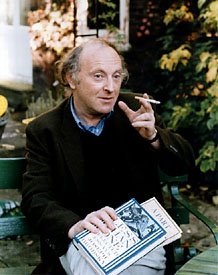
Natasha Rulyova recently asked me some questions about my experience of translating Joseph Brodsky, for a book she is writing. I ventured the following replies:


- Your translation of Strophes first appeared in Strand (21:1, 1979/80)

It appeared in Stand, not Strand.

and Vogue (May 1980). Subsequently, Joseph Brodsky (JB) revised it after publication.

That’s correct.

- Did Joseph Brodsky (JB) ask you to translate Strophes or was it your initiative?

One afternoon when I visited him at 44 Morton Street he asked me to translate the poem. He told me he had been keeping it for me.

- Do you know whether any other translators were approached to do the job?

No, but it’s possible to suppose that they weren’t.

- Have you ever seen any other versions of the poem?

No, apart from the revised versions of ‘our’ translation which Joseph published during his lifetime.

- Did JB try to translate it himself independently?

Yes, I believe so.

- JB had already started translating some of his own poems from the Russian when you translated Strophes. His auto-translation of December in Florence appeared roughly at the same time, in 1980. Why do you think did JB want you to translate Strophes rather than do it himself, taking into account that his control over his English translations was about to start growing?

As far as I could tell, Joseph regarded Strophes as something apart from the rest of his production at that time. For him it seemed to represent a statement that was acutely personal, and one he wasn’t sure very many people would understand. He wanted the translation to be a process of understanding.

- To what extent did JB interfere with your translation and at what stages?

He didn’t interfere much with the actual writing of the ‘final’ translation, but we had at least two long sessions where he went through various drafts of the individual stanzas with me and made suggestions. It was a sort of extended discussion, and it took quite some time.

- Did he try to russify your translation?

No.

- Did he attempt to make it less ‘smooth’?

No.

- If not, how would you describe the changes he suggested? Did you agree with all his suggestions?

As far as I know, I accepted nearly all his changes, which seemed to stem from his own conviction and certainty about what he was saying. There are a few problems with the translation which haven’t been resolved – as in the lines

Like our thirty-third letter
I jib all my life ahead.

where the second line is still only a very approximate rendering of the Russian, but which represents Joseph’s preferred choice.

I think it needs to be remembered that for Joseph the process of translating his own poems was in many ways not ‘translation’ in the usual sense at all. He used to talk of ‘throwing away the original, as it’s not important now’. The idea was to create a new poem in English – and that was going to involve reliving some of the same existential tensions that had led to the writing of the Russian version. I always felt that the conventional kind of ‘translation’ had negative meanings for Joseph – he tended to regard it rather as Mandelstam did. The important thing was to create something new and alive that worked in the host language. Innokenty Annensky, of whom I’d made a special study and whom Joseph greatly admired, also took this approach.

- Did you consult anybody while you were translating Strophes?

No, only Joseph.

- How did JB make his suggestions/corrections: on your manuscript in your presence, after publication without consulting you, or any other?

Essentially we made the translation together, as part of an ongoing conversation – I made changes to my own drafts on pieces of paper, and submitted them for his approval. And he made his. Each stanza of the poem was treated almost like an individual poem in itself – a kind of rhyming haiku. We also translated some poems of Tsvetaeva at about the same time by a similar process, though it was almost exclusively oral, and didn’t involve much writing down. I only saw the results when Joseph had two of the translations published in the New Yorker, under the pseudonym "F.F. Morton". The idea was that 44 Morton Street had done the translating.

- In the Beinecke library JB archive, I saw a reference to your translation of the poem ‘On the Death of a Friend’ which, according to the reference, has not been published. Did JB ask you to translate the poem?

I think it was in a group of about four poems he gave me to translate, but also gave to Alan Myers, Daniel Weissbort, George Kline, and someone else.

- Do you still have this translation?

No.

- Why was not it published?

I don’t know.

- Whose decision was it not to have it published?

Again, I don’t know.

- Did JB make any changes in it?

Once again, I don’t know.

- Have you translated any other JB’s poems which were not published?

I translated part of The Thames at Chelsea, but Joseph preferred Alan Myers’ version of the complete poem.

- What were the reason for not having them published?

I think I’ve explained the situation above.

- In From Russian with Love, Daniel Weissbort notes that he felt more ‘proprietorial’ about his translations of JB’s poems than Alan Myers who saw his translations as ‘versions’, or ‘drafts’. How would you describe your relationship with your translations?

I always saw them as open-ended drafts, which were under Joseph’s control – they were his poems, and I tried to help to find an English idiom in which to phrase the English versions of the few that I got involved with. It may seem strange, but the translation of Strophes was really an extension of the conversations we were having at the time, both about the poem itself and about other matters, rather than a literary text as such. I felt that this improvisatory process was one of the ways in which Joseph gauged the personal characteristics of his translators and of other non-Russians who surrounded him. The translations were a kind of test – not so much of linguistic or literary skill, though that mattered, of course - as of existential authenticity. I was never sure whether I passed or failed this test, though in our work together Joseph always insisted that I had passed it. I rarely had contact with his other translators.

- Did JB ever ask you to edit his English poems or to comment on his English texts?

He sometimes asked me to edit his prose texts – the short essay on Dostoevsky is an example, though it needed hardly any changes. I also read and commented, at his request, on some other texts he had written, but I don’t remember what they were now.


My translation of Strophes is here.

IHF: Joint NGO Statement

International Helsinki Federation for Human Rights, Vienna, Austria

As Russia Takes Over the Chair of the Council of Europe It Must Show Respect for Human Rights

Joint call by Amnesty International, Center ‘Demos’, Center for the Development of Democracy and Human Rights, Civic Assistance Committee, Human Rights Center ‘Memorial’, Human Rights Watch, International Helsinki Federation for Human Rights, Moscow Helsinki Group, Union of Committees of Soldiers’ Mothers of Russia

19 May 2006.

Today for the first time the Russian Federation will assume the chair of the Committee of Ministers of the Council of Europe, shortly after the 10th anniversary of its joining the Council of Europe. We, Russian and international human rights organizations, strongly believe that this occasion carries special responsibilities and heralds opportunities. The country occupying the chair of this inter-governmental organization that promotes respect for and monitors compliance with human rights, rule of law and democracy in its member states should exhibit exemplary cooperation with the bodies of the Council of Europe and respect for its aims.

Russia has made considerable progress in fulfilling a number of key promises and commitments it made when joining the Council of Europe. Among them it has signed and ratified the European Convention for the Protection of Human Rights and Fundamental Freedoms and several other Council of Europe conventions; transferred the supervision of the prison system to the Ministry of Justice; introduced new criminal, civil and procedure codes; and imposed a moratorium on the death penalty.

However, we are concerned that Russia has failed to follow up on a number of the commitments it made when becoming a member of the Council of Europe and to consistently cooperate with bodies of the Council of Europe. We are also concerned that the government’s adherence to respect for fundamental human rights and freedoms, particularly in the area of political freedoms, has seriously declined in Russia in recent years.

We are hopeful that during its Chairmanship of the Council of Europe, Russia will take significant steps to enhance the respect and protection of human rights at home, and to encourage such enhancement across the Council of Europe region. We believe that by taking the measures as outlined below Russia will demonstrate its real commitment to the Council of Europe’s aims of promoting and respecting human rights, the rule of law and democracy.

· End Arbitrary Detentions, Torture, Ill-treatment, Enforced “Disappearances”, and Extra-judicial Executions in the North Caucasus.

The Russian army, federal security forces and official as well as un-official units of the government of Chechnya have to strictly obey Russian law as well as international human rights and humanitarian law. All groups on the side of the Chechen armed opposition must refrain from all activities, which endanger the civilian population.

We urge the Russian authorities to put an end to torture and ill-treatment, arbitrary detentions, enforced “disappearances”, and extra-judicial executions.

· Take Meaningful Steps to End Impunity in Chechnya

Upon becoming a member of the Council of Europe, Russia committed itself to ensuring that “those found responsible for human rights violations will be brought to justice - notably in relation to events in Chechnya.” In cooperation with the Council of Europe the Russian authorities have taken some steps towards identifying exhumed bodies and investigation of human rights abuses. However, an overwhelming climate of impunity continues to reign in the region.

We urge the Russian authorities to make real measurable progress over the next six months in the investigation and prosecution of a number of key cases of human rights violation. i)

· End Violent Abuses in the Russian Armed Forces

Upon accession to the Council of Europe, Russia also undertook “to reduce, if not eliminate, incidents of ill-treatment and deaths in the armed forces outside military conflicts”. Yet hazing and violent initiation practices in the armed forces still result in the deaths of dozens of young soldiers every year, and serious damage to the physical and mental health of thousands of others.

We call on the Russian government to present and implement a clear and comprehensive plan of action to end violent initiation practices in the armed forces.

· Amendments to the Law on Non-governmental Organizations

In April 2006, a new law governing the work of non-governmental organizations (NGOs) came into force, which includes provisions that dramatically increase government control over the work of NGOs, and that may lead to even more sustained political interference in the activities of NGOs.

We call on the Russian government to amend the law and introduce safeguards to protect NGOs from arbitrary restrictions of their lawful activities.

· Reform of the Procurator’s Office

Russia has made a commitment when it joined to reform the Procurator's office in line with Council of Europe standards. However, this reform has yet to happen. A large body of research by the undersigned human rights groups illustrates that the procurator’s office routinely fails to promptly, thoroughly, impartially and effectively investigate allegations of human rights abuses.

We believe that the Russian government should swiftly undertake a comprehensive process leading to a thorough overhaul of the office of the procuracy, in line with European standards and thereby allowing for access to effective redress and accountability for human rights violations.

· Cooperation with the Committee for the Prevention of Torture

In 1998, Russia ratified the European Convention for the Prevention of Torture and Inhuman or Degrading Treatment or Punishment. In doing so, it committed itself to cooperating with the European Committee for the Prevention of Torture (CPT). While Russia has generally permitted the CPT to visit places where people are deprived of their liberty, we are concerned that during its most recent visit in May this year the CPT was initially denied access to the village of Tsenteroi in the Chechen Republic. ii)

Russia is the only Council of Europe country not to authorize the publication of all reports of the CPT’s visits. To date 12 out of a total of 13 reports of the CPT’s visits remain confidential. While not required to do so, authorization of publication of the reports has become an established practice of all other parties of the Convention.

We believe that Russia should ensure full cooperation with the CPT by among other things, ensuring the Committee access to all places where people are deprived of their liberty; making public plans for real and transparent efforts to implement the CPTs recommendations, and authorising, without further delay, publication of all reports of CPT visits to Russia.

· Ratification of Protocol 6 to the European Convention for the Protection of Human Rights and Fundamental Freedoms (ECHR)

In 1996, Russia undertook to “sign within one year and ratify within three years” Protocol No. 6 to the ECHR, which provides for the abolition of the death penalty in time of peace. Although no death sentences have been passed or executions carried out for years, Russia has yet to ratify the protocol.

We urge the Russian parliament to ratify Protocol 6 without further delay.

· Ratification of the European Social Charter

On accession as a Member State of the Council of Europe, Russia undertook to “study, with a view to ratification, the European Social Charter”. Russia signed the charter on 14 September 2000.

We believe Russia should finalize the ratification process during its Chairmanship.

_______________________________________
Endnotes:
i) Such as the systematic ill-treatment and enforced “disappearance” at the Oktiabrskii District Temporary Police Precinct in Grozny in the spring of 2000 or the “disappearances” of Said-Khusein and Said-Magomed Imakaev . The later is an applicant to the European Court of Human Rights in relation to his son’s “disappearance”;
ii) On 1 May 2006, the CPT interrupted its visit to the North Caucasus after it had been denied access to the village of Tsenteroi. However, the CPT resumed the visit after receiving assurances from the President of Chechnya that it would be able to work without further interference.

The Hole


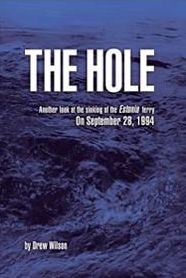
Jens-Olaf at Estland has a post about "Overcoming the Past", in connection with Drew Wilson's recently published book The Hole, a study which re-examines the sinking of the Estonia, and proceeds from the supposition that the ship had a hole - from a collision or an explosion. The Estland post focuses on aspects of Estonian social and political life in the early 1990s, which are highlighted in Wilson's book, and wonders about the real nature of Estonian-Russian tensions at that time.

I plan to discuss Wilson's book in a future post to this blog.

Taziev

This week, Ingushetia's interior minister, Dzhabrail Kostoev, was assassinated by a roadside bomb on the outskirts of the republic's capital Nazran. The bomb also killed two bodyguards and four civilians.

In the same week, Nurpashi Kulayev - supposedly the only surviving attacker in the Beslan school seizure - was found guilty of terrorism, hostage taking, murder and other charges by the North Ossetia Supreme Court.

Chechnya Weekly has an analysis of a possible connection between these two events, and points to the possibility that other Beslan attackers are still at large - contrary to official Russian state propaganda.

Friday, May 19, 2006

Mikael Storsjö Radio Interview

Kavkaz Center has published a transcript in English of a Swedish-language radio interview given to Sveriges Radio by Finland-Swedish businessman Mikael Storsjö. As Norbert Strade points out at chechnya-sl, the translation is fairly accurate, though it contains some odd mistakes and alterations - such as the substitution of "Islamic" for "Islamist", and "so-called separatists" for "separatists". However, as a background to the recent seizure of the KC servers by Swedish police, the English-language interview is worth reading - and comparing, if one understands Swedish, with the original. There are also short interviews with Swedish police officials.

Update May 23: Mikael Storsjö has now made clear that the translation is his own. The errors were his, and were not deliberate.

An Unlikely Defender

Today, Russia takes over the chairmanship of the Council of Europe (CE). Writing in the Independent, Anne Penketh observes that
a confident, even swaggering, Russia takes the helm of Europe's foremost human rights body today, ready to deflect accusations that it has failed to live up to the standards set by the institution it will lead for the next six months.

Russia's chairmanship of the Council of Europe, whose three pillars are human rights, the rule of law and open democracy, comes just two months before President Vladimir Putin hosts the G8 summit in St Petersburg and will place the Kremlin's commitment to the core values of the West under fresh scrutiny.

In recent months, concerns have been raised about Russia's moves to shut down non-governmental organisations, its curbing of the media and its imprisonment of Russia's richest man just when he was becoming a political rival of Mr Putin. The President has, meanwhile, developed strong links with the hardline authoritarian leaders of Belarus and Uzbekistan.

In Chechnya, according to Human Rights Watch researcher Anna Neistat who visited the restive Russian republic three weeks ago, the pro-Moscow leader Ramzan Kadyrov has taken torture to a new level as he seeks to crush resistance.

But the West's dependency on Russian energy has radically changed the balance of power, leaving European governments with less political leverage at a time when Russia has already used its gas-powered influence over the West-leaning former Soviet states of Ukraine and Georgia.

Thursday, May 18, 2006

Iran Interfering in Iraq

Via RFE/RL:
WASHINGTON, May 17, 2006 (RFE/RL) -- U.S. Defense Secretary Donald Rumsfeld has reiterated that he believes Iran is contributing to the instability in Iraq, telling U.S. senators that a hasty withdrawal from Iraq would merely serve Iran's interests.

Rumsfeld told members of the defense subcommittee of the Senate Appropriations Committee on May 17 that U.S. forces continue to find Iranian-manufactured weapons in Iraq, though he conceded that there is no conclusive proof of Iranian involvement.

War in Chechnya Continues

Writing in EDM, commentator Andrei Smirnov notes that the new wave of attacks by guerrillas in Chechnya is forcing the Kremlin to lift its information blockade on events in the region:
Yesterday, May 17, Russia's official news agency, Interfax, reported that a convoy of Russian troops had been ambushed near the Chechen village of Nikikhat. Official casualty figures listed five dead and six wounded. The news resembled reports that regularly came from Chechnya during the first several years of the second military campaign in the republic, but such reports have been noticeably absent in recent years.

One major difference between the first (1994-96) and the second (1999-) Chechen wars was the coverage by the Russian and international media. During the First Chechen War, journalists had free access to the region, and the media published reports from both the Russian military command and the Chechen rebels. The Russian generals often would insist that the war was over, but each time independent media sources, including Russian ones, disproved such claims.

The Second Chechen War is characterized by the information blockade set up around the separatist republic. No free press was allowed into Chechnya, and the centrally controlled press department of the security services became almost the sole source of information concerning hostilities in the region. As time went by, official military reports became shorter and shorter; eventually they were replaced by optimistic statements from pro-Russian Chechen leaders asserting that the situation in Chechnya had normalized.

Nevertheless, the guerilla war in Chechnya continued, hidden from the outside world. For example, on February 8, 2006, Abdul-Khalim Sadulaev, the leader of the Chechen separatists, issued a decree that was posted on the Kavkaz Center website (Kavkaz Center, February 12). In the decree he ordered the rebel field commanders "to recruit volunteers and equip them with weapons and ammunition as required by the approved plan for the spring and summer military campaign." Following the decree, insurgent envoys surfaced in Chechen settlements to recruit new fighters. This process became so overt that Chechnya's pro-Russian leader, Ramzan Kadyrov, went on local television with a vow to kill rebel envoys who tried to compel young Chechens to join the guerillas (Vainakh TV, February 23). But rather than discouraging the rebels, attacks increased following Kadyrov's threat.

Chechen insurgents have staged attacks with increasing frequency since early March. First, insurgents clashed with Russian special forces in mountain districts such as Vedeno or Itum-Kale, then Grozny, the Chechen capital, was mentioned with increasing frequency in rebel reports, usually regarding night-time surgical strikes against checkpoints and army patrols in the city.

Throughout March Russian authorities remained silent regarding these attacks. But as the frequency of rebel attacks increased in April, they could no longer be ignored. The authorities found themselves in a difficult position; on the one hand, they had to continue their policy of trying to prove that the war in Chechnya is over, but, on the other hand, they realized that they should react somehow to the Russian army's rising casualties from rebel activities. Security officials had typically tried to explain their heavy casualties away by citing bad luck or traffic accidents.

When rebel websites reported ambushes and bombings of the Russian columns in the mountains, officials responded with other versions of events. On April 24, RIA-Novosti reported that in Itum-Kale district the driver of an APC had lost control of the vehicle and had fallen into a gorge, killing two officers died and injuring two others. Six days later, on April 30, Interfax reported that a truck had fallen into the Argun River in the mountainous Shatoy district. On May 3, the Russian military command reported another accident in the Vedeno district, saying that an infantry combat vehicle had exploded due to faulty engine wiring (Ekho Moskvy, May 3). On May 10, Interfax reported an APC had fallen into a gorge in Nozhai-Urt district near the village of Ersenoy.

There are no mountains or gorges in Grozny, so the authorities had to find other reasons why federal forces continue to die in the city. On May 1, Interfax reported that a stray bullet from a wedding celebration had injured a bystander, while another report the next day said that a Russian policeman had been wounded in Grozny by a "random bullet." On May 8, Interfax noted that an officer had been injured when an unidentified explosive device detonated during a sweep around the city's police headquarters.

According to the rebel sources, insurgent attacks reached a new peak during the first week of May, with 98 Russian servicemen killed or wounded during that time throughout Chechen territory (Daymokh, May 10). The attacks became bolder and more lethal and more raids occurred during daylight. Ultimately, the authorities realized that they could not hide such information from the public any longer. On May 12, RIA-Novosti reported that two soldiers had been killed and three injured when a military jeep was ambushed in Grozny, and the next day Radio Liberty reported another ambush in the Chechen capital, this time leaving one soldier dead and four wounded.

After such reports the generals in Chechnya openly voiced their concerns. "An analysis of the situation has shown that the bandit formations are preparing acts of sabotage this spring and summer," General Grigory Fomenko, the military commandant of the republic, said on May 13. He had to admit, "Bandit activity increased during the last week" (RIA-Novosti, May 13).

Despite immense efforts on the part of the Russian authorities to hide the war in Chechnya, the rebels are undaunted and are starting their spring and summer offensive. The increasing guerilla operations in the region are tearing down information barriers, even without the presence of independent media in the region.

"Europe Is Afraid Of Russia"

Hufvudstadsbladet, Helsinki

“Europe afraid of Russia”

Published: 17/05/06 21:19

[my tr. from Swedish]

“The Europeans don’t dare to say anything, even though Russia is violating human rights,” claims Robert Amsterdam, lawyer of the imprisoned oligarch Mikhail Khodorkovsky. He hopes that Finland, as the next EU chair country, has left Finlandization behind.

Robert Amsterdam engages in lobbying, and does not allow Western politicians to forget that Russian President Putin’s ex-rival Mikahil Khodorkovsky is serving what many political observers see as a political sentence in a Siberian prison camp. But he admits that the chances of obtaining a new trial are slim.

“Our only chance is to appeal to the outside world. If the decision-makers claim to support human rights they must force Russia to respect international agreements,” Amsterdam told Hbl.

“But Russia is twisting the EU round its little finger.”

As an example, Amsterdam mentions Rosneft boss Sergei Bogdanchikov’s speech at a recent economic seminar in London attended by dozens of European politicians and investors. Rosneft is the formerly state-owned oil company which hijacked the greater part of Khodorkovsky’s company Yukos in a forced auction – according to Western analysts, acquiring it for a ridiculously low price.

“No one asked a single question, even though Rosneft increased its own market value six times in the course of a year and bought assets worth 9 billion dollars which the company is now selling for 45 billion,” Amsterdam says.

“The problem is that Europe treats Russia like the Soviet Union, even though the size of the country’s economy is in the same class as Holland’s. Russia needs European currency far more than Europe needs Russian energy.”

Khodorkovsky was convicted of tax fraud and the Russian state split up his company, but Amsterdam points out that other businessmen who have become rich in the same way in connection with Russian privatisation walk free. He takes this as proof that Khodorkovsky’s trial was politically motivated.

“Everyone was doing the same, but Khodorkovsky was convicted. For example, Sibneft was also suspected of tax fraud, but in the end the Russian state bought back the company.”

Billionaire Roman Abramovich sold his share in Sibneft to state-owned Gazprom, and got a hundred times more for it than he originally paid. But he has good contacts in the Kremlin and, unlike Khodorkovsky, hasn’t let it be known that he is challenging Putin for political power.

According to human rights organizations, Russia is violating human rights, restricting press freedom and persecuting dissidents. Several Western politicians have warned Russia against winding up its democracy and market economy.

“This is not just about Khodorkovsky but about dozens of new political prisoners,” says Amsterdam.

He mentions cases which have attracted attention, such as that of Svetlana Bakhmina, the young Yukos lawyer who was convicted of fraud and sentenced to seven years’ hard labour. Ex-FSB agent Mikhail Trepashkin was sentenced to four years’ imprisonment after the police found illegal weapons in his car – he had uncovered the trace of the security services as he was investigating the bomb attack in Moscow which led to the second Chechen war.

Amsterdam is visiting Finland in order to meet parliamentarians and to prepare himself for Finland’s EU chairmanship. He plans to lobby intensively during the next six months.

“Finland must leave its own Finlandization behind. I hope that the Finnish decision-makers’ knowledge of Russia will mean that Finland’s chairmanship will lead to better results than those that have been achieved by recent chair countries.”

Marcus Lindqvist

09-1253 228

marcus.lindqvist@hbl.fi

Wednesday, May 17, 2006

Migrating to Reality

At México desde fuera, some interesting discussion of Emigration and Economy in Mexico, against the background of the forthcoming presidential elections. The blog considers that the militarization of the U.S.- Mexico border could have some positive aspects, as it may force an appraisal of economic realities which are at present hidden: a significant tightening of controls on illegal migration could prove to be a test of how far the United States can manage without cheap manual labour. It might also have a pacifying effect on Mexico's northern border, which might cease to be the favourite transit-point of the Colombian and Mexican Mafias for the trafficking of drugs:
I suppose that a similar honour will now be transferred to the border with Canada, which causes me an immense joy. Perhaps Tijuana and Mexicali, the same as Nuevo Laredo and Juárez, will be able to recover something of the tranquillity they once had.
Concerning the elections, the blog takes the unorthodox view that a victory for López would not be the disaster predicted by many commentators, as it would enable the formation of a PRI-PRD majority in the Mexican parliament which might render the country governable once again, instead of "six more years of divided government which are not going to take us anywhere."

The Istanbul Commitments

In EDM, Vladimir Socor discusses the Russian government's maneuverings in connection with a secret conference which, with the connivance of "Old" Europe, among other things threatens the security of the Baltic states of Estonia, Latvia and Lithuania. Certainly an issue to watch over the coming months. Socor writes:
Amid a deep secrecy that belies its democratic professions, the OSCE is preparing to hold a Conference to Review the Operation of the Treaty on Conventional Forces in Europe (CFE) in Vienna at the end of this month. Some West European chancelleries are seeking ways to give in to Moscow's main goal at this conference: ratification of the 1999 treaty at the expense of a few small countries in Europe's East. Thus far, Moscow has only managed to persuade Belarus, Ukraine (during Leonid Kuchma's presidency), and Kazakhstan to ratify that treaty.

Originally signed in 1990, the CFE Treaty underwent adaptation at the 1999 OSCE Istanbul summit, in one package with the Final Act that includes what came to be known as Russia's "Istanbul Commitments"; namely, to withdraw its forces from Georgia and Moldova. While the original 1990 treaty remains in force, the 1999-adapted treaty never entered into force because Russia has not fulfilled those commitments. Moreover, Armenian forces deploy Russian-supplied heavy weaponry exceeding CFE treaty limits in areas seized from Azerbaijan, out of bounds to international inspection.

Meanwhile, Russia seeks to extend the CFE Treaty's area of applicability so as to include the three Baltic states, which were not parties to the 1990 treaty (they were still occupied by Moscow at that time). Since the Baltic states joined NATO, Russia seeks to bring them under the purview of the 1999-adapted CFE treaty and start negotiations with them about limiting allied forces that might hypothetically be deployed to the Baltic states' territories, for example in crisis contingencies. Legally, however, the Baltic states cannot join an unratified treaty.

Thus, Russia is now pressing for the treaty's speedy ratification by all state-parties, so as to make possible the Baltic states' accession to the ratified treaty, while still keeping Russian troops on Georgia's and Moldova's territories in Abkhazia, South Ossetia, and Transnistria. Moscow calculates that Western consent to ratification of the 1999 treaty in such circumstances would legitimize, prolong, and even legalize the stationing of Russian troops in Georgia and Moldova as "peacekeepers."

To pave the way for such an outcome, Moscow has agreed with Georgia to close Russian bases and military installations situated deep inside the country by 2008 (nine years after its pledge to do so); but it insists on maintaining its "peacekeeping" forces in Abkhazia and South Ossetia while heavily arming its proxy forces there. Russia had liquidated most of its treaty-limited weaponry in Transnistria already in 2001; but retains a part of it to this day, has transferred another part as well as personnel to Transnistria-flagged forces, and openly repudiates the obligation to withdraw Russia's own troops, styled as "peacekeepers."

The United States as well as NATO collectively take the position that ratification of the adapted CFE Treaty is inseparably linked to fulfillment of Russia's commitments to withdraw its forces from Georgia and Moldova; and that the Baltic states would accede to the treaty, once it enters into force.

Russia has drafted its version of a decision for the CFE Treaty Review conference and wants negotiations on its basis in the OSCE's Joint Consultative Group (JCG), the Vienna forum of the 30 state-parties to the treaty. Moscow's draft claims, "Most commitments and arrangements mentioned in the [1999] Final Act are either already fulfilled or are in the process of fulfillment, [while] the implementation of the remaining ones has no direct relevance to the CFE Treaty and depends on the progress of conflict settlement on the territories of some State Parties." It proposes that all state parties should deem the 1999 treaty as valid from October 2006, start the national ratification procedures, bring the treaty into force in 2007, and "discuss the possibility of accession of new participants."

The translation: Although Russia has far from completely honored its force-withdrawal commitments, the state-parties (mostly NATO and European Union member countries) should agree that it has. Thus, they should: proceed with the Moscow-desired ratification of the treaty; de-link ratification from the fulfillment of Russia's withdrawal commitments, using the conflicts for an excuse; lean on Georgia, Moldova, and Azerbaijan to accept the situation and ratify the treaty; and start the procedure of the Baltic states' accession to the force-limiting treaty.

Some German, French, Belgian, and other diplomats are now exploring a solution that could allow Russia to claim that it has fulfilled its troop-withdrawal commitments. Such a solution would:

1) exempt Russia's "peacekeeping" troops from the obligation to withdraw, recognizing their hitherto unrecognized role as "peacekeepers" and allowing them to stay on;

2) silently tolerate the arsenals of CFE treaty-limited weaponry that Russia has transferred to proxy forces in Transnistria, Abkhazia, and South Ossetia, as well as the deployments inside Azerbaijan; and

3) elicit consent from Tbilisi, Chisinau, and Baku with such a solution.

It would seem that the secrecy surrounding the JCG debates in Vienna and the ironing out of common positions at the EU in Brussels is a propitious atmosphere for a compromise with Moscow at the expense of small countries. Lack of transparency in Vienna also tends to facilitate undercutting or diluting the U.S. and collective NATO position on these issues through initiatives from a few important European capitals.

(JCG documents, May 2006)

Summertime


From Anthony Barnett's AB Fable label, some new CDs. I've already listened to one of them, Summertime: Rex Stewart - Stuff Smith - the 1963 St. Onge LA Duets & Narration, a fascinating and previously unreleased private recording of the two musicians, trumpeter and violinist, talking about their early days in jazz and playing together unaccompanied by a band, in a completely informal setting.

Gayle Dixon has commented:
To hear two instruments with such distinct timbres blend this way is amazing in itself. Trumpet and violin trade melody and comping duties -- Stuff sets up the changes with short rhythmic statements in double stops, or comps pizzicato as Rex solos. As the violin plays the melody, someone casually hums along in unison. Classic musician humor, ending in gales of laughter, punctuates the session.

To Anthony -- Meticulously produced with artistry and love, you capture the essence of the moment as well as the music. Congratulations on another masterful restoration. This recording is a worthy addition to your Violin Improvisation Studies series, and a service to the music community.

Hear, hear.

Tuesday, May 16, 2006

Cell Phone Network Problems in Chechnya

Further to Anne Nivat's article about life in Grozny, a Prague Watchdog report (my tr.):
May 16th 2006


Prices of Megafon SIM cards soar in Chechnya

By Umalt Chadayev

GROZNY, Chechnya – The May holidays were marked by a sharp increase in the price of SIM cards that connect to the mobile phone network in Chechnya. People who want to become subscribers of Megafon, the only mobile carrier operating in the republic, must now pay two or three times the normal price for a connection to the network.

For the past few days, Grozny’s numerous Megafon SIM card sales points have not been serving customers. Office workers speak of a lack of cards.

"There have been no SIM cards on sale in our city for more than a week now," says Kheda, an employee at one Megafon sales point." And no one knows when they’ll be available again. As far as I know, it’s possible to get SIMs at the exchange (an area in Grozny’s central market where private individuals deal in currency and second-hand mobile phones). They say the SIMs there cost about 800 rubles. There’s also a place quite close to us where they sell SIM cards, but their price varies between 1,000 and 1,200 rubles."

According to Kheda, the speculation in SIM cards in the republic began during the period of the May holidays. "At first SIM cards began to cost 500 rubles, then 600. Before May 9 the price went up to 800 rubles, and now it’s already over 1,000. Some buyers think we’re deliberately refusing to sell them SIMs in order to make the price go up, but we just don’t have any," she says.

Until recently a connection to the Megafon mobile phone network in Chechnya cost subscribers 400 rubles, but now new customers have to pay two or three times more. It is true that at the exchange it’s possible to find people who are selling their own SIM cards, and the price of such "used" cards is 500-600 rubles.

"Buying a SIM card second-hand rather than at a sales point presents the customer with a number of problems. First, the phone number will not be registered in their name, and second, it will constantly get calls from the former owner’s friends, and that also costs money," a young person employed as a mobile phone sales clerk in Grozny told PW’s correspondent. "As for the lack of cards in the places where they’re normally sold, I think that’s being done artificially, for one purpose only: to put the prices up.

“Subscribers to "Chechen" Megafon have repeatedly voiced serious complaints about the company’s work in the republic. People complain about the poor connection, and about credits that disappear from their accounts, sometimes involving very large sums. A few months ago the head of the republic’s [Moscow-backed] government, Ramzan Kadyrov, intervened in the dispute between residents and Megafon, promising to ban the company from operating on Chechen territory if it failed to lower the tariffs on the use of mobile connections for its customers and improve the quality of the connection.

“The tariffs for Chechen customers were in fact reduced a bit; however, the questions about connection quality and credits disappearing from customers’ accounts have remained practically unresolved. Now on top of all this there’s a sharp increase in the price of SIM cards. In the neighbouring North Caucasus republics SIM cards cost 100-150 rubles on average."
See also: Cell Phone Protest

"Like Stalin In Another Era"

Anne Nivat, the journalist and writer who has done more than almost any other Western correspondent to obtain and publish on-the-ground information about the conflict in Chechnya - often in the face of threats and violence from the Russian authorities - has written a two-part assessment in Le Monde Diplomatique, here and here, of the current state of the republic. Although she notes a superficial appearance of a return to normal, she also observes that this deceptive situation conceals a much more troubling reality. The Russians are counting on continued violence, and the resignation of the local people. From the article:
After crossing the Chechen border we took a minibus to Grozny. Snow was falling and the radio was playing Russian hits. It seemed that every car had its radio on at full volume, as though blasting people with sound would help them forget. Mobile phones arrived here about two years ago and now everybody has one, but people prefer to receive rather than make calls because of the cost. Chechnya is regarded as a jammed zone. Megafon, the only authorised phone operator in the Chechen Republic, is thought to have links with the secret services. Scores of disgruntled users sometimes protest in front of the firm’s Grozny headquarters and chant “Megafon steals!” Customers’ phone credits occasionally disappear overnight.

Brand-new Leader petrol pumps belonging to the Kadyrov family have sprung up along the main road. Spruce redbrick houses stand beside shot-up ones with battered corners and blasted roofs. Road signs and advertising hoardings have sprouted at major crossroads and next to pockmarked buildings. The name Grozny is written in huge, freshly painted letters at the entrance to the city. Inside the city, the traffic lights are working even though many drivers are afraid to stop.

Minutka Square is still the same pile of concrete debris. Nothing has been rebuilt. We emerged from the tunnel and drove down Victory Avenue, formerly Lenin Avenue. On the left, on a huge red marble pedestal is a life-size statue of Akhmad Kadyrov wearing a papakha, the traditional fur hat, and holding worry-beads. Two soldiers with Kalashnikovs stand guard over the statue 24 hours a day. We passed the pale blue Orthodox church on our right - one of the first religious edifices to have been rebuilt - and arrived in the centre of Grozny, where the bazaar was in full midday swing. It is still surrounded by dilapidated buildings, and the covered part has been partly rebuilt of plywood, but the traders continue to set up their stands. We had passed through 11 checkpoints since leaving Sleptsovsk, three times fewer than two years ago.


- - - - - - - - - - - - -

It is rare now to hear the sounds of war in Grozny at night but between 2000 and 2004 they were a constant background noise. The columns of tanks, often several kilometres long, are fewer and there are not so many reports of the terrible clean-up operations, the zachistki. But the time has come to settle scores: Chechen pitted against Chechen, brilliantly masterminded by Moscow. The capital appears to be bustling with activity but it is all facade, like the reconstruction of Victory Avenue and the empty words of the newly elected politicians, obsessed by their allegiance to their pro-Russian boss - “Like Stalin in another era,” say the locals.
Nivat investigates the role of religion in the Chechen conflict:
There is a final question on a key point in Russian propaganda: the role of religion in the conflict. Most Chechens reply: “There is no role.” They continue to practice Islam “as before” with the great moderation beloved of the Sufi tradition.

“They blame Islam, the Islamists and the fundamentalists,” explained Lida Iusupova, “but why are only Muslims labelled extremists? Why don’t they call the skinheads marauding around Russian cities Orthodox fundamentalists?”

Melnikova said: “The religious factor is being manipulated. Since 1999 the Kremlin has accused the Wahhabis and the fundamentalists so as to cover up the real culprits they would have to fight and arrest. Meanwhile the situation is worsening each day. The assassination of Maskhadov has radicalised the conflict and it can only get worse. The army doesn’t seem to want the war to end; it’s as though it suits them. And Putin’s decision after the Beslan disaster to appoint regional governors - who were previously elected by universal suffrage - shows just how useless our government is.

What is the connection between the method for electing governors and the international war against terror?”
Read it all.

Monday, May 15, 2006

Secret Prisons in Chechnya

Secret Prisons in Chechnya Should Be of Concern to the Council of Europe

Vienna, 15 May 2006. The International Helsinki Federation for Human Rights (IHF) has submitted its report "Unofficial Places of Detention in the Chechen Republic" to Council of Europe Legal Affairs Committee Rapporteur Dick Marty, who has a mandate to investigate "alleged secret detention centres in Council of Europe member states".

The 37-page report documents the existence of secret prisons in Chechnya operated by Chechen officials, in particular the so-called "Kadyrovtsy," and by Russian security forces. These facilities violate Russian law and Russia's obligations as a party to the European Convention on Human Rights (ECHR) as well as to the International Covenant on Civil and
Political Rights (ICCPR).

"Secret illegal prisons are used for detaining, torturing and even killing kidnapping victims in Chechnya," according to Aaron Rhodes, IHF Executive Director. "We believe the investigation by Mr. Marty must focus on this issue as a challenge to the rule of law and human rights in a Council of Europe member state."

The report is posted on the IHF internet site at www.ihf-hr.org.

For further information:
International Helsinki Federation for Human Rights
Aaron Rhodes, IHF Executive Director, +43 -676-635 66 12
Joachim Frank, IHF Project Coordinator, +43-676-312 23 48
Henriette Schroeder, IHF Press Officer, +43-676-725 48 29


################################

Executive Summary

At the beginning of the second Chechen war, numerous unofficial places of detention existed throughout Chechnya, many of them in the form of earth pits. The biggest such facility was located on the territory of the headquarters of the federal army in Khankala, close to Grozny. The existence of these unofficial places of detention was denied at the time. Later, in February 2001, a large mass grave was found close to Khankala, containing more than fifty dead bodies, many bearing signs of execution. Most of the bodies that were identified belonged to persons who were last seen in the custody of Russian troops or police.

Now, in the seventh year of the armed conflict, many illegal places of detention still exist in the Chechen Republic. Most of them are run by forces operating under Chechen Prime Minister Ramzan Kadyrov (so-called "Kadyrovtsy"). One reason for this parallel penitentiary system is to obtain "confessions" and "testimonies" through cruel beatings and torture, which subsequently can lead to the official detention and persecution of the respective persons. A high number of such criminal cases are fabricated.

In the village Tsentoroy (Khosi-Yurt), where the "Kadyrovtsy" headquarters is located, there are at least two illegal prisons functioning.

. One consists of concrete bunkers or boxes, and kidnapped relatives of armed Chechen fighters - parents, wives, brothers or even children - are held there as hostages.
. The second prison in Tsentoroy is evidently located in the yard - or in immediate vicinity - of the house of Ramzan Kadyrov.

Some of the other illegal prisons run by the "Kadyrovtsy" are:

. the premises of the "anti-terrorist centre" (ATC) in Gudermes
. the premises of the "anti-terrorist centre" (ATC) in Geldagan (Kurchaloevsky district)
. the premises of the "anti-terrorist center" (ATC) in Urus-Martan: in the buildings of the former RAIPO in the city center and in the building that used to belong to the regional Selkhoztechnika association opposite school nr 7
. the "anti-terrorist centre" in the western suburb of Avtury (Shalinsky district)
. the buildings occupied by the so-called "oil regiment" in Grozny's Yuzhnaya street
. the base of a subdivision of the "oil regiment" in the Dzhalka village in the Gudermes region
. another "oil regiment" house, being opposite the house of their commander Adam Delimkhanov
. the base of PPSM-2 in Grozny next to the building of the 'RTS Microrayon'
. the buildings of a technical college in the 12th district of the Oktyabrski region of Grozny in Achkhoy-Martan. The battalions "Vostok" ("East") and "Zapad" ("West"), being part of the 42nd Mechanized Infantry Division of the Russian Defense Ministry's Main Intelligence Directorate (GRU), also use their premises as illegal prisons.
. premises of the battalion "Vostok" in Gudermes, on the territory of the former company PMK-6 (till spring 2006, "Vostok" had an additional premise in a food factory)
. premises of the battalion "Zapad" in the Staropromyslovski district of Grozny (till spring 2006 "Zapad" was based in the Transmash Factory);
plus the territory of a subunit of them in the south-eastern part of Urus-Martan

The summary special groups (SSG) of the FSB of the Russian Federation, located in different districts of the republic, also run unlawful places of detention, inter alia in the following places:

. the premises of a former private enterprise in the outskirts of Katyr-Yurt village (Achkhoy-Martan district)
. a mill near the village Starye Atagi (Groznensky rural district)
The premises of a former food factory between the villages of Avtury and Geldagan also serve as a secret prison, run by a federal structure, but it is not clear which structure.

The main military base of the Russian army in Chechnya, Khankala, seems not any longer to be the major place, where illegally persons are kept.

Even official places for detention, like the temporary detention facility (IVS) at the republican and district level, are used as illegal places of detention, where the presence of several of its detainees are not properly registered. Kidnapped people are kept there, and beatings, torture and extrajudicial executions are perpetrated there as well. The legalization of ORB-2 - the Operational-Search Bureau of the North Caucasus Operative Department of the Chief Department of the Russian Federal Ministry of Internal Affairs in the Southern Federal District, and opening of several ORB-2 sub-offices is disputed, as it opposes Russian federal law. There are confirmed reports that kidnapped persons are still being brought there and that it is still a place where torture is used systematically.

The "Kadyrovtsy"

"Kadyrovtsy" is a term used by the population of Chechnya - as well as members of the groups themselves - for members of the former so-called Security Service of the President of the Chechen Republic headed by Ramzan Kadyrov, son of the late President Akhmad Kadyrov, and now Chechen Prime Minister. This is the group now most feared by Chechnya's civilian population, more than federal servicemen. This Security Service was initially created as a personal security guard of the Moscow-appointed head of the Chechen administration, Akhmat Kadyrov, without any legal status, and gradually grew into a powerful military formation. It was commanded from the beginning by Ramzan Kadyrov. Some of its sub-units were legalized in 2004 and 2005 to become parts of different structures of the Chechen Ministry of Internal Affairs. After Akhmat Kadyrov was killed in a bomb blast in May 2004, the Security Service was formally liquidated and most of the rest of its units integrated into the system of Russian law enforcement agencies and security authorities. Gradually, all structures of the Chechen Ministry of Internal Affairs are falling under control of "Kadyrovtsy".

The total strength of the "Kadyrovtsy", which now include the "Second Road Patrol Regiment of the Police (PPSM-2)", the "oil regiment" and the "anti-terrorist centers" (ATC), is not disclosed. The estimations vary from 4 to 12 thousand people, although the last figure is probably an overestimation. Some are completely legalized into special structures of the Interior Ministry of Chechnya while others continue to exist in the form of paramilitary formations. By spring 2006, another reorganization of the "Kadyrovtsy"-structures started. Allegedly, the "anti-terrorist centers" (ATCs) are going to be closed down, and two new battalions will be formed: the battalions "Yug" ("South") and "Sever" ("North"). The announcement is that these two new battalions will be directly subordinated to the federal Ministry of Interior.


--
Joachim Frank, Project Coordinator
International Helsinki Federation for Human Rights
Wickenburggasse 14/7
A-1080 Vienna
Tel. +43-1-408 88 22 ext. 22
Fax: +43-1-408 88 22 ext. 50
Web: http://www.ihf-hr.org

Update: At RFE/RL, a Secret Prison Victim Recalls His Ordeal.

A Strong Military - II

In essence, the speech boils down to the paradoxical conclusion that Putin is not serious about beefing up Russia's military. All he needs is some virtual power that would remind the forgetful West that Russia cannot be treated as a subject for "democratization." Nuclear arguments always seem to carry weight, but in real terms it is hard to see how a strategic submarine that might become operational close to 2010 (if the test flights of the Bulava missile go smoothly) could be an answer to the criticism that the extermination of free media damages the efficiency of state leadership.
Pavel K. Baev, commenting in EDM on Putin's address to the Federal Assembly last week.

See also: A Strong Military

This Blog Is 2 Today

It's now two years since I began posting to A Step At A Time. The blog has tended to concentrate on regions of public and international concern, especially in areas like Chechnya, the Russian Federation, and Eastern Europe - but its focus has never, I hope, been a narrowly political one. My aim has been - and continues to be - to highlight injustice, while at the same time looking for hope among the writings of the enormous assembly of bloggers, journalists, analysts, chroniclers, diarists and commenters with whom the Internet is populated. I'm heartened and encouraged - there really is a large and growing fund of good will and good intent out there, and a genuine will to tackle the world's problems, which we all share. There's also undeniably a great deal of destructive behaviour and discourse - but surely that's only what one would expect in a medium like the Internet which, almost like a natural element or environment, encompasses the globe itself.

I'll continue to watch and and reflect.

Romantics

"It's a difficult time now for the Russia romantics. The people who over-invested in this are in intellectual and political trouble right now."

- Bruce P.Jackson

Sunday, May 14, 2006

The Poverty of the "Progressives"

Edward Lucas has posted the text of a sermon he is to give in Canterbury Cathedral this evening on the occasion of Christian Aid Week. "It is a tragedy," he sayds, "that anti-poverty campaigners in the west have allowed themselves to be conned by the self-interested protectionist arguments of rich people in poor countries. Protecting the corrupt, incompetent and uncompetitive producers and providers of goods and services in poor countries levies yet another tax on people who are least able to pay."

Read it all.

No to Dictators

Writing in the London Sunday Times in advance of Hugo Chávez's visit to London, which begins today and continues through tomorrow, Ian Buruma has some words of warning for Western intellectuals and "progressives" who warm to dictators. Just as Stalin attracted Western admirers like the Webbs (Beatrice and Sidney), and just as Western followers of radical fashion lined up to pay homage to Mao and Castro, so Chávez is proving to be a focus for privileged discontent with the world of Western democracy:
That Chavez is applauded by many people, especially the poor, is not necessarily a sign of democracy; many revolutionary leaders are popular, at least in the beginning of their rule, before their promises have ended in misery and bloodshed.

The left has a proud tradition of defending political freedoms, at home and abroad. But this tradition is in danger of being lost when western intellectuals indulge in power worship. Applause for autocrats undermines the morale of people who insist on fighting for their freedoms. Leftists were largely sympathetic, and rightly so, to critics of Berlusconi and Thaksin, even though neither was a dictator. Both did, of course, support American foreign policy. But when democracy is endangered, the left should be equally hard on rulers who oppose the US. Failure to do so encourages authoritarianism everywhere, including in the West itself, where the frivolous behaviour of a dogmatic left has already allowed neoconservatives to steal all the best lines.

Peace for Chechnya

via chechnya-sl
On May 19th 2006, Russia will take over the chair of the committee of ministers of the Council of Europe - the principal European institution for the protection of human rights. At the same time, the Russian government continues to support the brutal oppression of the people of Chechnya.

We, an initiative of international students based in Paris, think that we should take this occasion to demonstrate solidarity with the Chechens. We hope to be able to raise support and encourage European-wide civilian action. In order to achieve this and to enhance coordination, we established the following website:

http://www.peace-for-chechnya.org/

We really think that European civil society should stand together to show that we do not accept the torture of an entire population!

* Let us thus show our governments that the people they are representing do not accept the sacrifice of the Chechens to protect political and economic interests!

* Let us show the Russian government that it has to respect human rights if it wants to be respected by the people of Europe!

* Let us show that the citizens of Europe can stand in solidarity and have a say in the politics of Europe!

* Let us help that the conflict and the torture in Chechnya will not be forgotten!

In this spirit we want to motivate the organisation of demonstrations in as many places around Europe as possible. For practical reasons we propose as date the 20th of May 2006.

With little time remaining, we hope that we will succeed to work together as a European civil society!

Therefore, we would like to suggest three ways to take part in this initiative:

1. To organize demonstrations and protest actions for May 20h 2006. To support this we have set up a website as a forum for communication, coordination and exchange of material:

http://www.peace-for-chechnya.org/

2. To organise informational meetings on the conflict in Chechnya before this date in order to rise public awareness.

3. To help us to promote this initiative throughout Europe by informing and possibly by forwarding this text to the members of your organisation and to others that might be ready to engage.

The text of this email is also available in multiple other languages at:

http://www.peace-for-chechnya.org/material/email_texts.htm

Thank you!

P.S.: As stated, this is intended to be an initiation and encouragement for independent action. The content of this email and the website are thus open to suggestions, recommendations and criticism.

***

Saturday, May 13, 2006

Web Wars

Some odd goings-on in connection with the Kavkaz Center website, which is hosted on a number of different servers, two of which were recently seized and confiscated by Swedish police. Now a site purporting to be the only genuine KC website is publishing disinformation targeting Mikael Storsjö, the Finland-Swedish businessman who was hosting the real KC site on the now confiscated servers in Sweden. An announcement on the cloned site, definitely a fake, and apparently hosted on a server in Reston, Virginia, USA says [my translation]:
The editorial staff of the independent information agency "Kavkaz-Tsentr" requests that the owner of the domains kavkazcenter.com, kavkaz.tv, kavkaz.uk.com, kavkaz.org.uk, kavkazcenter.net, kavkazcenter.info Mikael Storsjö should relinquish the post of information policy director of the above-mentioned sites, and also transfer control of these domains to any person from the editorial staff of "Kavkaz-Tsentr" or other independent media of the ChRI.

The "Kavkaz-Tsentr" collective does not intend to further tolerate the information policy that is being conducted by Mr Storsjo at the above-mentioned domains, which are considered to be the core sites [osnovnye sayty] of "Kavkaz-Tsentr".
In fact, Mr Storsjö is not the owner of the mentioned sites. As Norbert Strade has pointed out, "most of them are owned by Visami Tutuyev in Tbilisi, Georgia, who has been the formal owner of them for years. I.e., they continue to be under the control of the 'real' Kavkaz-Center people ([Movladi] Udugov)."

More at chechnya-sl.

See also in this blog: Kavkaz Center Servers Seized By Police

1946 and 2006

In Kommersant, Andrei Illarionov considers that, just as in 1946, it is Moscow that is aiming to distance itself from the West. The analogy drawn by Illarionov between the strategic co-operation of the World War II allies in the 1940s and the "strategic alliance" of Russia and the West in the aftermath of September 11 2001 may seem far-fetched to some, but Illarionov makes an interesting argument. The original Russian-language article of the article is much more comprehensive and ramified than the English summary.

Andijon Massacre - One Year On

The BBC World Service program Assignment presents a moving commemoration of as many as 500 peaceful demonstrators who were massacred by Uzbek security forces at Andijon on this day a year ago. The voices of victims and victims' relatives can be heard on recordings which have never been released before.

Friday, May 12, 2006

7/7 Reports - II

It now seems clear that the parliamentary committee and Home Office reports released yesterday will do little to end speculation about who and what was behind the July 7 2005 London bombings. The British government's aim is evidently to conceal most of the real evidence, and to imply that, while there may have been a tenuous Al Qaeda link, the bombers were essentially acting on their own, with "home-made" weaponry.

The press and media reports alone suggest that this isn't a satisfactory explanation of what happened. For one thing, the bombings bear the hallmarks of a carefully-planned, military-style operation- the level of organization required to achieve such a synchronised attack would surely have been beyond the resources of the group of "local lads" as portrayed in the press.

The apparent slowness and reluctance of the British security services to officially envisage the possibility of such an attack, and their underestimation of the threat, raise even more questions.

There are particular questions about intelligence-sharing. On July 11 2005, in a report that is still relevant now, the New York Times wrote that
There was an extraordinary, private meeting in London on Saturday, convened by Scotland Yard and MI5, Britain's domestic intelligence agency, that brought together senior law enforcement and intelligence officials from the United States and the two dozen European countries. The meeting was to discuss the bombings in London last Thursday.

Participants said they were struck by how little was known about the attacks, which hit three trains in the London Underground and a double-decker bus. The investigation into the coordinated bombings, which left at least 49 people dead and more than 700 wounded, is now the largest criminal inquiry in British history.

Britain is regarded by other European countries as often having access to more and better quality intelligence because it is part of a long-established, Anglophone intelligence-sharing agreement with the United States, Canada, Australia and New Zealand.

But the two-hour session indicated that the British officials running the complex inquiry were frustrated because they had few breaks, few leads and no suspects in the 48 hours after the attack, the most important investigative period after a terrorist bombing.

Thursday, May 11, 2006

Poland

Edward Lucas presents an Economist Poland survey, starting at this link on his blog.

BBC Belarusian broadcasts - V

A poster in the comments to this post at br23 blog has correctly pointed out that as a result of Blair's recent cabinet reshuffle, Douglas Alexander is no longer minister for Europe. The poster suggests that an alternative and possibly more effective way to influence British government policy on the matter of BBC World Service Belarusian language broadcasts would be to lobby the British ambassador in Minsk, Brian Bennett - contact details are on the British Embassy's website.

Chávez in London

Venezuelan dictator Hugo Chávez is to visit London next week as the guest of Mayor Livingstone, Harry's Place notes.

China and Cuba

In Jamestown's China Brief, William Ratliff looks at two countries whose relations with each other "are more interesting and perhaps important than their varying orientations and roles in the world today would seem to suggest."

7/7 Reports Fail To Answer Questions

Two reports on the July 7 2005 London bombings published today have failed to answer major questions about intelligence blunders, giving impetus to pressure for a full public inquiry. The Guardian notes that
Intelligence sources say the number of terror suspects stands at more than 700.

See also: 7/7/Terror Cell Link

Finkevich Sentenced to 2 Years Hard Labour


Reuters reports that Artur Finkevich, the young Belarusian activist, has been sentenced by a court in Minsk, Belarus, to two years of hard labour for spraying slogans that included words "Enough!" and "We want a change" on walls.


See also in this blog: Young Belarusian Activist Faces 7-12 Year Prison Term

Wednesday, May 10, 2006

Battle Near Grozny

A PW report (my tr.)
Battle takes place in Novye Atagi

May 10th 2006

By Umalt Chadayev

NOVYE ATAGI, Chechnya - Last night a group of guerrillas and law enforcement officials exchanged fire on the outskirts of the village of Novye Atagi, about 20 kilometers southeast of Grozny. Local residents say the battle lasted not less than two hours.

"At around 1:00 am concentrated fire from sub-machine guns, machine guns and other weapons began,” says Mansur, a 33-year-old resident of Novye Atagi. "People were extremely frightened, but were afraid to come out to the street because it was impossible to tell who was firing at whom, and why.

"The shoot-out lasted for about two hours. No one is able to say exactly what happened there. People say that Russian soldiers and local police tried to arrest a group of guerrillas on the outskirts of the village, and the guerrillas put up resistance,” he said. "Then heavy armour was brought in. There is information that one guerrilla was killed. It’s also not known exactly how many of them there were, but it seems that several were able to get away.”

According to Mansur it is also not known whether there were any losses among the forces who carried out the operation. The area where the armed clash took place is at present cordoned off by soldiers and police.

In the morning Chechen police refused to make any comment on what was happening in Novye Atagi. In the afternoon the Interior Ministry of the Chechen Republic announced that local guerrilla leader Timur Maayev was killed in the battle.

While the Ministry claims that Maayev was alone and put up armed resistance to an offer to surrender, local people insist that there were several guerrillas and Maayev stayed in the place to provide covering fire that would help his fighters break through the encirclement.

A Strong Military

"We should be able to respond to anybody's attempts to put pressure on Russia in matters of foreign policy in order to strengthen their own positions at our expense," he continued, concluding that "it must be said openly: the stronger our armed forces will be, the less tempting it will be to put such pressure on us."

Vladimir Putin, quoted on May 10 2006.

Children's Home Petition

Maidan posts a link to a call from human rights activists to save a children’s home founded by Mikhail Khodorkovsky.

Tuesday, May 09, 2006

Reporters Without Borders Survey

Reporters Without Borders has published its annual survey, together with a new list of predators. On Belarus and Russia, the Europe report notes that
Belarusian President Alexander Lukashenko worked to shut down his country’s few independent newspapers as the March 2006 presidential election approached, crippling them with huge fines and blocking printing and distribution. Several key papers in the capital, such BG Delovaya Gazeta, were doomed. Journalists, especially those from the Polish minority, who reported on opposition demonstrations were tried and imprisoned.

Violence against journalists in Russia was frequent and impunity prevailed in a country where news is still closely controlled by the government. Two journalists were killed and a third escaped being murdered in 2005. More than a year after the death of editor Paul Khlebnikov of the Russian edition of the US magazine Forbes, the authorities closed their investigation and said Chechen independence militant Kozh-Akhmed Nukhayev had ordered the killing. The government steadily took control of all the country’s TV stations and stepped up pressure on the few independent papers, seriously threatening news diversity. Chechnya remained a void for news and journalists could not go there freely.

BBC Belarusian broadcasts - IV

In the comments at br23 blog, a poster writes:
Like Google’s search filter for China, it is most likely that the BBC ran into problems while making agreements with the regime to create any such service. Google yielded by altering their search engine to meet the desires of the Chinese government. The BBC’s only option would be to transmit in Russian but that would completely annihilate the point of setting up a Belarusian service.
Those seem to me like reasonable suppositions. It's a pity that the corporation apparently can't bring itself to be more open about the true situation vis-à-vis Belarusian language broadcasting. Perhaps if the BBC received more inquiries about this, some official policy statement might be made. Whether anything would actually change in practical terms as a result is another matter, of course.

It should be noted, by the way, that while the rest of the BBC is funded primarily by a licence fee, the World Service is funded by the British Foreign and Commonwealth Office.

Monday, May 08, 2006

Book Review

Michael Peverett has published a review of I Studied Once At A Wonderful Faculty.

BBC Belarusian broadcasts - III

br23 blog in Minsk has commented on the reply I received to my letter to Douglas Alexander on the subject of Belarusian language broadcasts on the BBC. As the blog points out, the reply did evade the central issue almost completely.

Just for the record, here is the letter I wrote:
To: Douglas Alexander MP

Dear Mr Alexander,

I note from a report in the Belarusian service of Radio Free Europe/Radio Liberty that the BBC has no plans to institute a Belarusian language service. While I'm aware that the BBC has recently had to make cutbacks in its foreign-language broadcasting, it seems to me that in the currently changing political climate in Eastern Europe a Belarusian component in the Russian/Ukrainian language service would be an important source of information and support for a Belarusian opposition that is increasingly threatened by the authoritarian government of Alexander Lukashenko.

I hope that the BBC might consider the addition of Belarusian to its Russian and Ukrainian language broadcasts.

Best regards,

David McDuff
See also: BBC Belarusian broadcasts - II
BBC Belarusian broadcasts

Sunday, May 07, 2006

Blair and Britain's Nuclear Deterrent

Talking on C-SPAN today, U.K. Times Washington bureau chief Tom Baldwin gave an interesting assessment of British politics in the wake of Labour's defeat in the recent local elections, and the subsequent drastic cabinet reshuffle. With Prime Minister Blair obviously on the way out, the signs are that a campaign to replace him with his New Labour colleague Gordon Brown may be about to begin within the party. As Baldwin pointed out, this is likely to have long-term implications for U.K.-U.S. relations, particularly in the field of defence. The big question at present is whether the current Labour government will commit its successors to the indefinite retention of nuclear weapons,and there are powerful lobbies and pressure groups arguing against it. Though the present Trident system will not become obsolete for another 20 years, if its replacement is to be practically implemented, work needs to start now, and a substantial contingency plan has been built into the U.K.'s defence budget for this purpose. The cost of the replacement is likely to be in the region of 15 billion GBP (28 billion USD).

Baldwin suggested that Brown is less likely than Blair to favour a new delivery system. And he predicted that in the present political climate Blair won't last more than another year as Britain's PM.

7/7 Terror Cell Link

A report in the Observer reveals that British intelligence had information directly linking one of the 7/7 bombers to a terrorist cell that was already under surveillance. The revelation contradicts the British government's officially stated claim that the four 7/7 bombers were operating independently of any larger group in a "home-made" bomb plot.

Saturday, May 06, 2006

Klebnikov: Chechens Freed

A Moscow court has acquitted two Chechen men of murdering American journalist Paul Klebnikov.

Kavkaz Center Servers Seized By Police

Mikael Storsjö reports that the servers hosting the Kavkaz Center website have been seized by Swedish police. Details are here.

www.kavkazcenter.com is temporarily unavailable, and a Russian-language message gives details of yesterday's events connected with the confiscation of the servers - however, www.kavkazcenter.net can be accessed at this time (May 6).

No Place To Run

In WorldNetDaily, Robert Pfriender discusses America's lack of adequate prevention and professional planning for nuclear and other disasters:
We are terribly unprepared and extremely vulnerable, and not just to a nuke attack but to all types of attacks with weapons of mass destruction and, as Katrina demonstrated, from natural disasters such as severe weather and flu pandemics. And while the general public is not aware of these crucial facts, our worst enemies certainly are and intend to exploit our weaknesses in every way they can.

It was not always like this. During the Cold War, America had a substantial civil defense program with many shelters, supplies and procedures put in place. And so did the former Soviet Union and China. Many European countries also had very sophisticated programs, and most of these countries still do. Russia and China continue to build massive facilities designed to shield the populations of entire cities and even whole regions deep underground, stocked for many months full of supplies.

Helsinki Arson Attack


A fire in the centre of the city of Helsinki, Finland, on Friday evening destroyed the "Makasiinit" - disused railway warehouses on which demolition work was due to begin on Monday. The police suspect arson, as the fire spread so quickly (according to press reports, the structures burned down within the space of an hour), but have not so far given details.

The fire was taken under control, but firefighting work still continued on Saturday morning. There are more photos here.

In an earlier incident on May Day Eve, a group of young people, mostly anti-globalization protestors, lit fires in the vicinity of the warehouses, and threw stones and bottles at police.

Friday, May 05, 2006

Svetlana Bakhmina


In the comments to this post, Jeremy Putley writes:
My unpublished letter to the FT concerned specifically the brutal and tragic case of Svetlana Bakhmina:

27 April 2006

The Editor
Financial Times
London

Sir

Saying no to Rosneft, Editorial today

In your second editorial today you are right to say that investors presented with the opportunity to buy into Russia’s oil riches, in the planned stock market flotation of Rosneft, must consider the moral dimension. It is not only the question of whether they will be buying “stolen goods”. There is also the matter of the abuse of legal process to persecute former Yukos employees, and not just Mikhail Khodorkovsky.

It has not been widely reported that last week the Yukos lawyer, Svetlana Bakhmina, was sentenced by a Moscow court to seven years imprisonment in a labour camp. She had denied any wrongdoing. Now 36, she has been detained since 7 December 2004, and has not been allowed to see her two children, aged 3 and 7 in that time. Bail was refused for apparently no justifiable reason.

The Russian opposition politician, Boris Nemtsov, is reported as saying that Ms Bakhmina does not deserve the sentence, which he calls an act of repression, considering it part of a campaign by the Kremlin aimed at intimidating business employees in order to prevent them from expressing independent views on society in Russia.

This appalling case of abuse of legal process in a European capital should arguably carry rather more weight with investors even than the other matters that arise in considering potential investment in Russia, such as the unexplained exclusion from Russia of the investor Mr William Browder.


Jeremy Putley

Cheney: Russia's Bullying Tactics


At the Common Vision for Common Neighborhood Conference in Vilnius on Thursday, US Vice President Dick Cheney talked about Russia (from the Telegraph):
"In Russia today, opponents of reform are seeking to reverse the gains of the last decade," Mr Cheney said in a speech to Baltic and Black Sea leaders in Vilnius, the Lithuanian capital. "The government has unfairly and improperly restricted the rights of her people."

He went on to accuse Russia of using its vast energy supplies as "tools of intimidation or blackmail" and of undermining the territorial integrity of its neighbours.

"Actions by the Russian government have been counterproductive and could begin to affect relations with other countries," he warned.

Even by the standards of one of President Bush's foremost hawks, the comments were astonishing in their bluntness.

One western diplomat described it as the most abrasive speech directed at Russia since Ronald Reagan visited the Brandenburg Gate in 1987 and called on his Soviet counterpart, Mikhail Gorbachev, to "tear down this wall".

Mr Cheney has spearheaded a review of US policy towards the Kremlin in recent months as the White House has become increasingly concerned about Russia's direction under Mr Putin.

His speech provoked fury in the Kremlin, where a spokesman described the remarks as "completely incomprehensible".

A leading Kremlin adviser predicted a "tough reaction" from the Putin administration. "In Moscow this statement is seen as disgusting and will be unanimously condemned by both the ruling and political elites," said Gleb Pavlovsky.

Child Trafficking in Chechnya

A PW report (my tr.):


Another attempt to sell a child prevented in Chechnya

By Umalt Chadayev

GROZNY, Chechnya – On May 2 Chechen police prevented another attempt by medical workers to sell a baby. One of the culprits is a female doctor who was recently shortly detained for the same crime.

The April scandal connected with the exposure of a group of doctors at one of Grozny’s hospital who were arranging the sale of children had not yet died down when another incident in which medical professionals tried to sell a child came to light. And it turned out that Inna Akhtayeva, a female gynaecologist at Grozny’s city hospital who was involved in the recent scandal, was the initiator of the new sale of a baby.

“Now she has been rearrested for having made another attempt sell a baby, this time for five thousand dollars already," a police official says.

According to him, several people involved in committing similar crimes were detained along with Akhtayeva. In addition to the medical workers, an official of the law enforcement agencies also belonged to the organized criminal group which was engaging in the trafficking of children.

"I can’t understand what guided the officials of the prosecutor’s office when they released from detention someone who was involved in children trafficking – a doctor, moreover," says a 48-year-old instructor at one of Grozny’s institutes of higher education. “This is a monstrous, amoral crime, made all the more terrible by the fact that it was carried out by someone who had taken the Hippocratic oath! These people must be taken to court and given their just deserts, even if it means life imprisonment."

It will be recalled that on April 21 the media carried the first reports that during the processing of operational information federal anti-drug police officials had detained doctors at one of Grozny’s hospitals who were engaged in the trafficking of children. "On April 19 Akhtayeva and her two accomplices were detained by local narcotics agents in the course of a special operation. Posing as "buyers", the law enforcement officials purchased a three-month old baby girl, paying seventy thousand rubles for her. Immediately afterwards the "live goods merchants" were put under arrest. The prosecutor’s office of Grozny’s Leninsky district is undertaking the investigation of this criminal case. As has now become known, citizen Akhtayeva was released after giving a written undertaking not to leave the country," a source in the republic’s law-enforcement agencies said.

Thursday, May 04, 2006

Books from Finland

Books from Finland magazine 1/2006 is now posted. I have some new translations of Ostrobothnian poet Lars Huldén in this issue, among other things.

Amnesty Report

A new report by Amnesty International says that racial killings in Russia are out of control.

Rich Russia - II

In the comments section of this blog, Jeremy Putley has posted the text of two important letters in the Financial Times. One is from Bruce K. Misamore, former chief financial officer of the Yukos oil company, and the other from Robert Amsterdam, international defence attorney for Mikhail Khodorkovsky.

Rich Russia

Edward Lucas, on how Rich Russia minus ideology equals trouble.

Stalin's World

A former Soviet prison camp at Grutas, in Lithuania, has become a major tourist attraction.

Moomins


I've received a number of email queries from people asking where they can obtain a copy of my translation of Tove Jansson's first Moomin book, The Moomins and the Great Flood (1945): the translation was published last year by Schildts Förlag of Helsinki.

I suggest that you order the book from Stockmann's Academic Bookstore in Helsinki, or from Schildts Moomin section: SCHILDTS FÖRLAGS AB Georgsgatan 18, 00120 Helsingfors, Finland Tel. +358 9 88 70 400 Fax +358 9 804 32 57 schildts@schildts.fi

A version of the translation - but without the author's illustrations - can be found here.

Wednesday, May 03, 2006

Tyutchev and the Russian Empire


In Yezhednevnyi zhurnal Dmitry Oreshkin considers the great 19th century Russian poet Fyodor Tyutchev (1803-1873), characterizing him as a sincere and idealistic proponent of Russian imperialism, but contrasting him with today's adherents of a Great Russian nationalism (my tr.):
Tyutchev was an imperialist in the highest (and most tragic) sense of the word. With his heart's blood he wrote approximately the same text that is inscribed at the base of the Statue of Liberty in the United States. About the orphaned and the injured from all over the world, to whom the Russian tsar and the Russian faith promise protection, comfort, prosperity and freedom. The question of the ability of Russia then, or the USA today, to fulfil the promise is unimportant. Tyutchev believed that Russia was able to fulfil it, and obliged to do so. And the founding fathers held a similar belief. That can be felt in the text.

But our patriots don't have that belief. They don't call people to them - on the contrary, they do their utmost to repel them. Not only foreigners, but even those who were recently their fellow believers. They see everyone as enemies and betrayers, heretics and traitors, calling them a fifth column and a world conspiracy, immigrants and saboteurs. A certain loss of imperial greatness, wouldn't you say?

Tuesday, May 02, 2006

Gazprom Buys the Print Media

Writing on the RFE/RL web site, Robert Parsons discusses Gazprom's apparent designs on the remaining independent print media in Russia. Izvestia and Kommersant are both candidates for a Gazprom takeover. Parsons talks to Masha Gessen, who comments:
"What is going on here is there's a [presidential] election coming up in 2008 and the Kremlin clearly feels it needs to take control over the remaining print media, now that they have complete control over the electronic media. Things keep going in the same direction and it's intensified because of the election coming up."
And Oleg Panfilov, director of the Moscow-based Centre for Journalism in Extreme Situations, says he thinks that
"...the authorities are conducting a political game in which on the one hand they want a controlled press but on the other have certain obligations to the European Union and the G-8. And so a small part of the free press will be allowed to remain in order to create the image of a more or less free state. It's another matter of course that this small part of the press has no influence on public opinion..."

Airstrikes in Ingushetia

Via Prague Watchdog (my. tr.):


Airstrikes in one of Ingushetia’s mountain districts

By Liza Osmayeva

INGUSHETIA – During the night of May 1-2 Russian fighter-bomber airforce made several strikes on a forest tract in the north-western part of Ingushetia. There were no casualties or structural damage.

The strikes were reportedly carried out in an area of mountain and forest situated between the Nazranovsky and Sunzhensky districts of the republic (not far from Ingushetia’s administrative border with North Ossetia). Local residents say they heard the sound of jet fighters, and of bombs being dropped in the vicinity of the villages of Ali-Yurt and Surkhakhi in Ingushetia’s Nazranovsky district.

"At around 11.30 pm we heard the rumble of aircraft. After a while there was the sound of bombs being dropped. It’s very probable that the strikes were carried out on the area of forest to the southeast of the villages of Ali-Yurt and Surkhakhi. There were only two explosions, 10-15 minutes apart. The force of the blast wave was such that the glass rattled in the windows of several houses. We were so scared that we couldn’t get to sleep all night. Fortunately, no one was hurt as a result of these raids,” Akhmed G., a resident of Ali-Yurt, said in a conversation with PW’s correspondent.

It is not known what served as the grounds for airstrikes on the forest. In connection with the incident the Ingushetian law enforcement agencies have reported that sub-units of the 58th Army were taking part in special training exercises on the outskirts of Surkhakhi and Ali-Yurt. However, officials of the republic’s interior ministry refused to answer a question about whether ground support aircraft were used in the course of the exercises.

In addition, it is reported that on the same night Russian soldiers also subjected the outskirts of the village of Valerik in the Achkhoy-Martanovsky district of Chechnya to a concentrated artillery bombardment. The attack began at approximately 11 pm and went on for 10-15 minutes. According to local residents, the firing came from long-range artillery at a place in the Urus-Martanovsky district where Russian soldiers are deployed. No one was hurt as a result of the shelling.

A Welcoming Crowd

Publius Pundit has a first-hand report from Los Angeles, and the La Brea evening protest. A. M. Mora y Leon writes:
This was the second one that wasn’t the early morning’s coercive boycott, but instead a real show of presence for the immigrants who feel most strongly affected by coming Congressional efforts to deal with immigration. It was endorsed by Cardinal Mahony and Dolores Huerta, and reportedly drew about 400,000 people, versus the morning action, which only drew about 200,000. There was probably some overlap of protestors. But by and large, it goes to show that more immigrants want peaceful dialogue and change, not ‘revolucion’ and confrontation endorsed by ANSWER and its confrontational allies.

Iran: Russia and China Will Not Back Sanctions

The Iranian foreign minister says that Russia and China have officially informed Tehran they will not support sanctions or military action over Iran's nuclear programme:

When asked how far Russia and China, veto-wielding permanent members of the council, would support Washington, Manouchehr Mottaki told the Kayhan newspaper:

"The thing these two countries have fficially told us and expressed in diplomatic negotiations is their opposition to sanctions and military attacks."

"At the current juncture, I personally believe no sanctions or anything like that will be on the agenda of the Security Council,"
he said in the interview.

Monday, May 01, 2006

Gas Wars

In the wake of recent adverse publicity about its London flotation, sparked by concerns about low corporate governance standards (but also about the shadowy nature of the enterprise itself) Russian energy company Rosneft is now said to be planning cutbacks in the size of the venture. The Guardian's industrial editor writes that
the oil giant was expected to sell up to £11bn of shares through an initial public offering that would have seen up to 49% of the company's equity offered to investors but is now planning to reduce the figure to about £4bn-£5.5bn, according to reports this weekend.
Gazprom, Vladimir Putin and the Russian government are also involved:
The Kremlin is expected to sell only sufficient shares to cover the £4bn cost of its purchase of a controlling stake in another Russian energy group, Gazprom. It is believed it took the decision to limit the size of the flotation because of the positive impact of the high oil price on Rosneft's finances.
Last week the head of corporate governance at the leading London investment company F&C Asset Management advised investors to “tread carefully when considering investing in Rosneft”. All this follows reports that William Browder, the head of Hermitage Capital Management, the largest foreign investor in Russia, has been barred from entering Russia since late last year, and the threats made by Gazprom's deputy head, Alexei Miller, that any attempts to block the company's expansion in Europe would "not lead to good results".
The British government has been concerned about a possible bid from the Russian energy group for Centrica, the parent company of British Gas. The British government has since made it clear that it would expect any approach from Gazprom to be dealt with by the competition authorities, not by ministers.
According to the Guardian, London is now seen as a "destination of choice" for Russian companies "keen to cash in on investor enthusiasm for the natural resources sectors."

Last week London was once again host to the so-called Russian Economic Forum, organized by Eventica.

A reader comments:
Browder supported the Kremlin pros(pers)ecution of Khodorkovsky and must have expected reciprocity instead of having his visa revoked; that was written up in the Moscow Times when it happened.

The extent of Putin’s interventions on behalf of Gazprom outside Russia is revealing.